The Bronze Age Burials in the Khachenaget River Valley
Location
The burials were situated near the village of Arajadzor in the Martakert Region of the Republic of Artsakh, on both the right and left banks of the Khachen (Khachenaget) River. Since 2023, the area has been under Azerbaijani occupation.
Historical Overview
Detailed information is preserved in the excavation reports of the archaeologist E. Rössler (Izvestiia Imperatorskoi Arkheologicheskoi Komissii [IAK], 1897). The sites were also discussed by K. Kushnareva (1954, 165–179; 1957, 135–177).
Archaeological Investigations
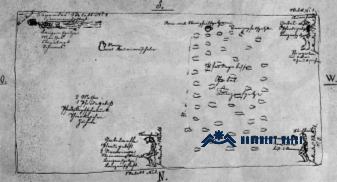
The left-bank burials were excavated by E. Rössler in 1893–1894 (Arajadzor) and in 1894 and 1897 (Balukaya, Srkhavend). South of Arajadzor, in an area 1.5 km from the village, Rössler recorded nine Late Bronze Age burials (barrows), two of which he excavated. In Burial (Mound) No. 1 (height: 10 m; basal diameter: ca. 27 m), a cist grave covered by five slabs was exposed at a depth of 3 m. Four skeletons were recovered from the burial (Fig. 1).
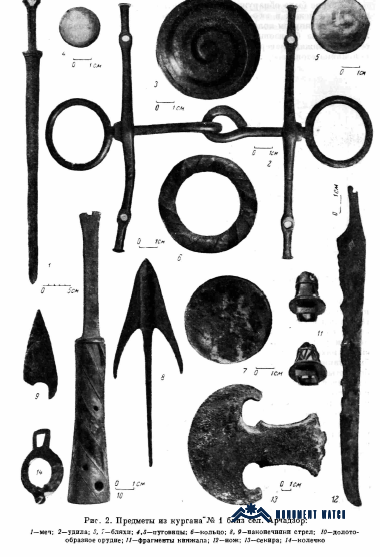
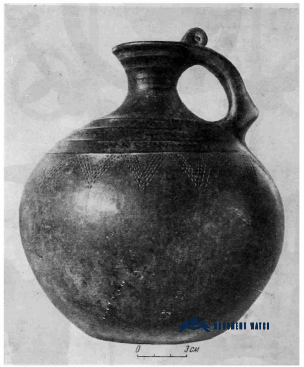
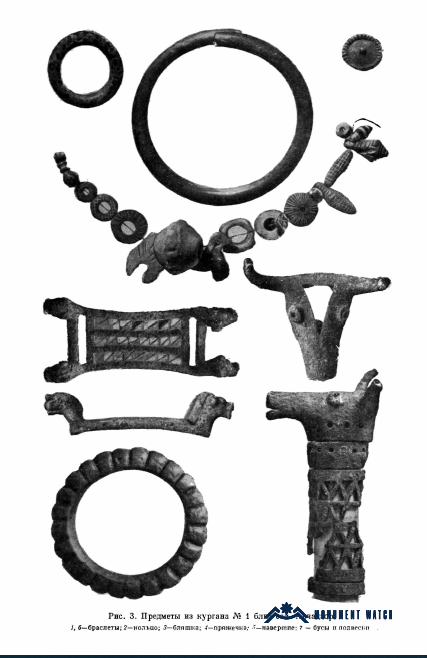
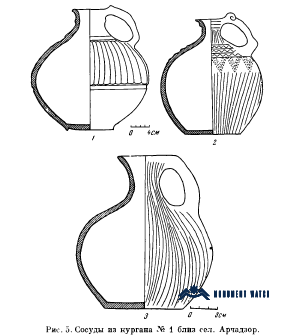
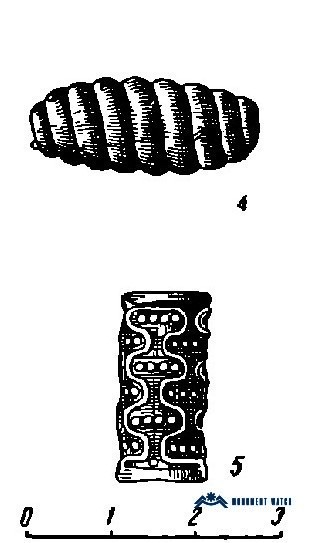
The principal deceased was placed in the southeastern part of the grave in a supine position, with the head adorned by a bronze diadem. Three accompanying individuals were interred in a seated position: the skeletons of two males were set in the south-western corner, and at the centre of the northern side. In contrast, the female skeleton was placed in the north-western corner. In the western sector of the tomb, 40 ceramic vessels were discovered, one of which was filled with obsidian arrowheads and another containing ash. In the eastern part were animal bones, bridles, and other components of horse gear. Additional finds included a narrow bronze sword; 40 bronze and 15 obsidian arrowheads; four bronze daggers; a large bronze sagaris (battle-axe); three bronze socketed spearheads; a bronze helmet; four bronze bits; and the finials of two bronze sceptres, among other items. Beyond the bronze artefacts, the burial yielded hundreds of carnelian beads, pendants, and ceramic vessels (Figs. 2-5).
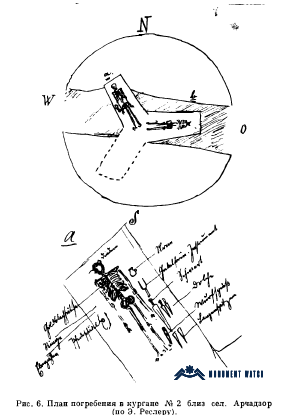
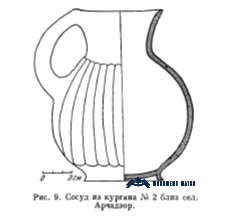
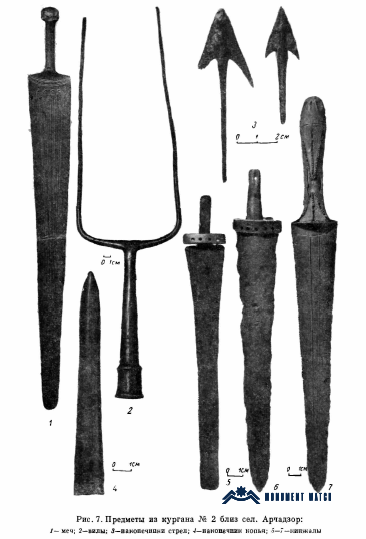
Barrow No. 2 (height 5.5 m; basal diameter ca. 16 m) contained, at a depth of 3 m, three graves of rectangular plan (each 1.2 m deep) arranged radially in three directions (Fig. 6). Only two were examined by E. Rössler. In each of the investigated graves, a single individual was laid in a supine position; in grave "b," the skeleton was recovered without the cranium. Grave goods were placed beside the bodies and comprised a bronze sword, a spearhead, bridles, daggers, knives, one narrow (tanged) spearhead, thirty bronze arrowheads, six obsidian arrowheads, a small hollow cylinder made of gold sheet, carnelian beads, and a small single-handled vessel (Figs. 7–9; Kushnareva 1957, 145).
On the right bank of the Khachenaget River, E. Rössler recorded eight burial mounds, five of which he excavated in 1897. Externally, the mounds are similar in form, but they differ in funerary rite: inhumation was practiced in Barrows 1–3, while cremation occurred in Barrows 4 and 5.
Barrow 1 (H: 2 m; D: 10 m) contained four individuals in a seated position; no grave goods were recovered.
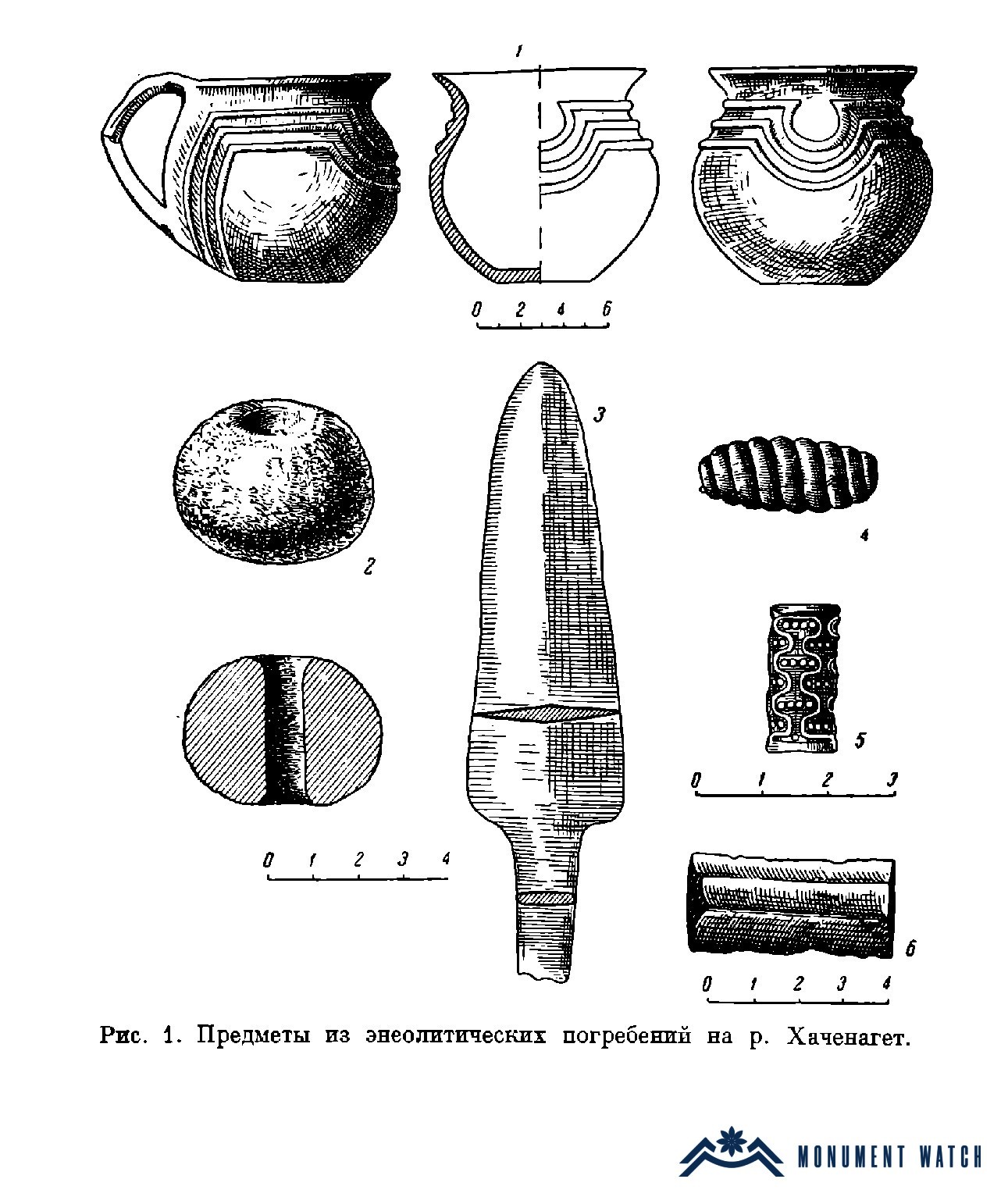
Barrow 2 (H: 1.25 m; D: 20–25 m) contained a single individual lying supine. Associated finds included a flat bronze dagger, a stone macehead, two obsidian blades, a small, single-handled, finely made vessel (Fig. 10), and gold ornaments.
Barrow No. 3 (H: 2.5 m; D: 18.5 m) is akin to Barrow No. 2 in external form and funerary rite, except that it contained two interments rather than one. The inventory comprised a flat bronze dagger blade; a barrel-shaped ornament fashioned from round-section bronze wire twisted into a nine-turn spiral and sheathed in gold leaf; and fragments of small vessels of gray ware.
Beneath the mound of Barrow No. 4 (H: 1.5 m; D: 20.2 m) lay a subsoil grave filled with ash and remains of charred bones. The sole find was a pear-shaped mace head made of granular tuffite.
Piotrovskii dated these barrows to the Chalcolithic (Eneolithic) period (Piotrovskii 1949, 39), a view shared by K. Kushnareva (Kushnareva 1954). In fact, they belong to the Early Bronze Age.
Bibliography
- IAK 1897 - The Imperial Archaeological Commission and the Study of the Monuments of the Caucasus and Ciscaucasia. In Imperial Archaeological Commission (1859–1917): The History of the First State Institution of Russian Archaeology from Its Foundation to the Reform: A Collective Monograph, vol. 2, chap. IX, St. Petersburg, 2019, pp. 968-977.
- Kushnareva 1954 - Kushnareva, K. “Monuments of the Copper Age of Nagorno-Karabakh.” Soviet Archaeology 20. Moscow, pp. 165-179.
- Kushnareva 1957 - Kushnareva, K. “Some Monuments of the Bronze Age in Nagorno-Karabakh.” Soviet Archaeology 27, pp. 135–137.
- Piotrovskii 1949 - Piotrovskii, B. Archaeology of Transcaucasia. Leningrad.
The Bronze Age Burials in the Khachenaget River Valley
Artsakh