The Surb Lusavorich Church of Kghartsi Village

Location

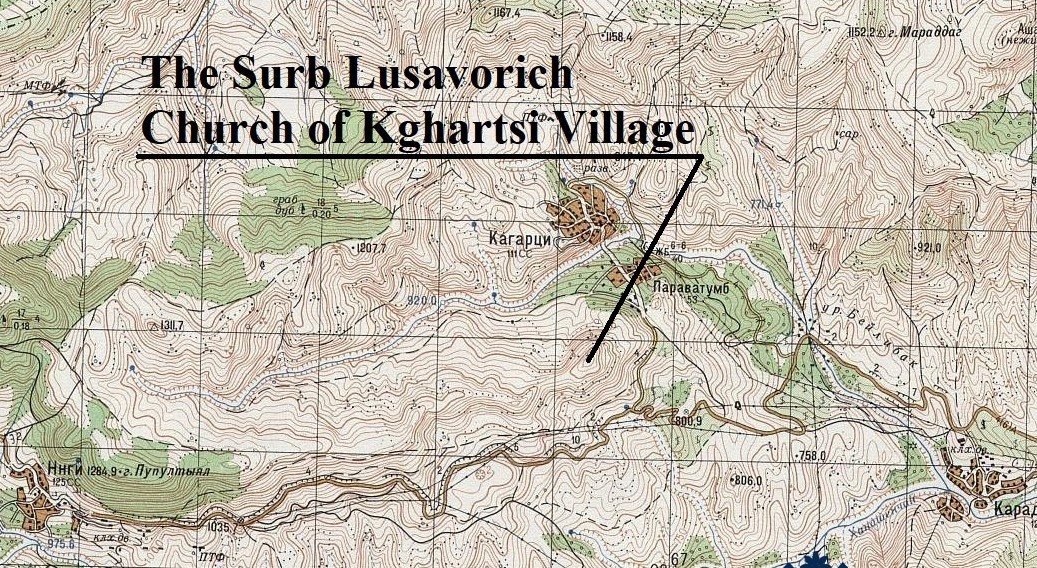
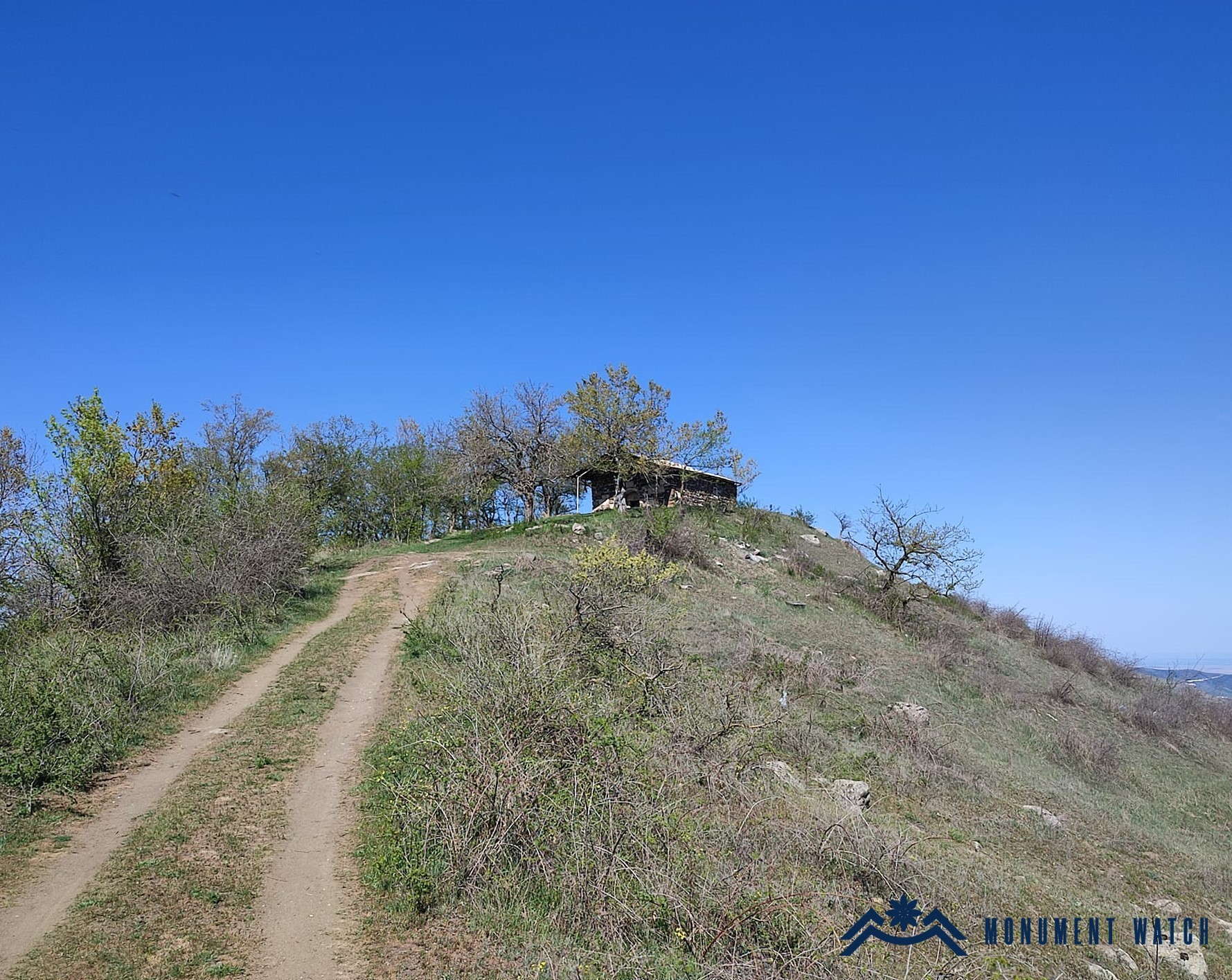
The monument is located 2 km southwest of Kghartsi village in the Martuni region of the Republic of Artsakh, on a height traditionally called "Lusavorchi Vank" (Monastery of the Illuminator) (fig. 1). Since 2023, it has been under Azerbaijani occupation.

Fig. 1. The Lusavorich Monastery. Photo by G. Sargsyan.

Historical Overview

The register of Kghartsi's immovable historical-cultural monuments includes 18 sites: the Targmanchats Vank (Monastery of the Holy Translators) church; the St. Matthew Chapel sacred site (see "Kghartsi Surb Matē Shrine — Monument Watch"); 13 khachkars; the "Karmir Kerch" necropolis dating to the 2nd–1st millennia BCE; the "Lusavorich" cemetery; and the "Lusavorich" church.

Written information about the Church of the Illuminator is scarce. M. Barkhutareants first mentioned it. Describing the "Surb Lusavorich" church, he writes: "On a high hill, almost at the end of the Tsarekh mountain range, a small ancient church of undressed, milky-white stone has been built. It is a place of pilgrimage. According to tradition, it was founded by Catholicos Grigoris I of Albania in the name of Saint Gregory the Illuminator. Over the centuries, it has been restored many times" (Barkhutareants 1895, 111).

Balayan, presenting the historical-architectural monuments of Kghartsi village, notes: "The monuments of historical-cultural significance of the community include the Lusavorich chapel (17th–18th centuries) … According to a legend preserved among the inhabitants of Kghartsi, the index finger of Saint Gregory the Illuminator is interred in the Lusavorich chapel" (Balayan 2020, 439).

On the feast commemorating Surb Grigor Lusavorich's Descent into the Pit—March 25, 2023—the Divine Liturgy was celebrated in the chapel for the first time (https://artsakhdiocese.am/contacts).

Architectural–Compositional Examination

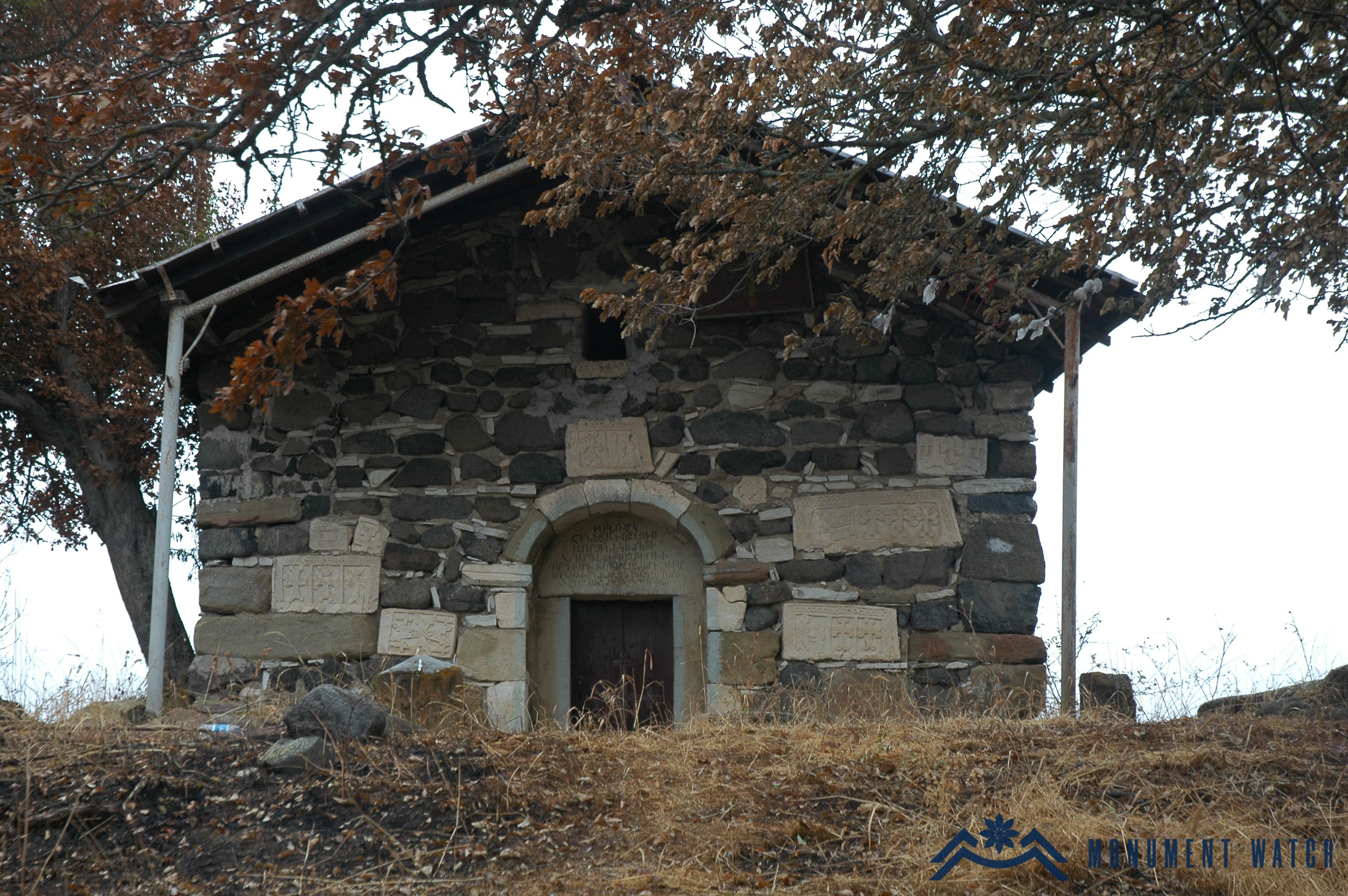
The church is a small, rectangular, vaulted hall. It has three windows. According to the construction inscription, it was built in 1811.

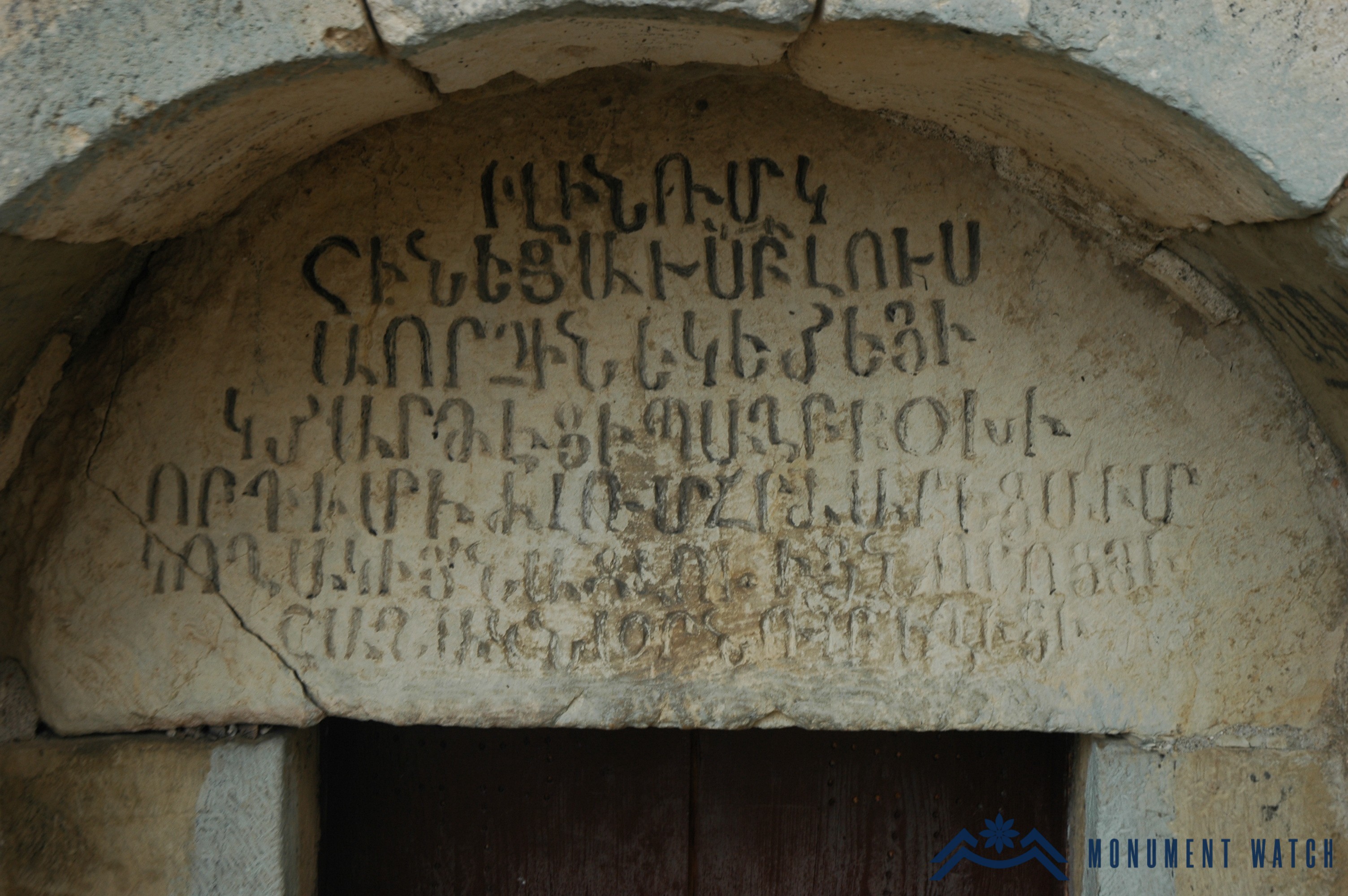
"In the year ՌՄԿ (1811), the Church of Saint Lusavorich was built by Mizhlum, a resident of Kghartsi, son of Pagi Koha. I renounced my wife Nazlu; in her memory … so be it." (Fig. 2)

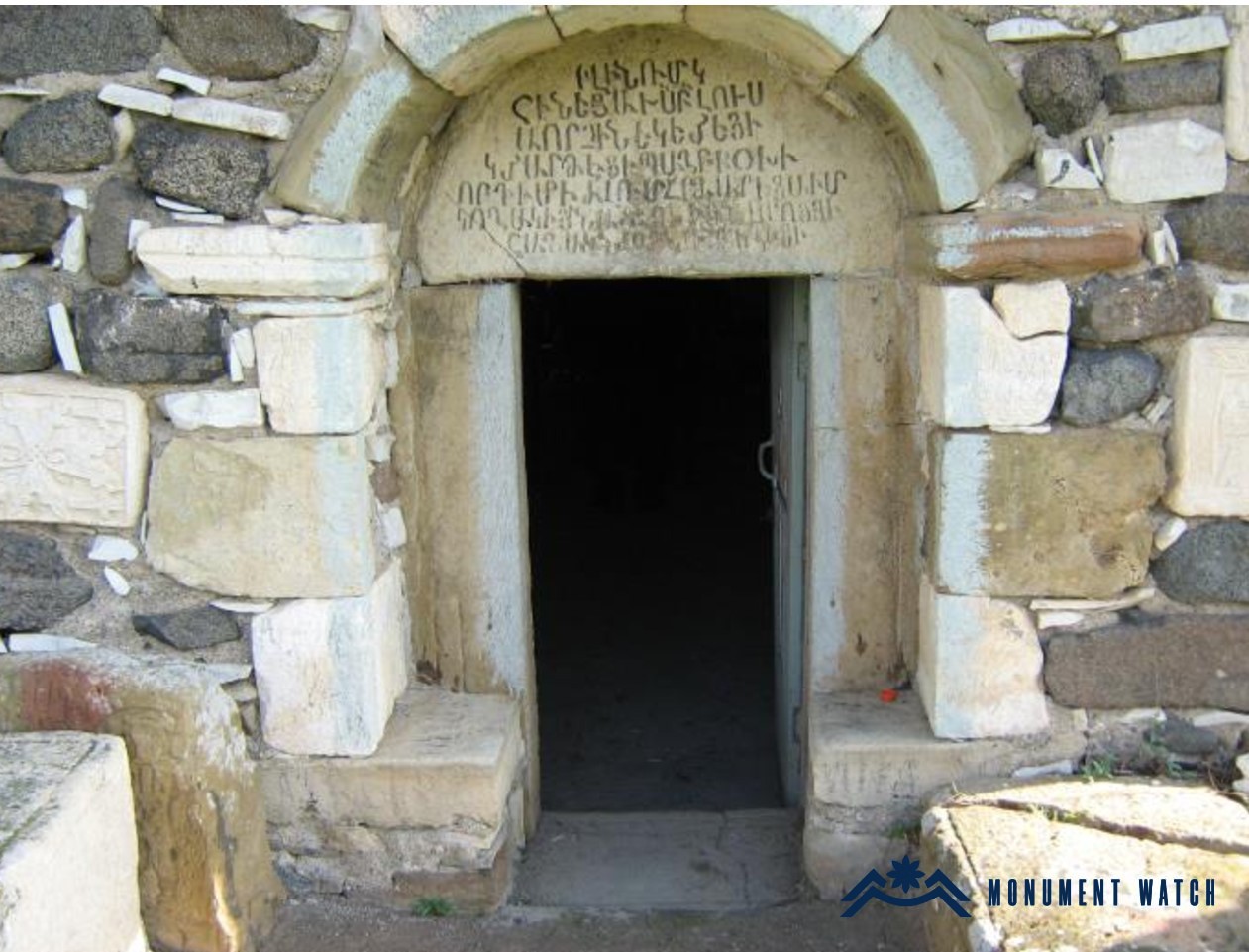
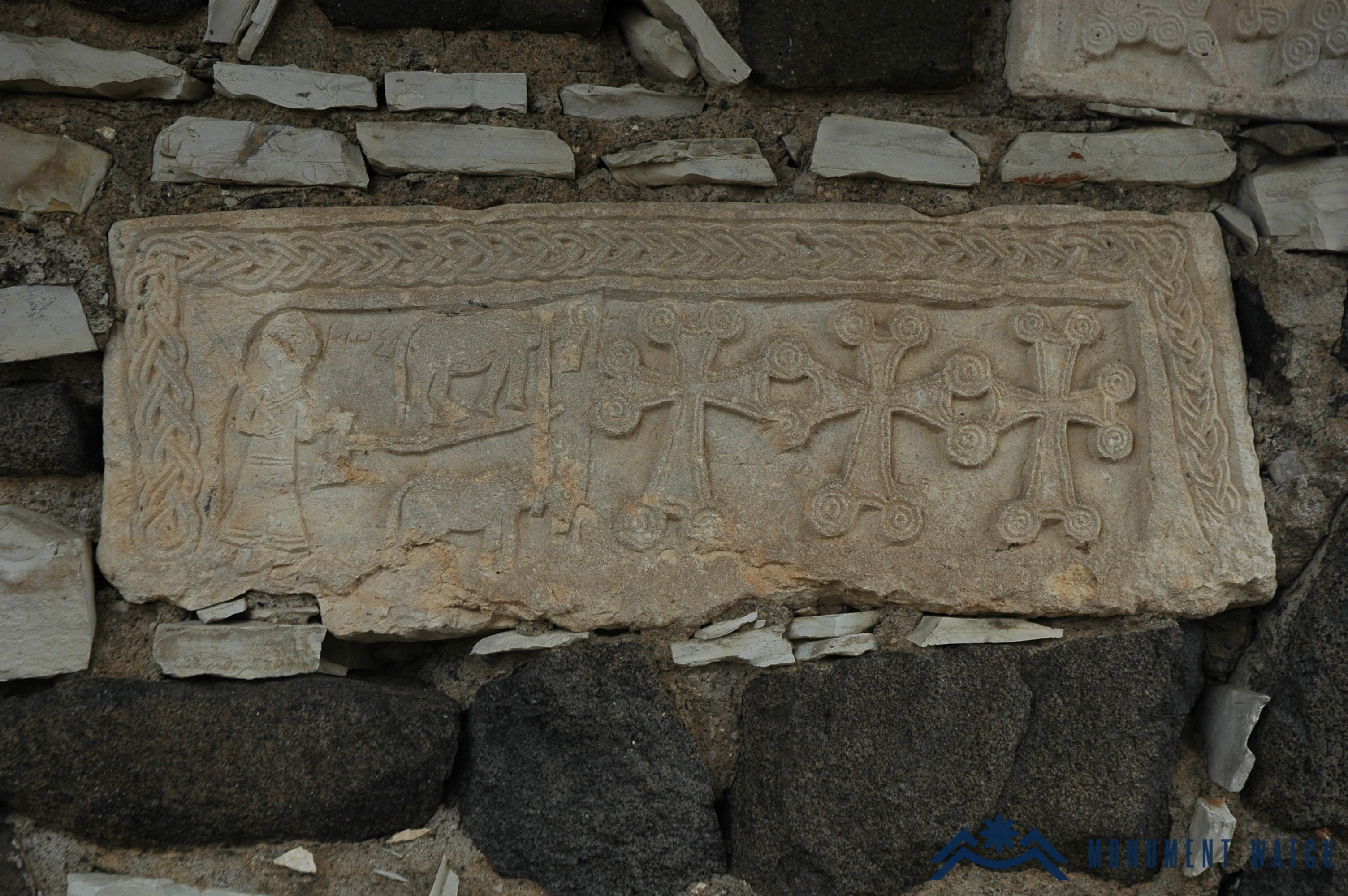
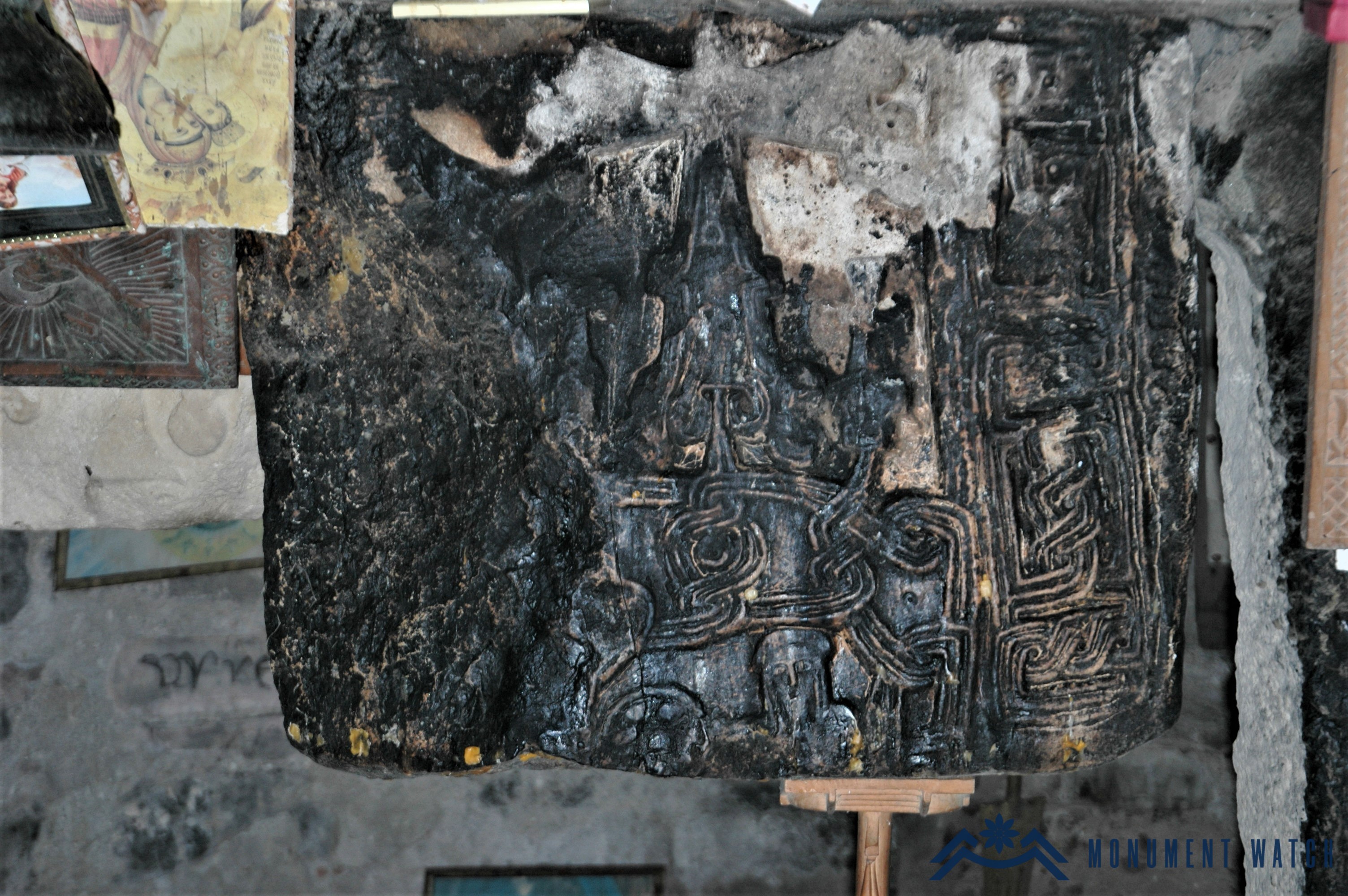
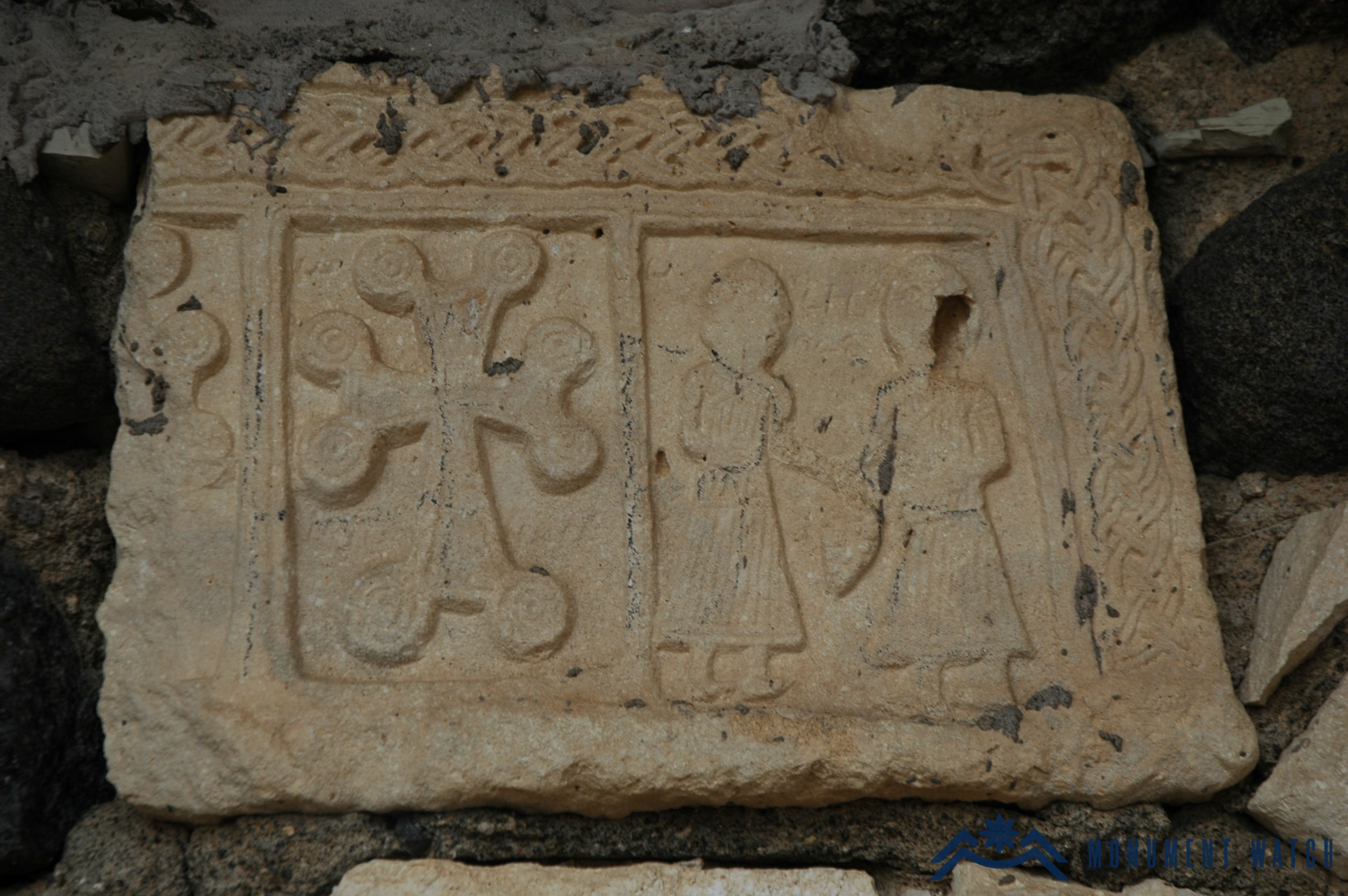
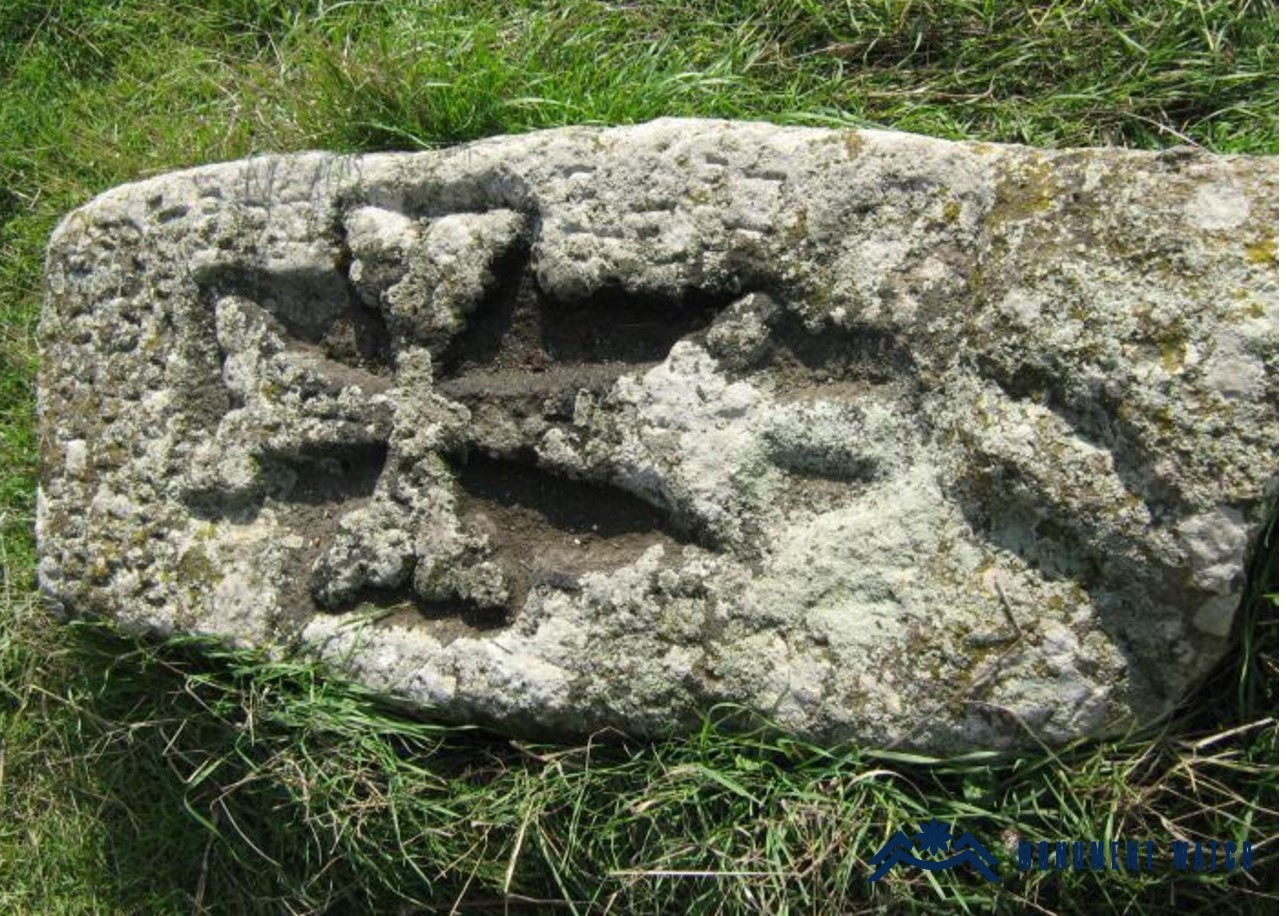
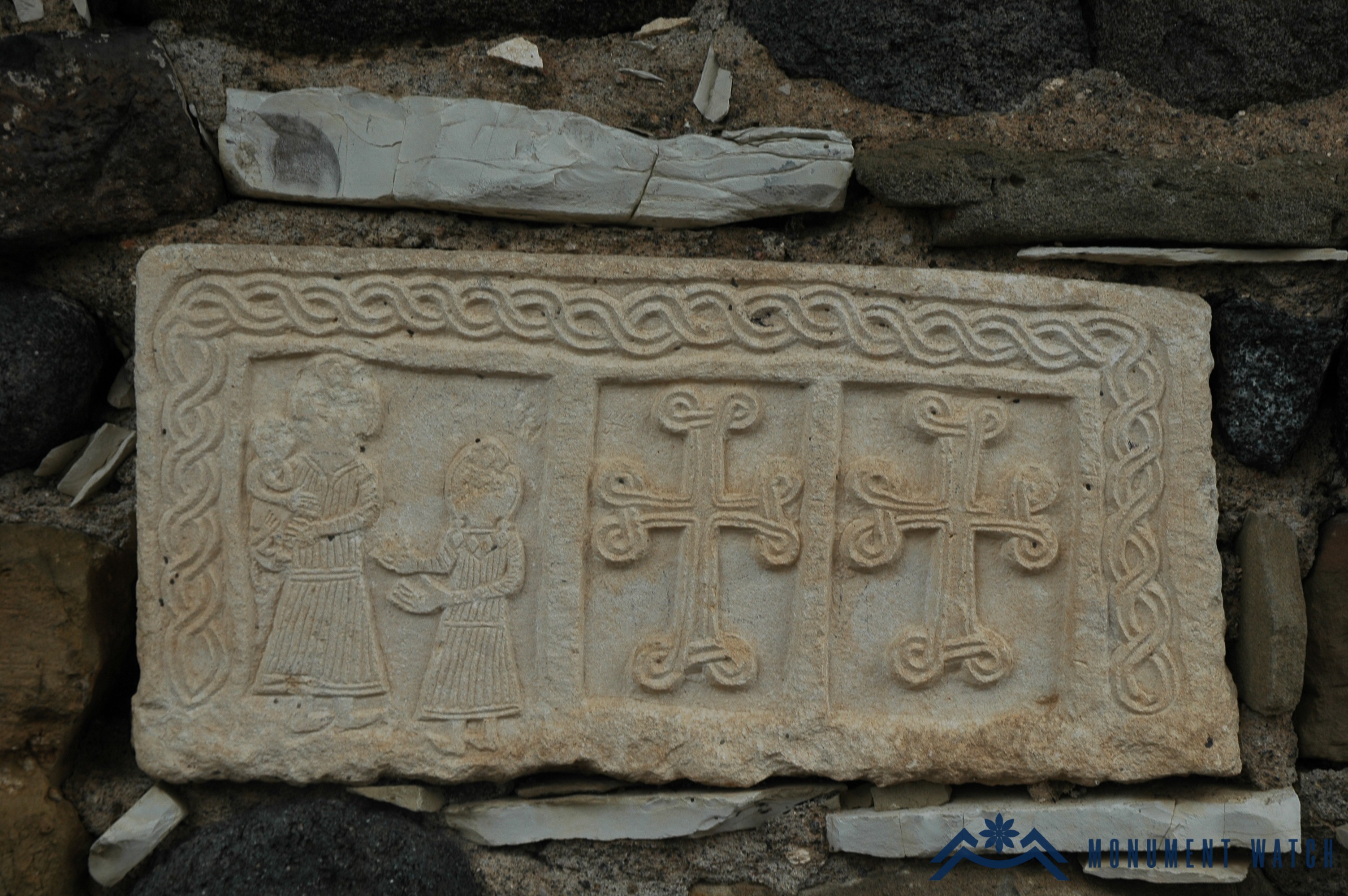
It appears that the church was constructed in memory of Mizhlum's late wife. It is built of black sandstone and incorporates khachkars and tombstones gathered from the surroundings (figs. 3–4). The entrance is from the west (fig. 5). A cemetery, the former village site, and several khachkars from various periods extend around it (figs. 6–7). Tombstones embedded as spolia in the church walls are of limestone and are characteristic of the 17th–18th centuries. Particularly noteworthy are their reliefs, which depict a plowing scene and "family portraits" (figs. 8–10).

The former village site spreads north—and partly northwest—of the church, covering about 2.5 ha. Trees and scrub surround house platforms and pits. The cemetery, which contains a single mausoleum on its lower, southwestern side, occupies 0.5 ha (5.       Certificate of the Ministry of Education, Science, Culture, and Sport of the Republic of Artsakh).

Fig. 2. The church lintel with a construction inscription. Photo by H. Petrosyan.

Fig. 5. The entrance of the church. Photo by G. Sargsyan.

Fig. 8. A 16th–17th-century tombstone with a plowing scene, embedded in the masonry of the western wall of the church. Photo by H. Petrosyan.

Fig. 3. The church from the west. Photo by H. Petrosyan.

Fig. 6. A fragment of a khachkar placed in the altar of the church. Photo by H. Petrosyan.

Fig. 9. A 16th–17th-century tombstone with a "family" scene, embedded in the masonry of the western wall of the church. Photo by H. Petrosyan.

Fig. 4. The church from the north. Photo by H. Petrosyan.

Fig. 7. Khachkars in the vicinity of the church. Photo by H. Petrosyan.

Fig. 10. A 16th–17th-century tombstone with a "family" scene, embedded in the masonry of the western wall of Surb Lusavorich Church. Photo by H. Petrosyan.

The Condition Before and After the War

The monument did not suffer damage during the Artsakh wars. No information is available about its current condition.

Bibliography

  1. Barkhutareants 1895 - Barkhutareants M., Artsakh, Baku.
  2. Balayan 2020 - Balayan V., Outlines of the History of the Settlements of Artsakh, Yerevan.
  3. Certificate of the Ministry of Education, Science, Culture, and Sport of the Republic of Artsakh.
  4. (https://artsakhdiocese.am/contacts) - “The Expected Liturgy at St. Gregory the Illuminator Chapel,” Diocese of Artsakh of the Armenian Apostolic Church.
The Surb Lusavorich Church of Kghartsi Village
Artsakh