The “Ptkes Berk” or “Srbi Dosh” Monastic Complex of Kavahan (Ghavakhan) Village

Location

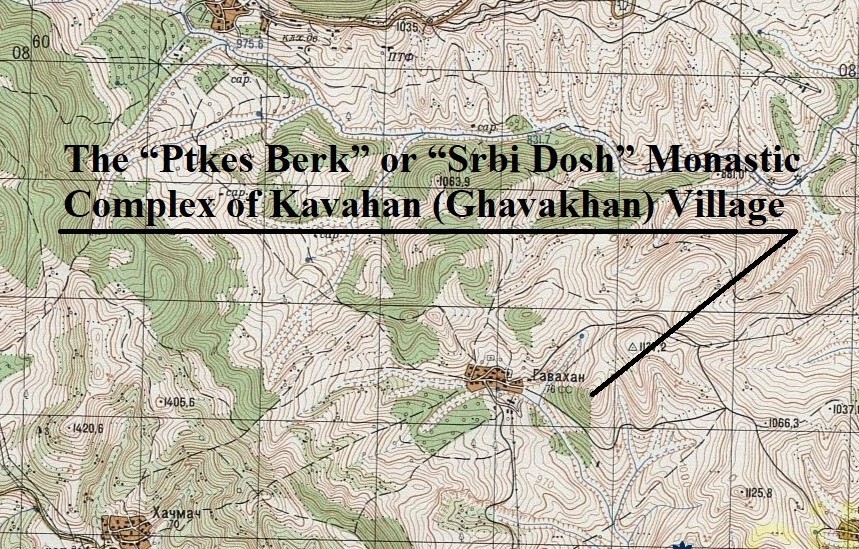
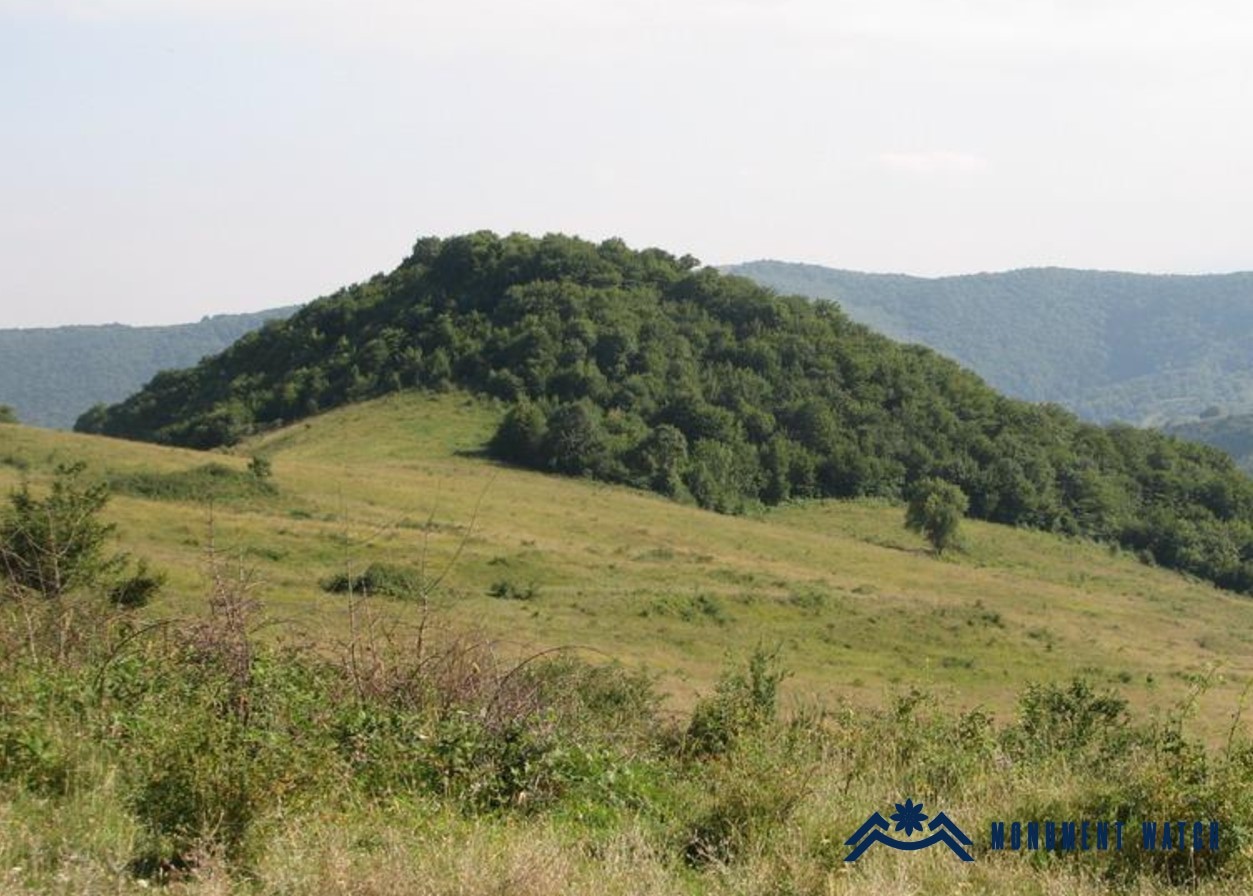
The monument is situated 0.7 km east of the village of Ghavakhan (Kavahan) in the Martuni region of the Republic of Artsakh, on the summit of a high, conical, forested hill (Fig. 1).

Since 2023, it has been under forcible occupation by Azerbaijan.


Fig. 1. The general view of the hill known as "Srbi Dosh". Photo by G. Sargsyan.

Historical Overview

Kavahan's register of immovable historical and cultural monuments includes 21 sites, one of which is the "Ptkes Berk" or "Srbi Dosh" monastic complex.

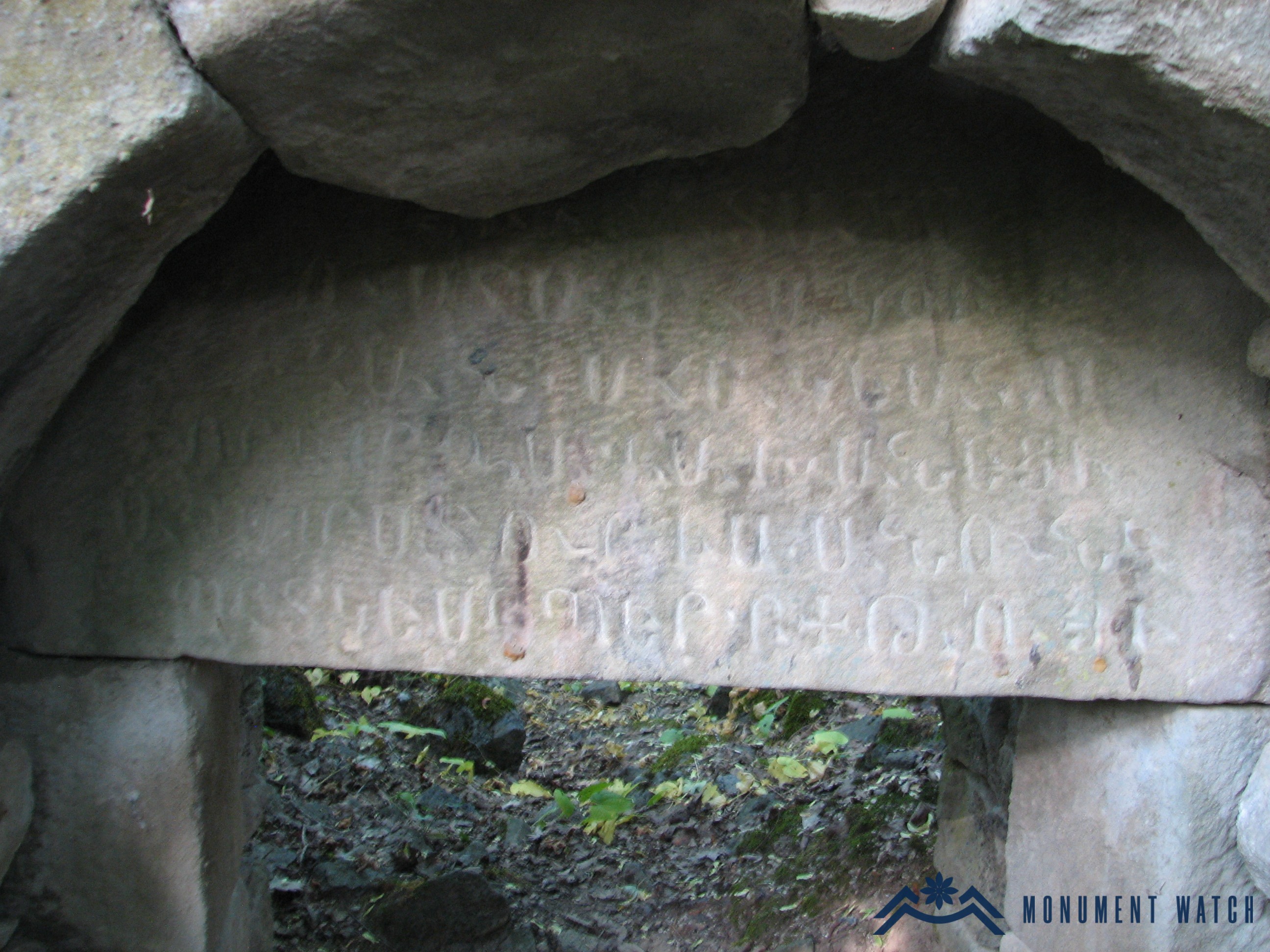
No precise historical written data about the monument has been preserved. According to the inscription on the church entrance lintel, it was rebuilt in 1861.

According to Sh. Mkrtchyan, the chapel has been known since the 13th century (Мкртчян 1989, 124). V. Balayan repeats the same information (Balayan 2021, 458). In both works, the monument is presented as the "Ptkes Berk" chapel.

Architectural-compositional examination

The "Ptkes Berk" or "Srbi Dosh" is a 17th–19th-century complex occupying an area of 1.3 hectares.

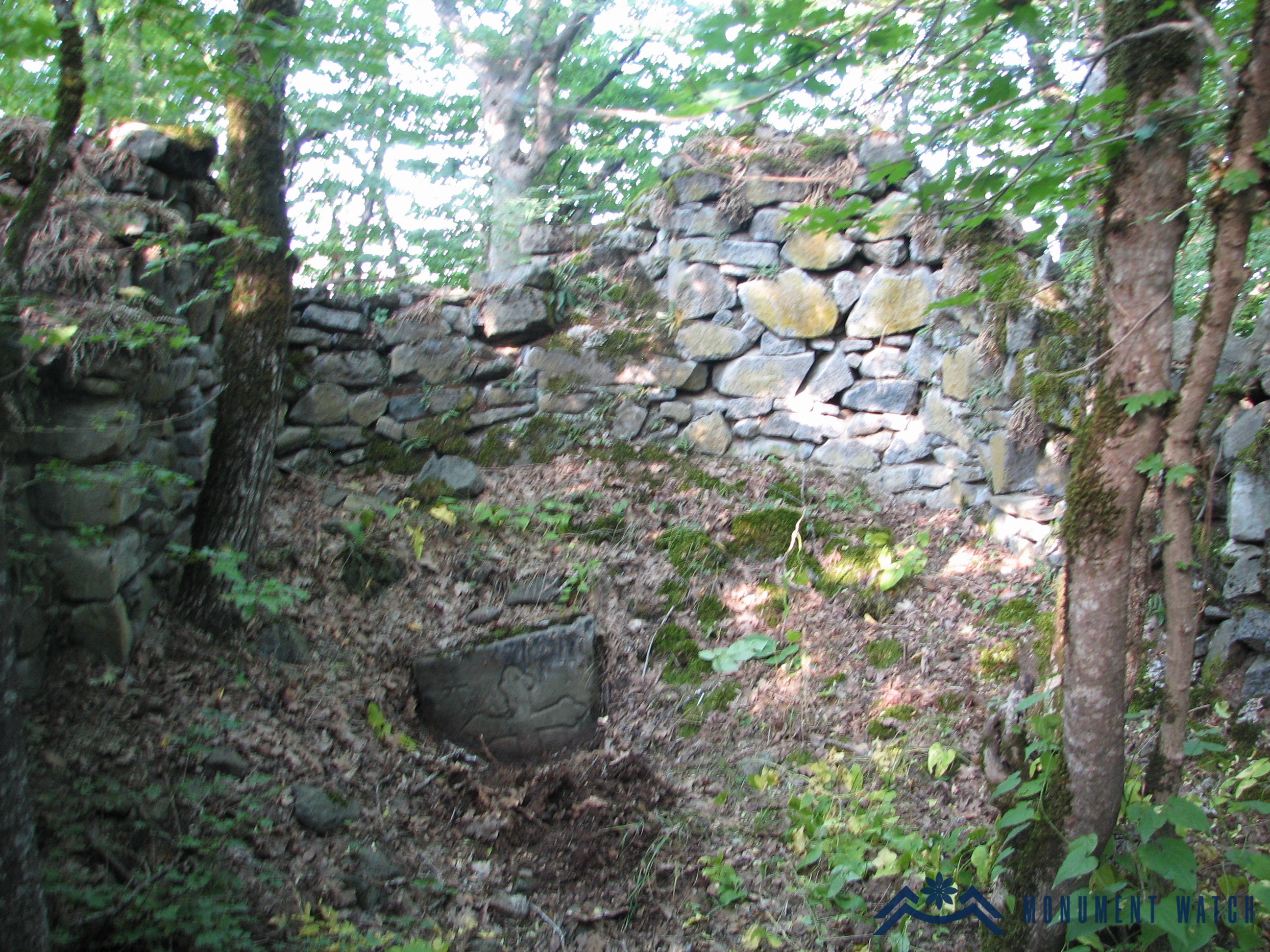
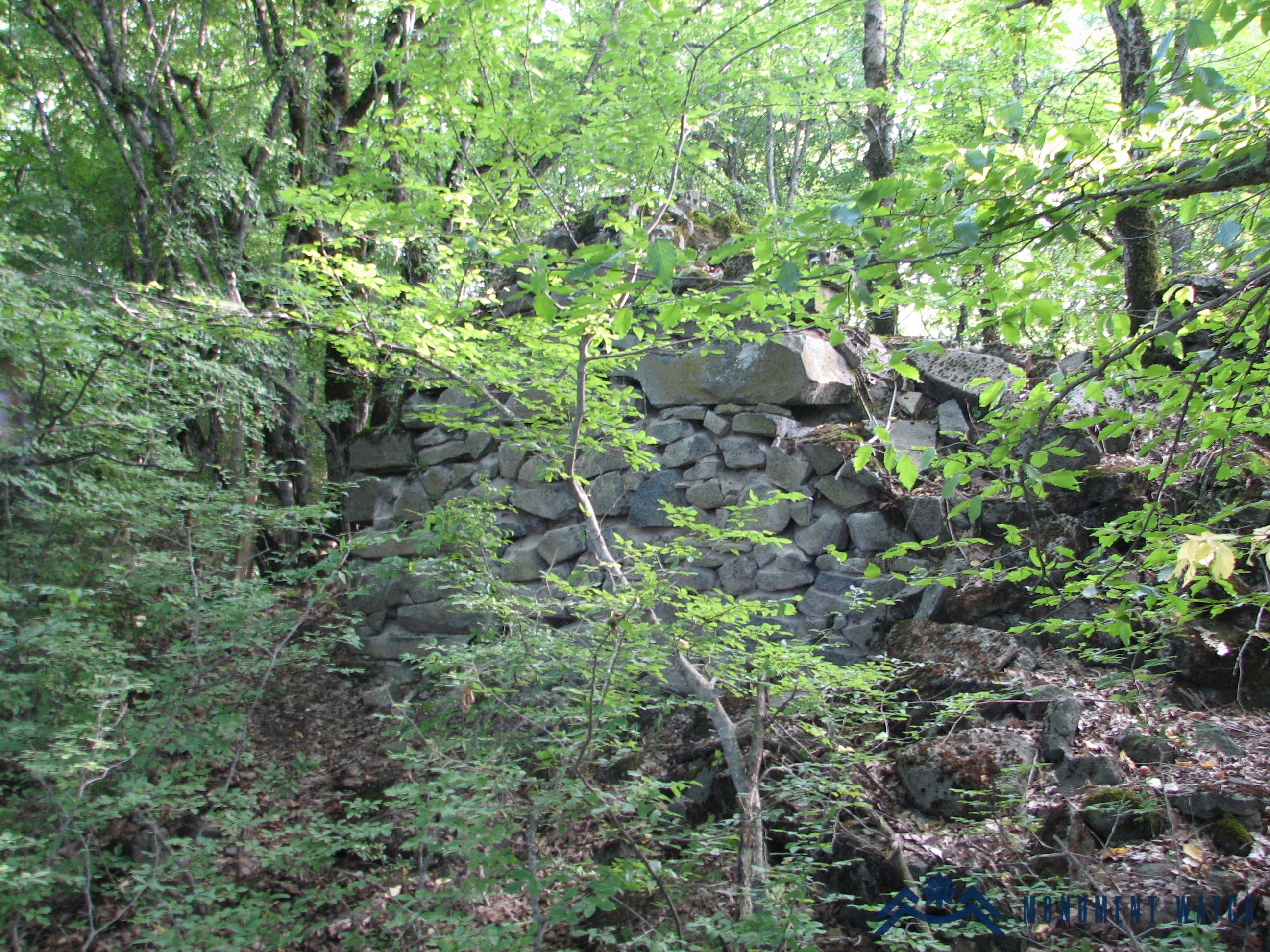
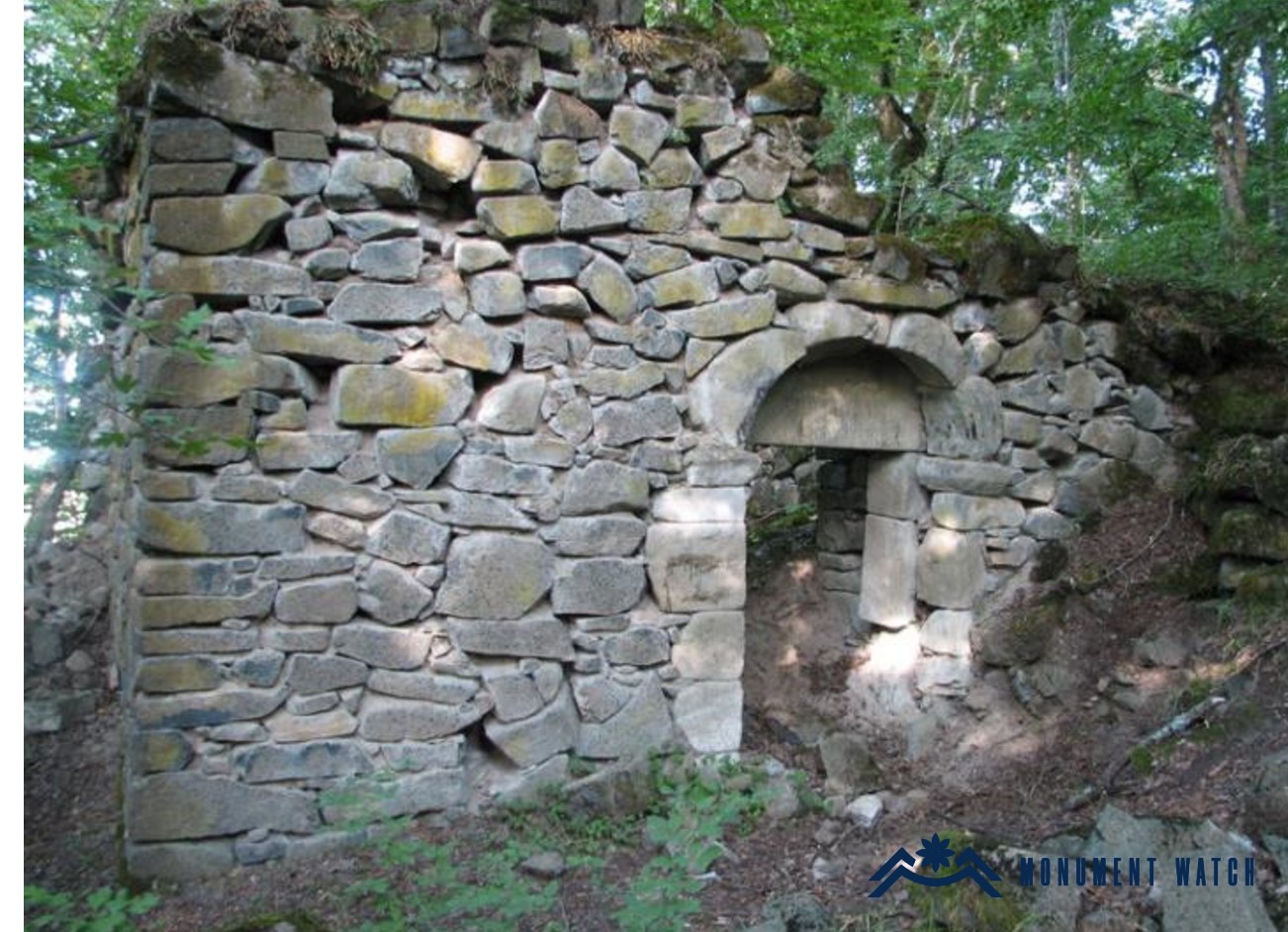
The monument stands on the summit of a high, conical, forested hill. At the center of the complex, in a semi-ruined state, is a single-nave church with a semicircular apse (length 6.3 m, width 3.1 m, height 2.5 m; Fig. 2). Opposite the church's only western entrance, the rectangular floor plan of the former gavit (narthex) can be traced. A perimeter wall once enclosed all of this, the remains of which are visible in fragments, most clearly on the western side (Fig. 3), where the outlines of two gates flanking the towers that formed the enclosure's entrance can be seen.

Fig. 2. The interior of the "Ptkes Berk" church. Photo by G. Sargsyan.

Fig. 3. The remains of the enclosing wall. Photo by L. Hovhannisyan.

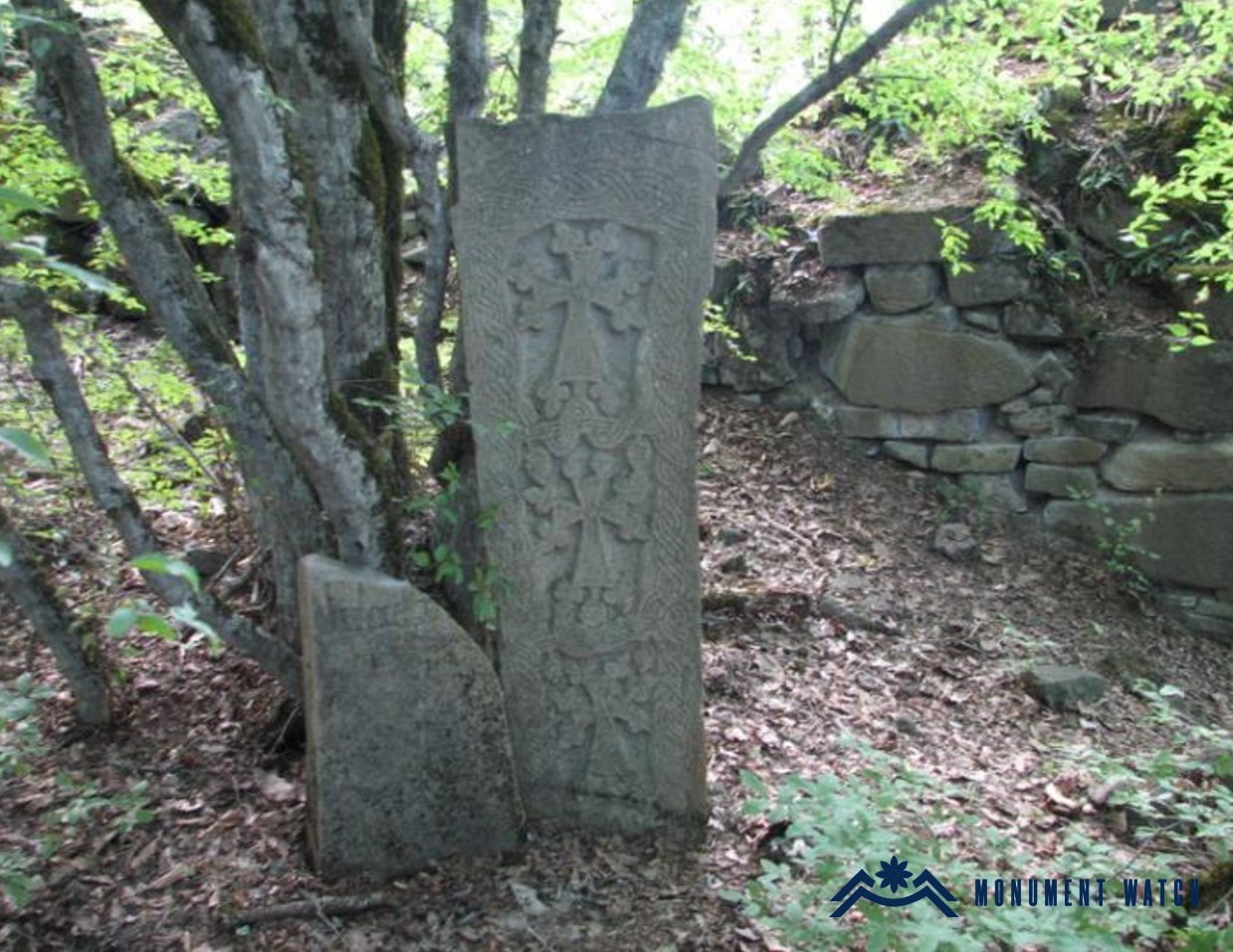
On the entrance lintel, the 1861 construction inscription has been preserved (Figs. 4, 5). On the northern side, tombstones and khachkars from an old cemetery are visible (certificate of the Ministry of Education, Science, Culture, and Sports of Artsakh). Of particular importance is a khachkar dated to the 12th–13th centuries, where three khachkar compositions are carved one above the other on the longitudinal slab (Fig. 6). Outside the enclosure wall, to the northwest, lie multi-tier artificial terraces showing traces of former dwellings.

Fig. 4. The "Ptkes Berk" church from the west. Photo by G. Sargsyan.

Fig. 5. The entrance lintel of the church. Photo by L. Hovhannisyan.

Fig. 6. A khachkar preserved from the old cemetery. Photo by G. Sargsyan.

The Condition Before and After the War

There is no information about the monument's current condition.

Bibliography

  1. Mkrtchyan 1989 - Mkrtchyan Sh., Historical and Architectural Monuments of Nagorno-Karabakh, Yerevan.
  2. Balayan 2021 - Balayan V., Outlines of the History of the Settlements of Artsakh, Yerevan.
  3. The Certificate of the Ministry of Education, Science, Culture, and Sports of Artsakh.
The “Ptkes Berk” or “Srbi Dosh” Monastic Complex of Kavahan (Ghavakhan) Village
Artsakh