The Late Bronze Age Burial Mounds of the Khachenaget Valley
Location
The burial mounds were located in the Martakert District of the Republic of Artsakh, between the villages of Aravadzor, Kolatak, Tbghlu, and Vank, on both the right and left banks of the Khachen River. Since 2023, the area has been under the control of Azerbaijan.
Historical overview
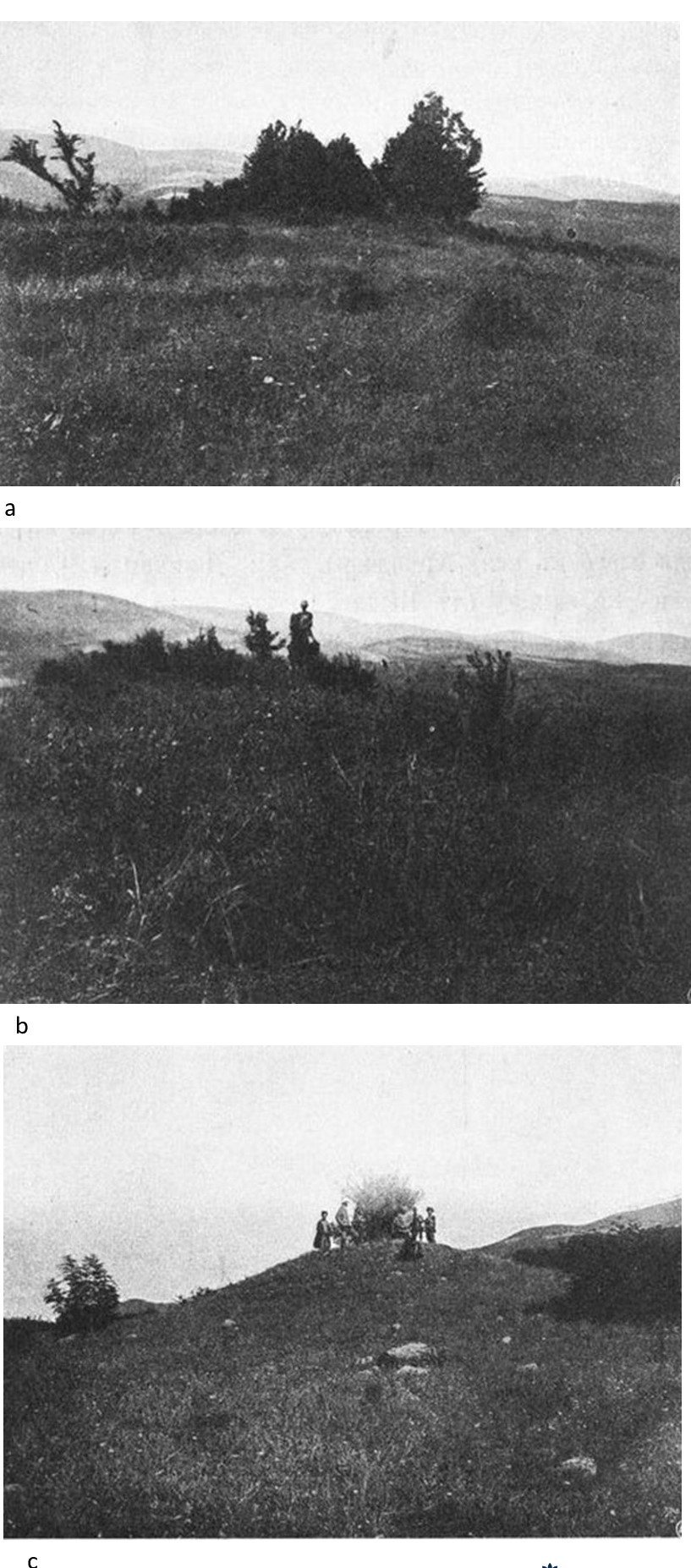
The most detailed information on this group of monuments has been preserved in the work of A. Ivanovsky (Ivanovsky 1911, 143–151).
Archaeological research
In the 1880s–1890s, Woldemar Belck (a chemist at the Getabek copper-smelting plant) and Emil Rösler (a teacher at the Shushi Realschule) carried out archaeological investigations in the Elizavetpol Governorate (Belck in Getabek, Rösler in Karabakh). Following the publication of the materials collected by Belck and Rösler in German scholarly periodicals, particularly in Verhandlungen der Berliner Gesellschaft für Anthropologie, Ethnologie und Urgeschichte, the Imperial Moscow Archaeological Society sent its member, A. Ivanovsky, to the Elizavetpol Governorate in 1896 to conduct archaeological research. The primary objective of the investigation was to excavate burials in the province and clarify their cultural affiliation. In Aravadzor, Ivanovsky intended to excavate burial mounds located on lands belonging to the estate owner M. Dolukhanov, but abandoned this plan because of the high fee demanded by the latter for each mound.
During his survey of the surrounding area, Ivanovsky established that small, isolated burial mounds were scattered across the communal lands between Aravadzor, Vank, Kolatak, and Tbghlu, five of which were excavated (Ivanovsky 1911, 143).
Burial mound no. 78, by Ivanovsky's numbering, was about 1.5–2 km from Tbghlu village, in the upper course of the river sharing its name, a right tributary of the Khachen River. A stone cist lay beneath washed-down earthen fill, uncovered at 166 cm depth. Two adjoining slabs covered the upper part of the cist, which measured 280 cm by 125 cm by 135 cm. Its long axis stretched from north-west to south-east. The south-western long wall used six large slabs, the north-eastern wall five. The north-western short wall also had five smaller slabs, and the south-eastern had three. Loose earth and fieldstones filled the entire grave.
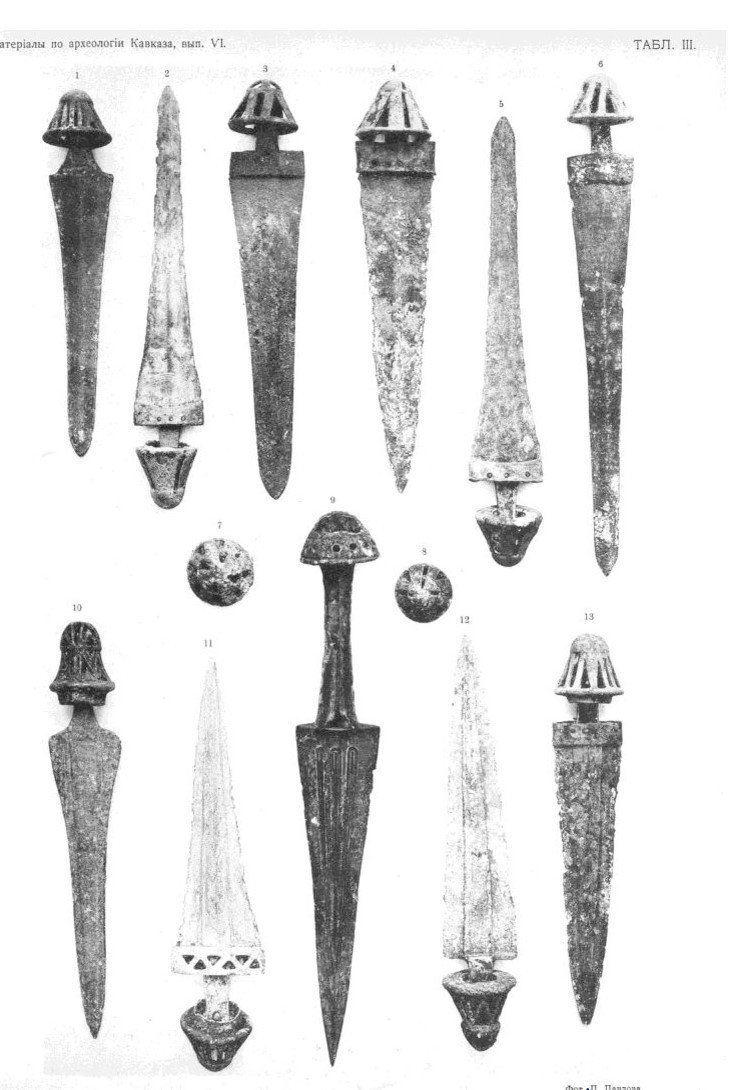
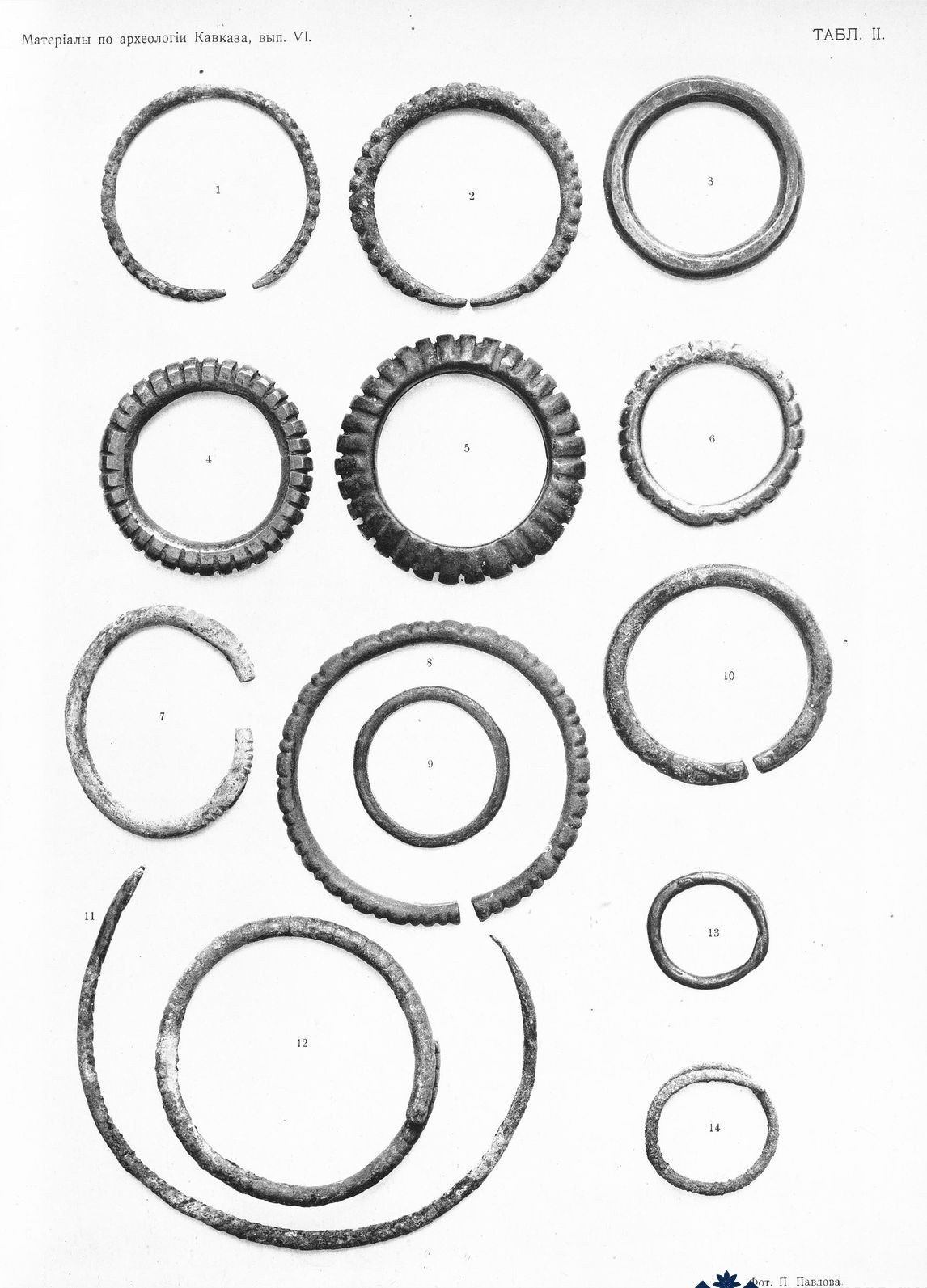
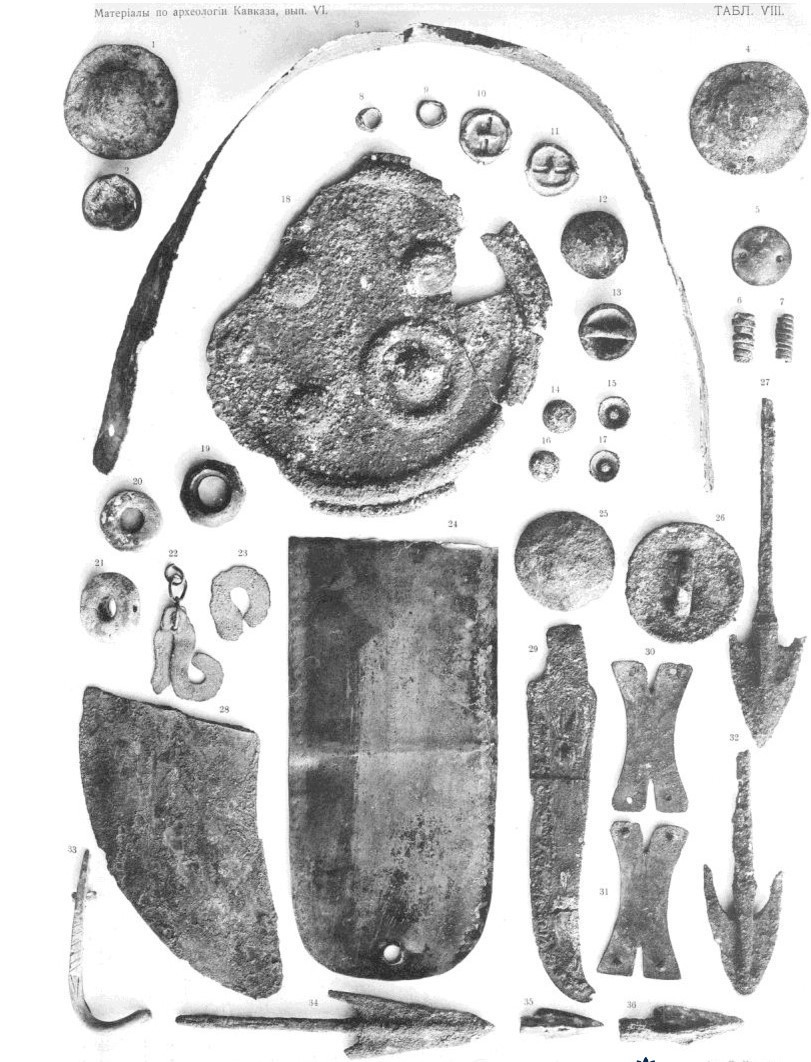
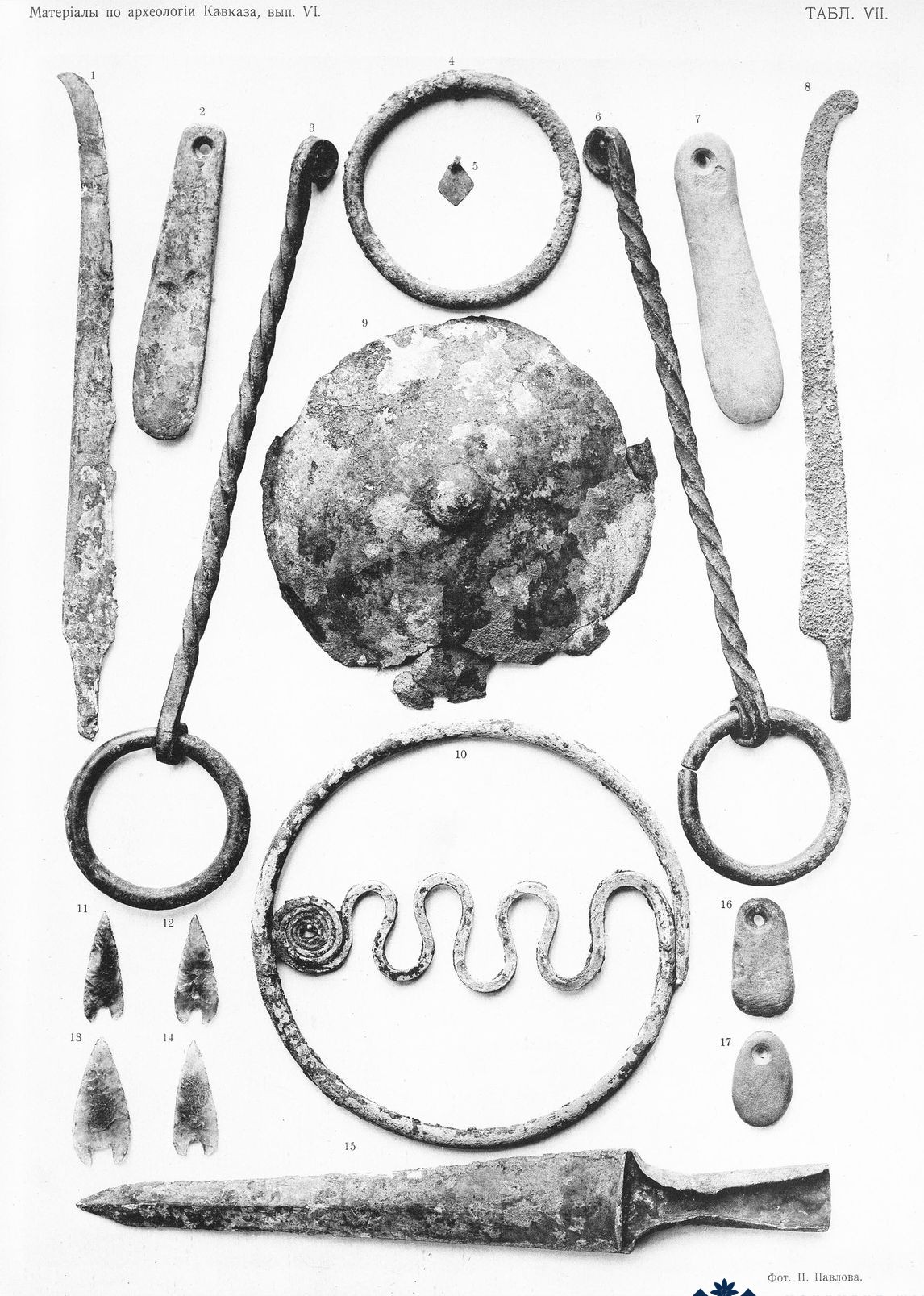
The deceased had been buried in a seated position, facing south-east. Traces of metal oxidation on the frontal and temporal bones of the skull indicate the presence of a headdress adorned with bronze ornaments. The grave goods consisted of broken ceramic vessels. Intact were only a small black-clay cup (height 3.6 cm, rim diameter 10.5 cm, base diameter 4.2 cm), a bronze dagger (length 32.0 cm), small fragments of a bronze knife, a massive bronze bracelet with deeply serrated edges, 15 arrowheads (9 obsidian and 6 jasper), more than one hundred carnelian beads, and 23 marine shells belonging to the Gastropoda group (Ivanovsky 1911, 143–145).
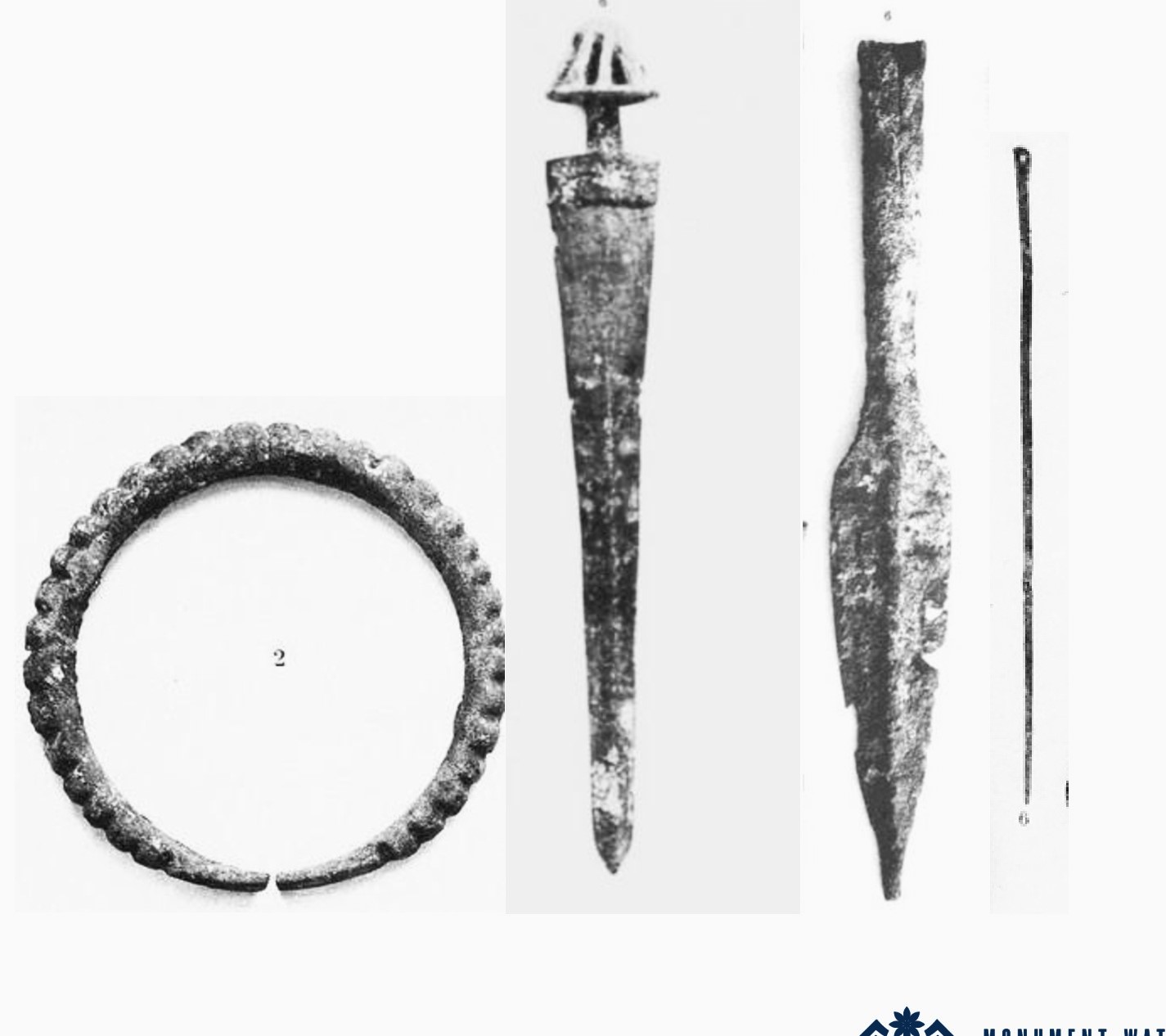
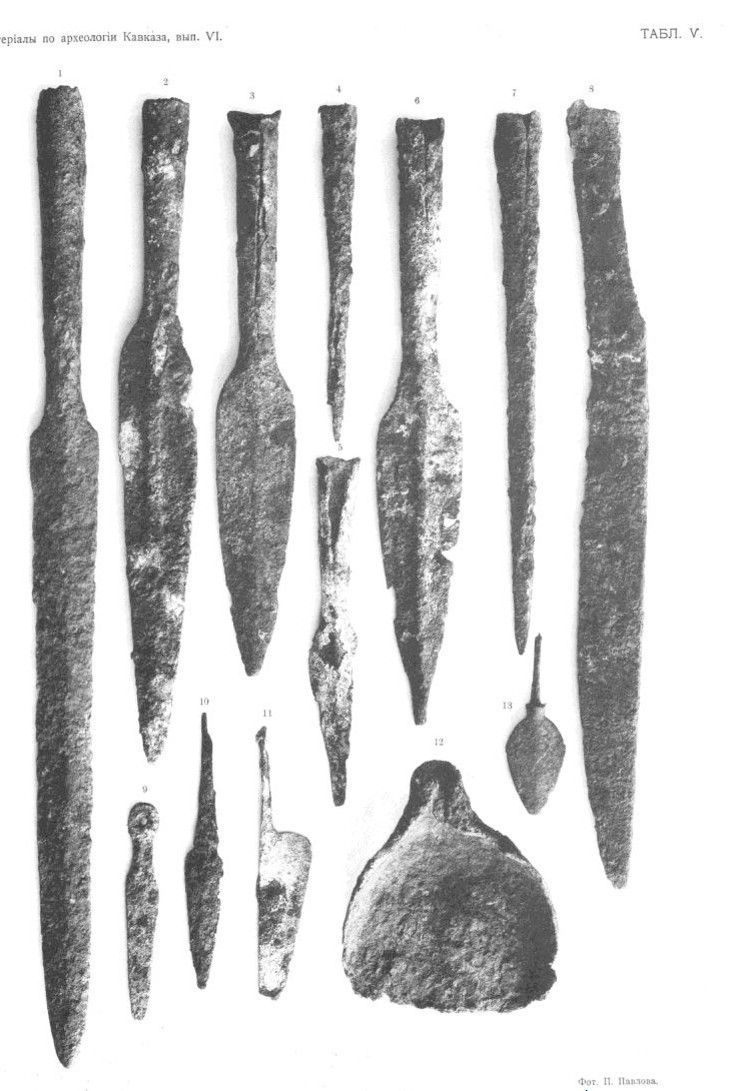
Burial mound no. 79 lay 20–30 m to the south-west of the previous one. The dimensions of the mound were not recorded. At a depth of 230 cm, a stone cist was uncovered, covered from above by three thick, roughly dressed slabs that did not fit together closely (length 260 cm, width 130 cm, depth 140 cm). Its orientation was north-east. The long walls were built of six slabs, and the short walls of four. The deceased had been buried in an extended position, facing east. Near the eastern wall, at the level of the feet, semi-decayed dog bones were found. The grave goods included a bronze dagger, a massive bronze bracelet with grooves on its outer surface, a thick bronze pin, an iron spearhead, small spherical and cylindrical carnelian beads, and 50 shells belonging to the class Scaphopoda (Ivanovsky 1911, 145–146).
At a distance of 18 m west of the preceding burial mound, burial mound no. 80 was excavated. It proved to be a cenotaph: no burial was found beneath the artificial mound fill (Ivanovsky 1911, 146).
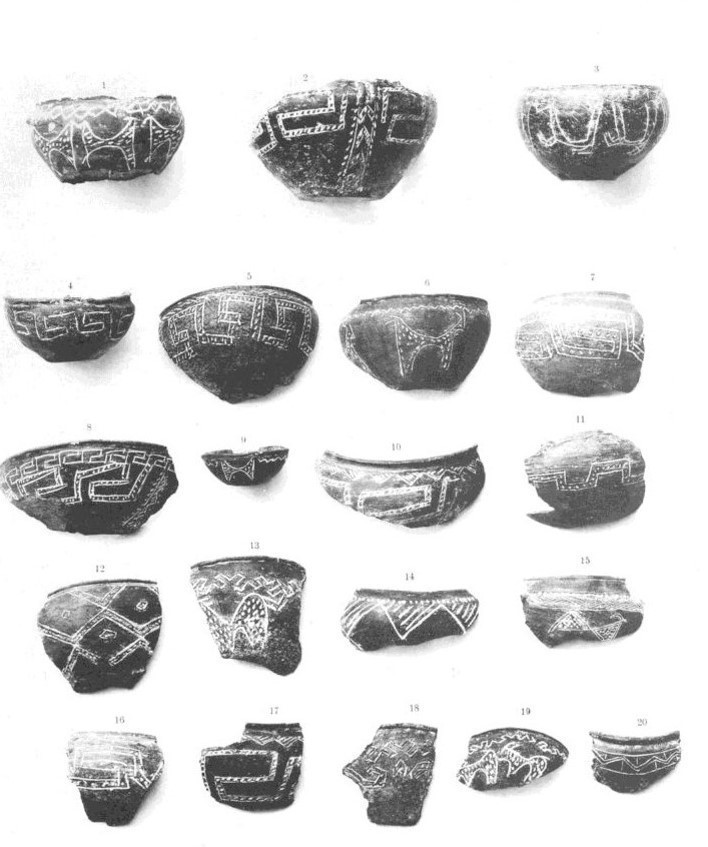
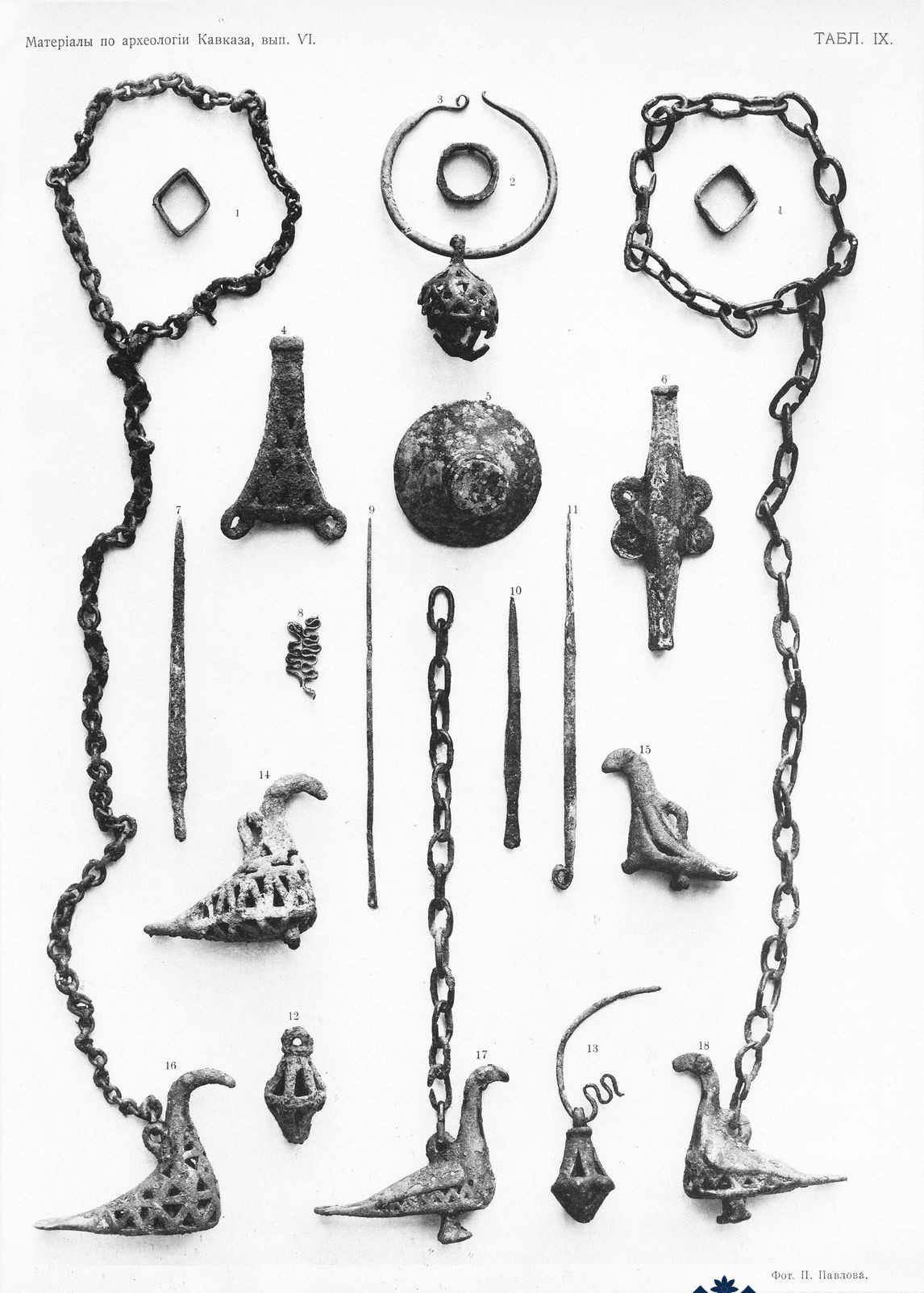
About 1 km south-west of the village of Kolatak, on the left bank of the Kolatak River, a tributary of the Khachen, another burial mound (no. 81) was excavated, with a basal circumference of 40 m. The stone cist, covered above by three slabs that did not fit closely together, was uncovered at a depth of 2 m. Its orientation was north-west to south-east. The long walls were built of six slabs, and the short walls of five. The cist measured 300 cm in length, 135 cm in width, and 140 cm in depth. The entire cist was filled with loose soil, while the floor was covered with fieldstones. All ceramic vessels were found broken; their sherds bore various ornaments, including meanders and animal motifs. The skeleton was half decomposed. The cranial bones were found near the north-north-western wall. Judging from the oxidation traces preserved on the skull bones, the deceased wore some kind of metal adornment on the head, which included large bronze buttons (18 examples were found). In the area occupied by the skeleton, more than one hundred beads of various shapes made of carnelian and agate, as well as around fifty shells, were found. Among the bronze objects were a dagger, two bracelets (diameter 5.7 cm), and a quadrangular awl. In addition to the bronze finds, three iron objects were recovered: a dart, spearheads, and a small knife (Ivanovsky 1911, 146–147).
Burial mound no. 82 was located south-east of the village of Vank. It had a circumference of about 35 m. The mound fill consisted of local soil and fieldstones. The stone cist, covered by two slabs, was uncovered at a depth of about 3 m. Its dimensions were: length 200 cm, width 100 cm, depth 130 cm; its orientation was west–east. All ceramic vessels were found broken. The deceased had been buried in a seated position, facing east. Compared with the other burial mounds, this grave is distinguished by its relatively poor inventory. The finds included several dozen carnelian beads, a bronze dagger, a massive bronze bracelet with a flat surface, two thin flat bronze rings, one stone pendant with a perforation, and six small obsidian arrowheads (Ivanovsky 1911, 147).
As a result of his study of the burial mounds and stone cists, Ivanovsky concluded that the excavations carried out in the Khachen River basin confirmed W. Belck’s opinion that the builders of these burials “belonged to the same people and had the same customs and practices.”
The structure of the burial mounds, the form of the stone cists, and the assemblage of grave goods make it possible to date these monuments to the Late Bronze Age.
Bibliography
- Ivanovsky 1911 - Ivanovsky A., Across Transcaucasia: Archaeological Observations and Research of 1893, 1894, and 1896 // Materials on the Archaeology of the Caucasus Collected by the Expeditions of the Moscow Archaeological Society, Moscow, issue VI, pp. 85–185.
- Asryan 1999 - Asryan Yu., Nagorno-Karabakh in the Late Bronze Age and Early Iron Age (2nd–1st Millennium BCE), Stepanakert.
Խաչենագետի հովտի ուշ բրոնզե դարի դամբարանները
Արցախ