The Surb Stepanos Church of Rev

Location

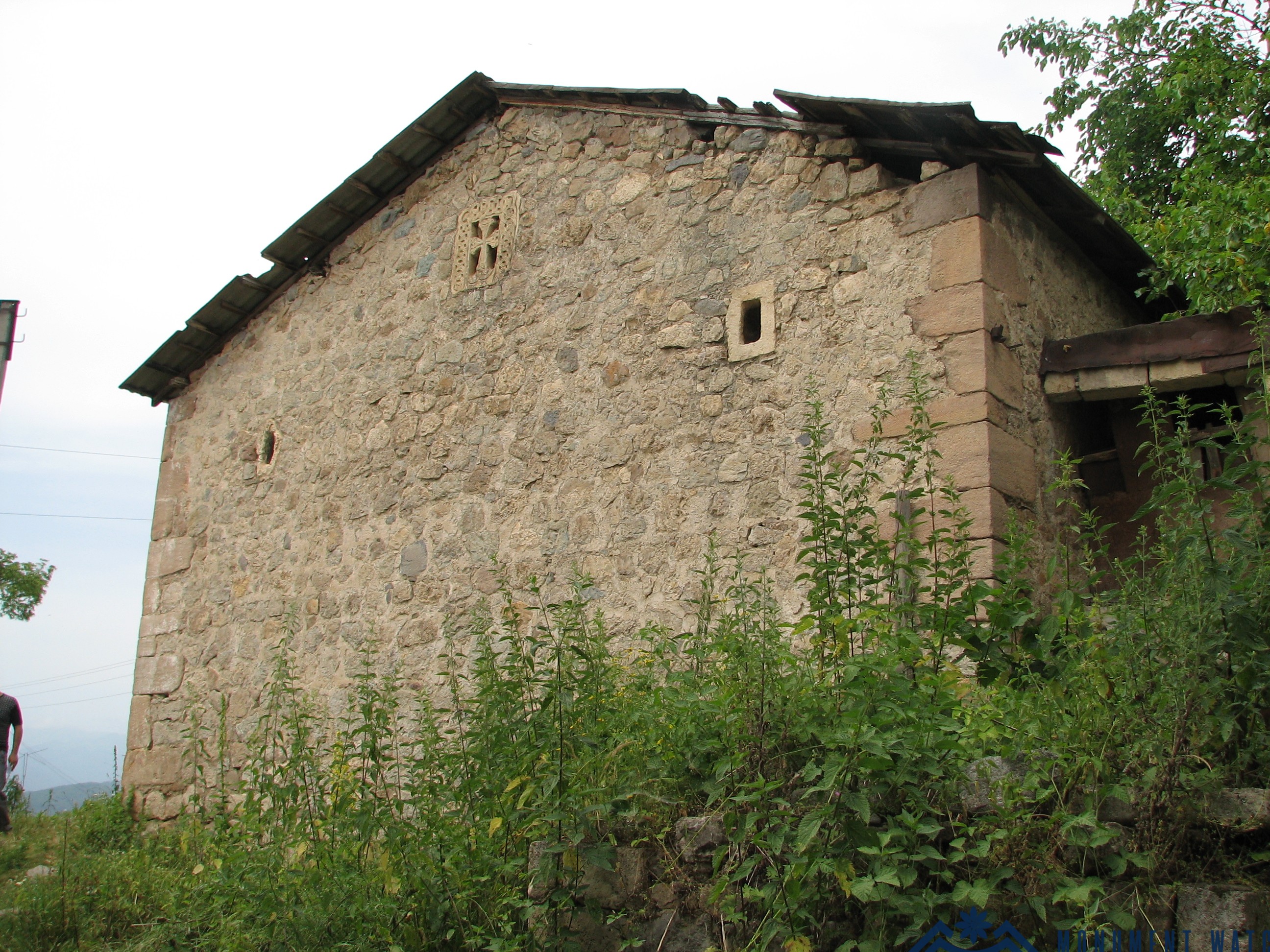
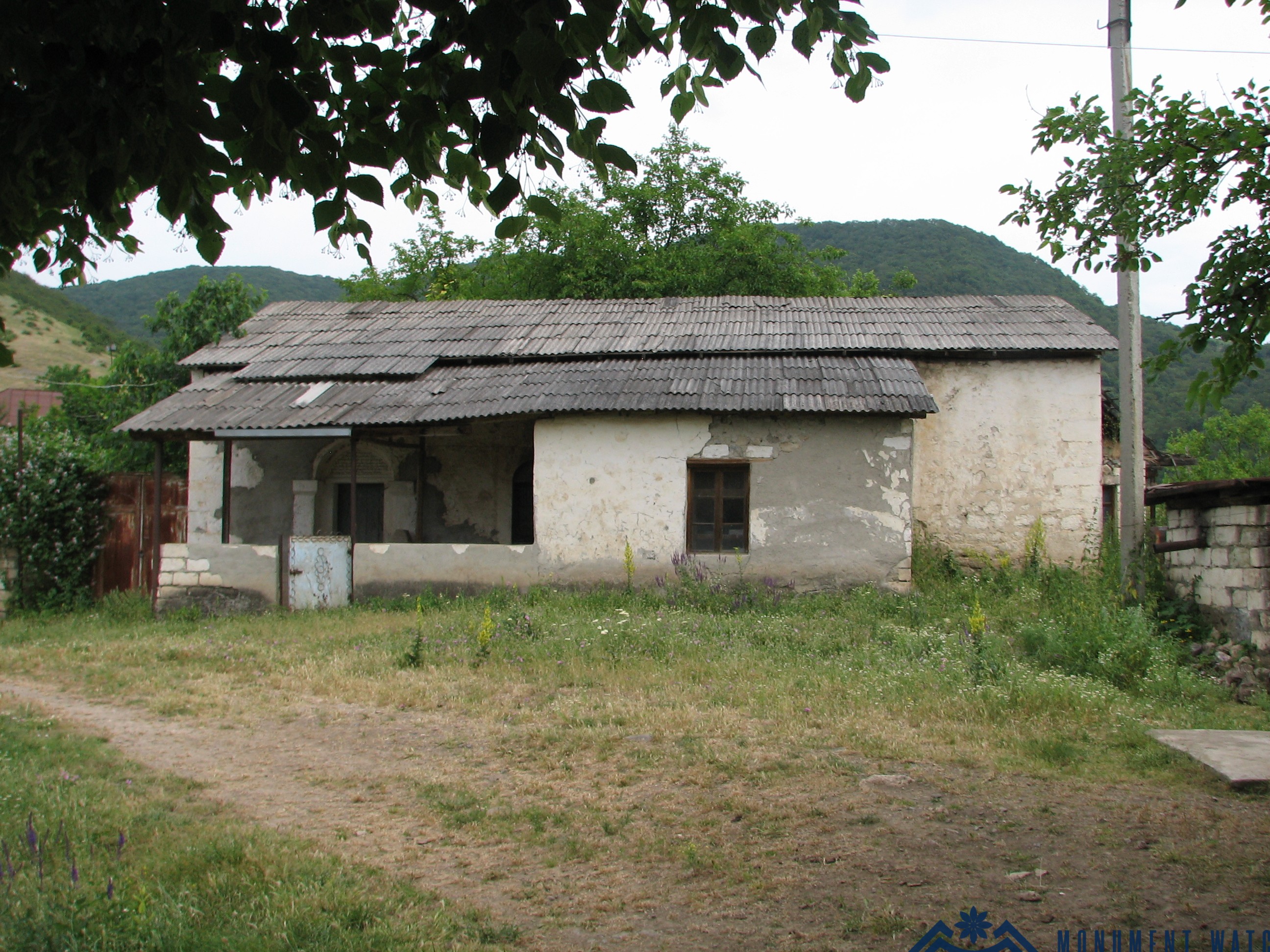
The village of Rev is located in the occupied Askeran region of Artsakh. Surb Stepanos Church stands in the center of the village (Fig. 1).

Fig. 1. The general view of the church. Photo by G. Sargsyan.

Historical overview

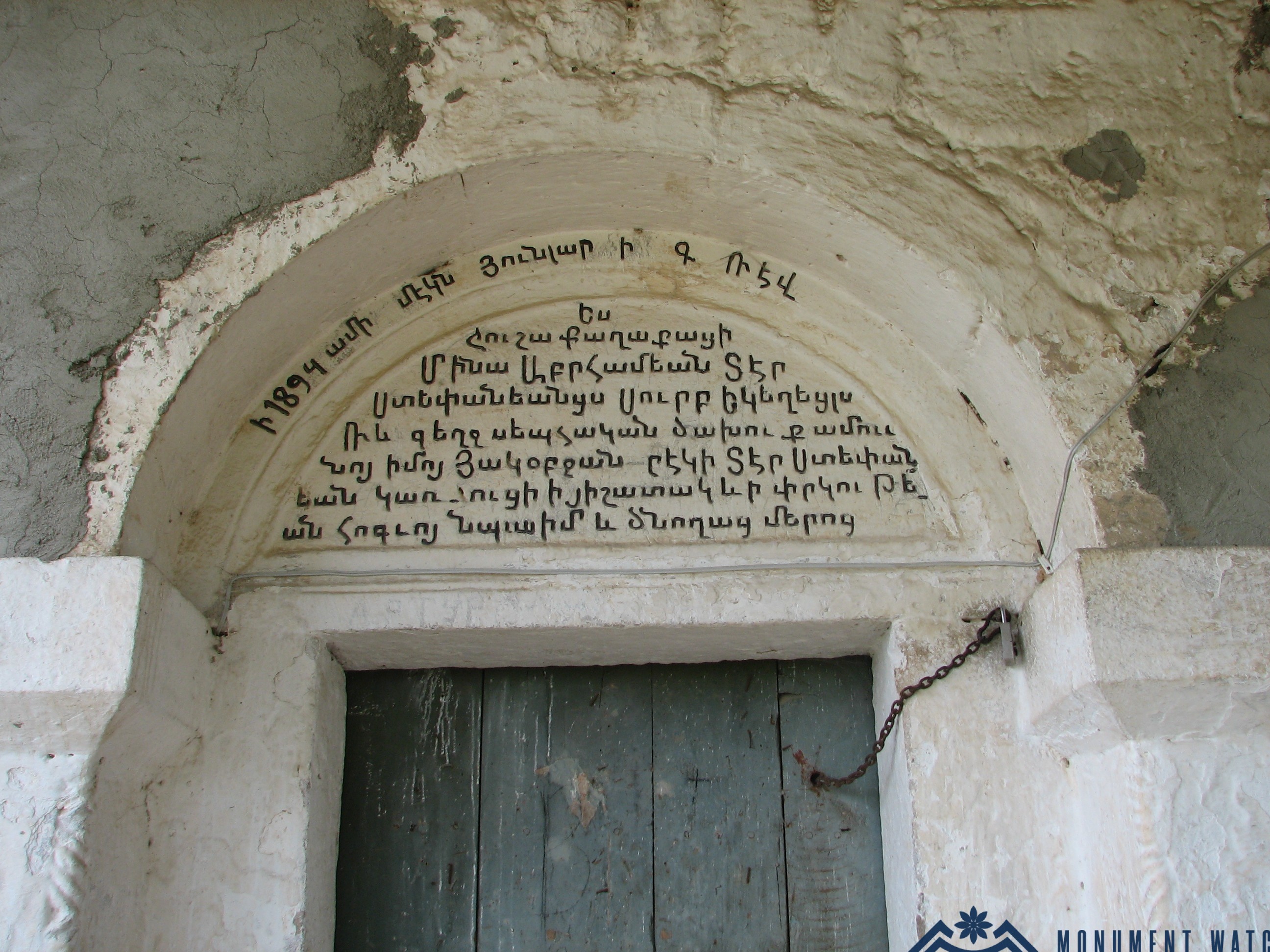
Information about the church is derived from the inscription on the lintel of its only entrance. According to this inscription, the church was built in 1894 by Mina Abrahamyan Ter-Stephanyants, a native of Shushi. The inscription reads:

“In the year 1894, on the first of January, in the village of Rev, I, Mina Abrahamyan Ter-Stephanyants, a citizen of the city of Shushi, [built] this holy church in the village of Rev at my own expense, together with my spouse, Yakobjan bek Ter-Stephanyan. I built it in memory and for the salvation of my soul and of our parents” (Fig. 2).

Describing the village of Rev, Makar Barkhudaryants notes that the village’s older church was damaged and not functioning (Barkhutareants 1895, 164). It may therefore be assumed that the new church was constructed after his visit.

Fig. 2. The construction inscription of the church. Photo by G. Sargsyan.

Architectural-Compositional Examination

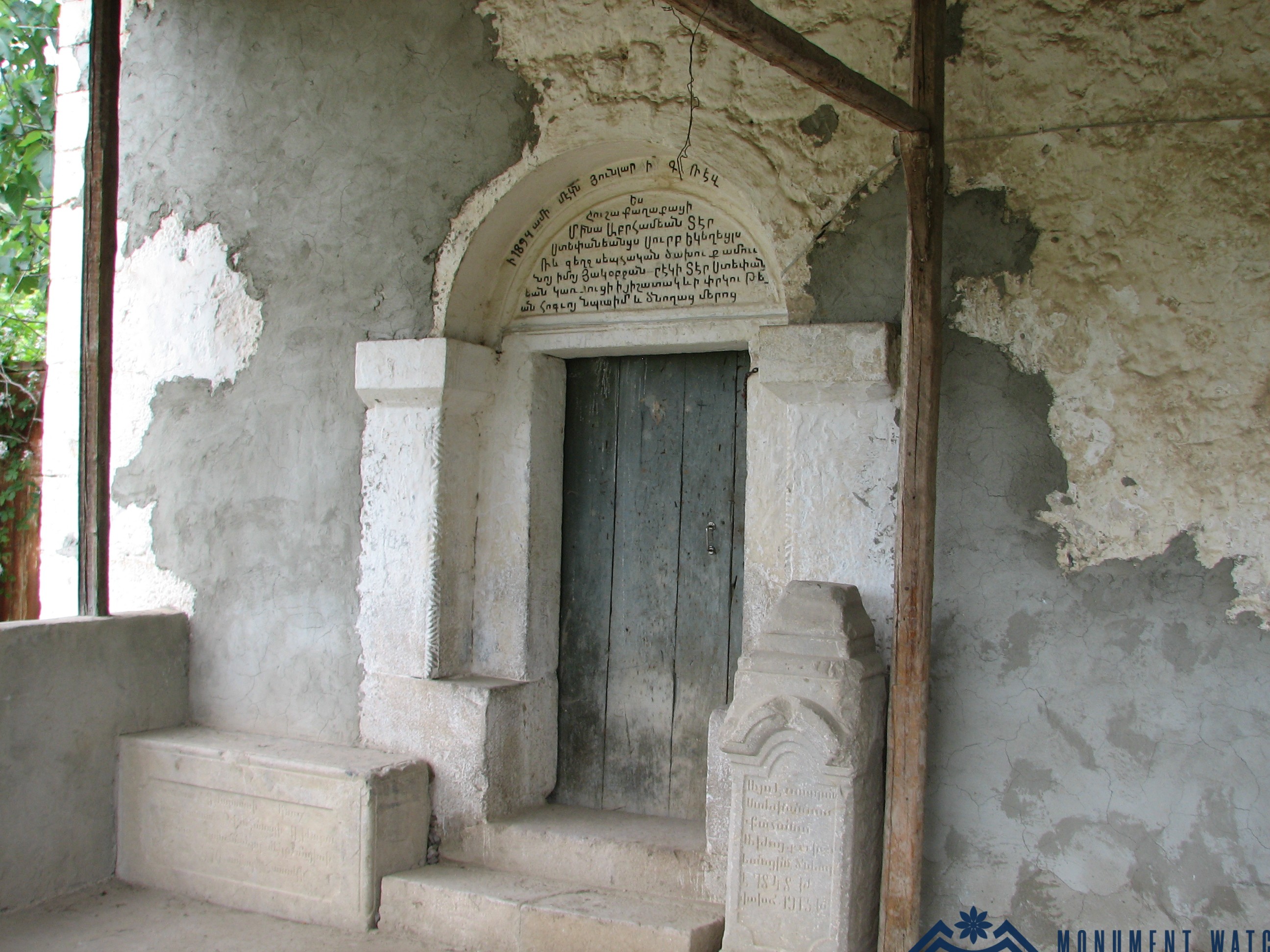
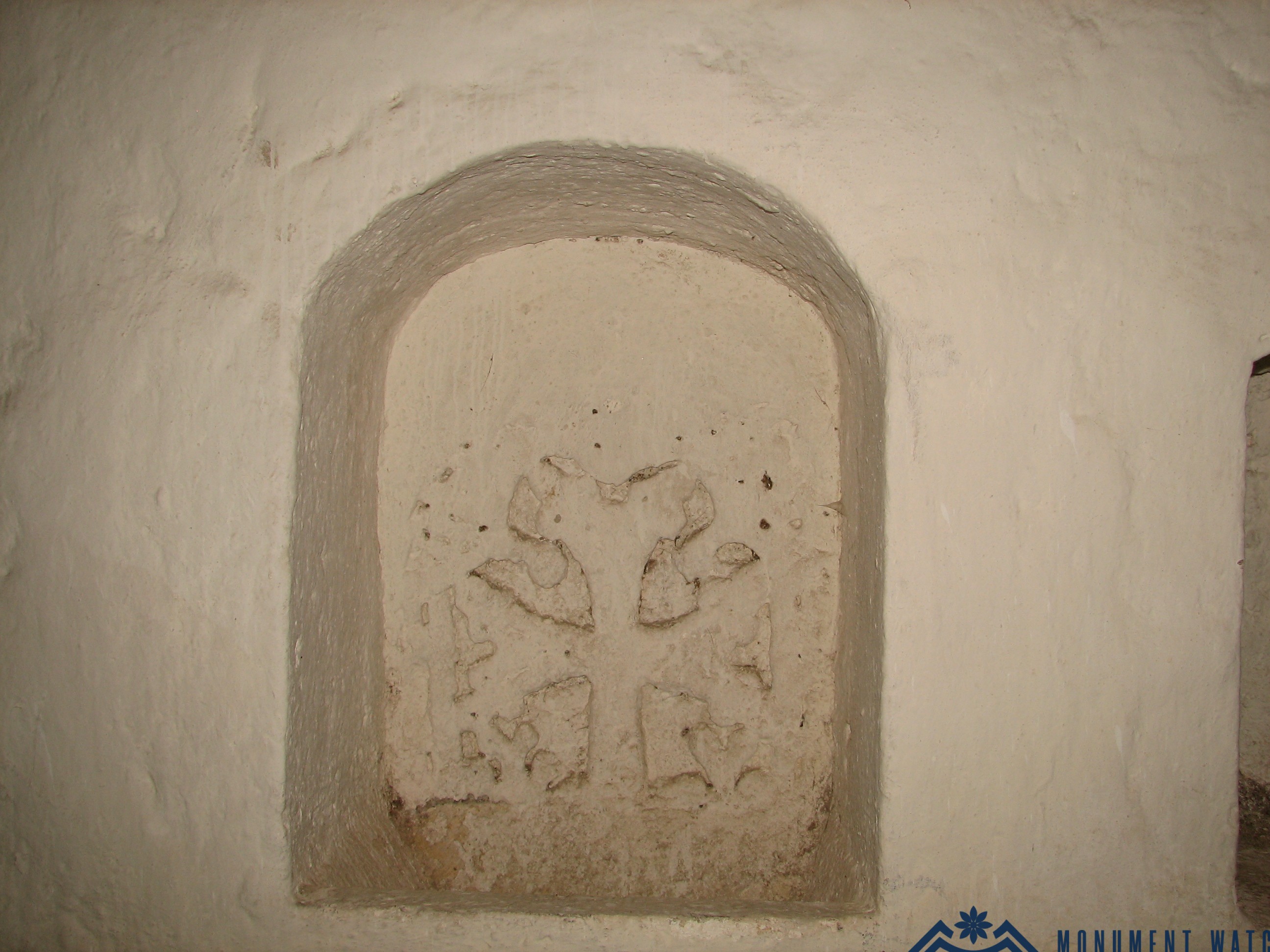
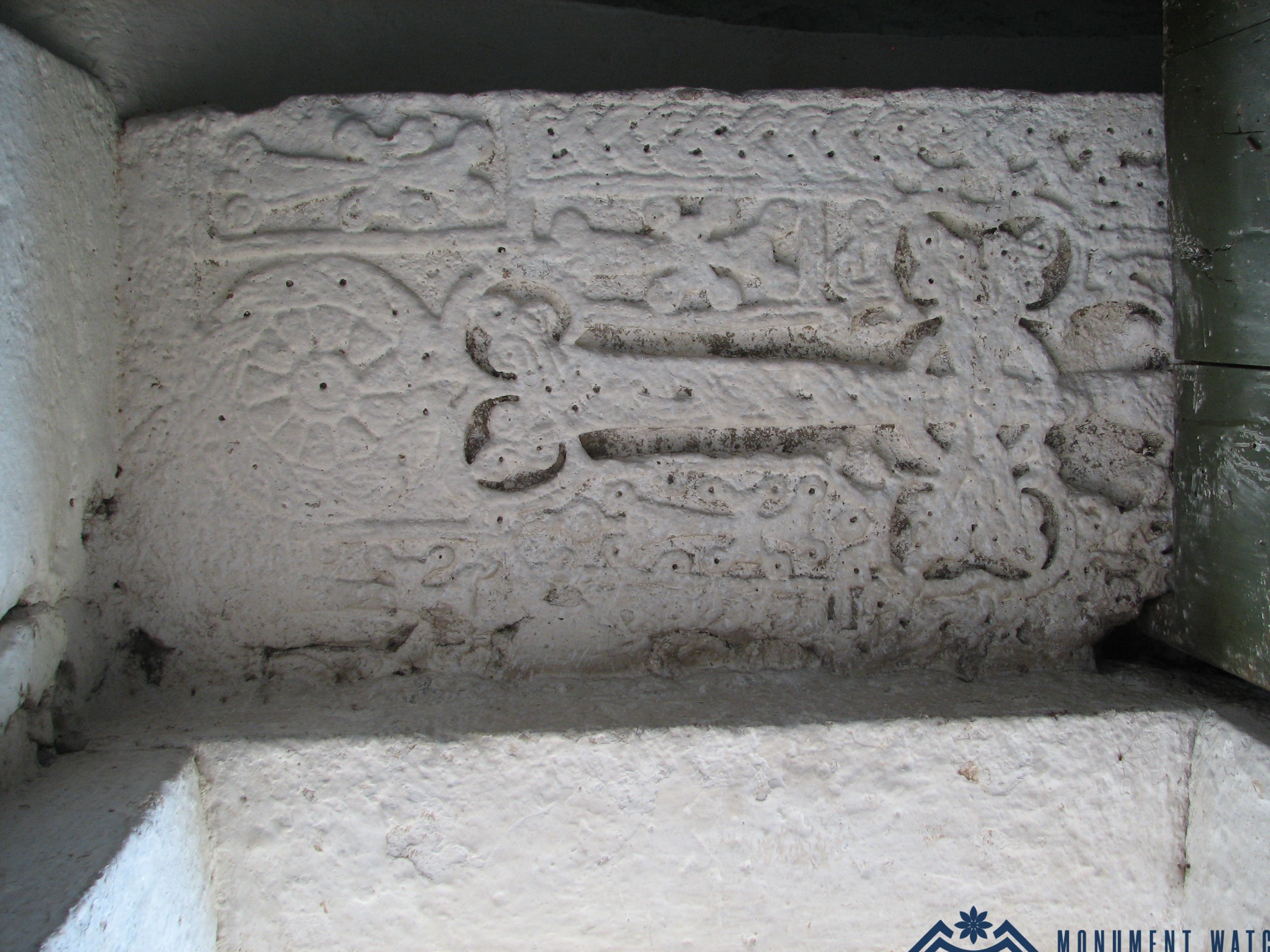
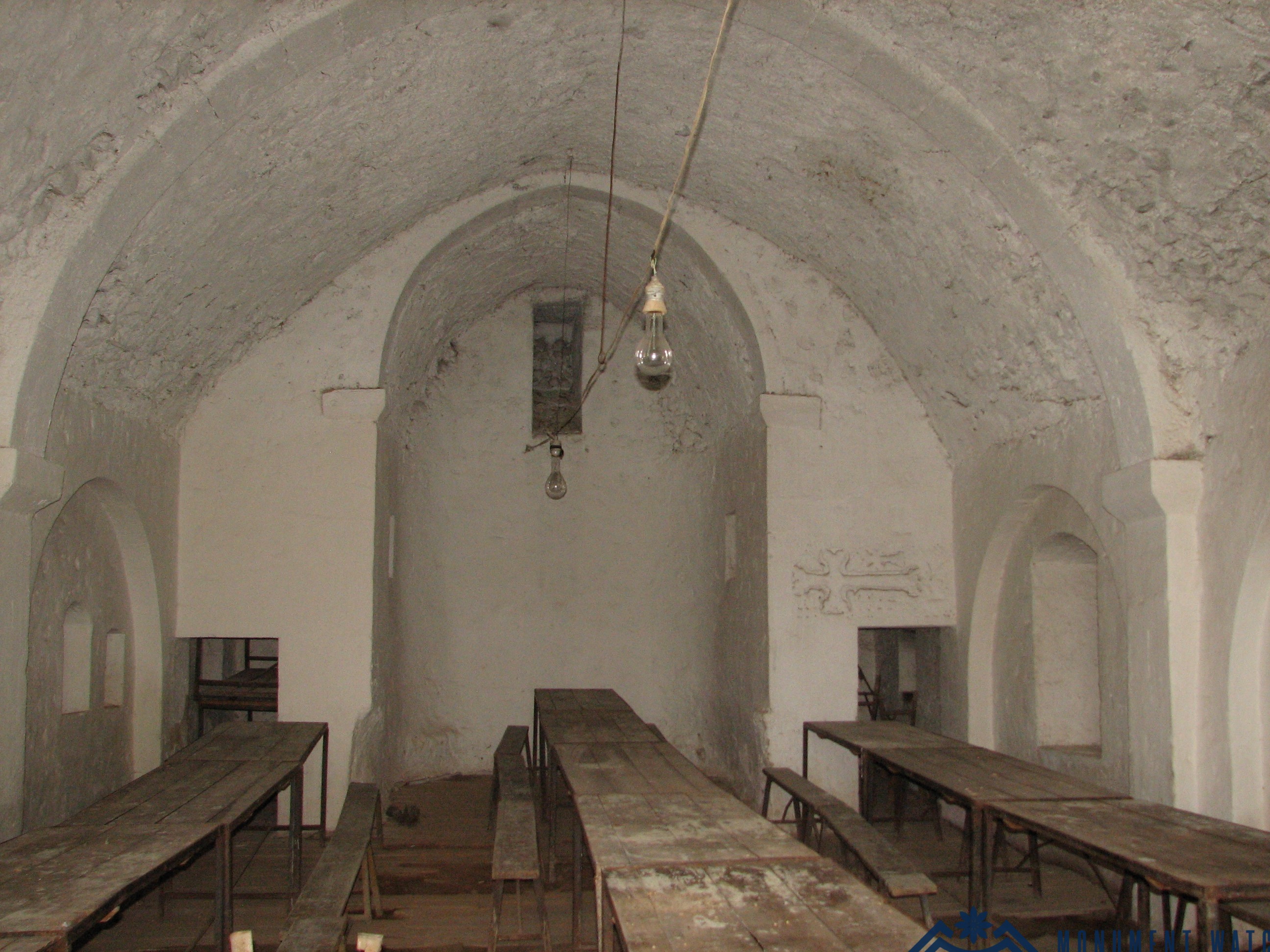
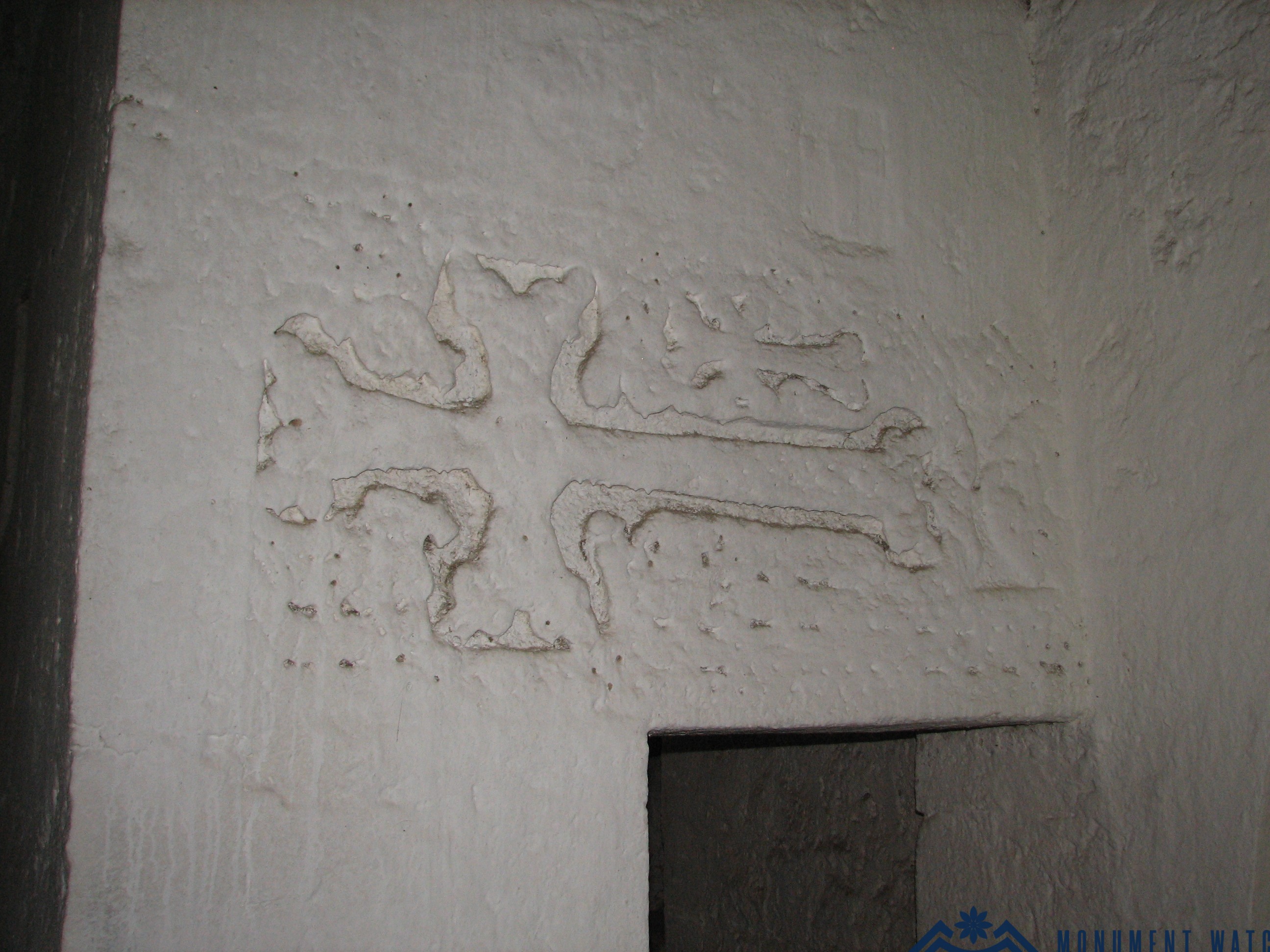
The church has a rectangular plan and consists of a single-nave hall. It is built of small and medium-sized blocks of undressed and semi-dressed brown limestone; only the frames of the entrance and windows, as well as the corner stones of the walls, are made of finely dressed stone. The building’s only entrance opens from the south (Fig. 3). The exterior is restrained; a 12th–13th-century khachkar is set into the eastern façade (Fig. 4). The vault of the hall is reinforced by two supporting arches resting on wall-piers (Fig. 5). Several 12th–13th-century khachkars are also embedded into the interior walls of the church (Figs. 6–8).

Fig. 3. The church entrance. Photo by G. Sargsyan.

Fig. 6. One of the khachkars embedded in the church wall. Photo by G. Sargsyan.

Fig. 4. The eastern façade of the church. Photo by G. Sargsyan.

Fig. 7. One of the khachkars embedded in the church wall. Photo by G. Sargsyan.

Fig. 5. The church interior. Photo by G. Sargsyan.

Fig. 8. One of the khachkars embedded in the church wall. Photo by G. Sargsyan.

The Condition before and after the war

During the Soviet period, the church was used as a storehouse, which led to the opening of large rectangular windows in the southern and western façades, and to the construction of an inappropriate annex on the southern side. A cemetery once surrounded the church; only a few tombstones have survived. During the Artsakh wars, the church did not suffer damage. At present, information on the church is not available.

Bibliography

  1. Our information about the church is based on the monument certificate prepared by the Ministry of Education, Science, Culture, and Sports of Artsakh, as well as photographs by the archaeologist G. Sargsyan.
  2. Barkhudaryants 1895 - Barkhudaryants M., Artsakh, Baku.
The Surb Stepanos Church of Rev
Artsakh