The “Old Taghavard” Church of Taghavard

Location

The village of Taghavard is located in the Martuni Region of the Republic of Artsakh (Nagorno-Karabakh). It is one of the villages rich in historical and architectural monuments and is divided into Upper and Lower parts. The church of Old or Lower Taghavard is situated in the quarter known as “Gyune” (Fig. 1).

Fig. 1. View of the “Old Taghavard” Church looking south-east. Photo by G. Sargsyan.

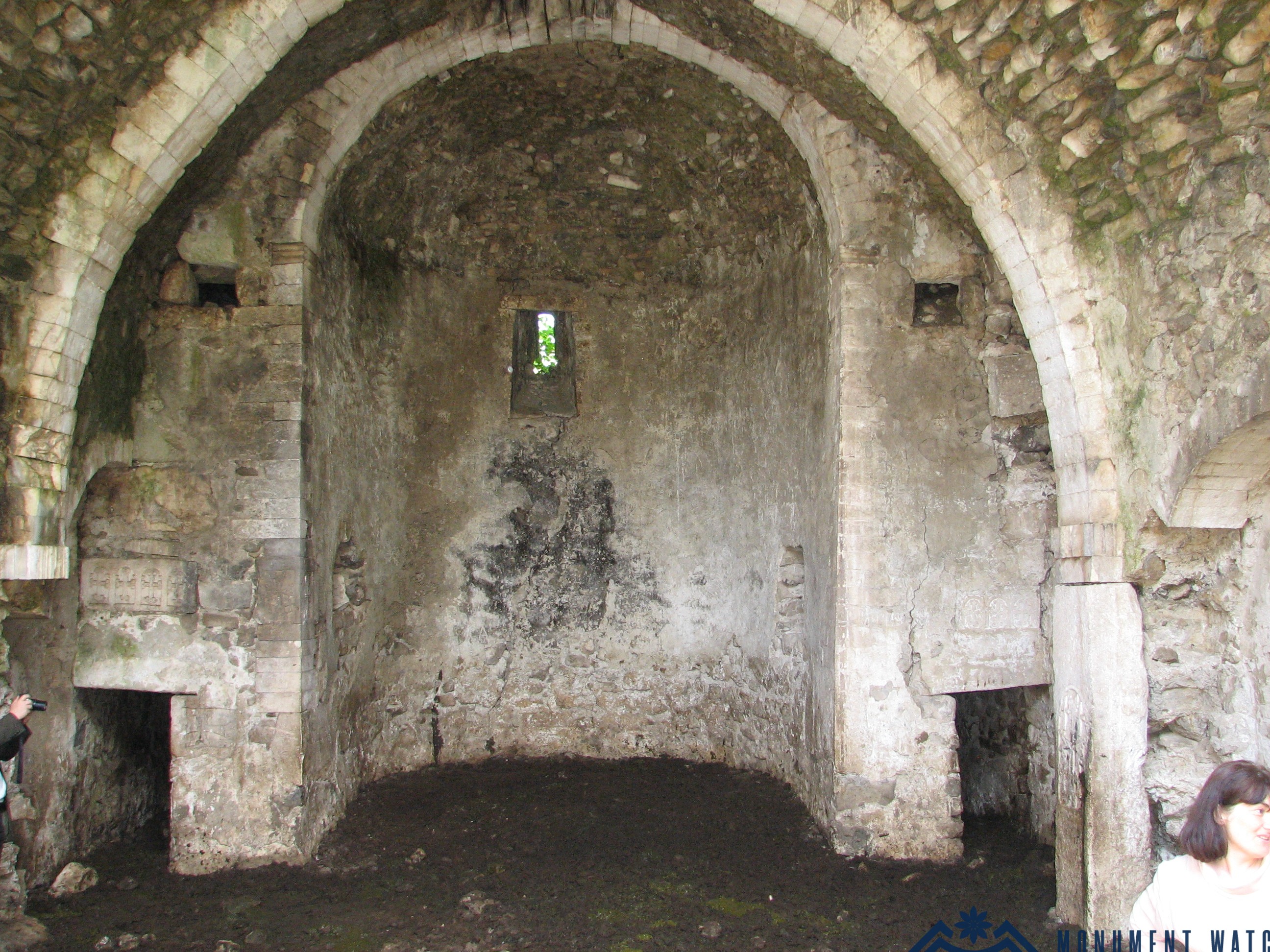
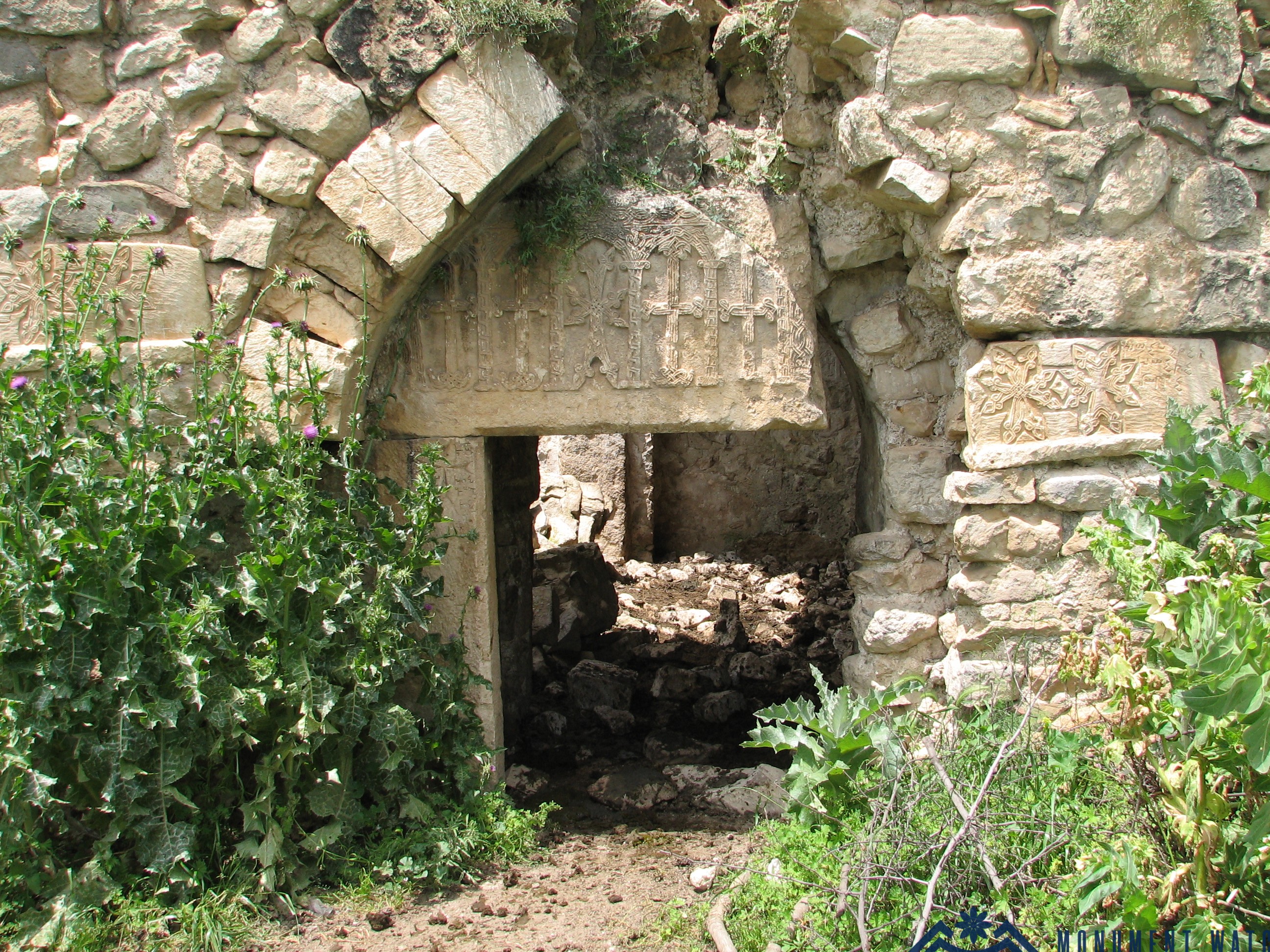
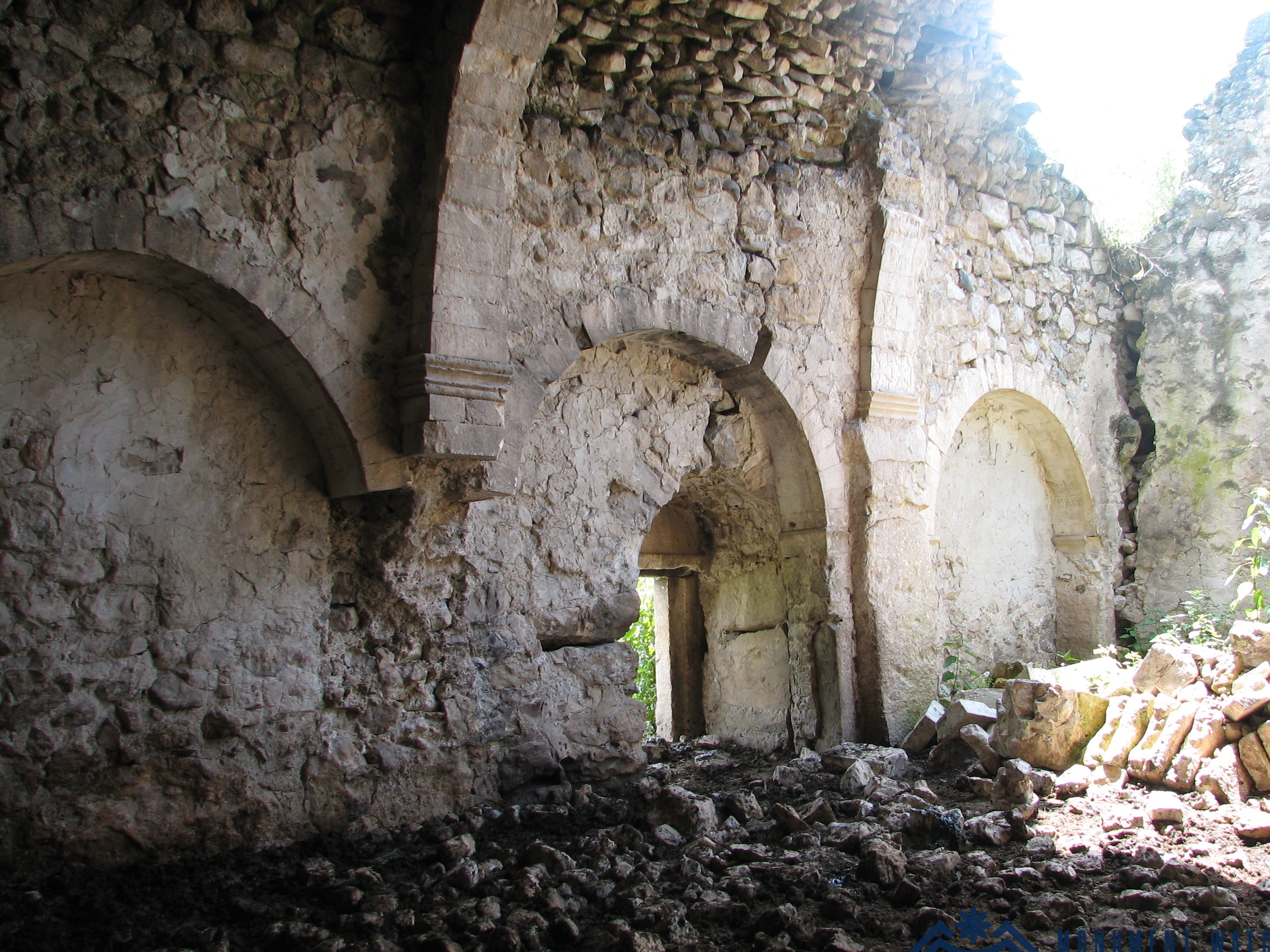
and spatial composition, the church is a single-nave hall ending in a semi-circular apse on the east. On either side of the sanctuary, there are sacristies. Niches are opened in the walls of the apse (Fig. 2). The barrel-vaulted covering was carried by three transverse strengthening arches, which rest on wall-piers attached to the longitudinal walls of the hall (Fig. 3). The church originally had a gabled roof. The entrance opens in the southern wall. It is recessed, and its façade-lintel is formed by a 17th–18th-century tombstone decorated with cross motifs (Fig. 4). This, together with other tombstones embedded in the walls, indicates that the church underwent repairs in the 19th century.

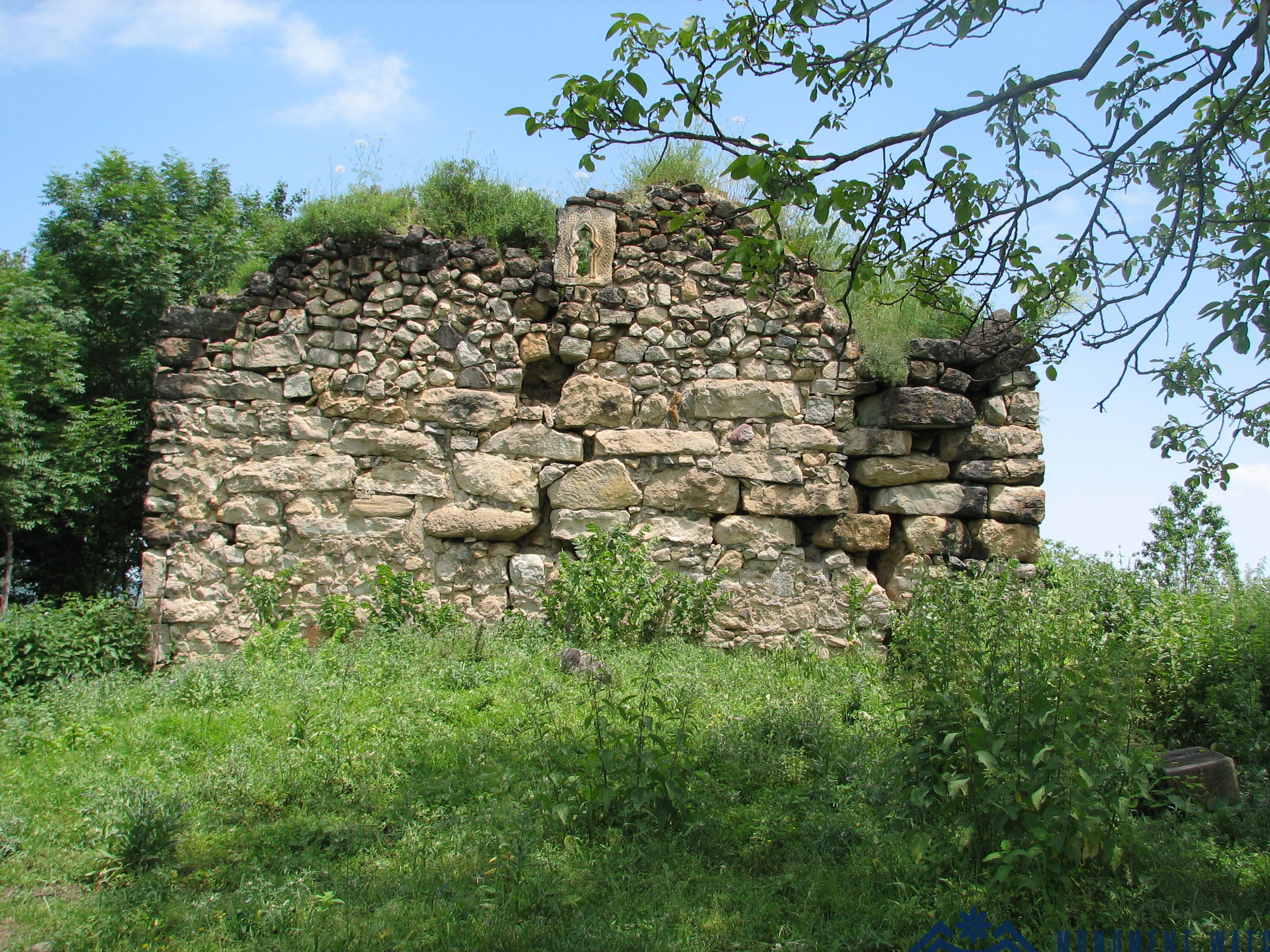
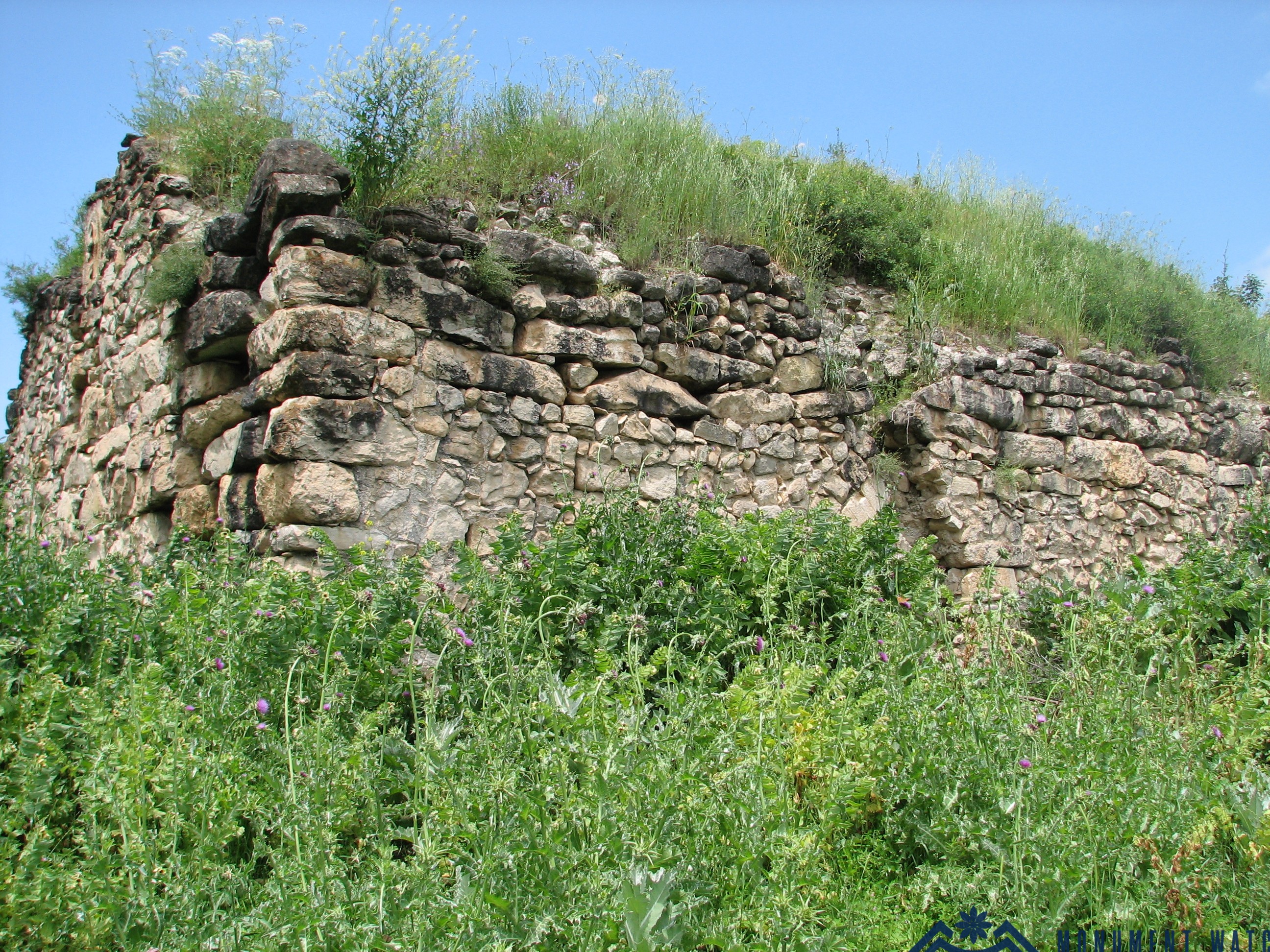
The western and eastern walls of the church each contain a single, rather narrow window. The walls of the structure are built of undressed limestone set in lime mortar. Only the architecturally “critical” parts of the building—namely the strengthening arches, wall-piers, and cornerstones—are laid in worked stone. The interior walls are plastered. The church was probably rebuilt in the 17th–18th centuries (Mkrtchyan 1985, 170). This is suggested by the reuse in the masonry of earlier stones bearing cross motifs (Fig. 5).

Among the ruins of the church, a door façade stone bearing an inscription was found. The inscription states:

“I, the unworthy Grigor, built the church of Taghavard, under the leadership of Davut’s son, that Papas Amirbek; he was so devoted that he did not sleep at night” (Barkhudaryants 1895, 89).

Numerous tombstones and khachkars are scattered around the church.

Both the compositional type of the “Old Taghavard” Church and its construction technique are highly characteristic of the ecclesiastical architecture of developed and late medieval Artsakh (Kirakosyan 2023, 249–264).

Fig. 2. The church sanctuary. Photo by G. Sargsyan.

Fig. 4. The southern entrance of the church. Photo by G. Sargsyan.

Fig. 3. Interior view of the church. Photo by G. Sargsyan.

Fig. 5. The church’s lateral façade. Photo by G. Sargsyan.

The Condition before, during, and after the war

Before the war, the “Old Taghavard” Church was generally still standing, but in a highly precarious condition. The vault had collapsed in the western section and fallen inward. Deep cracks are visible in the walls, threatening the building’s stability. The structure is entirely engulfed in dense vegetation. The grass cover of the roof drives its roots into the lime mortar, creating a serious risk of deterioration. The monument required excavation and clearing, both inside and around the exterior. The situation did not change after the war. Today, the church is under Azerbaijani occupation.

Bibliography

  1. Barkhudaryants 1895 - Makar Ep. Barkhudaryants, Artsakh, “Aror” Printing House, Baku.
  2. Mkrtchyan 1985 - Mkrtchyan Sh., The Historical and Architectural Monuments of Nagorno-Karabakh, Hayastan Publishing House, Yerevan.
  3. Kirakosyan 2023 - Kirakosyan L., “The Composition of the Vaulted Hall in the Architecture of Artsakh,” Armenian Humanitarian Herald, 1(10), Artsakh, Yerevan.
The “Old Taghavard” Church of Taghavard
Artsakh