


The “Khacher” Sanctuary of Khoznavar
Location
Khoznavar is located in the Syunik Region of the Republic of Armenia, 100 km from the provincial center Kapan, 29 km from Tegh, the administrative center of the enlarged community, and 21 km from the city of Goris. The village is situated at an elevation of 1,592 meters above sea level. One of the notable monuments in the village is the sanctuary known as “Khacher” (“Crosses”) (Fig. 1).
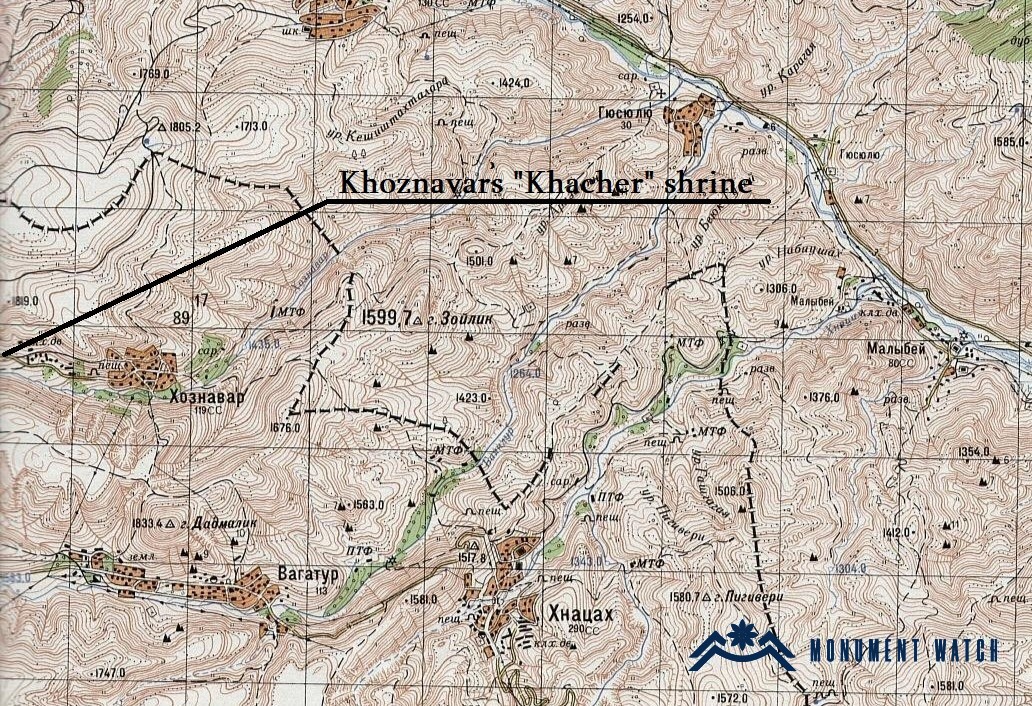
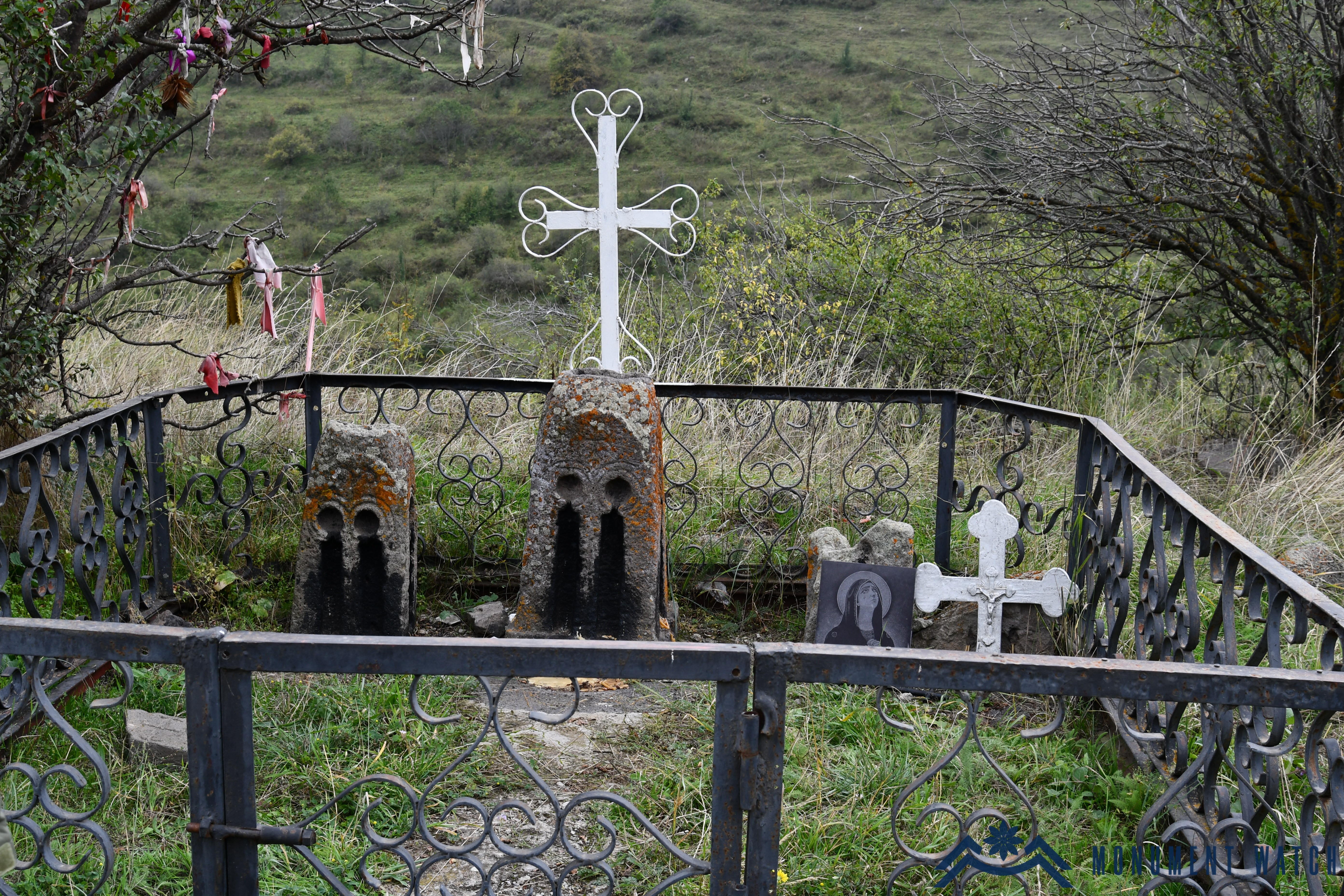
Fig. 1. Khoznavar’s Khacher sanctuary. Photo by Monumentwatch group.
Historical overview
The name “Khoznavar” means “a place for ploughing stubble fields (khozan)” (Margaryan 1992, 139). According to the new tax register of Tatev Monastery, the village paid 4,400 dahekans in fruit tax. Information on the village has been preserved in manuscript colophons (Colophons 1967, 116, 148, 191). One such colophon, written for a manuscript copied in 1490, states that Khoznavar was part of the district of Kashatagh, in Aghahechk, Syunik (Khurshudyan 2024, 93). No historical information or inscriptions relating specifically to the “Khacher” sanctuary have survived.
Currently, many burned candles are present near the monument. Numerous ribbons are tied to the consecrated bush. There are traces of sacrificial rituals and general care of the site. These signs all show that the sanctuary continues to hold importance for the community.
Architectural-Compositional Examination
Khoznavar’s “Khacher” sanctuary is located on the western side of the village, next to the sign at the village entrance, on the right-hand side of the road. Gathered on the slope are the crowning elements of two complete and one fragmentary early medieval cross-bearing monuments decorated with crosses; these form the principal sacred objects of the sanctuary (Fig. 2).
The crowning element is the most important component of an early medieval cross-bearing stele. As a rule, it represents a four-columned domed structure, similar to the tempietto erected on Golgotha and to the structure described in the vision of Gregory the Illuminator (Petrosyan 2008, 17–18). The crowning elements from Khoznavar are stylized in the form of a columned architectural structure. On the lateral sides of the rectangular monument, a single column beneath a horseshoe arch is depicted on each side, while on the broader front face, there is a pair of smaller arches. Above the pair of arches is an equal-armed cross. Taking into account the use in Syunik and Artsakh of horseshoe arches and cross-bearing stelae characteristic of the early medieval period up to the 9th–10th centuries, as well as the dating of the columns of Tatev and Vorotnavank, the Khoznavar crowning elements may be dated to the 7th–9th centuries.
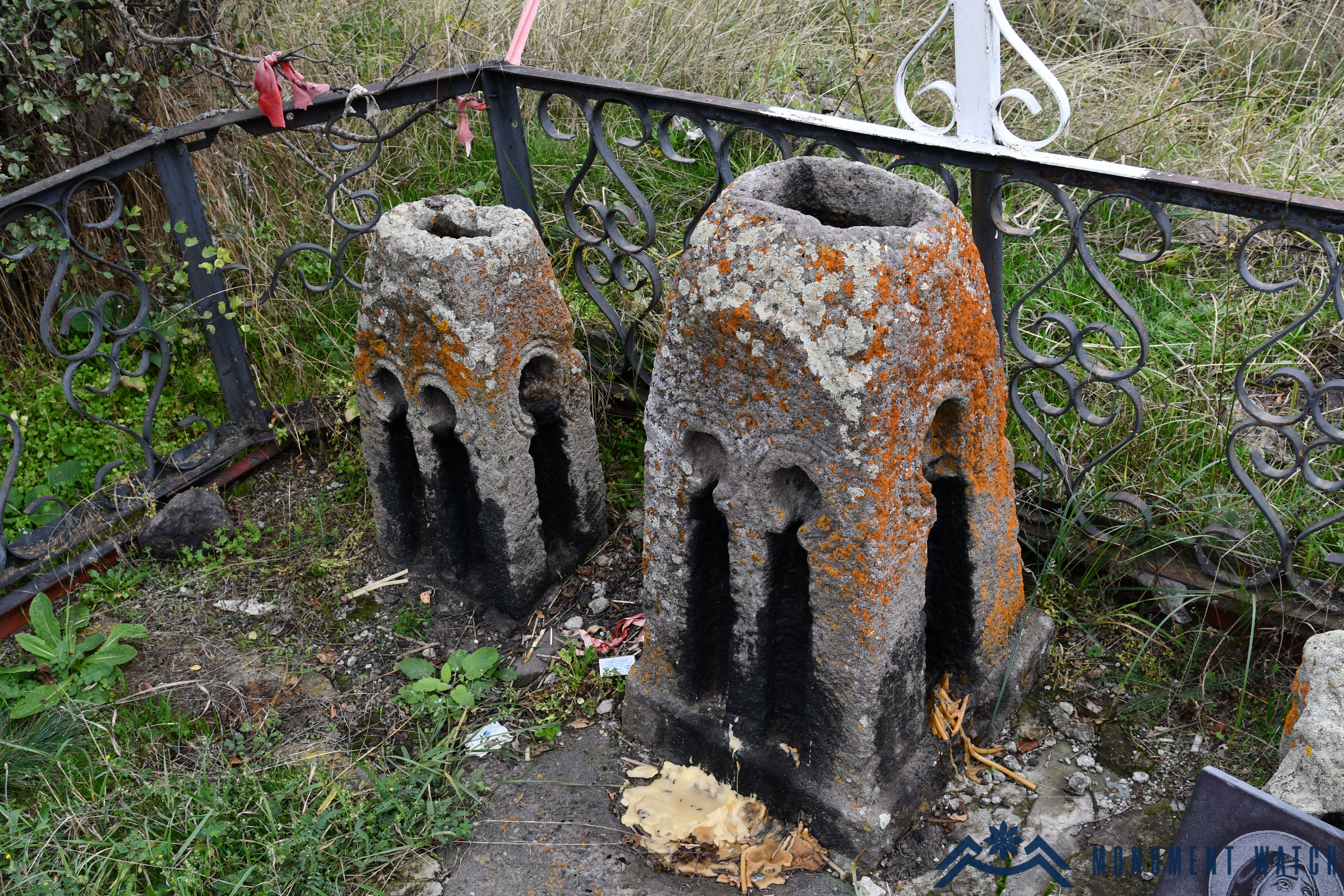
Fig. 2. The crowning elements at the sanctuary. Photo by Monumentwatch group.
At the “Khacher” sanctuary, these crowning elements, together with other fragments and newly made sacred carvings, are enclosed within a metal fence decorated with crosses. The sanctuary also contains a consecrated bush, around which numerous ribbons are tied, as well as the heads and limbs of sacrificial roosters (Fig. 3). Beneath the consecrated bush there is also a stylized hearth stone (Fig. 4). On the slope within the area, there were once the foundations of buildings, the remains of which—wall segments, fragments of tombstones, and pieces of khachkars—periodically emerge from the soil (Aleksanyan 2020).
For many years, the people of Khoznavar have bid farewell at this sanctuary to those departing for military service. In 2017, the sanctuary area was improved through the efforts of Aram Baghdasaryan, a native of Khoznavar, and a new 5-meter-high metal cross was erected there (Aleksanyan 2020; Fig. 5).
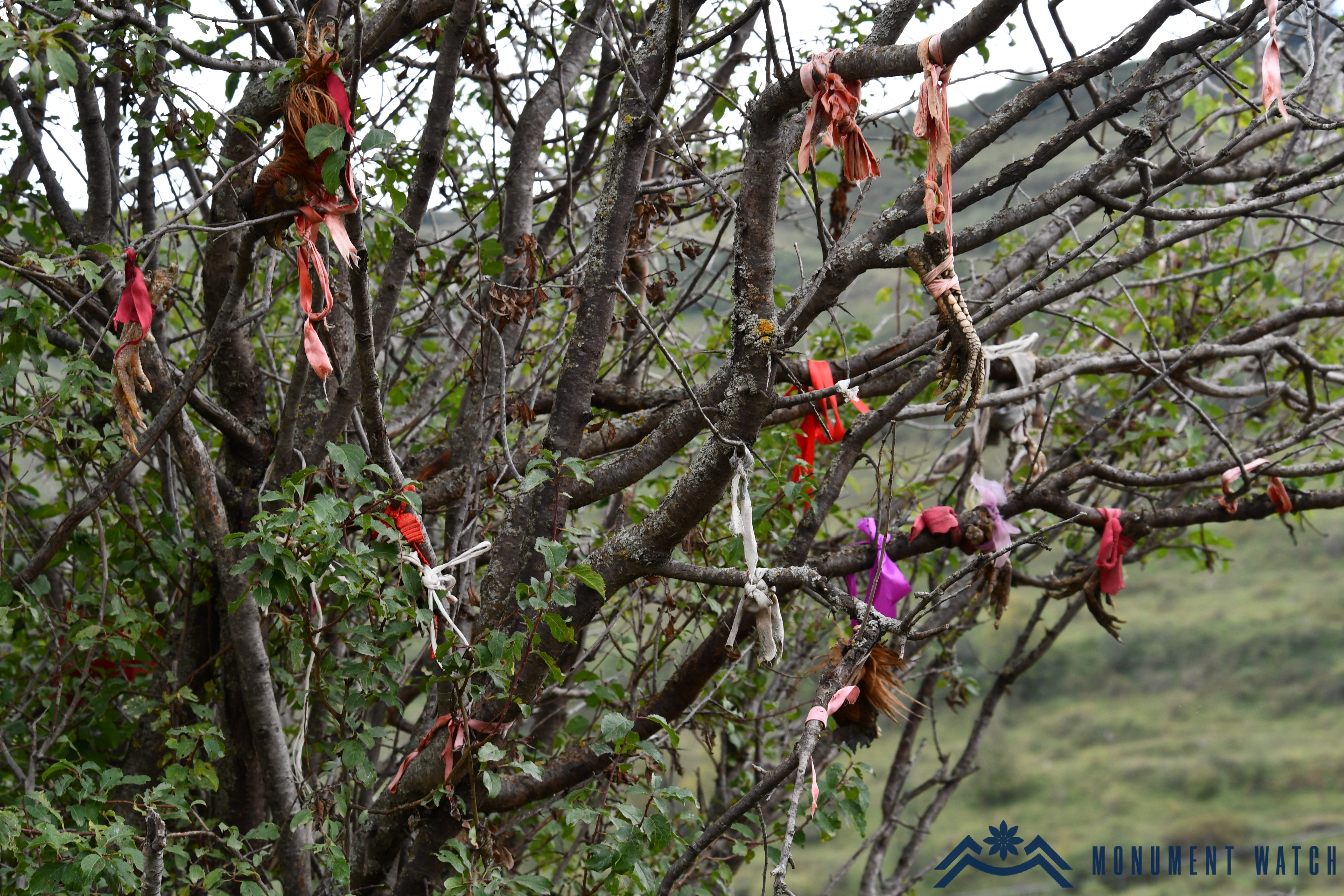
Fig. 3. The consecrated bush with ribbons and the heads and limbs of roosters. Photo by Monumentwatch group.
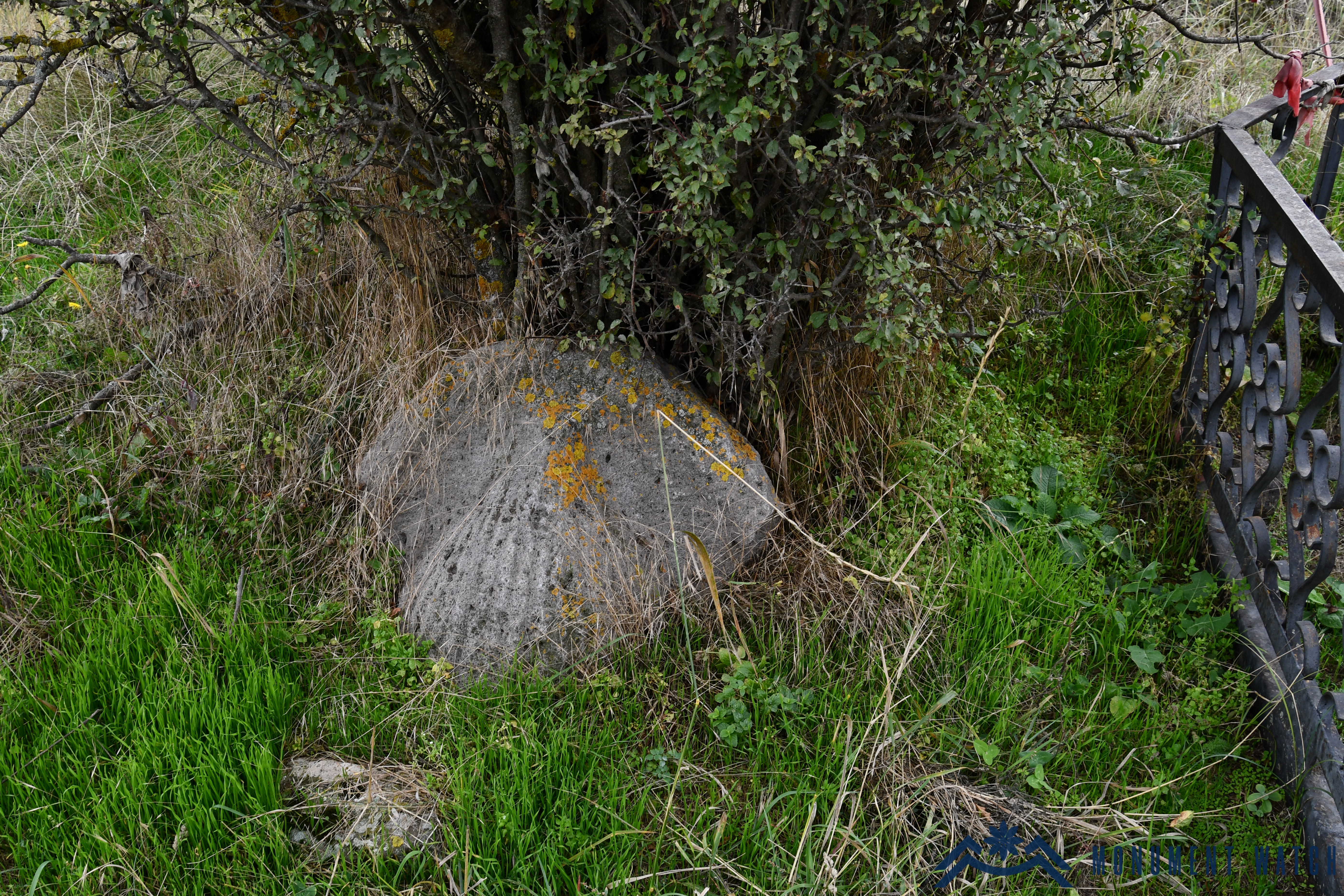
Fig. 4. The hearth stone. Photo by Monumentwatch group.
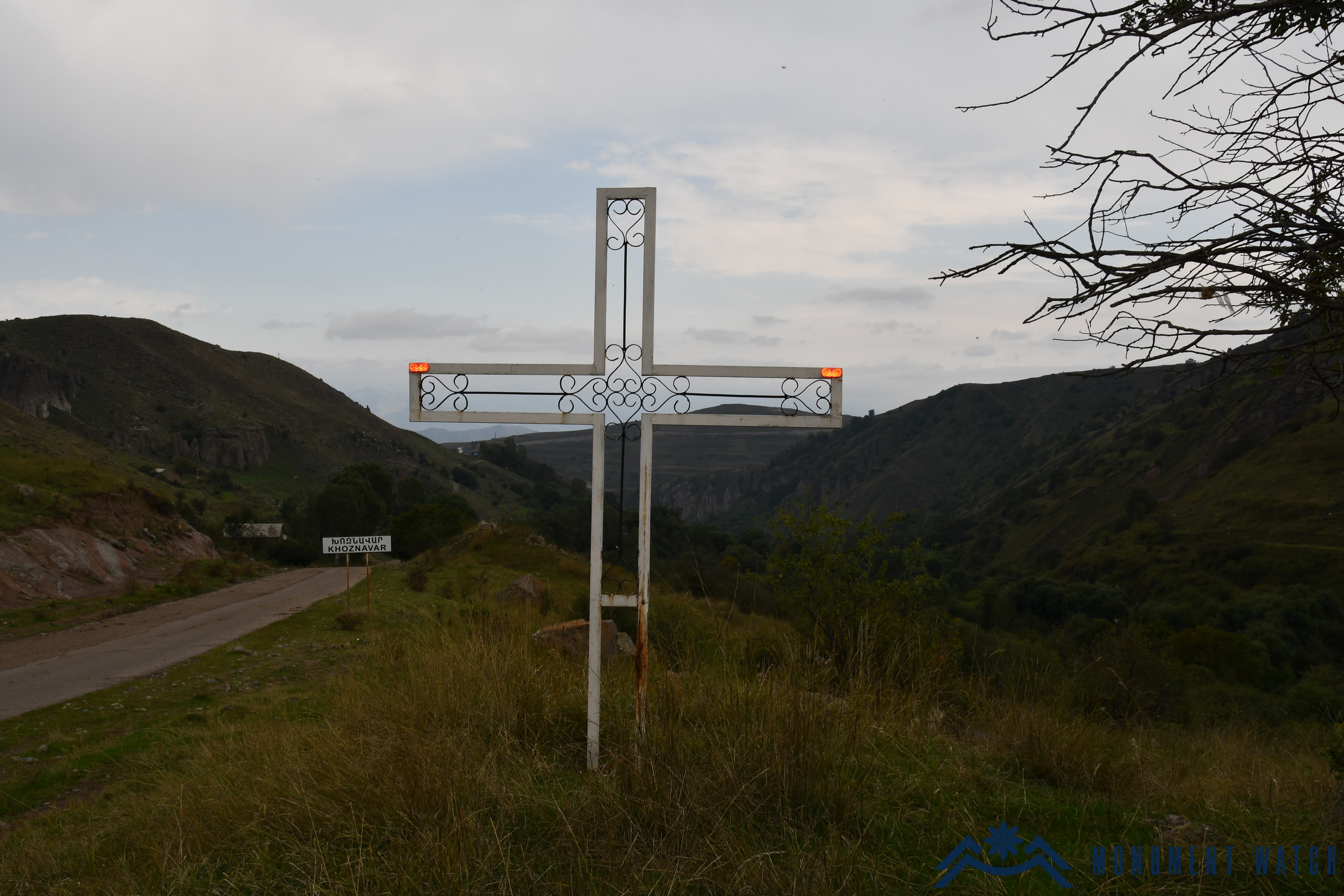
Fig. 5. The metal cross erected in 2017. Photo by Monumentwatch group.
Bibliographic examination
The sanctuary known as “Khacher” in Khoznavar is mentioned briefly by the epigraphist S. Khurshudyan in his article “The Monuments of Khoznavar” (Khurshudyan 2024, 98). A fuller descriptive account of the monument is provided on the website Syunyats Yerkir, in the article titled “The Sanctuaries of Khoznavar, a Scribal Center of Syunik” (Aleksanyan 2020).
The Condition after the 2020–2022 Azerbaijani aggression
Following the 44-day Artsakh war and the subsequent border changes, the sanctuary known as “Khacher” in Khoznavar came to lie 1.35 km from the border.
Bibliography
- Margaryan 1992 - Margaryan Al., “Toponymic Interpretations,” Historical-Philological Journal, no. 1, Yerevan, pp. 133–139.
- Colophons 1967 - Colophons of 15th-Century Armenian Manuscripts, part 3, compiled by L. Khachikyan, Yerevan.
- Khurshudyan 2024 - Khurshudyan S., “The Monuments of Khoznavar,” Sion, no. 96, Jerusalem, pp. 93–100.
- Petrosyan 2008 - Petrosyan H., Khachkar: Origin, Function, Iconography, Semantics, Yerevan, Printinfo.
- Aleksanyan 2020 - Aleksanyan S., “The Sanctuaries of Khoznavar, a Scribal Center of Syunik,” Syunyats Yerkir, 23 February 2020.