The Surb Hripsime Church of Verishen

Location

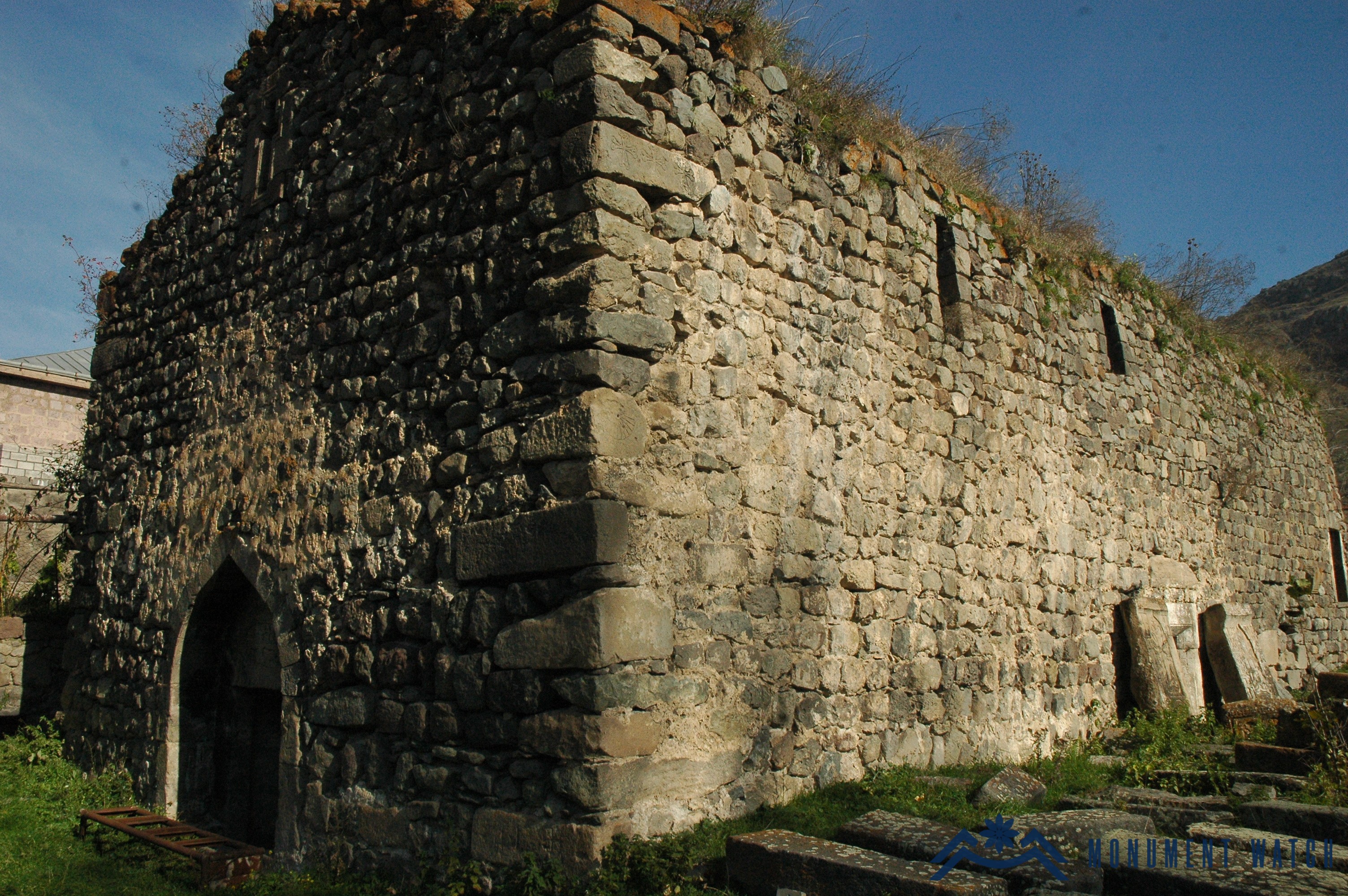
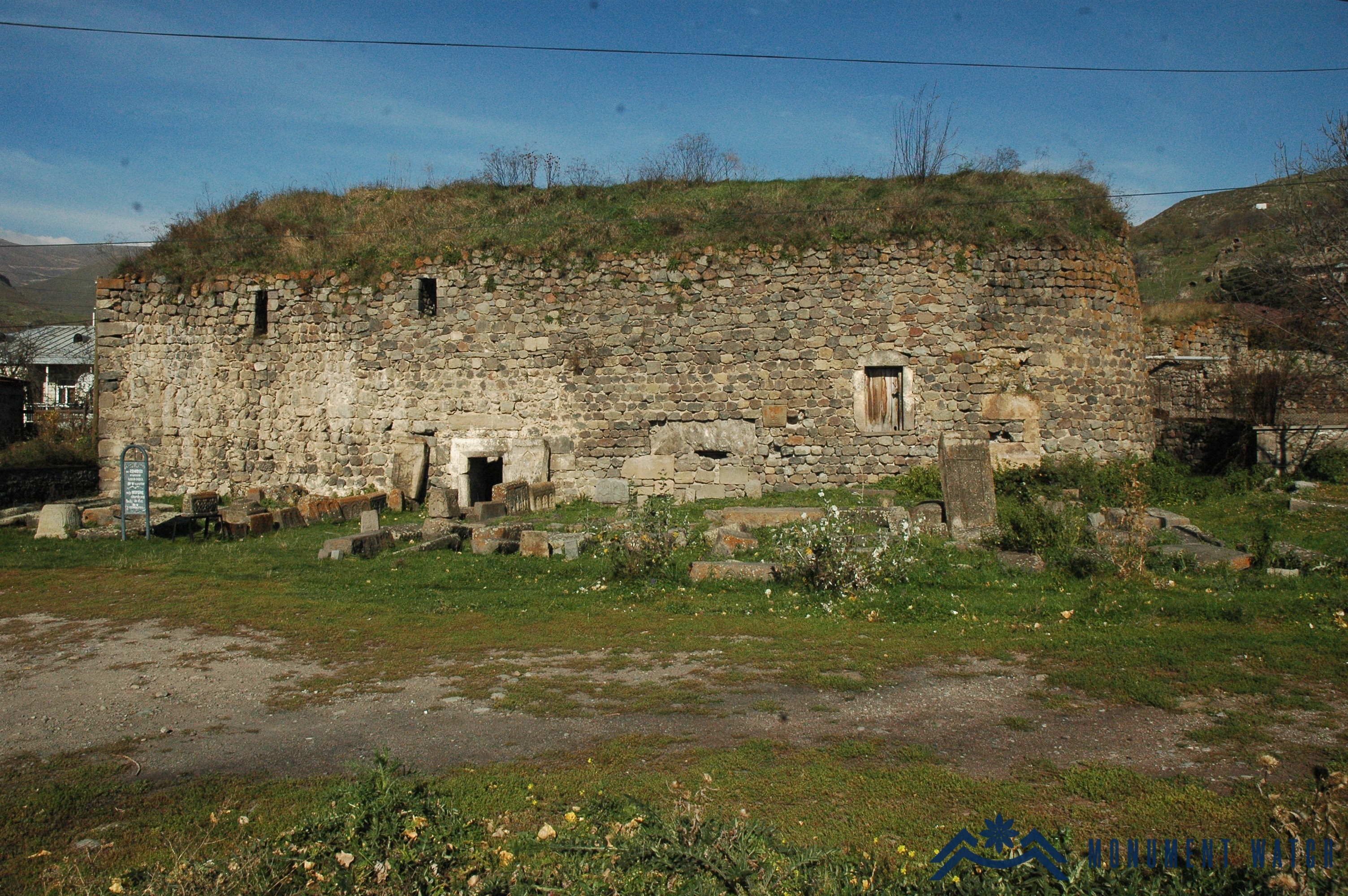
The village of Verishen is located in the Syunik Province of the Republic of Armenia, 83 km from the provincial center, Kapan, and 3 km from Goris, the center of the enlarged community. The most notable monument of Verishen is Surb Hripsime Church, located in the center of the village (Fig. 1).

Fig. 1. The general view of the church. Photo: Monumentwatch group.

Historical overview

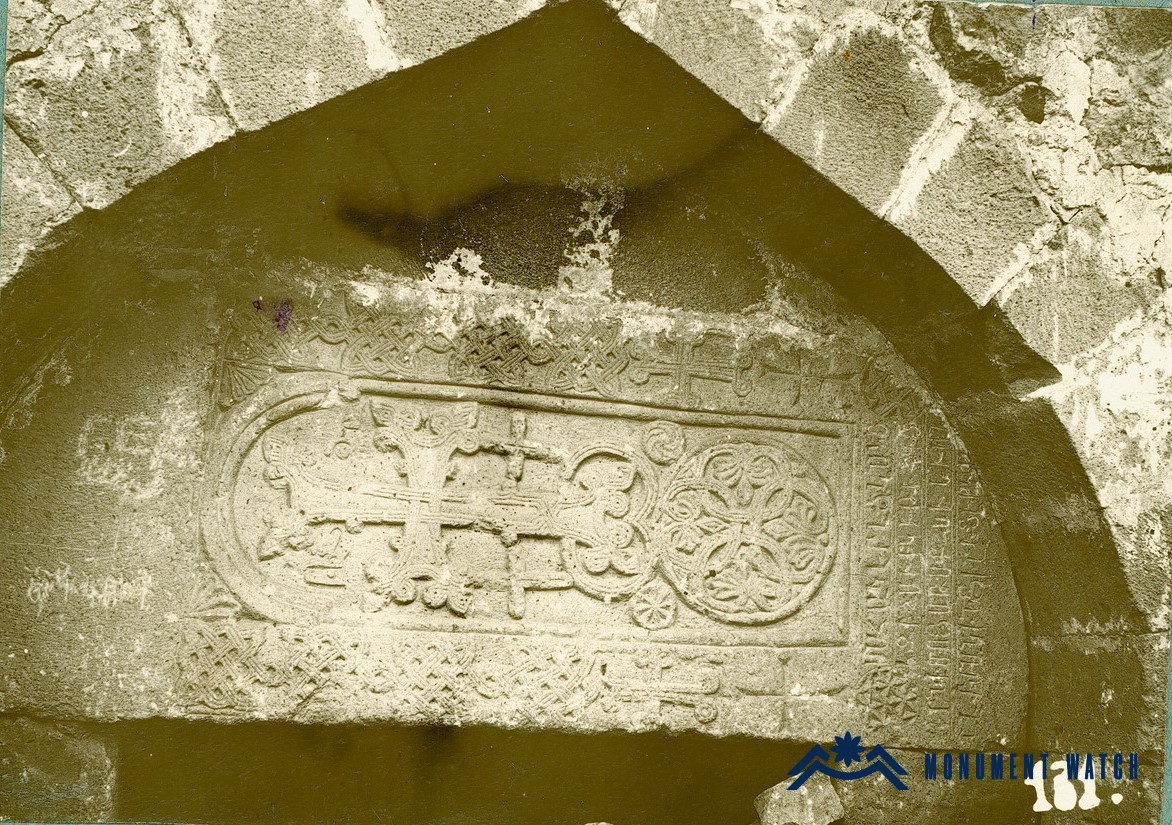
No historical information concerning the construction of the church has survived. Specialists in the history of architecture believe that it was originally built in the 4th–6th centuries (see below). The inscriptions preserved on the church belong to a later period. Thus, the khachkar serving as the lintel of the western entrance dates to the 16th century, which suggests that the church was rebuilt in the 16th–17th centuries, and that the khachkar was reused as building material. The khachkar bears the following inscription: “In the year 1509, Priest Sahak erected this cross for the salvation of the soul of my father, Priest Matos, and Eetiman. Remember [them] in Christ” (CAI 2 1960, 76; Fig. 2).

Thus, the church was reconstructed in the 16th–17th centuries, as is also indicated by the tombstones characteristic of the 16th–17th centuries reused as cornerstones on the western façade (Fig. 1).

Fig. 2. The khachkar converted into a lintel. Photo: History Museum of Armenia, 1539-114.

Architectural and compositional description

In its volumetric-spatial composition, the church belongs to the type of single-nave basilican halls widespread in Armenia in the 4th–6th centuries. It is distinguished by its externally emphasized apse (Ter-Minasyan 1986, 58–59). Churches with externally emphasized apses are known in Armenia at Voskevaz, Imirzek, Bayburd, Lusakert, Jarjaris, Parpi, Jrvezh, and Batikyan (Hasratyan 1976, 27).

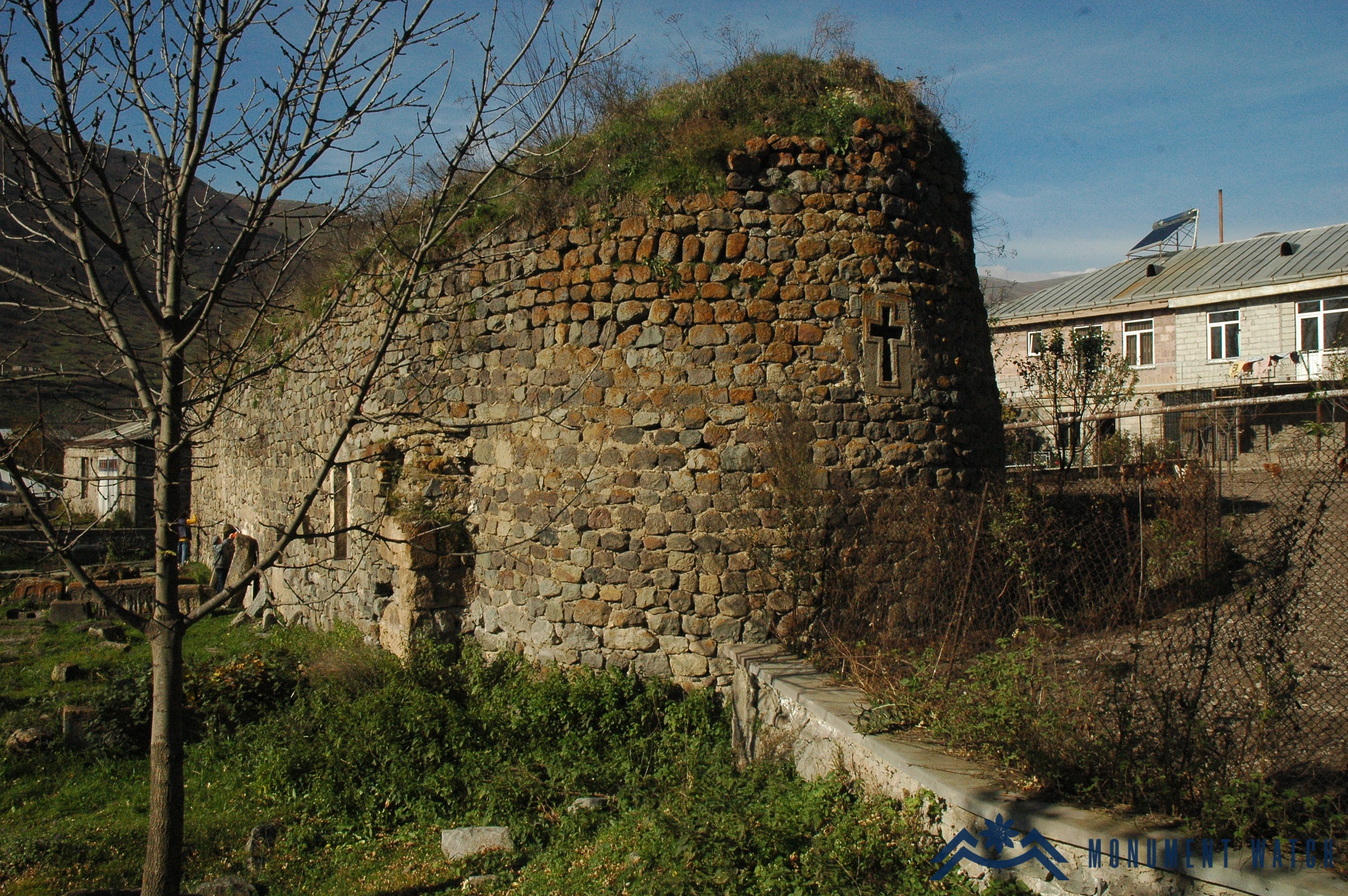
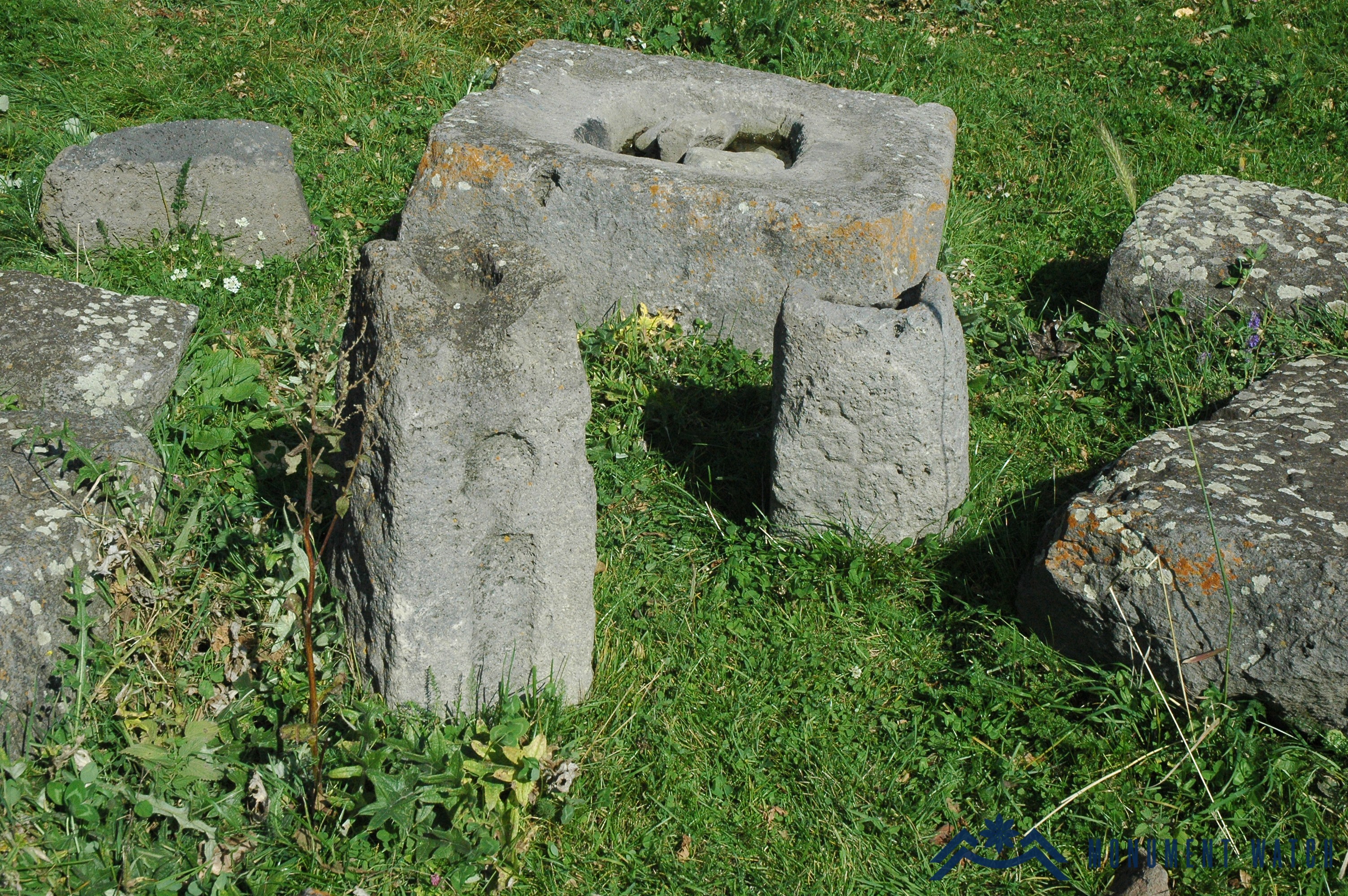
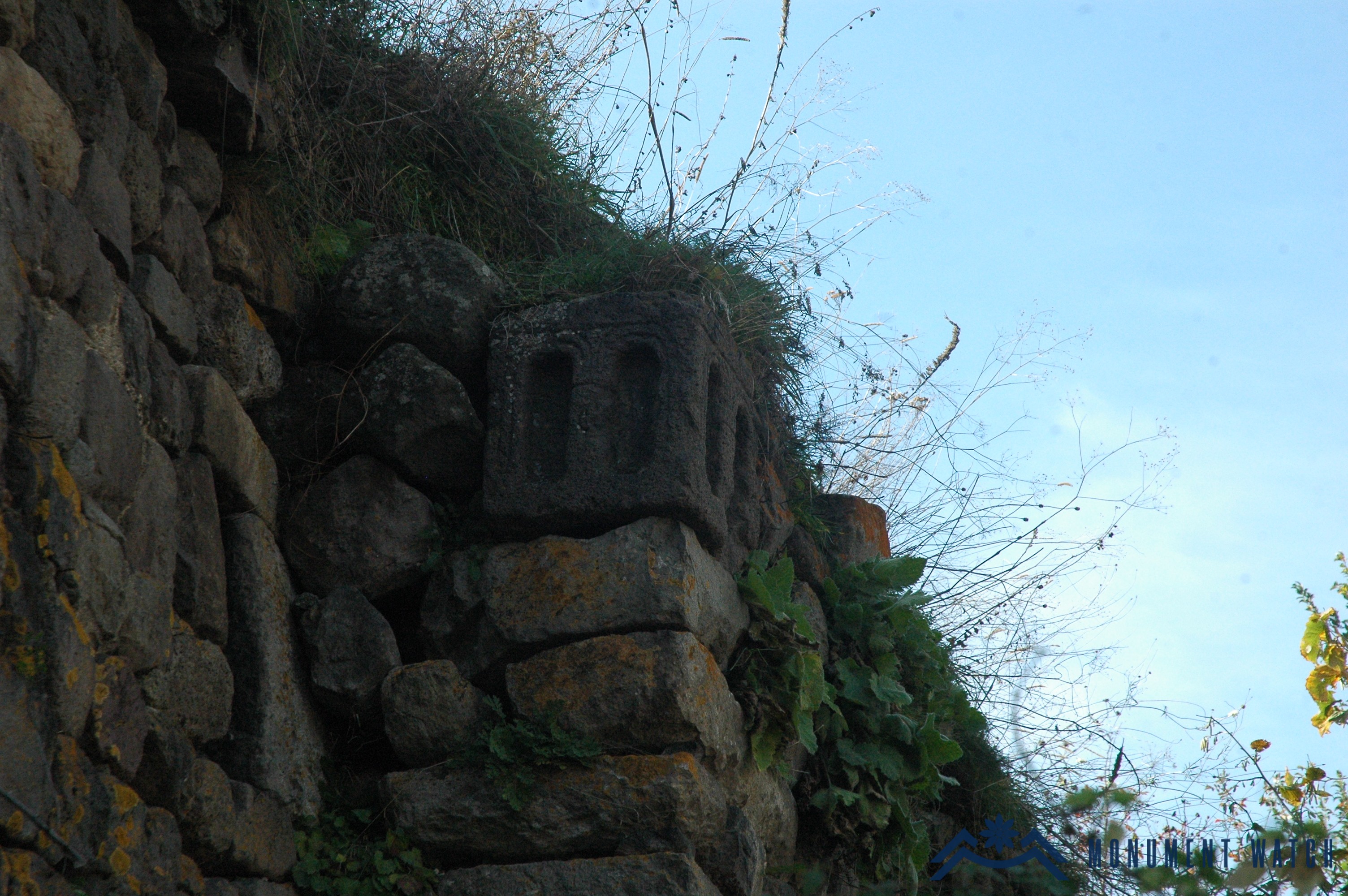
Verishen’s Surb Hripsime Church is particularly noteworthy for its apse, which is semicircular on the exterior rather than polygonal (Fig. 3). Early medieval hall churches with externally semicircular apses are also known at Tsolakert, Lusakert, and Batikyan (Ter-Minasyan 1986, 64). Early medieval architectural details have also been preserved both within the walls of the structure and in its immediate surroundings (Figs. 4, 5).

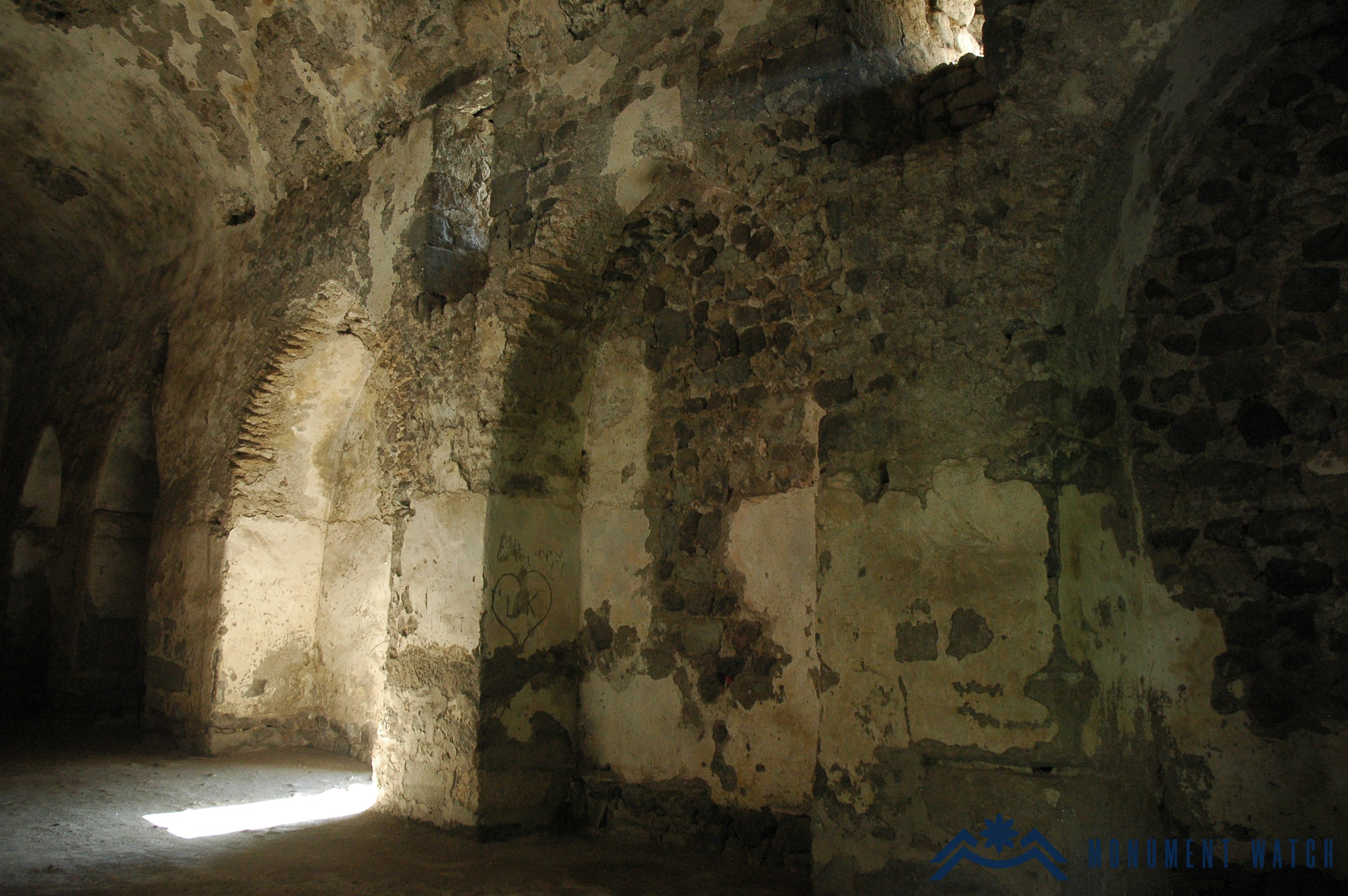
Verishen’s Surb Hripsime Church measures 20.9 × 4.5 m. Its interior is divided into six bays by five pairs of wall-piers. Notably, the wall-piers are so broad that the spaces between them create the impression of niches (Fig. 6).

Surb Hripsime Church is built of local undressed grey basalt bonded with lime mortar. Relatively large, semi-dressed and dressed stones were used for the corner sections and entrances of the church. This shows that early medieval churches in Armenia were built not only of finely dressed stone, but also of roughly hewn and undressed stone. One such example is the early medieval church of Lusakert (Hasratyan 1976, 30–31).

The monument has two entrances: one from the west and one from the south (Fig. 7). The present appearance of the western entrance is the result of a later renovation: it is pointed, and a khachkar was used as its lintel. Above the western entrance is a window with a cross-shaped opening. A window with the same type of opening is also found on the eastern side; both were added later (Fig. 3). East of the southern entrance there is an opening now given the appearance of a window, which was probably formerly an entrance (Fig. 5). Its size is not characteristic of a window. It should also be noted that the two entrances differ sharply in style and height (Ter-Minasyan 1986, 64).

Inside, traces of plaster have survived on the walls (Fig. 6). The windows of the church are very diverse: those on the southern façade are large and rectangular, and perhaps acquired their present form in the 19th century, while those on the northern façade are narrow and small. Today, the historical cemetery, with dozens of tombstones, khachkars, and fragments of early Christian monuments, is located mainly on the southern side of the structure (Fig. 7).

Fig. 3. The apse of the church. Photo: Monumentwatch group.

Fig. 4. The early medieval cross-bases on the southern side of the church. Photo: Monumentwatch group.

Fig. 5. An early medieval architectural detail. Photo: Monumentwatch group.

Fig. 6. The wall-piers of the church. Photo: Monumentwatch group.

Fig. 7. The general view of the church from the south. Photo: Monumentwatch group.

Bibliographic examination

Verishen’s Surb Hripsime Church has not been the subject of a separate study. It has mostly been briefly described from an architectural perspective in several articles devoted to the single-nave basilican churches of early medieval Armenia.

The condition after the Azerbaijani aggression of 2020–2022

Following the 44-day Artsakh war and the subsequent border changes, Verishen’s Surb Hripsime Church was not damaged, although during the two-day war of September 2022, four houses and one livestock building in Verishen were damaged by shelling. The monument is now located 8 km from the border.

Archaeological excavations preceding stabilization and restoration works are currently being carried out in the area of the monument.

Bibliography

  1. CAI 2 1960 - Corpus of Armenian Inscriptions, vol. 2, Goris, Sisian, and Kapan Districts, compiled by B. Arakelyan, Yerevan, 1960.
  2. Hasratyan 1976 - Hasratyan M., “The Single-Nave Monuments of Armenia with Externally Emphasized Apses,” Yerevan, Lraber Hasarakakan Gitutyunneri.
  3. Ter-Minasyan 1986 - Ter-Minasyan A., “The Early Medieval Single-Nave Monuments of Historical Syunik,” Yerevan, Lraber Hasarakakan Gitutyunneri, no. 1.