On Azerbaijan’s Adopted “Concepts for the Development of Tourism in Karabakh”
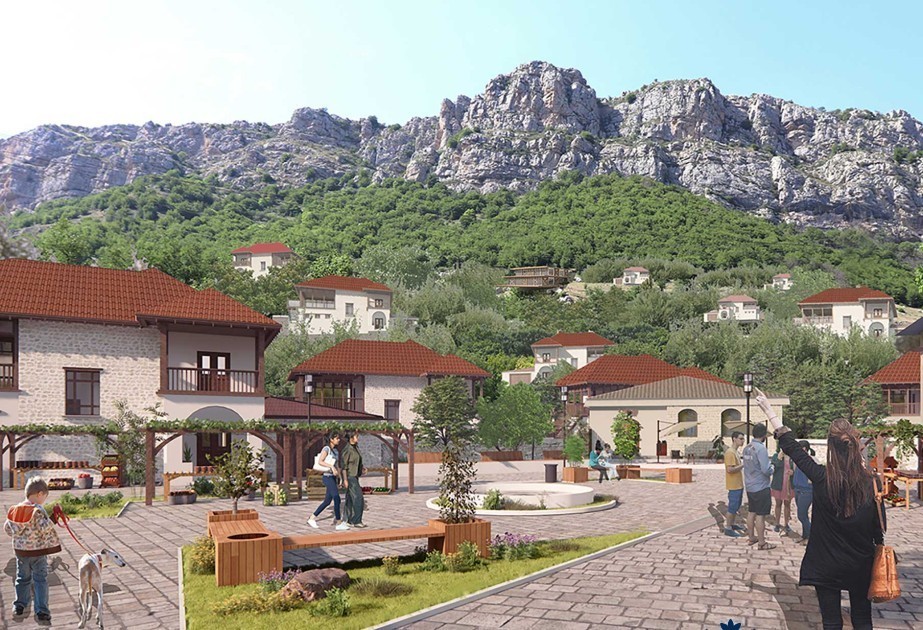
According to the State Tourism Agency of Azerbaijan, tourism development concepts have been prepared for the villages of Karin Tak and Togh, as well as for Hadrut, Mataghis, and Shushi. A tourist route titled “Victory Road” has also been developed, beginning in the Varanda region (https://azertag.az/xeber/dasalti_ve_tug_kendlerinin_hadrut_ve_suqovusan_qesebelerinin_susa_seherinin_turizm_inkisaf_konsepsiyalari_hazirlanib-3958083). Here, tourism is explicitly linked to the narrative of military victory.
Since 2021, Azerbaijan has been promoting the importance of tourism in Artsakh. This is evidenced by the first international culinary festival held in Shushi in 2022, the first scientific-practical conference on “The Restoration and Development of Tourism in the Liberated Territories” held in Aghdam in 2023, the international scientific conference on “Prospects for Cultural Tourism in the Turkic World,” the International Gastronomy Day organized in Shushi, as well as the international conference titled “Azerbaijan Health Tourism Conference: Development Opportunities.” These events are presented as efforts to promote the region’s tourism potential. Azerbaijan is now also promoting Artsakh on international platforms. In reality, however, such initiatives are aimed at creating an impression of normalcy before the international community in the occupied territory: everything is legal, and everything is fine. A striking example of Azerbaijan’s approach to tourism is the project for the “Victory Museum” in Stepanakert. The building of the former Party Committee of the Nagorno-Karabakh Autonomous Oblast — the presidential residence of the Republic of Artsakh — is now being transformed into a “Victory Museum” (https://monumentwatch.org/hy/alerts/%d5%bd%d5%bf%d5%a5%d6%83%d5%a1%d5%b6%d5%a1%d5%af%d5%a5%d6%80%d5%bf%d5%b8%d6%82%d5%b4-%d5%af%d5%a1%d5%bc%d5%b8%d6%82%d6%81%d5%be%d5%b8%d5%b2-%d5%b0%d5%a1%d5%b2%d5%a9%d5%a1%d5%b6%d5%a1%d5%af%d5%ab).
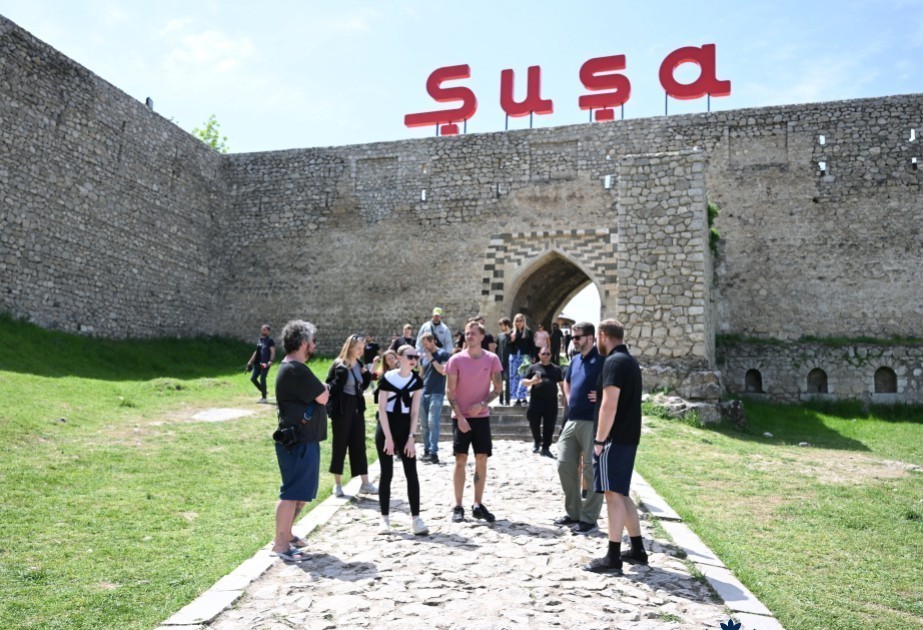
According to the State Tourism Agency of Azerbaijan, there are currently 35 hotels operating in the territory of Artsakh. However, Artsakh can be visited only with special permission, which is issued through several state platforms. Permits for travel by private car are valid for five days. Travel by private vehicle is possible only along several approved routes. Since 23 July 2025, foreign citizens have also been allowed to travel to Artsakh after obtaining the relevant permits. According to statistics from the state platform “Our Road to Karabakh,” a total of 2,549,857 people visited the region in 2025. The most visited destinations were Shushi, Lachin, and Stepanakert (https://azertag.az/xeber/qarabag_turizminde_boyuk_canlanma___bir_ilde_25_milyondan_chox_ziyaretchi_video-3957023).
Since 2021, the Azerbaijani side has included certain occupied territories of Artsakh among Azerbaijan’s tourist destinations. The organized visits are propagandistic in nature. The narrative underlying Azerbaijan’s tourism strategy is built on a simple logic: before “liberation,” the territory is presented as empty, backward, or unviable; after it, as a developing region open to investment and capable of hosting international events. This contrast serves one principal purpose: to create the impression that real development became possible only once Armenians were no longer present in the territory.
Fig. 1