Architectural and compositional description
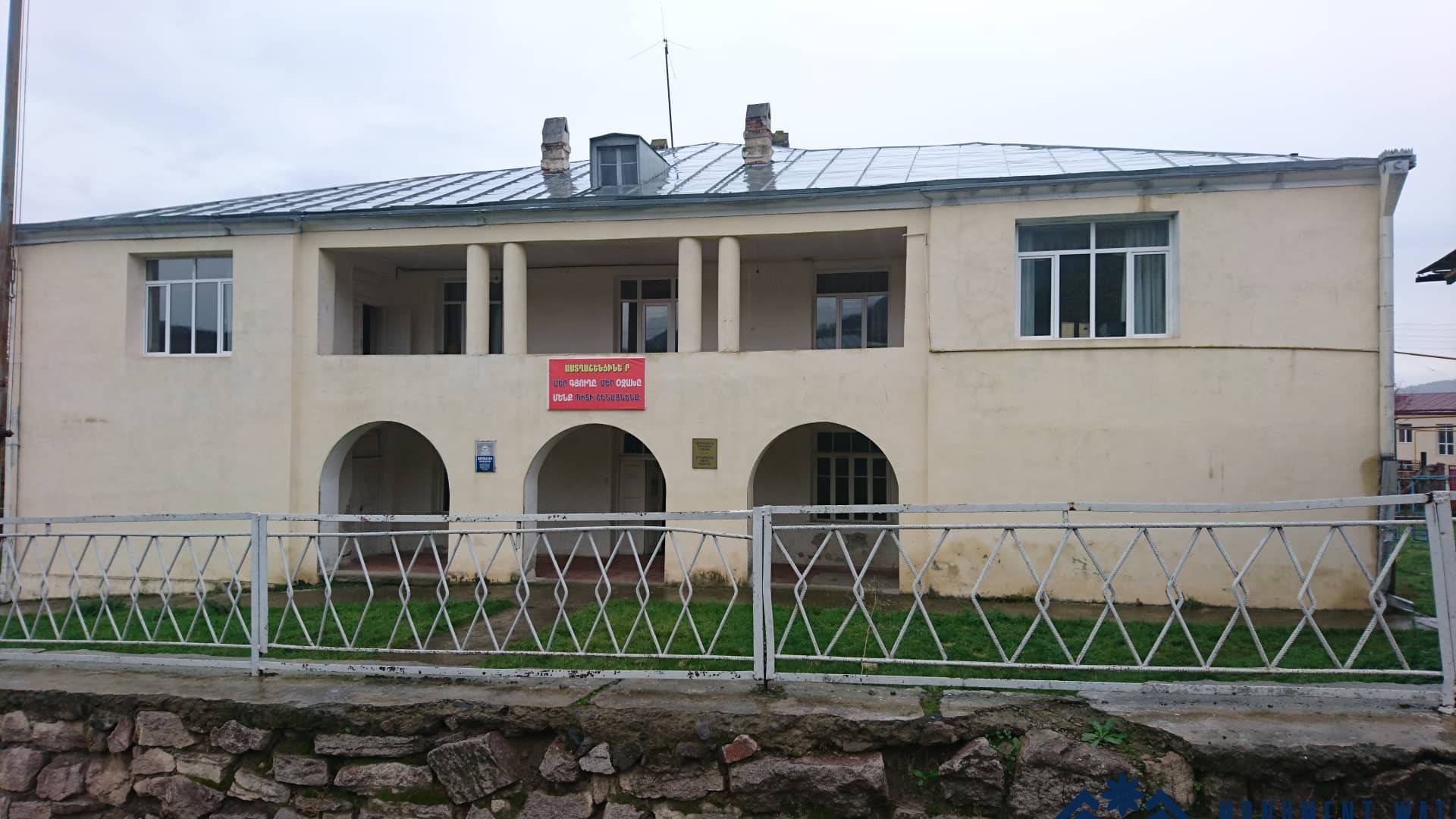
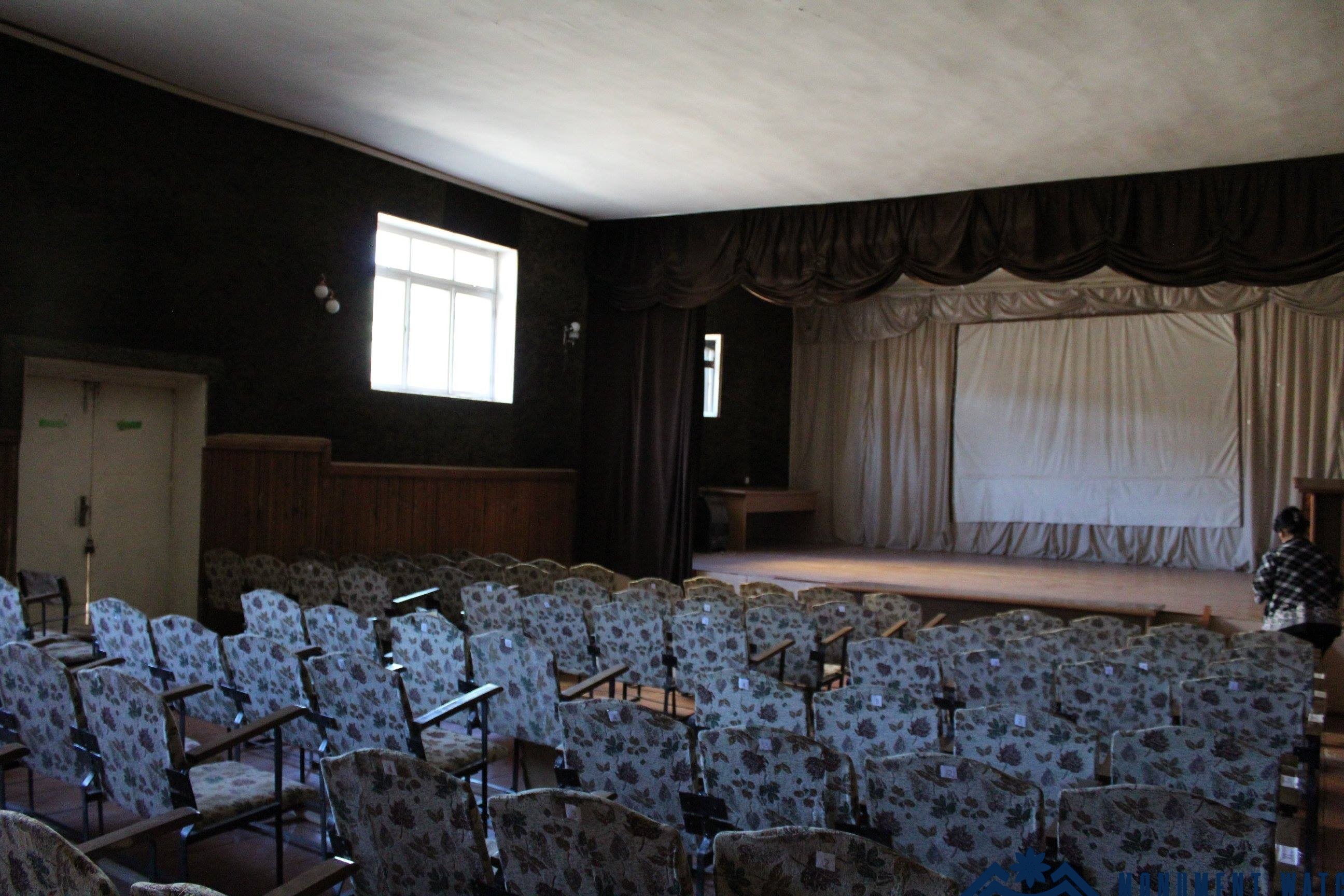
The House of Culture is housed in a standard two-story Soviet-era building comprising an auditorium and an adjoining room, while the second floor accommodated the Arts School, which opened in 2011. Until the occupation of 2023, the auditorium and the adjoining room were used as a venue for public events and celebrations.
In plan, the two-story building has a simple rectangular volumetric-spatial composition. At the center of the principal façade is an entrance hall articulated by three arched openings, incorporating the main entrances to the building. On the second floor above the entrance hall is a spacious balcony supported by two pairs of columns. The composition of the façade is completed by broad windows positioned on either side of the second-floor balcony.
The Condition before, during, and after the war
Before the 44-day war, the House of Culture in Astghashen formally remained operational and had two paid staff positions. Its active programming, however, was limited, with most efforts focused on organizing the annual “Cultural Crossroads” competition.
The Arts School, established in 2011 and occupying part of the building, faced a severe shortage of resources, including the absence of necessary musical instruments, particularly the qanun, as well as a lack of qualified personnel.
Following the 44-day war, Astghashen and the surrounding settlements focused on restoring essential infrastructure. More than 200 apartments were constructed for displaced families, while road construction was also underway. Since the occupation of the village in 2023, no information has been available regarding the condition of the House of Culture.
The study is based on field research conducted in Astghashen village in 2018–2019.