The Islamic Mausoleum of Gyurjulu

Location

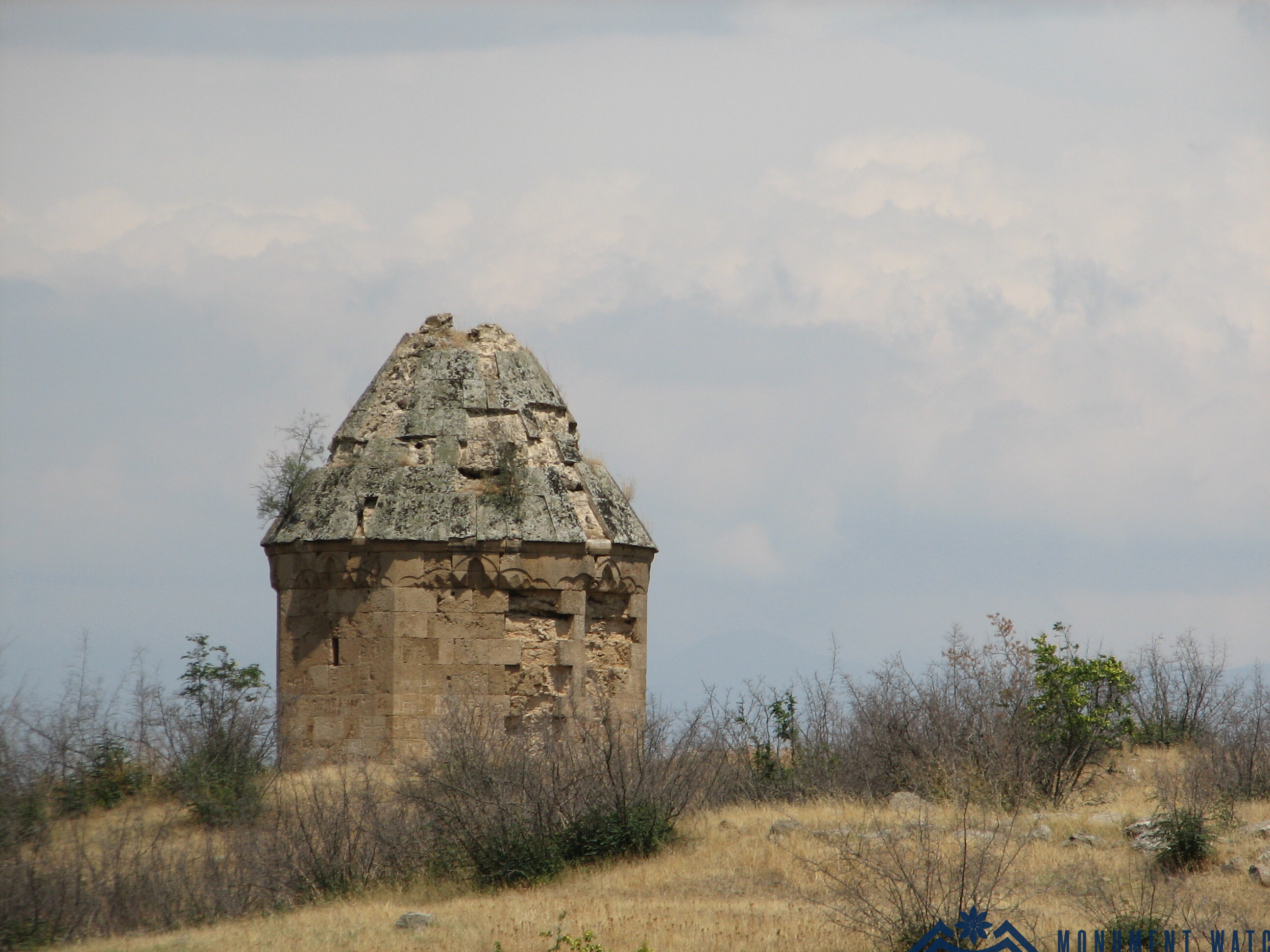
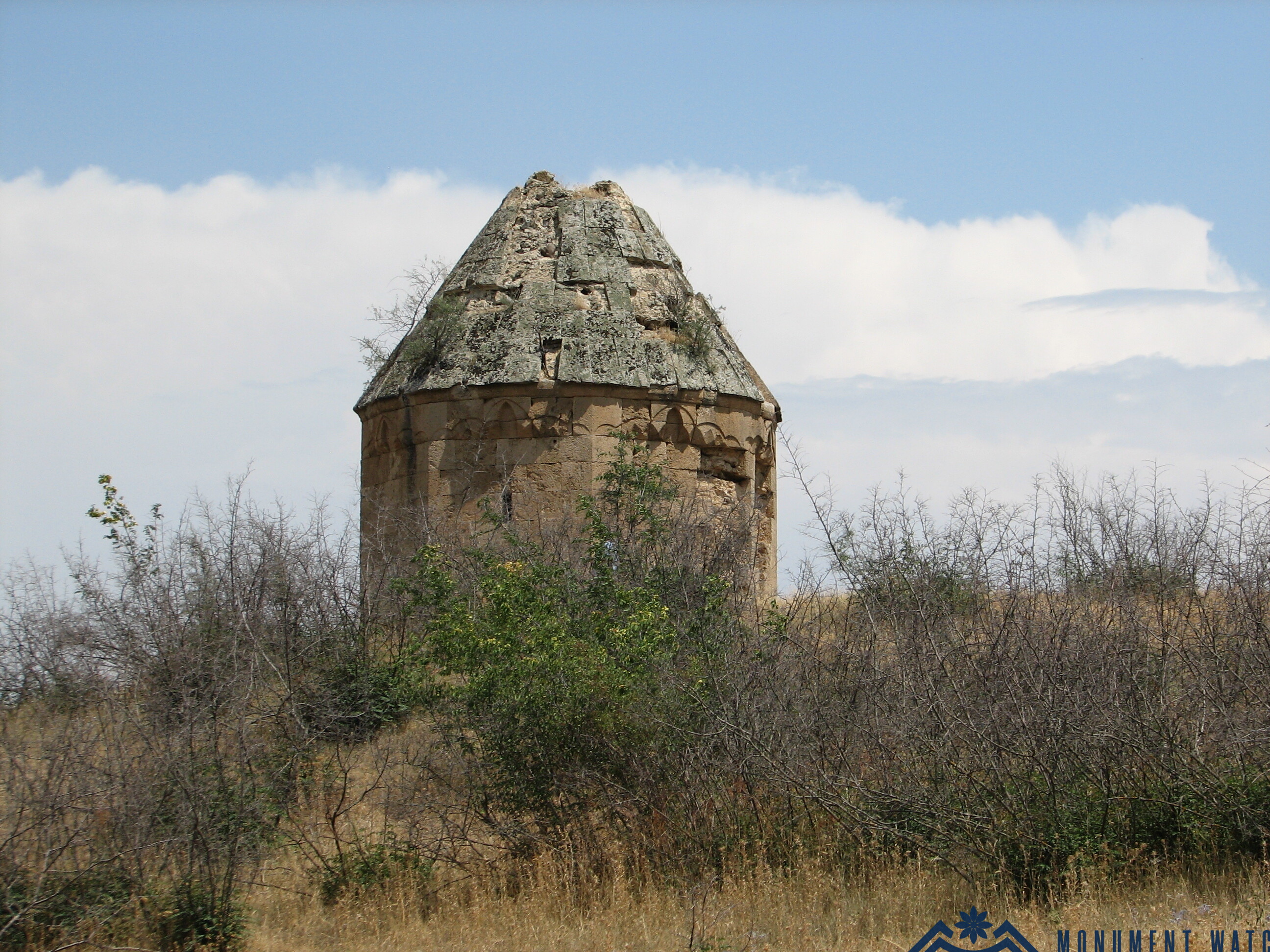
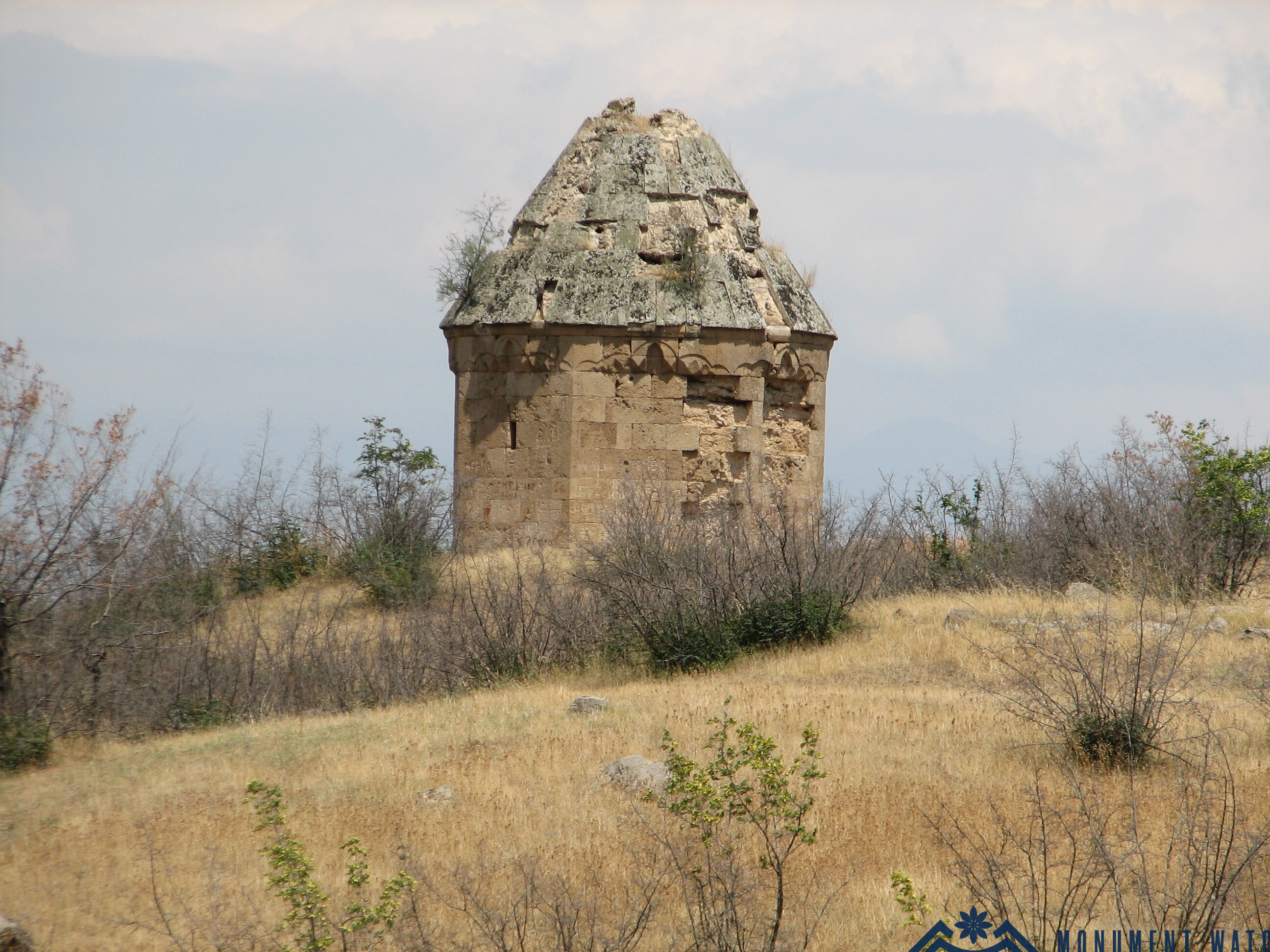
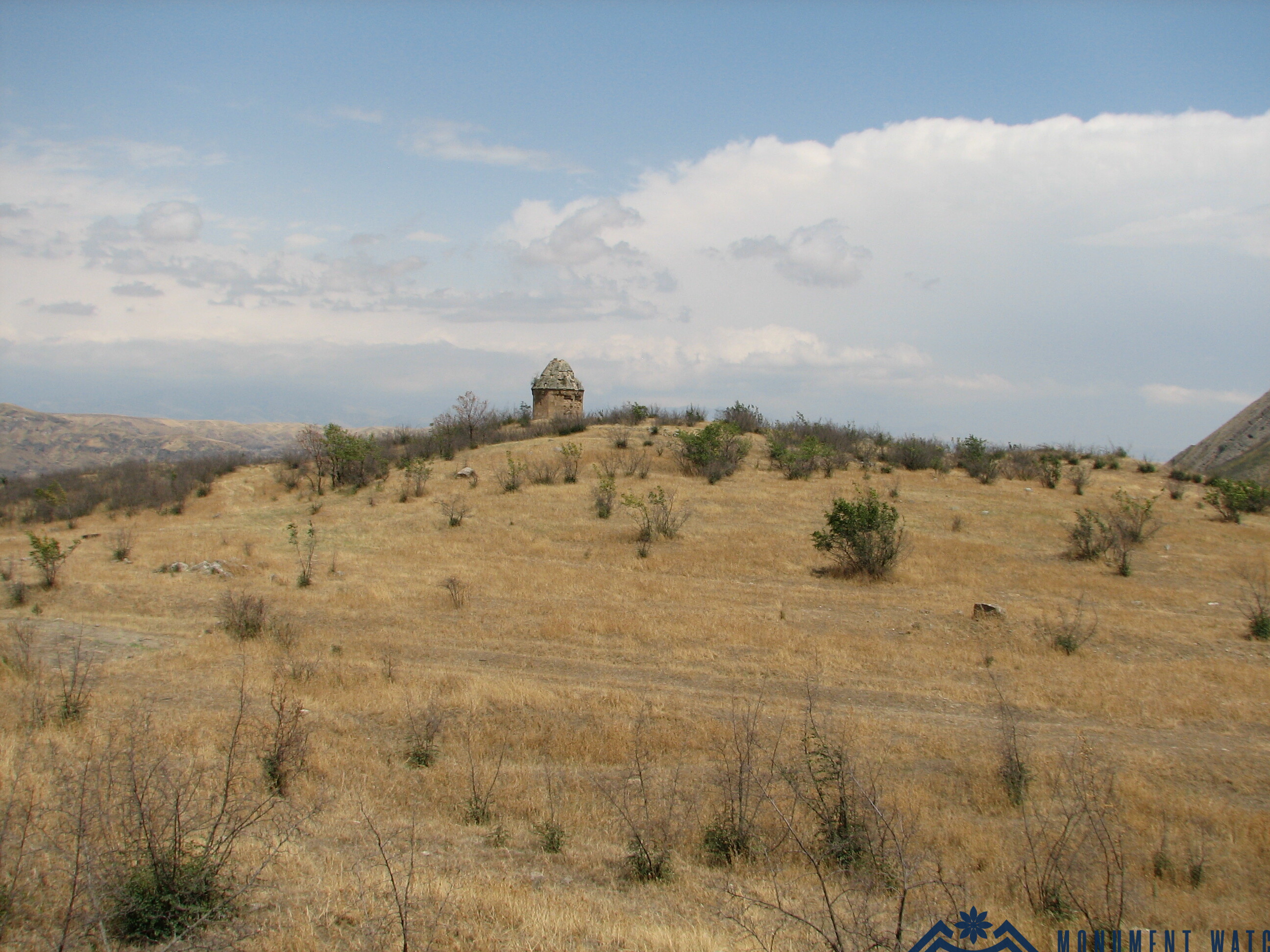
The mausoleum (Figs. 1, 2) is situated on the southern outskirts of Gyurjulu village, in the occupied Kashatagh District of the Republic of Artsakh. It stands on the right side of the road from the former settlement of Novlu, at an elevation of 958 m above sea level, in the foothill zone (Karapetyan 1999, 189).

Fig. 1. General view of the mausoleum. Photo by L. Hovhannisyan.

Fig. 2. General view of the mausoleum. Photo by L. Hovhannisyan.

Historical Overview

No historical information about the mausoleum has been preserved. The monument bears no inscriptions, although the lintel above its entrance appears to have been intended for one. In fact, many Islamic mausoleums lack inscriptions, leaving significant gaps in our knowledge of both their architects and the patrons who commissioned their construction (Hovsepyan 2025, 24–30). Judging from its architectural characteristics and construction techniques—including its octagonal form, tent-shaped roof, absence of a separate underground burial chamber, simple tombstones, and pointed-arch entrance—the mausoleum exhibits features characteristic of funerary monuments dating to the 15th–17th centuries. However, the architectural historian A. Salamzade dated the structure to the 17th–18th centuries (Salamzade 1964, 37, 52–53).

Architectural and Compositional Analysis

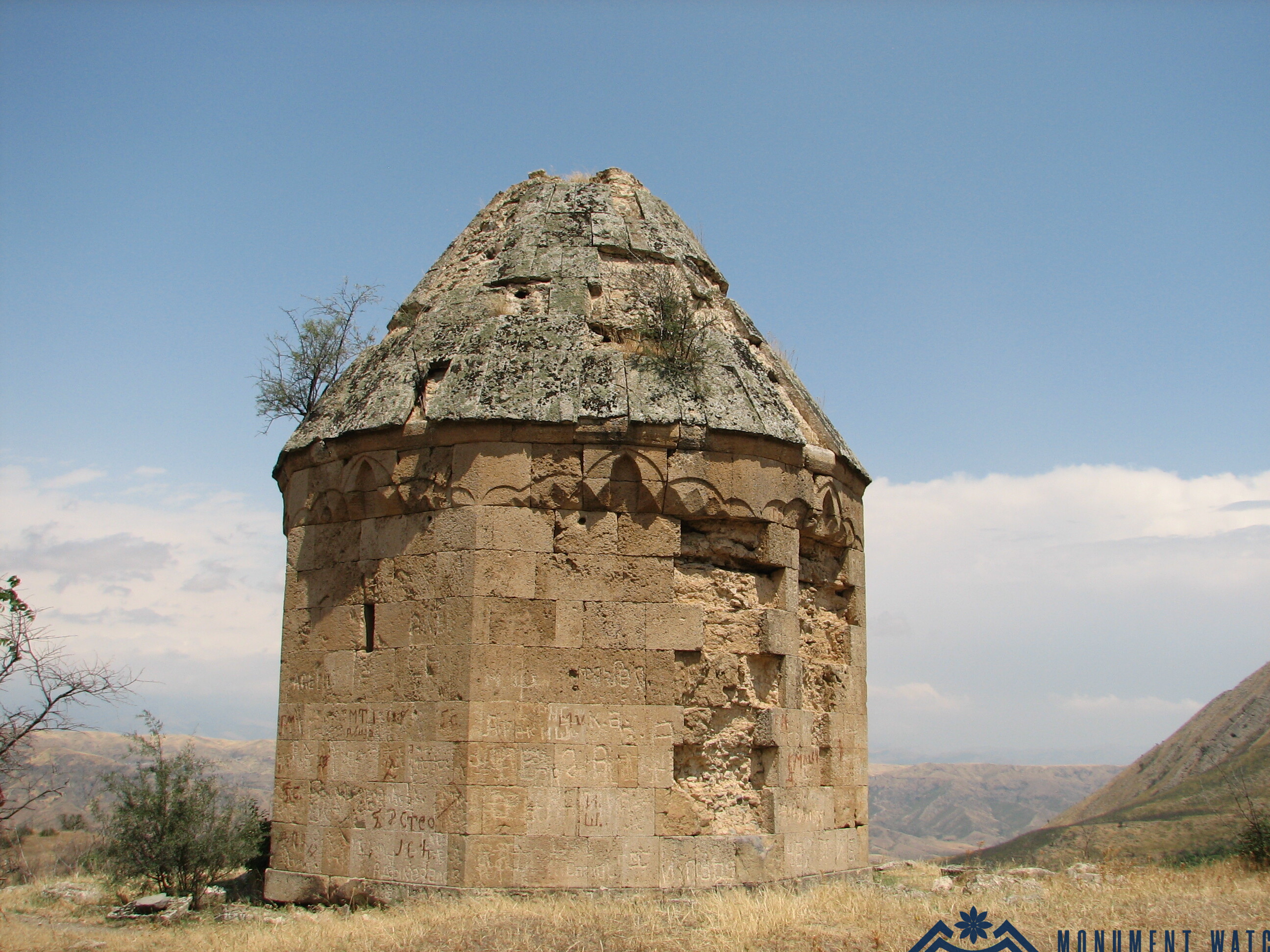
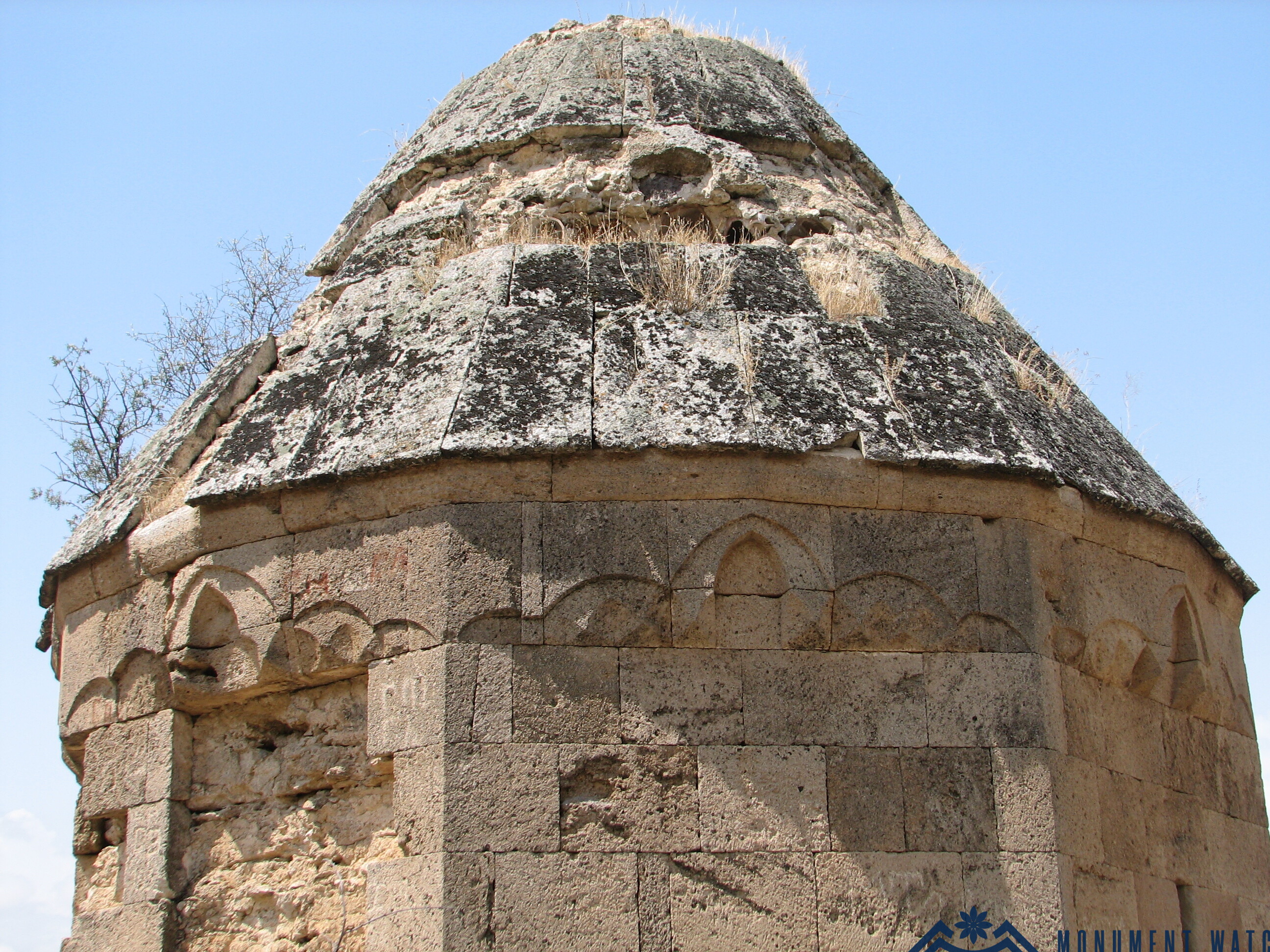
The Gyurjulu Mausoleum is constructed of finely dressed yellowish stone bonded with lime mortar. Unlike Islamic mausoleums of the 13th–14th centuries, the structure does not have a separate underground burial chamber. Instead, the burial is located within the prayer hall. The mausoleum has an octagonal exterior (Figs. 3, 4). Its eight facets terminate in a
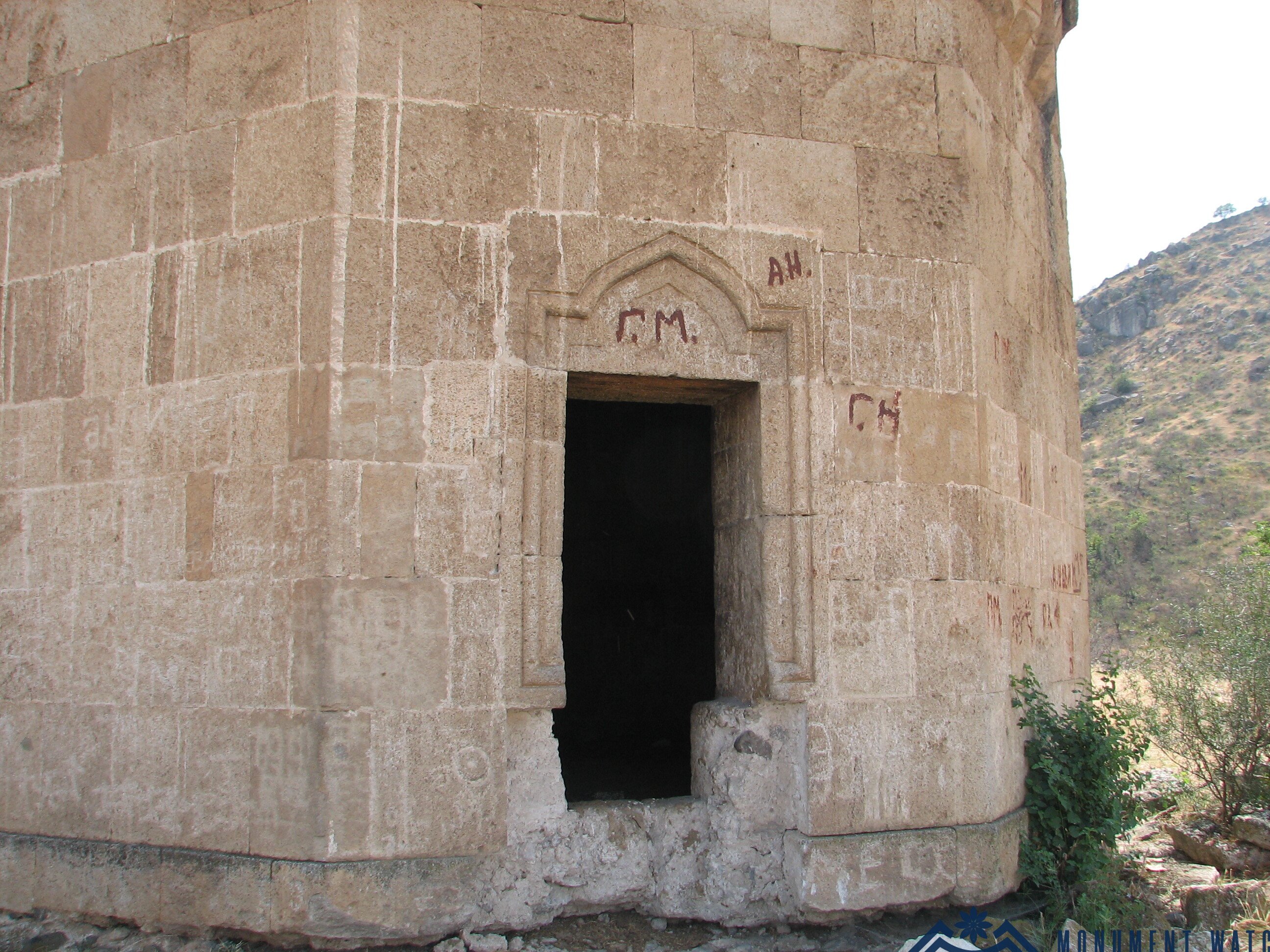
decorative band of muqarnas, which provides the transition to a sixteen-sided pyramidal roof (Fig. 5; Salamzade 1964, 52–53). The rectangular entrance, framed by a deeply carved surround, is located on the northern facet of the building (Fig. 6).
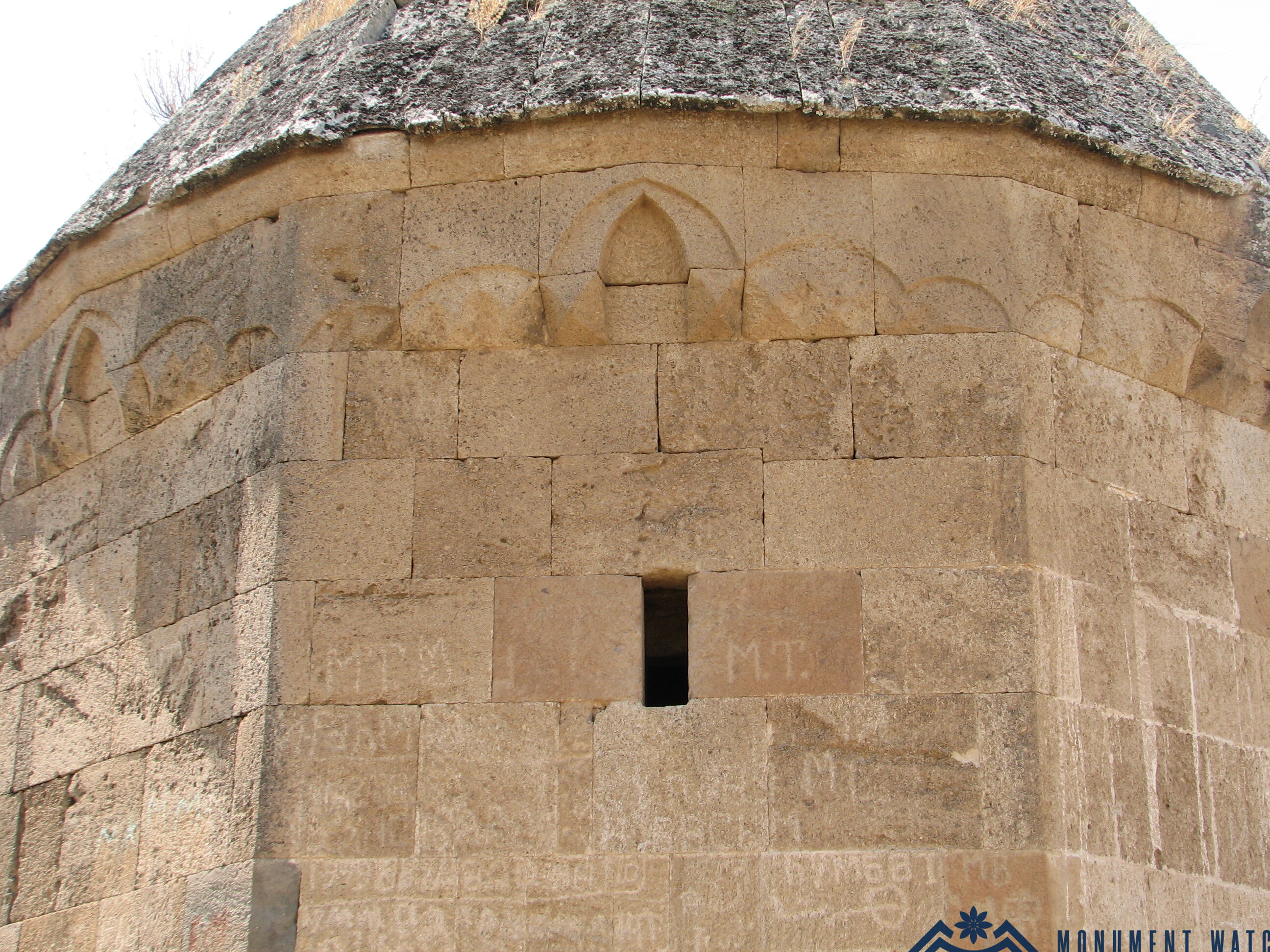
Internally, the mausoleum is covered by a hemispherical dome, whose central keystone is cross-shaped. A mihrab is situated on the southern side of the interior. The mausoleum is surrounded by gravestones that bear no inscriptions. Nevertheless, their overall appearance and form closely resemble those of medieval Armenian tombstones (Karapetyan 1999, 189). Ceramic vessels, including pots and fragments of large storage jars (pithoi), are incorporated into the fill of the roof structure (Fig. 7). The mausoleum has a single window (Fig. 8).

Fig. 3. The octagonal exterior of the mausoleum. Photo by L. Hovhannisyan.

Fig. 6. The entrance to the mausoleum. Photo by L. Hovhannisyan.

Fig. 4. The octagonal exterior of the mausoleum. Photo by L. Hovhannisyan.

Fig. 7. Ceramic pots and pithoi incorporated into the fill of the mausoleum’s drum. Photo by L. Hovhannisyan.

Fig. 5. The sculpturally decorated band of the mausoleum. Photo by L. Hovhannisyan.

Fig. 8. The sole window of the mausoleum. Photo by L. Hovhannisyan.

Condition Before and After the War

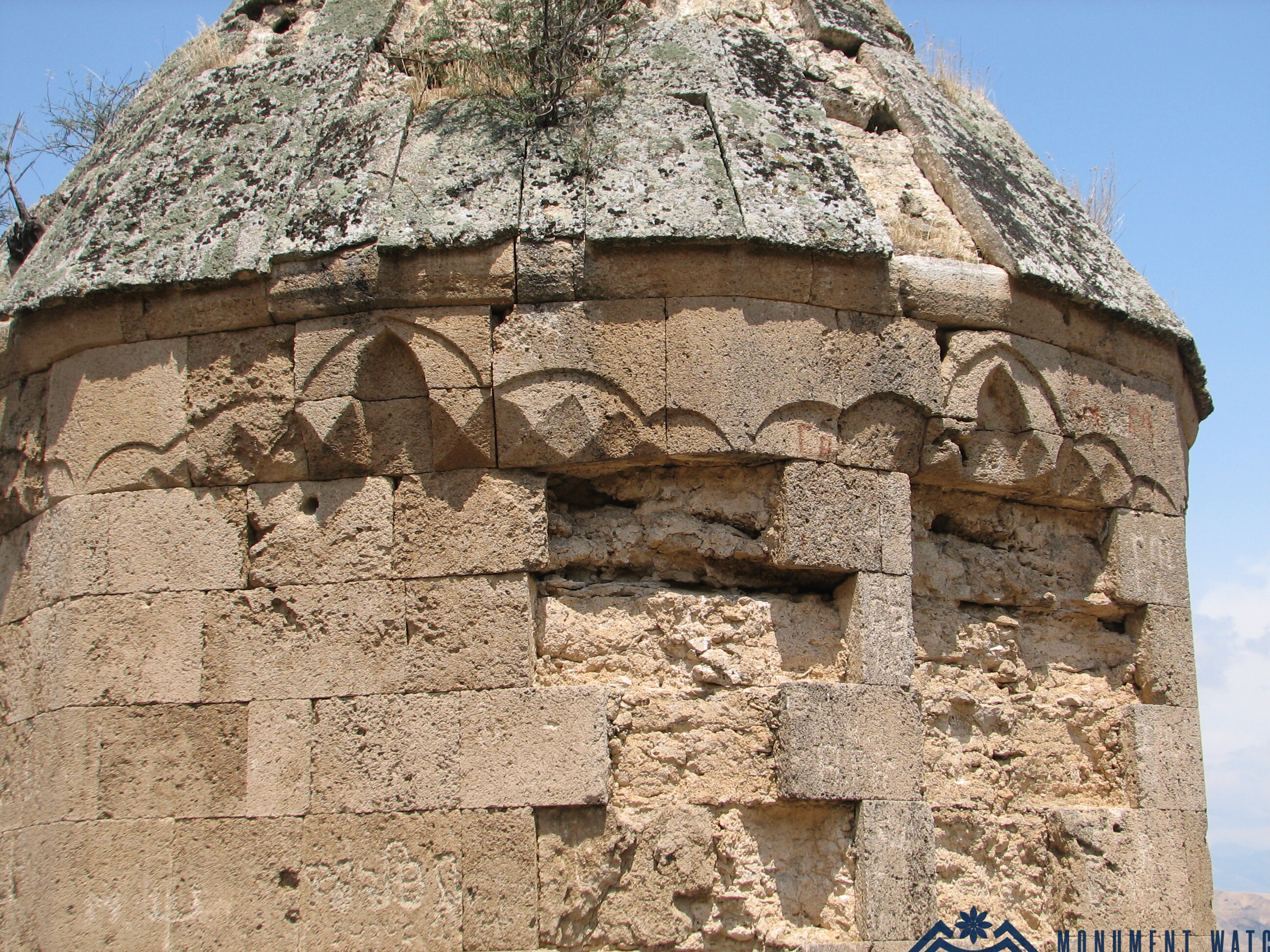
The mausoleum is in an excellent state of preservation and requires only minor repairs, primarily to replace several missing facing stones (Fig. 9). During the Soviet period, residents of neighboring Azerbaijani villages left dozens of inscriptions in Azerbaijani on the building’s surfaces, some applied in paint and others incised into the stone.
The mausoleum sustained no damage during the Artsakh wars.

Fig. 9. The damaged sections of the mausoleum. Photo by L. Hovhannisyan.

Bibliography
1. Karapetyan 1999 - Karapetyan S., Monuments of Armenian Culture in the Territories Annexed to Soviet Azerbaijan, Yerevan.
2. Hovsepyan 2025 - Hovsepyan R., “The Islamic Monuments of Artsakh in Their Historical and Chronological Context,” Hushardzan, no. 2, Yerevan,  pp. 22–39.
3. Salamzade 1964 - Salamzade A., The Architecture of Azerbaijan in the 16th–19th Centuries, Baku.

The Islamic Mausoleum of Gyurjulu
Artsakh