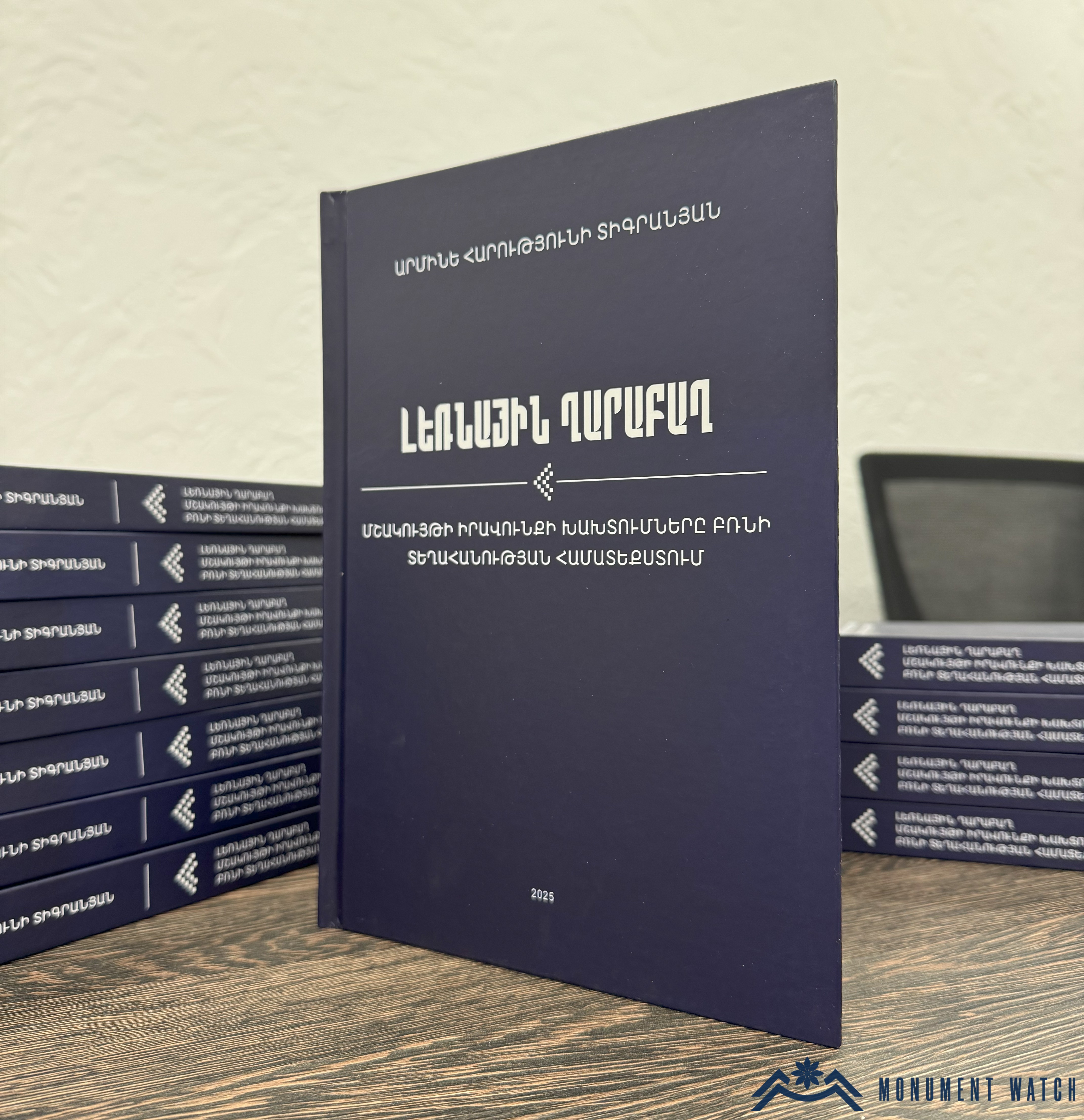
The monograph examines the multifaceted violations of the cultural rights of Artsakh Armenians who were forcibly displaced from their historical homeland as a result of the wars unleashed by Azerbaijan between "2020 and 2023", as well as ethnic cleansing, genocidal acts, racial hatred, discrimination, and the systematic destruction of cultural heritage. It also presents mechanisms for the protection of these rights.
Drawing on a critical analysis of international norms, reports, resolutions, and theoretical sources related to the protection of cultural rights, the study outlines the conceptual framework of cultural rights, its core components, the conditions required for participation in a community’s cultural life, and the consequences of obstructing such participation.
The book analyzes violations of the cultural rights of Artsakh Armenians arising from armed conflict and forced displacement, including the deliberate destruction, desecration, appropriation, and distortion of cultural monuments; the disruption of safeguarding and revitalization of intangible heritage; forced separation from Artsakh’s historical and natural environment; and restrictions on access to heritage sites and territories.
The monograph also addresses international prohibitions against forced displacement and its long-term negative impact, particularly in the context of the dismantling of cultural communities in Nagorno-Karabakh. Through an analysis of in-depth and focus-group interviews with Artsakh Armenians forcibly displaced from the Hadrut and Shushi regions of Nagorno-Karabakh, the author highlights systemic challenges threatening the preservation and continuity of identity—challenges stemming from coerced separation from tangible, intangible, and natural heritage, as well as the distortion of traditional ways of life.
On the basis of existing mechanisms in international law, the work formulates Azerbaijan’s obligations to respect, guarantee, and protect the cultural rights of Artsakh Armenians.
The book is intended for specialists dealing with theoretical and legal issues related to human rights, cultural rights, and forced displacement, as well as for state and civil society organizations, research and educational institutions, and a broader readership concerned with the preservation of Artsakh Armenians’ cultural heritage.