History
The Askeran Museum of History and Local Lore was established in 1996.
By a decision of the Artsakh government, in January 2004, it was renamed and reorganised as the “Askeran Museum of History and Local Lore” (a state non-commercial organisation). By Government Decision No. 849 of December 1, 2008, it was dissolved, and an Askeran branch of the “Artsakh State Museum of History and Local Lore” (a state non-commercial organisation) was established.
The museum was housed in the Askeran Regional Administration building, at 14 N. Stepanyan Street.
Following the military aggression of September 19, 2023 and the forced displacement of Armenians, the city of Askeran—including the museum—came under Azerbaijani occupation.
Collection
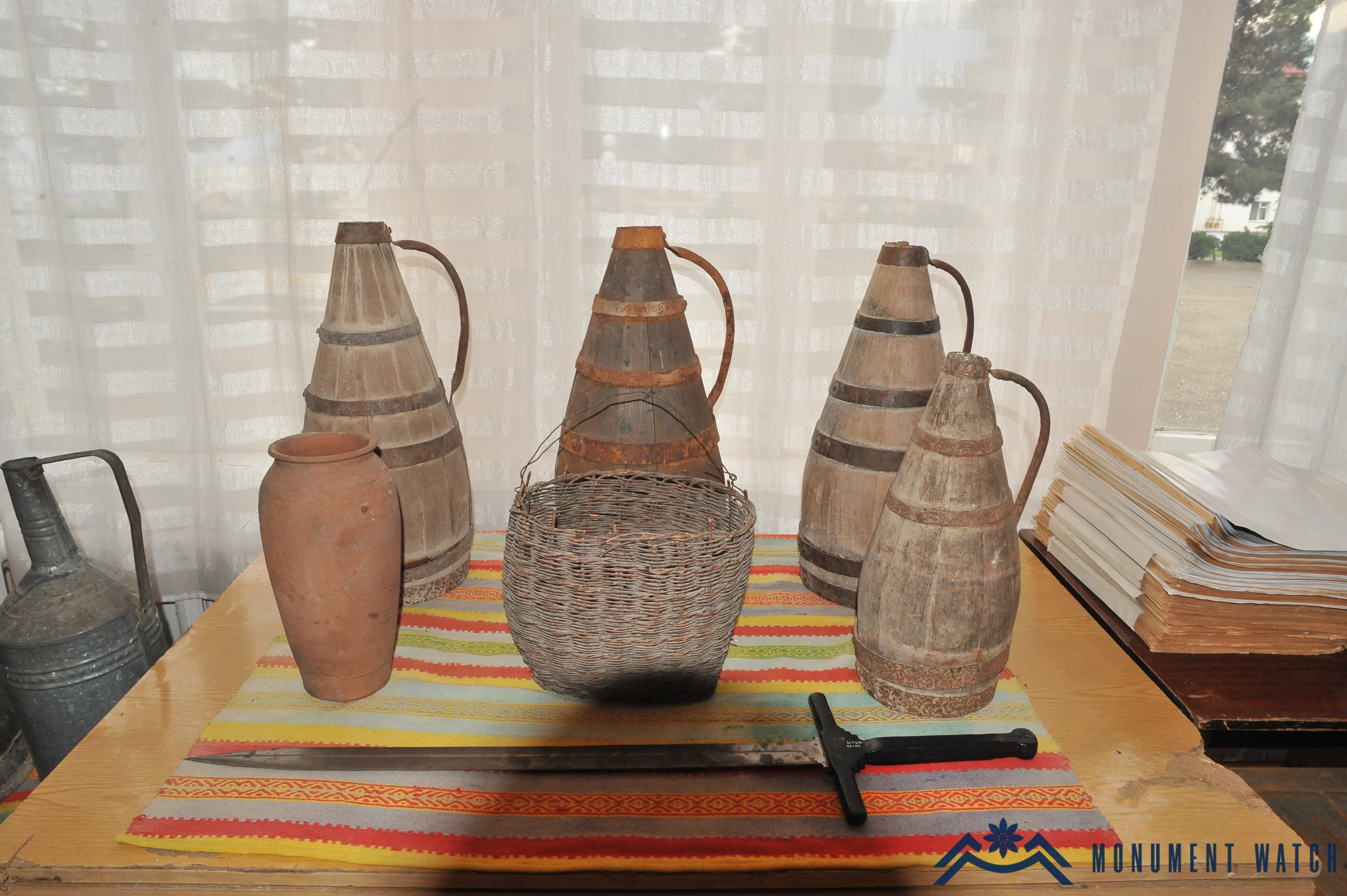
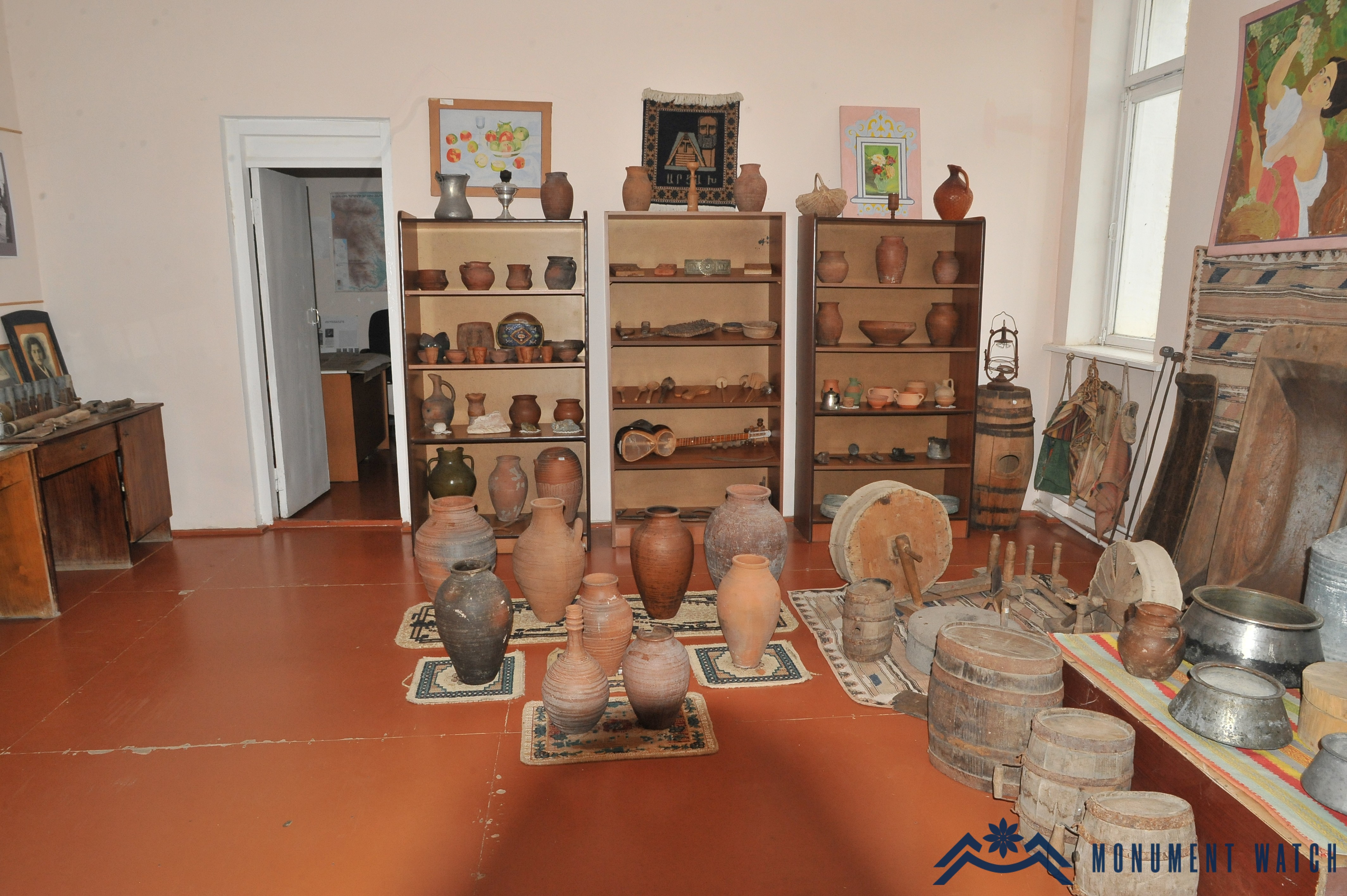
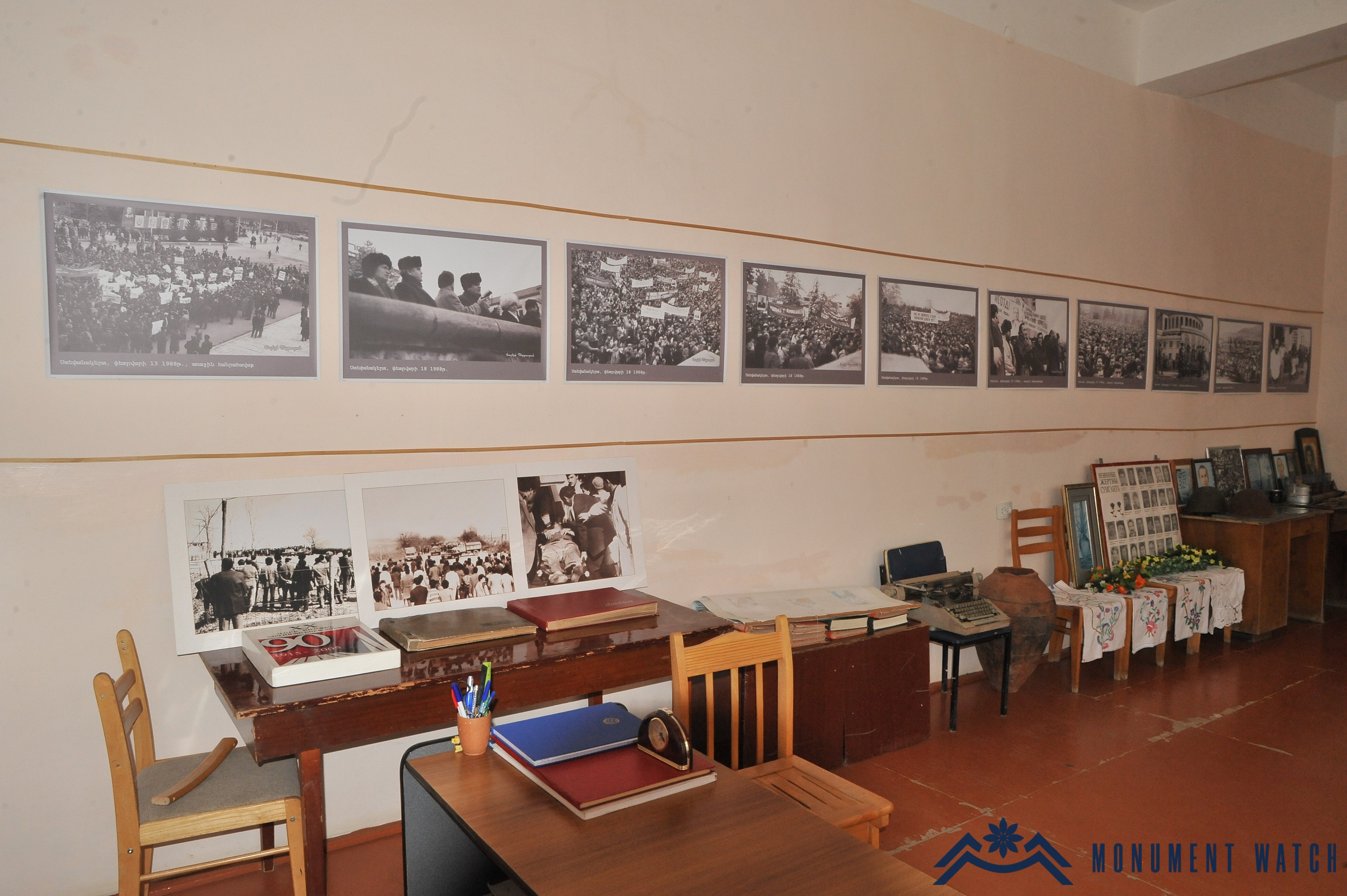
The Askeran Museum of History and Local Lore comprised two halls. Its holdings included approximately 500 objects, of which only a small number were archaeological finds. The main displays consisted primarily of ethnographic objects relating to Armenian culture of the 19th–20th centuries, as well as materials associated with the Great Patriotic War (Figs. 1–3). Items entered the museum through both collection work and voluntary donations.
Work focused primarily on acquiring and organising materials reflecting the Great Patriotic War and the Artsakh liberation struggle. The museum also presented historical-geographical descriptions of villages in the Askeran region; materials on distinguished educators; personal files of prominent state and public figures; and local-history and ethnographic materials relating to the history of Artsakh.
The exhibition halls
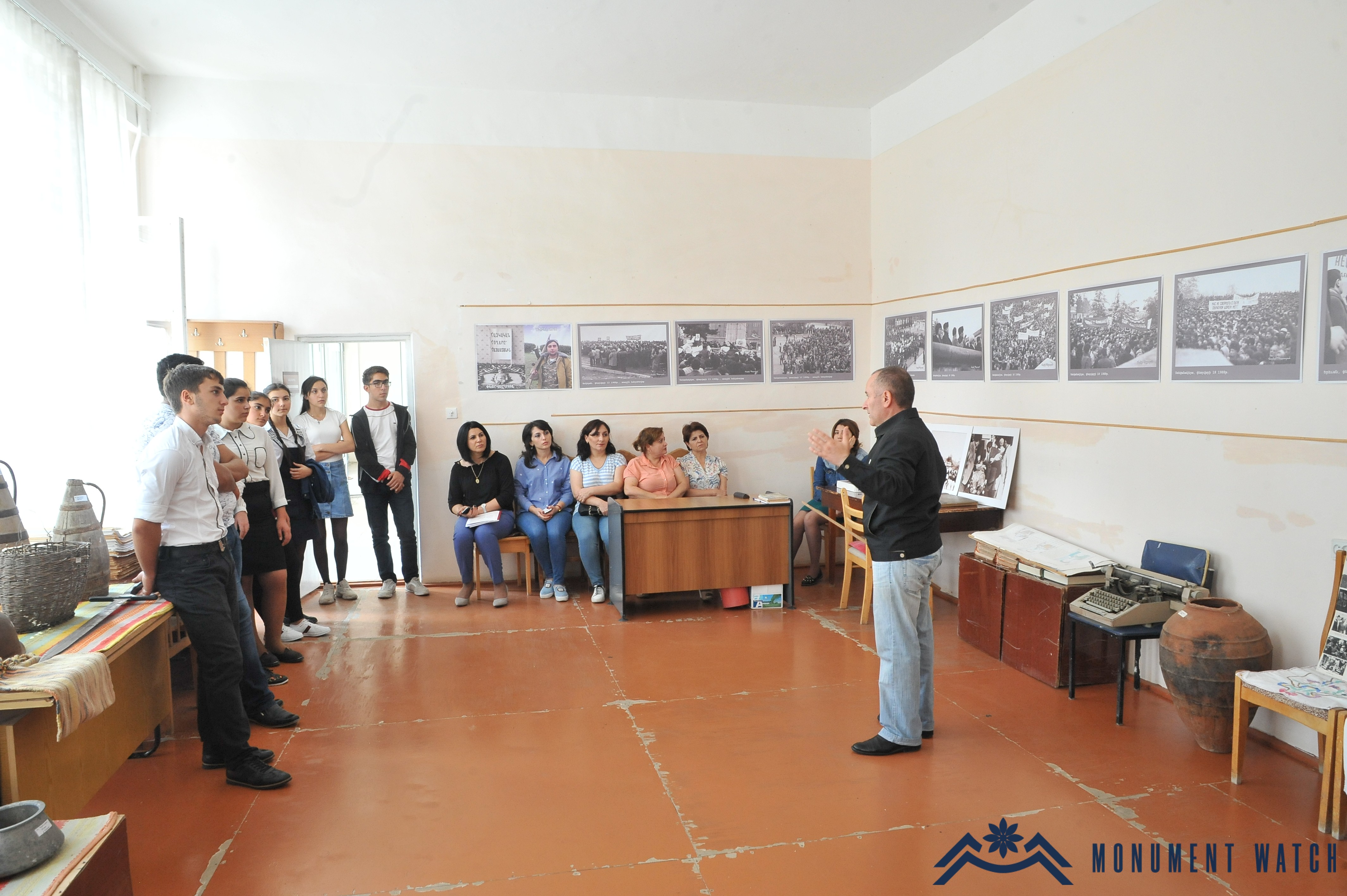
The Askeran museum consisted of two sections.
In the first hall—the archaeology and ethnography section—local history and ethnographic exhibits were displayed, along with photographs of Artsakh’s historical and architectural monuments and villages, books, pictures, and other materials on the history and culture of Askeran.
The second hall presented exhibits dedicated to the Great Patriotic War and to the Artsakh movement and war.