


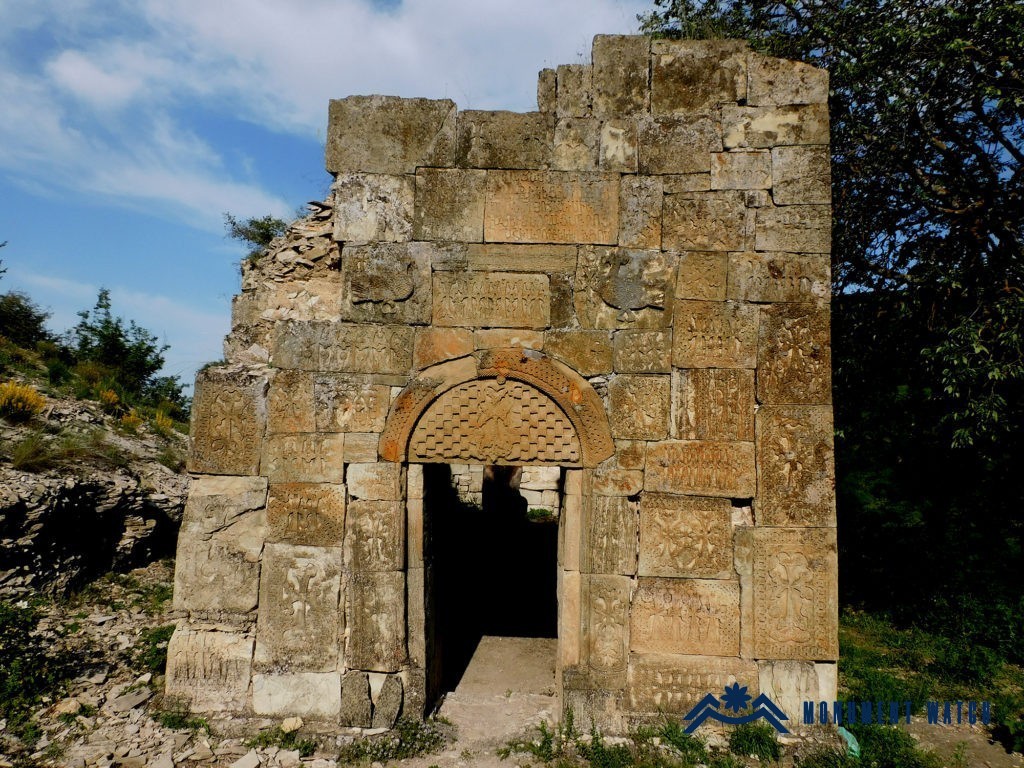
The Summary of the 2025 Works of the “Monitoring of Artsakh Cultural Heritage” Programme
Throughout 2025, the academic platform “Monitoring of Artsakh Cultural Heritage” continued to pursue its core mission— the scholarly documentation, study, monitoring, and public communication of Artsakh’s historical and cultural heritage in the context of forced displacement and the ongoing destruction of cultural heritage.
Over the course of the year, 50 heritage sites underwent scholarly assessment, including churches, monastic complexes, fortresses, archaeological sites, abandoned settlements, bridges, and khachkar fields. Each monument was examined through a comprehensive approach—incorporating mapping, plans, and photographic documentation—thereby ensuring systematic scholarly recording.
Within the framework of the programme, 11 brief studies were prepared and published, presenting distinctive elements of Artsakh’s cultural heritage, noteworthy facts, and under-researched episodes—from khachkar art and medieval relief sculpture to local beliefs and manifestations of historical memory.
In 2025, media monitoring was also significantly expanded. A total of 43 alerts were produced, addressing damage to, destruction of, and attempts to appropriate Armenian cultural heritage in Artsakh, as well as the international propaganda processes surrounding these developments. These materials aim not only to register facts, but also to shape an evidence-based, counter-argued discourse for international public debates.
Special attention was devoted to Artsakh’s museums and collections. During the year, five cultural institutions were examined, through which the history, role, and fate of Artsakh’s museum network were presented under conditions of peace, war, and forced displacement.
The year 2025 was also marked by scholarly publications. Three major works were published:
* The collective monograph “Artsakh Tigranakert: Its Historical and Cultural Profile in Light of Archaeological Research,”
* “Artsakh’s Museums: Under Conditions of Peace, War, and Forced Displacement” (Hamlet Petrosyan, Haykuhi Muradyan, Nzhdeh Yeranyan),
* “Nagorno-Karabakh: Violations of Cultural Rights in the Context of Forced Displacement” (Armine Tigranyan).
In addition, 19 news and analytical pieces were prepared and published, addressing international reactions, legal processes, scholarly discussions, and the evolving public discourse surrounding the protection of Artsakh’s cultural heritage.
The totality of the work carried out in 2025 underscores one essential reality: today, the preservation of Artsakh’s cultural heritage is possible primarily through scholarly memory, systematic documentation, and public responsibility. The “Monitoring of Artsakh Cultural Heritage” platform will continue its activities as an important instrument of scholarly, public, and legal advocacy.