Pottery from the 2019 Excavations at Berdashen

In July–August 2019, a detachment of the Artsakh Archaeological Expedition conducted excavations at the foot of the fortress in Berdashen village, Martuni Region of the Republic of Artsakh, and in the vicinity of the Pitsi Nahatak Chapel (for details, see https://monumentwatch.org/hy/monument/բերդաշենի-պեղումները/). The excavations provided an opportunity to broaden the study of medieval ceramics from this area. Archaeologists excavated two sites at Berdashen: the first at the foot of the fortress and the second near the Pitsi Nahatak Chapel.

Archaeologists recovered large quantities of medieval pottery from both excavation sites. The entire ceramic assemblage can be divided into plain (unglazed) and glazed wares. A total of 523 sherds were studied, of which 375 were unglazed and 148 glazed. Most of the pottery was recovered from the excavation area at the foot of the fortress.

Of particular interest are the glazed sherds. A small number of early examples date to the 10th–11th centuries (Fig. 1). They bear geometric motifs painted in black, probably with cobalt, beneath a dull yellowish-green glaze and recall examples associated with the Nishapur school of ceramics. Several other examples feature underglaze decoration executed with engobe.

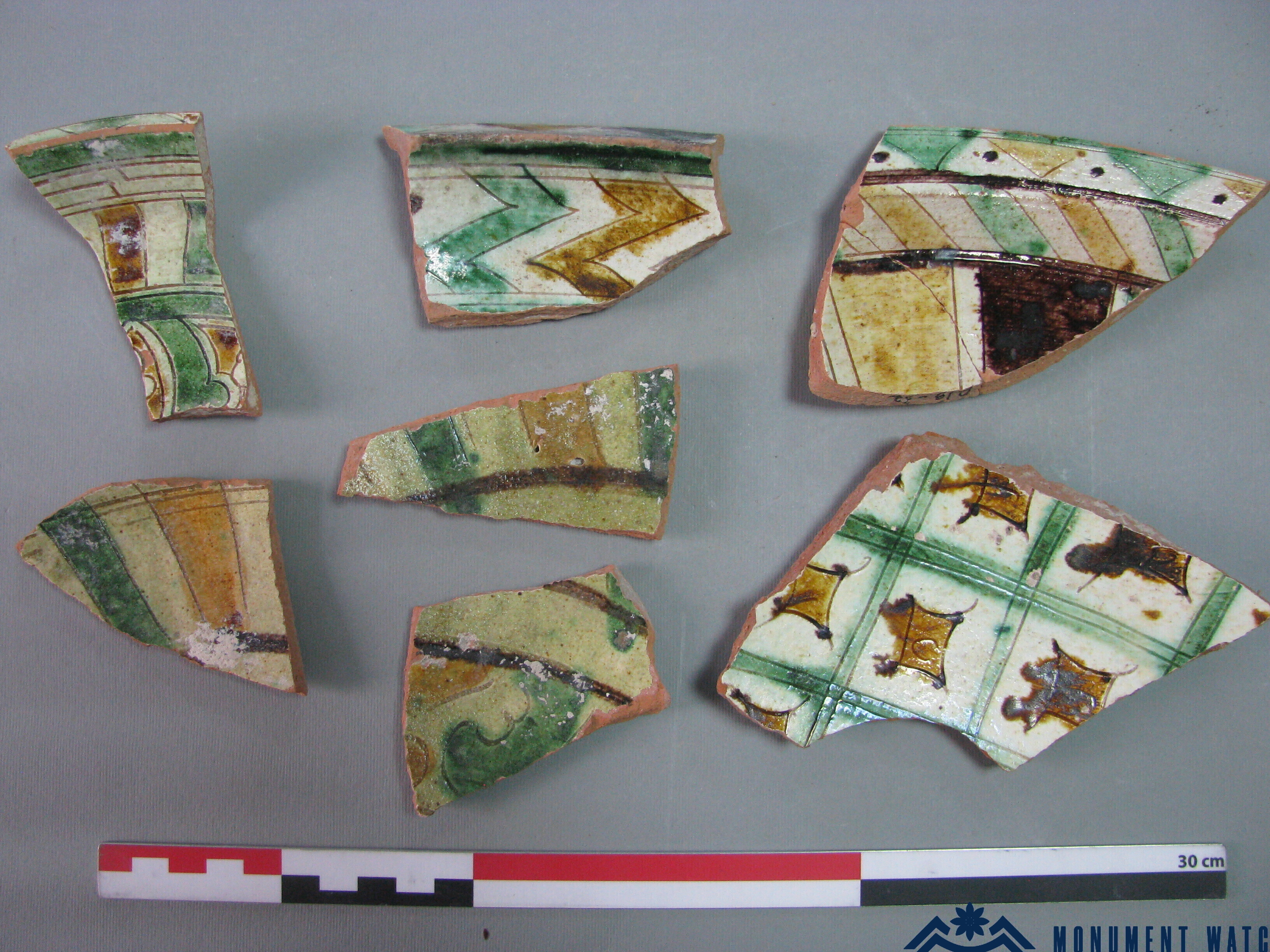
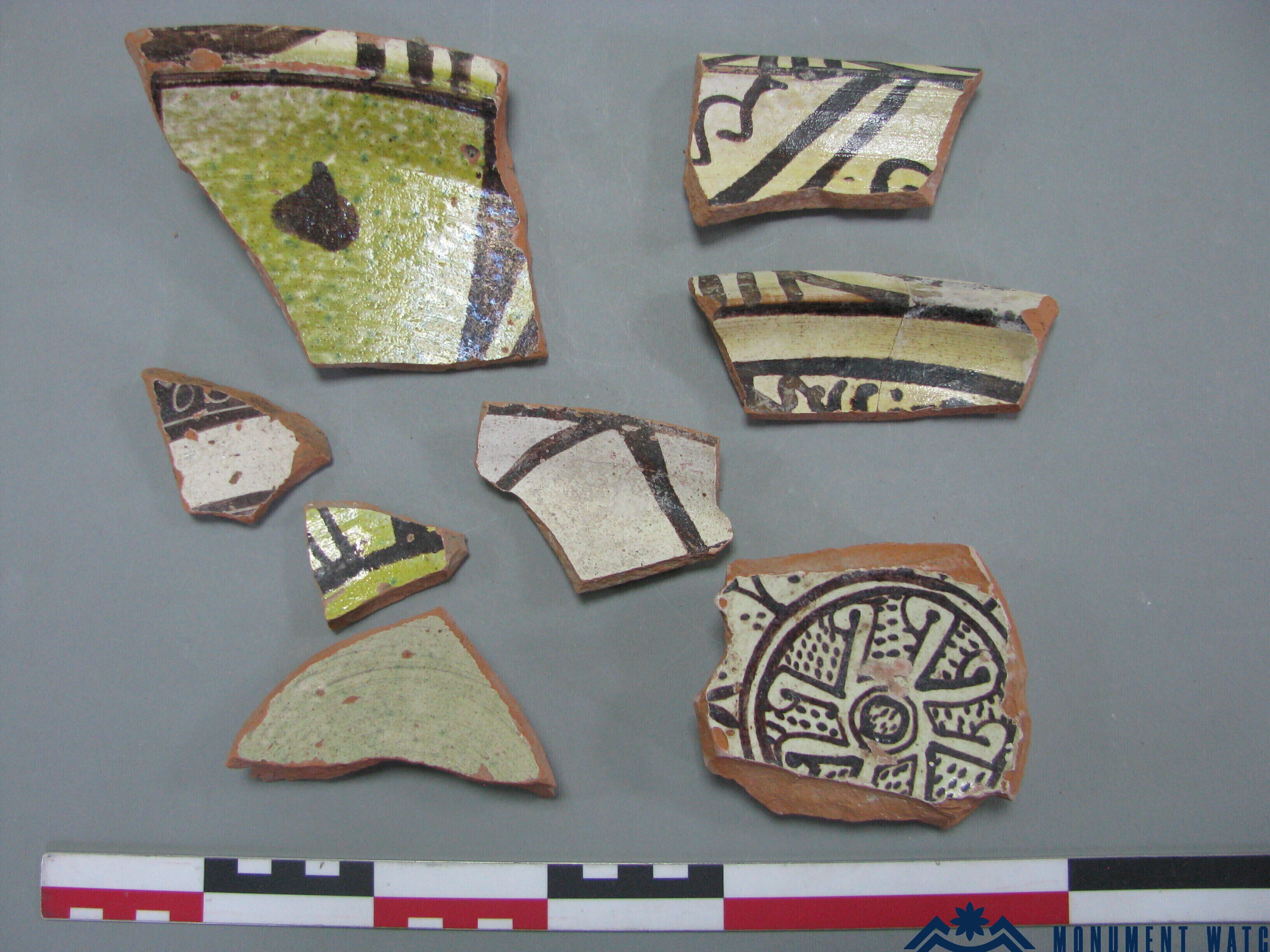
Most of the glazed pottery dates to the 12th–13th centuries, the period when this type of ceramic production flourished. These are readily recognizable incised and tricolor-glazed wares (Fig. 2).

Fig. 1. Underglaze decoration in cobalt, 10th–11th centuries, Berdashen, 2019. Photo: Artsakh Archaeological Expedition.

Fig. 2. Incised decoration on engobe and tricolor underglaze decoration, 12th–13th centuries, Berdashen, 2019. Photo: Artsakh Archaeological Expedition.

The technique was used primarily to decorate large and small bowls and plates intended as fine tableware. The plain ceramic body was coated with white engobe, into which the figures and ornamental motifs of the intended composition were outlined with a pointed tool. These were then painted with yellow, brown, and green mineral pigments. The entire decorated surface was subsequently covered with a colorless or colored glaze and fired. During firing, the pigments interacted with the low-melting glaze, producing a vivid polychrome effect. This technology is characteristic of a substantial portion of 12th–13th-century ceramics of the East, including the Middle East, Iran, and Central Asia.

At Berdashen specifically, the following natural mineral pigments were used to produce polychrome decoration: copper oxides for green; ochre and iron oxides for yellow and brown; and manganese oxides for purple or dark brown, approaching black.

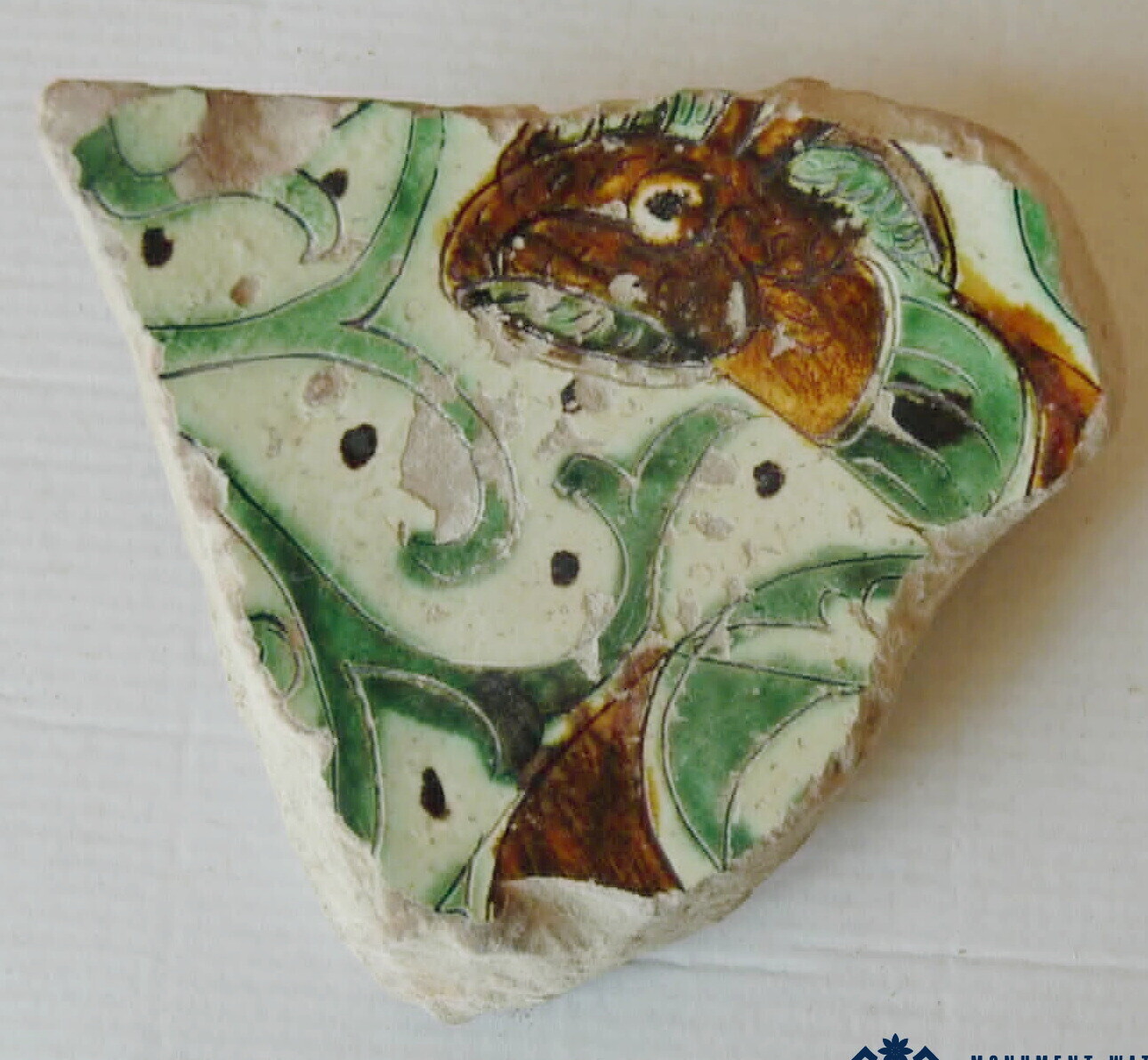
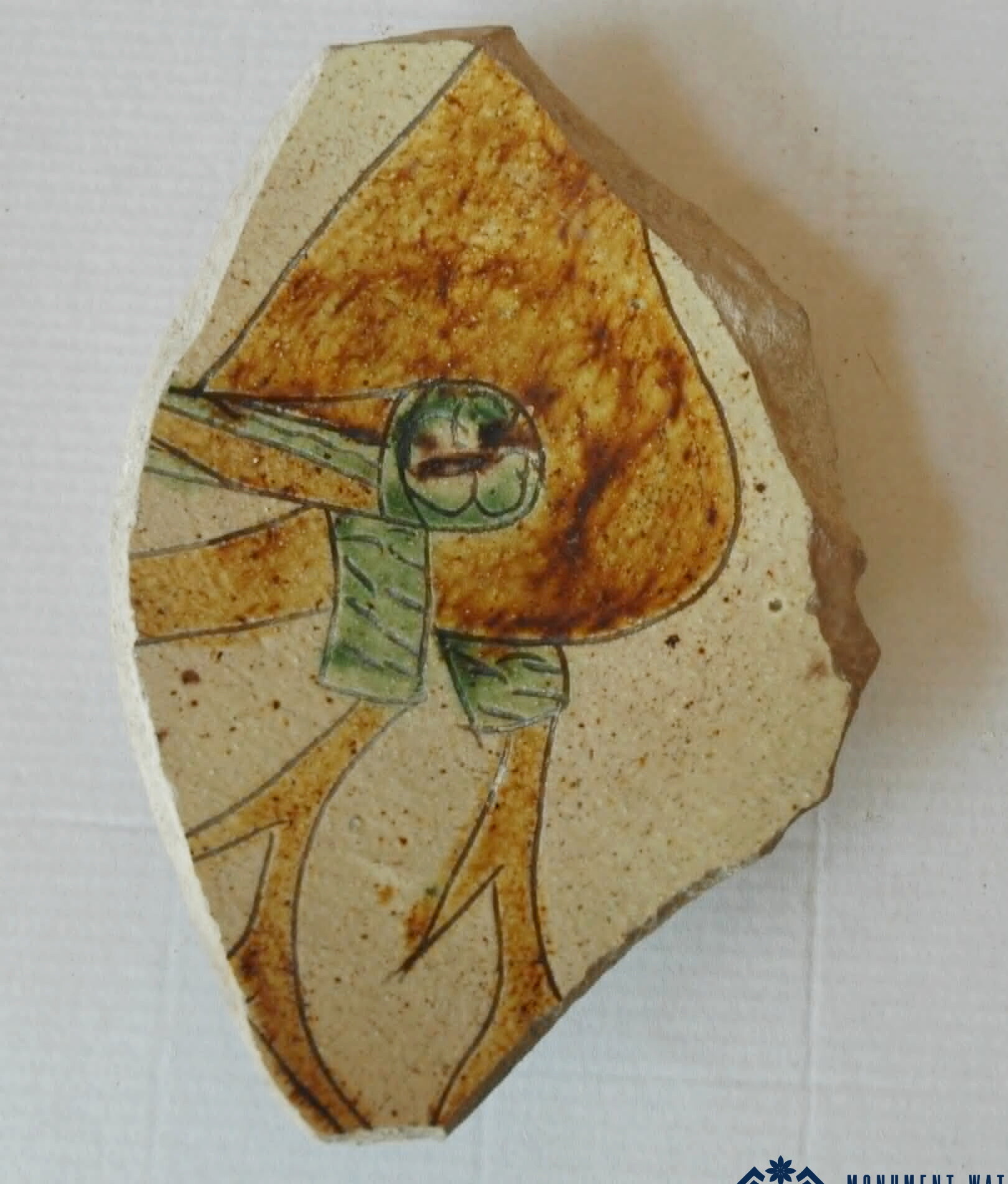
As for the subjects and motifs of the compositions, the excavated material primarily features simple geometric designs. It should be noted, however, that the classical decorative repertoire of this ceramic tradition also included vegetal ornament representing a flowering garden, often with various animals and birds at the center, reflecting the aesthetic preferences of those who used the vessels. Among the objects formerly displayed in the Berdashen Museum are also fragments bearing animal imagery (Figs. 3, 4).

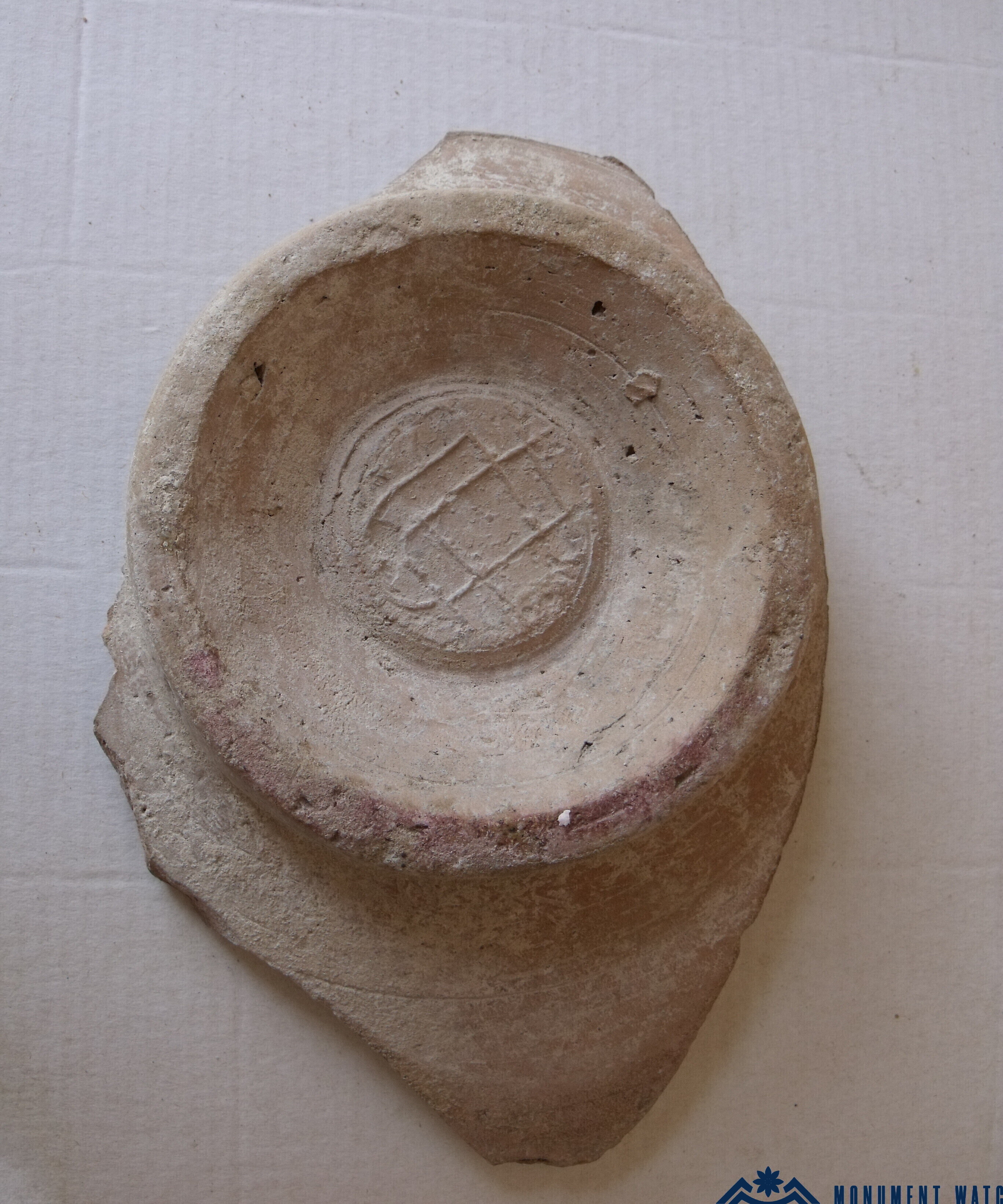
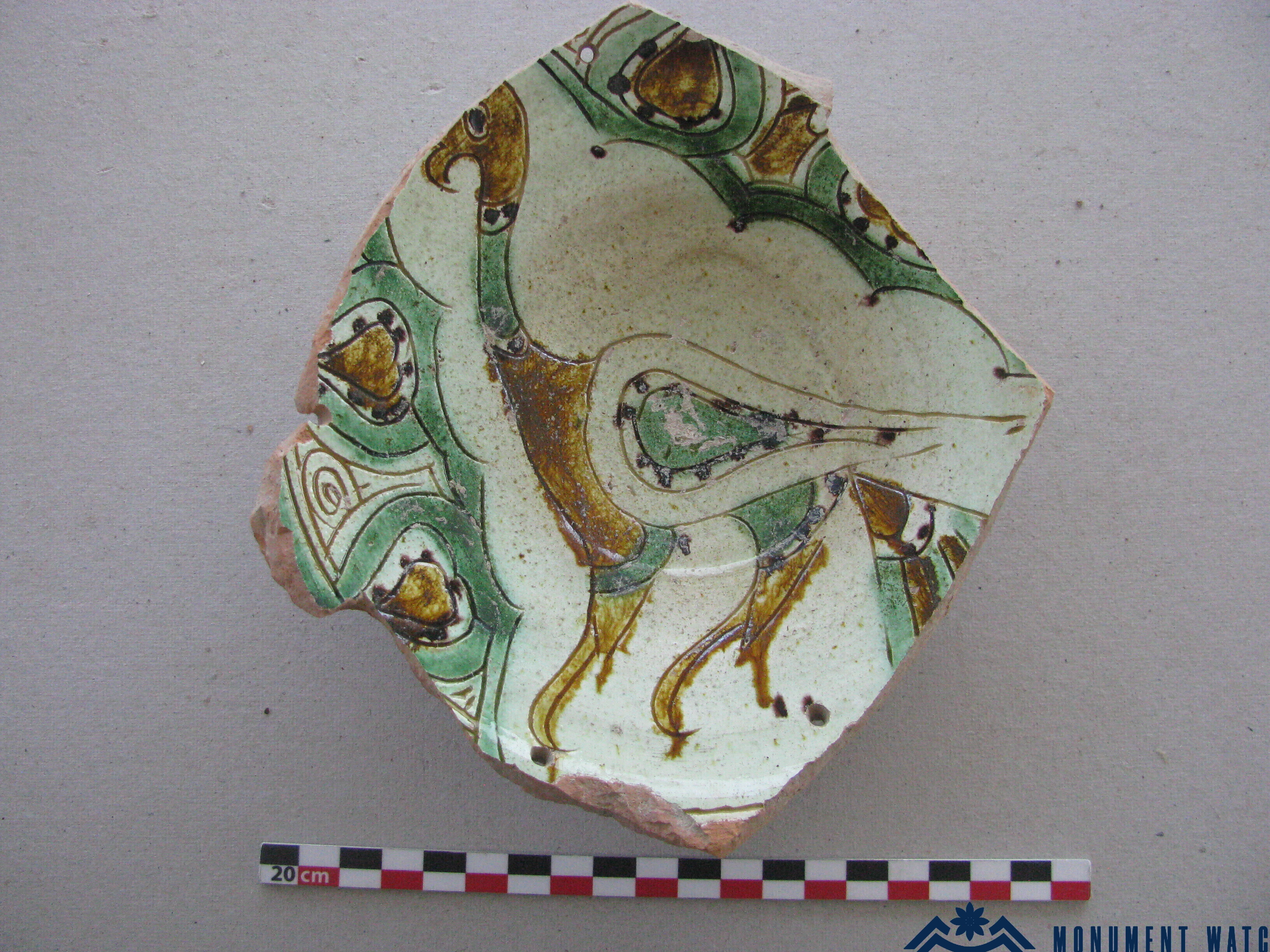
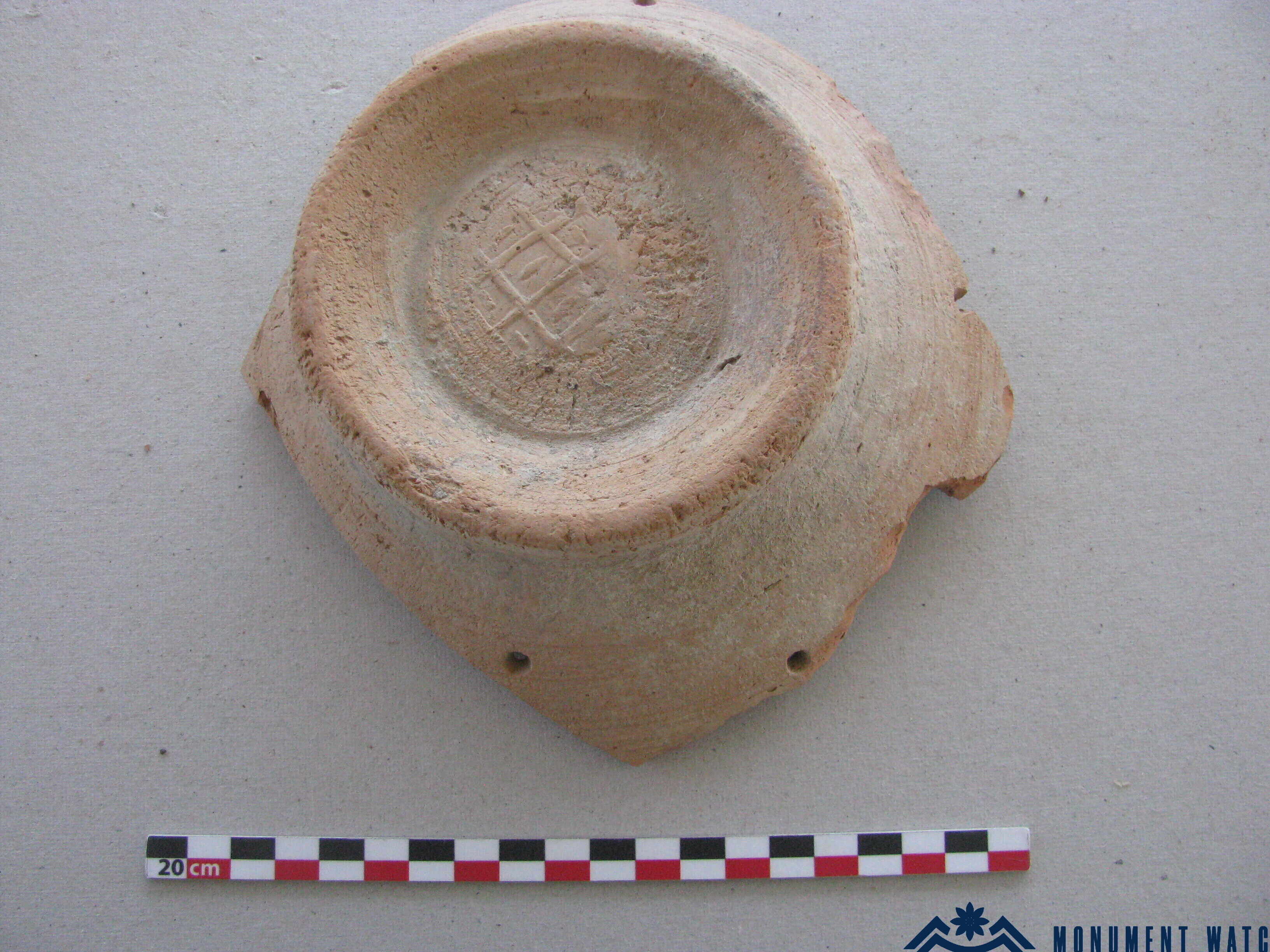
Particularly noteworthy is the base of a plate depicting an eagle-like bird (Fig. 4), whose foot bears a potter’s mark. Interestingly, a similar plate fragment, again bearing a potter’s mark, was recovered during the excavations of Tigranakert (Figs. 5, 6). It is highly probable that the two vessels were produced at the same pottery-production center.

Fig. 3. A horned animal in a garden, fragment of a plate, Berdashen Museum, 12th–13th centuries. Photo: Artsakh Archaeological Expedition.

Fig. 5. The foot of the same plate bearing a potter’s mark. Photo: Artsakh Archaeological Expedition.

Fig. 4. An eagle-like bird, base of a plate, Berdashen Museum, 12th–13th centuries. Photo: Artsakh Archaeological Expedition.

Fig. 6. An eagle-like bird, base of a plate, Tigranakert. Photo: Artsakh Archaeological Expedition.

Fig. 7. The foot of the same plate bearing a potter’s mark. Photo: Artsakh Archaeological Expedition.

The assemblage of plain or unglazed pottery recovered during the Berdashen excavations is diverse. The following functional groups can be distinguished:

* Storage vessels, including pithoi of various sizes;

* Architectural ceramics, represented by four fragments of roof tiles;

* Production ceramics, including fragments associated with manufacturing processes;

* Storage pottery, represented by pithoi;

* Cooking wares, represented by various types of cooking pots, jars, and milk vessels;

* Tableware, including pitchers, jugs, bowls, plates, serving dishes, and salt cellars;

* Special-purpose ceramics, including lids, oil lamps, and sphero-conical vessels—the so-called mercury vessels.

Overall, plain or unglazed pottery constitutes the largest part of the ceramic assemblage. One of the characteristic features of the unglazed pottery of Artsakh is the diversity of both its decorative techniques and its iconographic motifs. The pottery was mass-produced, standardized, and intended for sale.

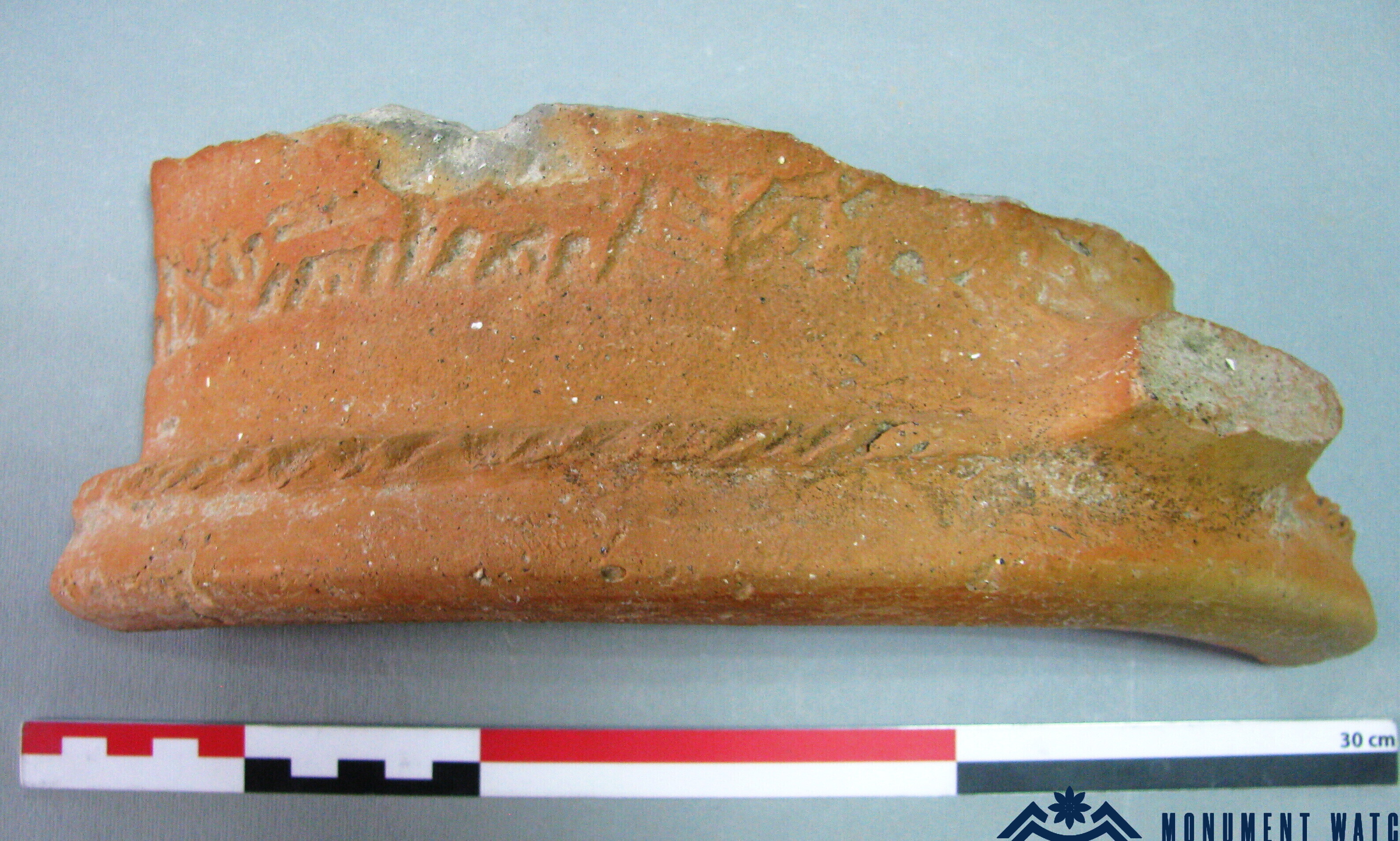
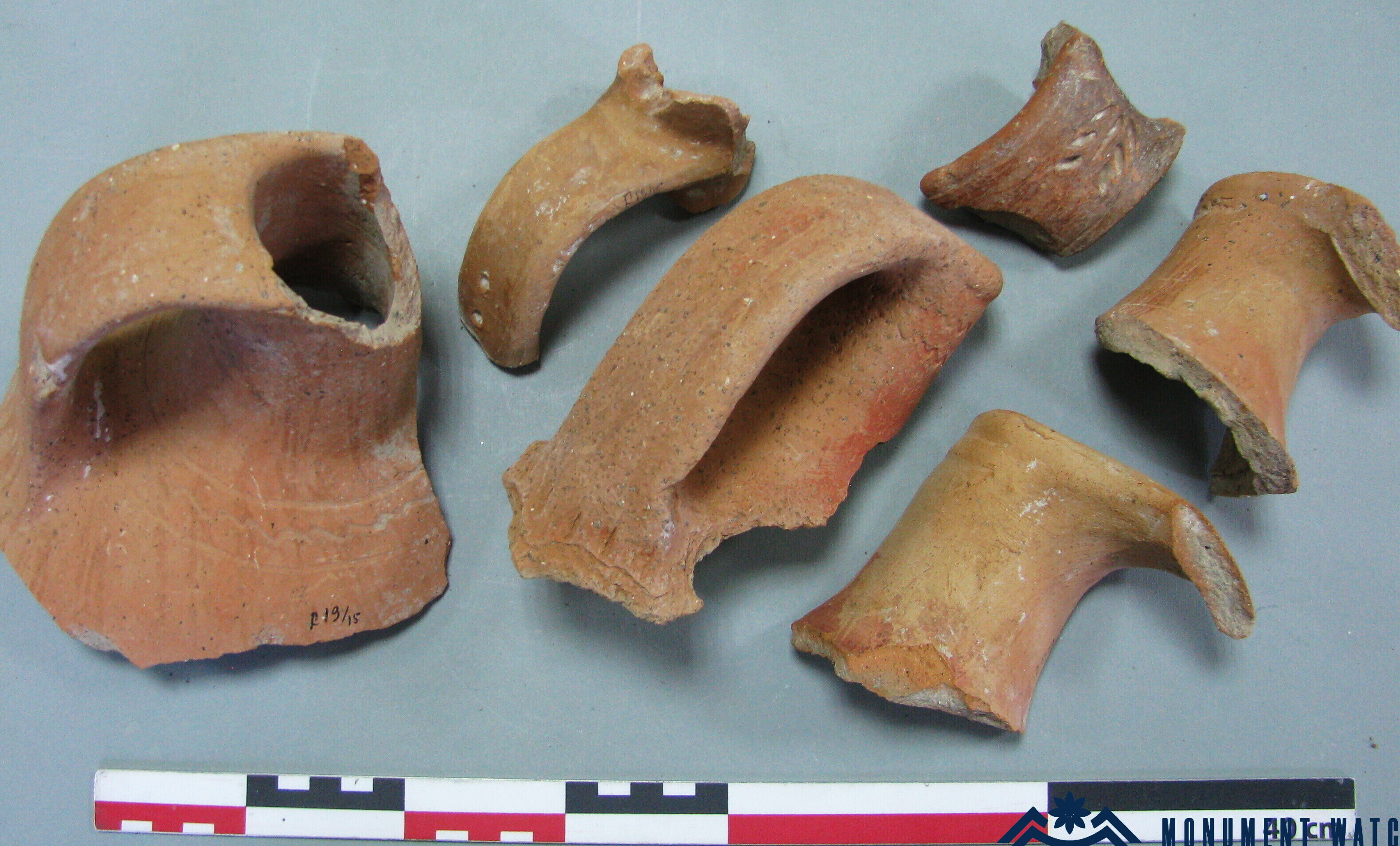
An interesting detail supporting this conclusion is a rim fragment from a large pithos bearing a stamped decorative band that was accidentally impressed upside down (Fig. 8). Had the vessel been individually produced, such a defect would presumably have been corrected. Numerous fragments of water jugs and pitchers, including handles, also constitute a distinctive group within the assemblage (Fig. 9).

Although the 2019 excavations at Berdashen were conducted within a limited timeframe and area, the recovered ceramic material reveals the developed cultural character of this fortified settlement situated along the Orenkala–Tigranakert–Partav section of the Silk Road.

Fig. 8. Rim of a pithos with a stamped decorative band, 12th–13th centuries, Berdashen, 2019. Photo: Artsakh Archaeological Expedition.

Fig. 9. Fragments of pitchers, 12th–13th centuries, Berdashen, 2019. Photo: Artsakh Archaeological Expedition.

Pottery from the 2019 Excavations at Berdashen
Artsakh