Stepanakert’s “Sword-Cross” Khachkar

Location

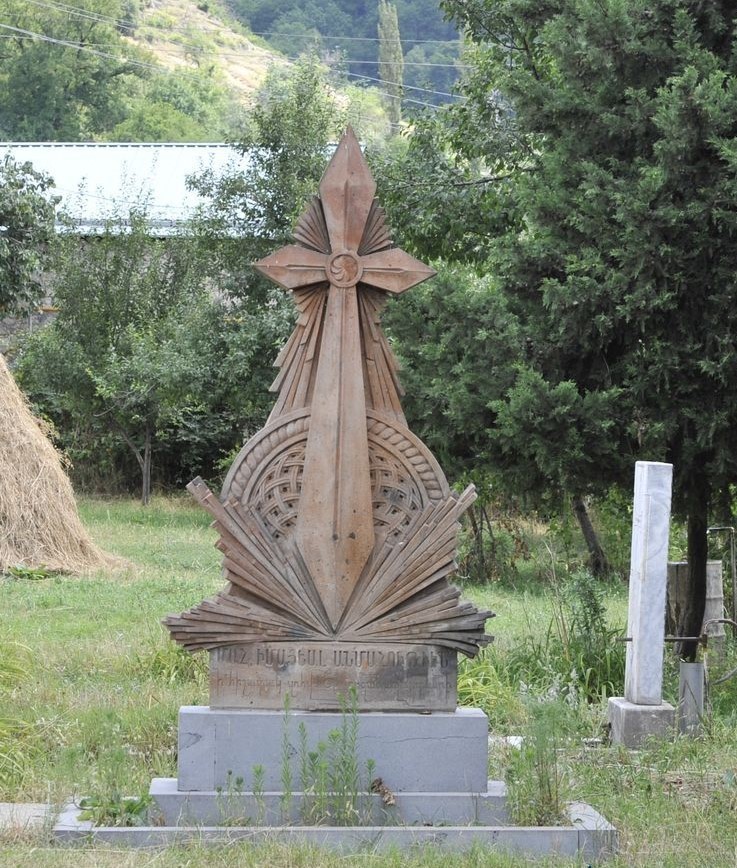
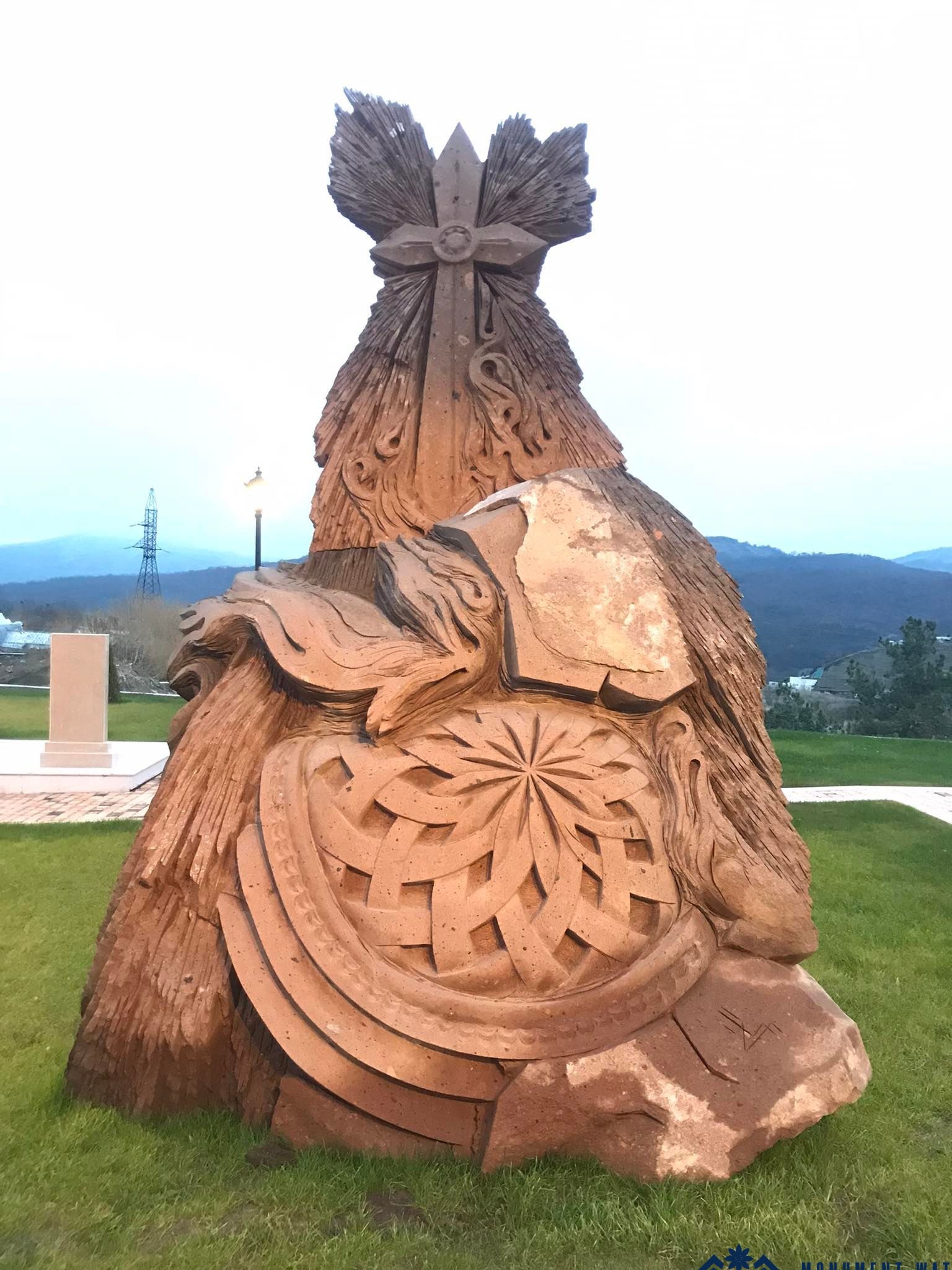
Stepanakert’s “sword-cross” khachkar is located in the section added in 2020 to the Fraternal Cemetery-Memorial Complex in Stepanakert, the capital of the Republic of Artsakh (Fig. 1).

Fig. 1. Stepanakert’s “sword-cross” khachkar. Photo by A. Grigoryan.

Historical overview

The memorial complex was founded in 1945 in memory of those who died during the Great Patriotic War. After 1991, when the area came under the de facto control of the Armenian authorities of Nagorno-Karabakh, the memorial complex continued to function and was expanded. Its most recent section is the military cemetery, where the remains of servicemen killed during the Artsakh Liberation War are buried. The complex was later supplemented by a new section intended for the burial of those killed during the 44-day war of 2020.

The “We Shall Win” sword-cross khachkar was created by khachkar master Varazdat Hambardzumyan during the 2020 44-day war. After the war, it was intended for installation in Artsakh as a symbol of victory. Having remained for a long time in the courtyard of the khachkar master, it was eventually installed in 2022 within the Fraternal Cemetery-Memorial Complex in Stepanakert.

Architectural and compositional analysis

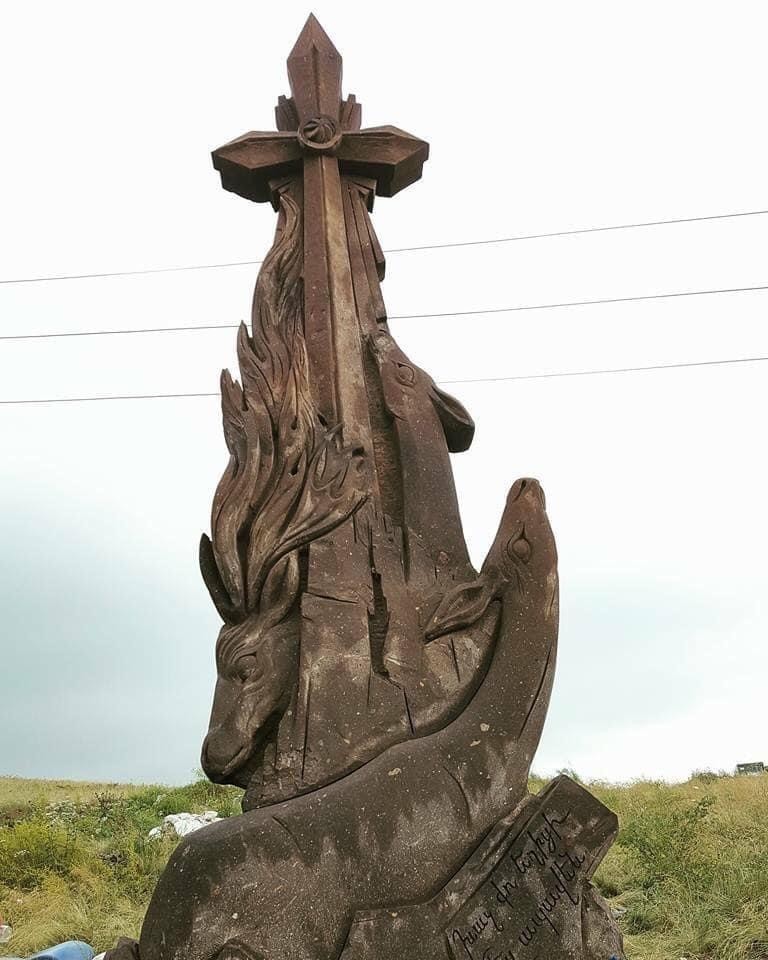
The “sword-cross” or “frontier-cross” khachkars represent an exceptional and relatively new phenomenon in contemporary khachkar culture, fundamentally connected with the Artsakh Liberation Struggle (Figs. 2, 3). It should be noted that although medieval masters, in their inscriptions, sometimes characterized the cross as a weapon or sign of victory, they avoided giving the cross the actual appearance of a weapon or sword. In the case of these khachkars, however, the cross is clearly transformed into a sword.

This is a new phenomenon which, to a certain extent, departs from the broader Christian symbolic tradition, since the cross — as a sign oriented toward the future and salvation — was never traditionally represented as a sword or weapon. Through these khachkars, it is therefore possible to speak of a new function of the khachkar, one that was not characteristic of the classical khachkar tradition.

Fig. 2. The “sword-cross” khachkar of Arajadzor. Photo by H. Petrosyan.

Fig. 3. A “sword-cross” khachkar installed in the 7th defensive district. Photo by V. Hambardzumyan.

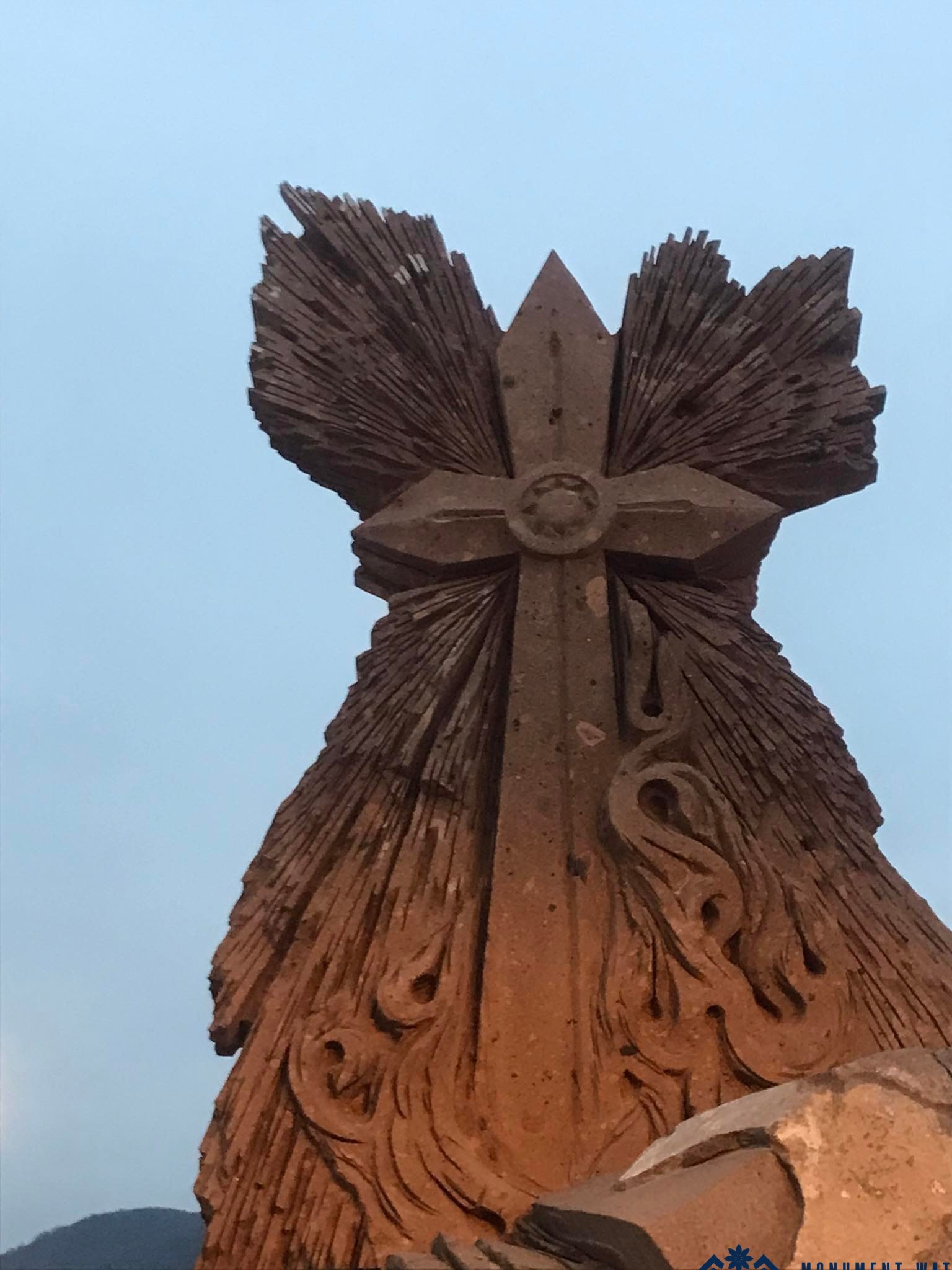
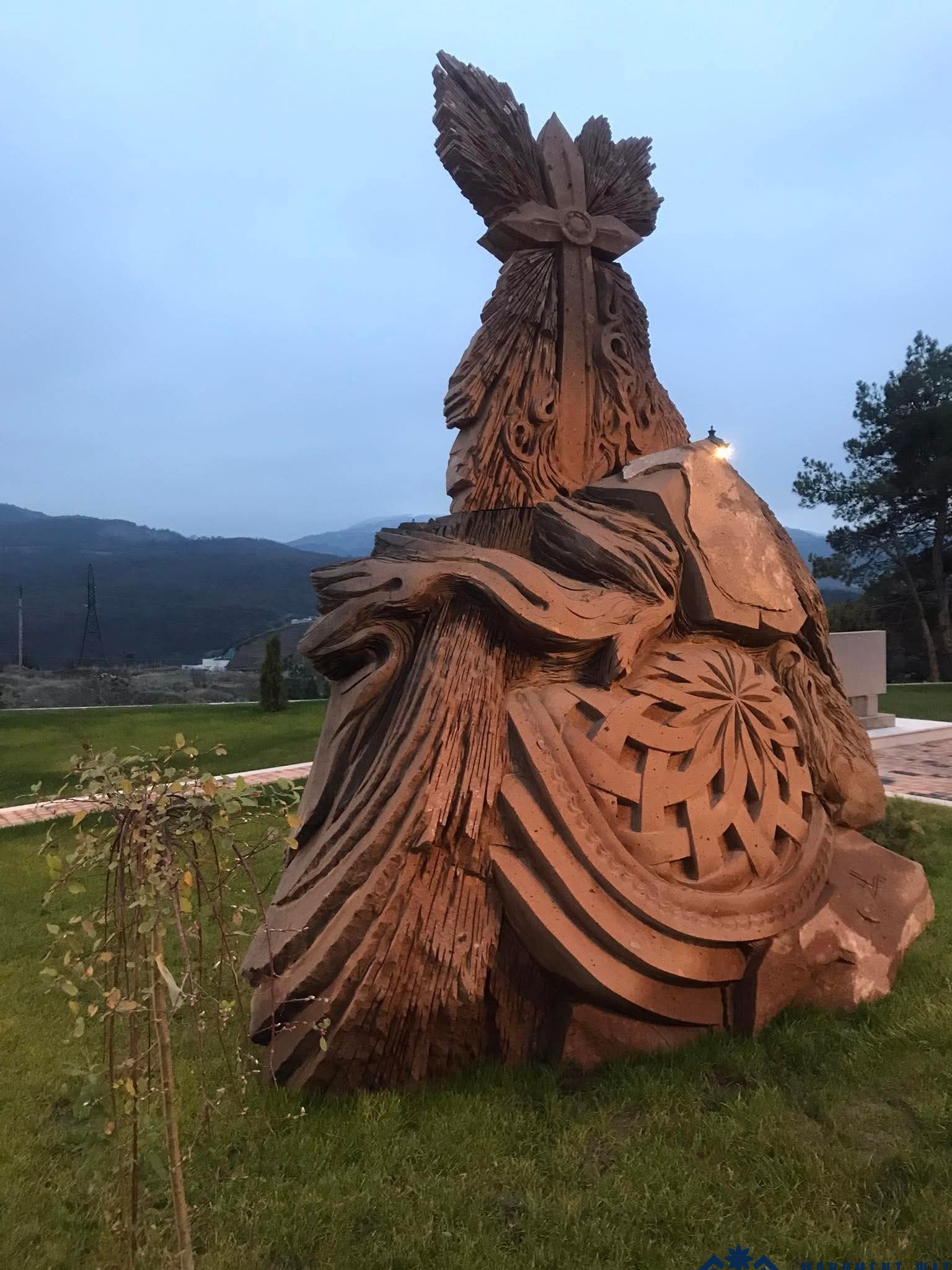
In the composition of the “We Shall Win” khachkar, the central element is the sword, which appears almost as a four-armed sword. In other words, this is not a conventional sword with a hilt, a horizontal guard, and a blade. Rather, master Varazdat Hambardzumyan seems to have sought to express its strength and power in all directions. The second important component is the shield, placed below the cross as a symbol of protection (Figs. 4, 5).

It should be noted that similar crosses had previously been erected by the same master in Varanda/Fuzuli, Nerkin Chartar, Spitak Shen, Martakert, Mataghis, Tonashen/Yeghakir, Jrakan/Jabrayil, and elsewhere.

Fig. 4. Stepanakert’s “sword-cross” khachkar. Photo by A. Grigoryan.

Fig. 5. Stepanakert’s “sword-cross” khachkar. Photo by A. Grigoryan.

The Condition before, during, and after the war

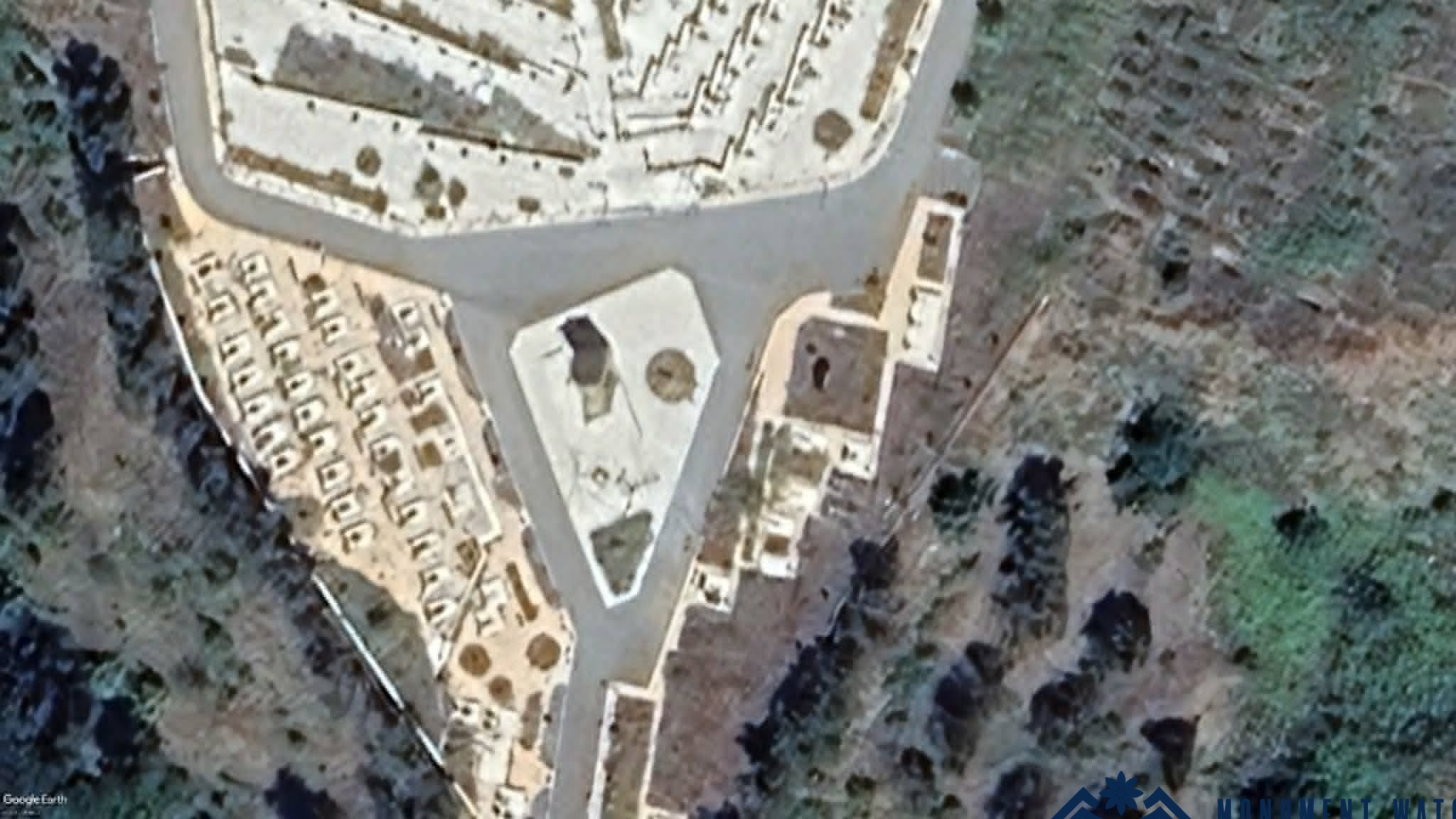
According to satellite imagery from July 2025, Stepanakert’s “sword-cross” khachkar was still standing (Fig. 6). However, after the complete occupation of Artsakh, the Stepanakert Memorial Complex came under threat of destruction. In numerous videos, Azerbaijanis visiting occupied Stepanakert have called for the elimination of this memorial complex.

For more on this issue, see: The Stepanakert Memorial Complex Is Under Threat, Azerbaijan Has Desecrated the Gravestones of the Stepanakert Memorial Complex, and The Desecration of the Fraternal Cemetery of Stepanakert Continues.

This material was prepared with the direct participation of khachkar master Varazdat Hambardzumyan.

Fig. 6. The “sword-cross” khachkar as seen in satellite imagery from July 2025.

Stepanakert’s “Sword-Cross” Khachkar
Artsakh