The Church of the “Nngijan” Rural Settlement

Location

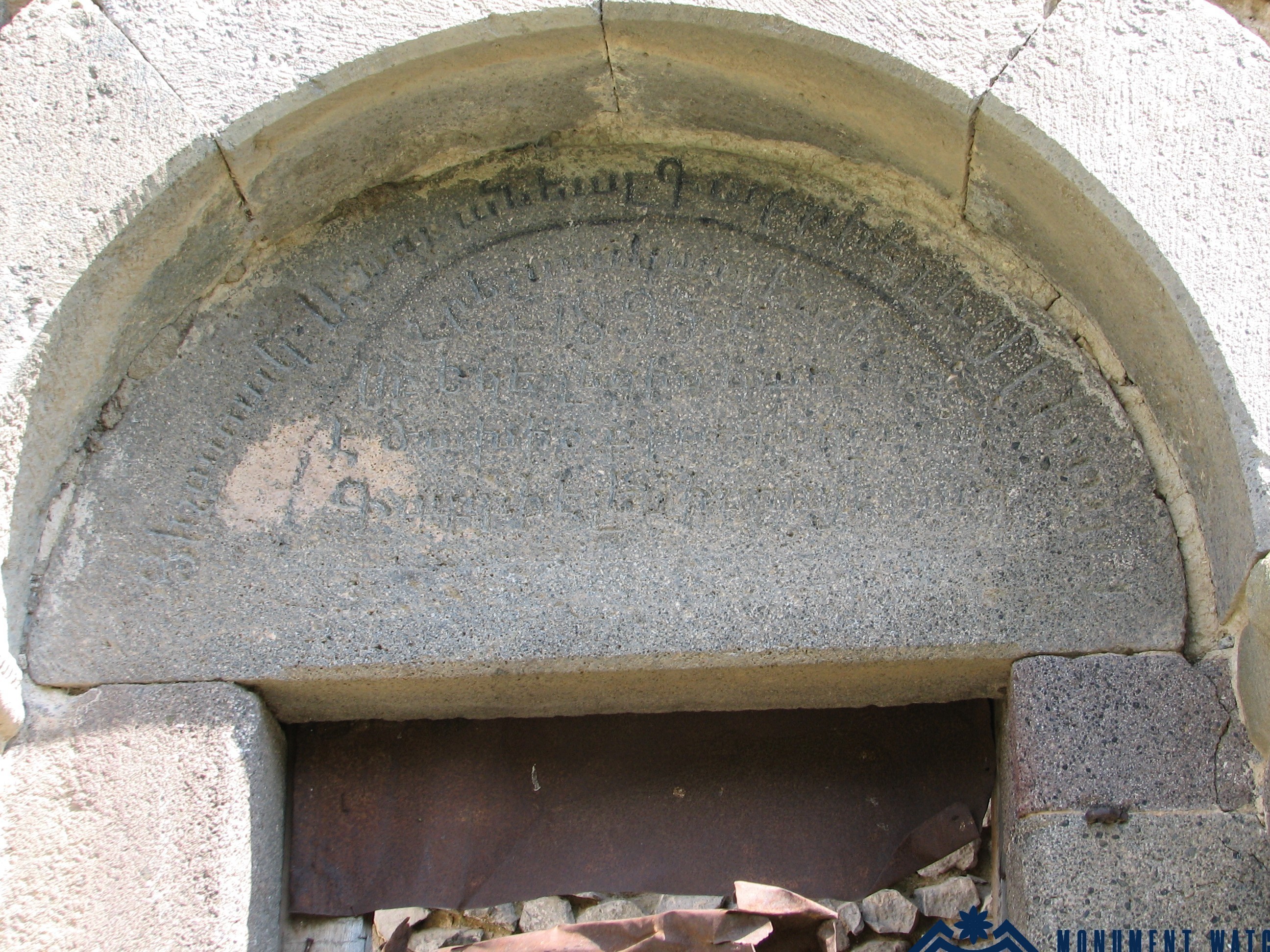
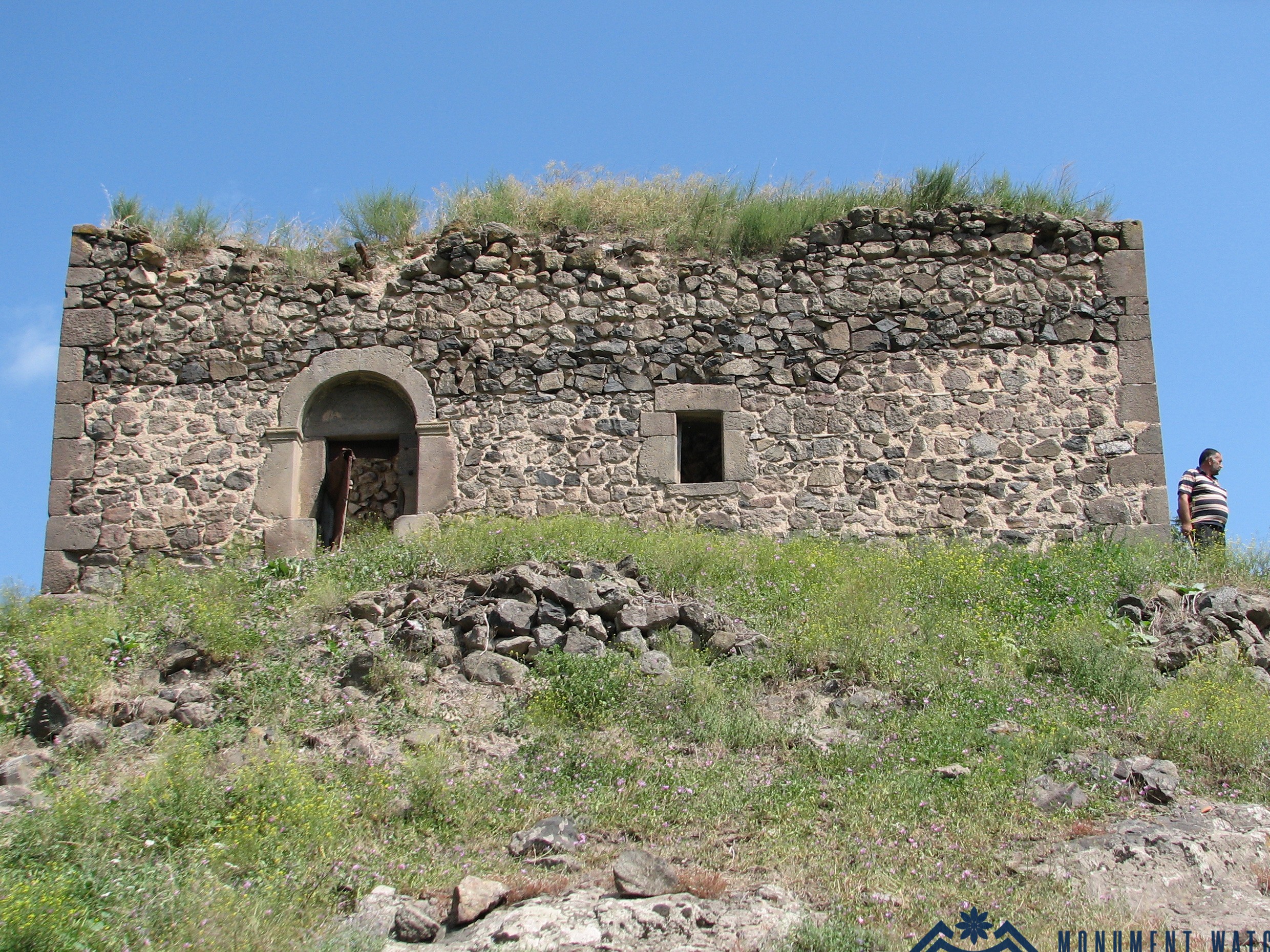
The village of Nngi is one of the ancient settlements of Varanda and is today located in the Martuni Region of Artsakh/Nagorno-Karabakh. The ravine of Nngi contains historical built remains. The construction ruins of several rebuilt and newly established rural settlements have been preserved here. Among the surviving structures of one of them — the historical settlement of “Nngijan” — is the church. It is located in the central part of the rural settlement, on a rock (Fig. 1). According to the inscription on the entrance lintel, the church of “Nngijan” was built in 1895 (Mkrtchyan 1988, 128).

Fig. 1. View of the “Nngijan” Church looking south-east. Photo by G. Sargsyan.

Architectural and compositional analysis

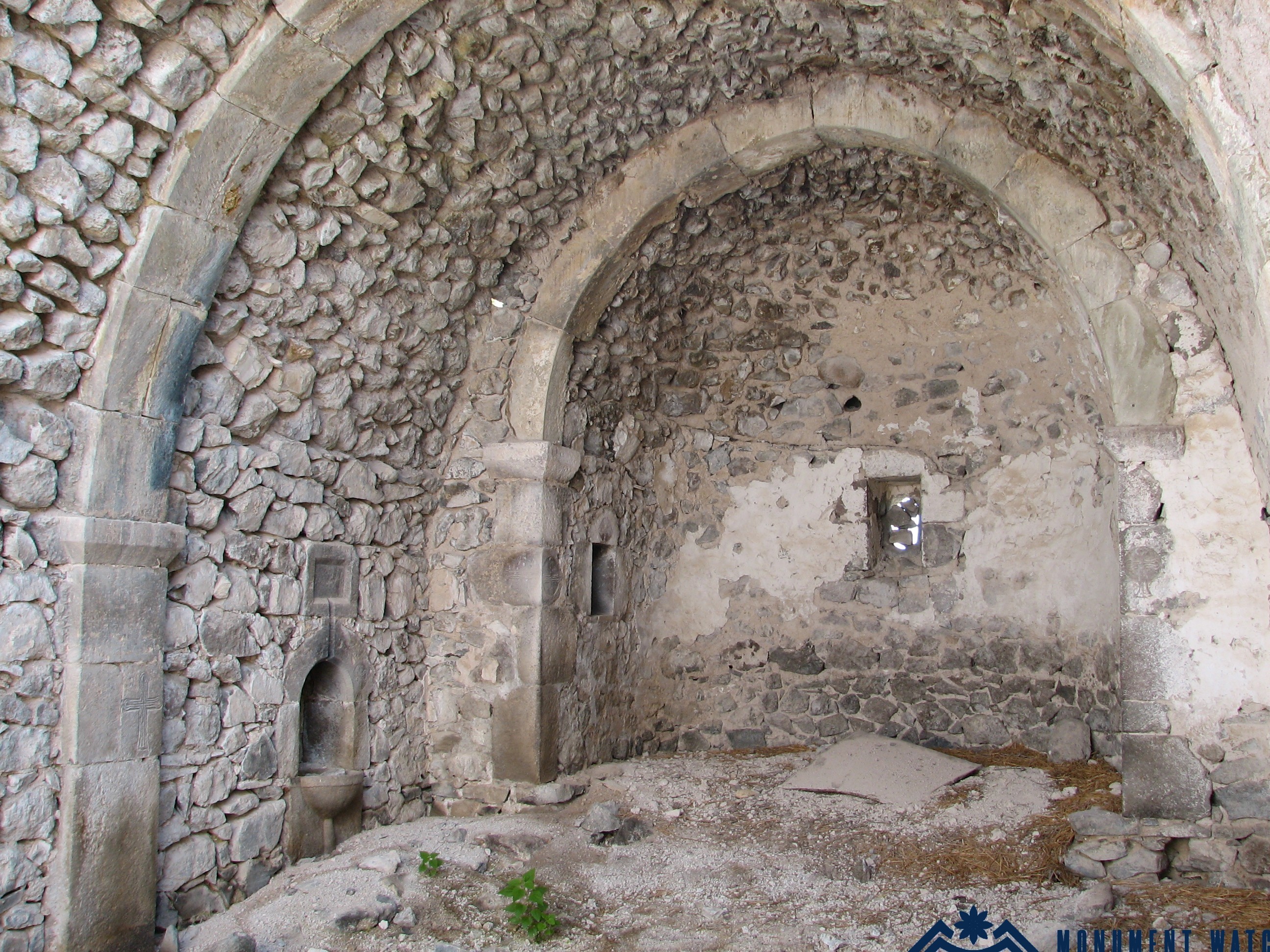
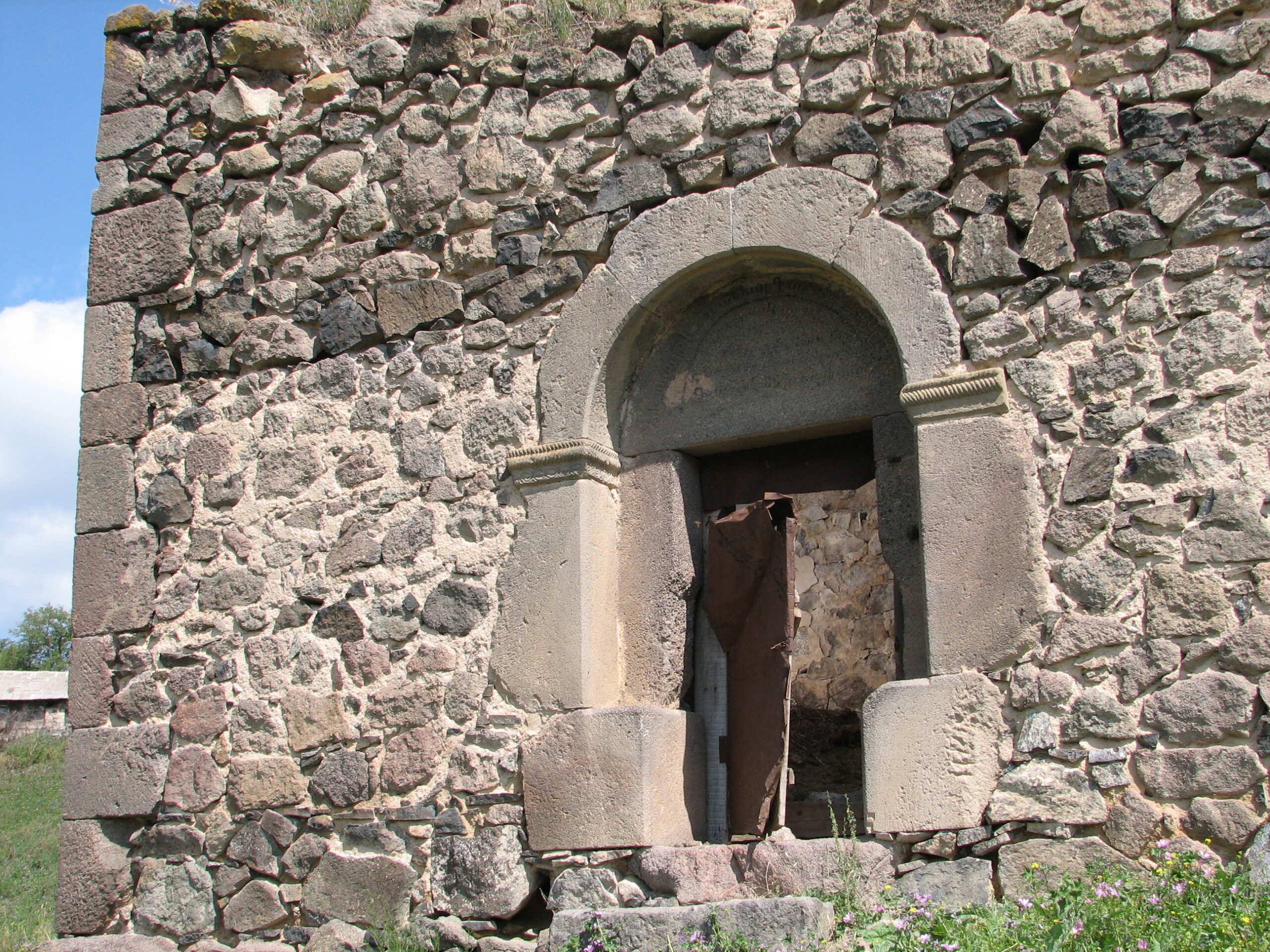
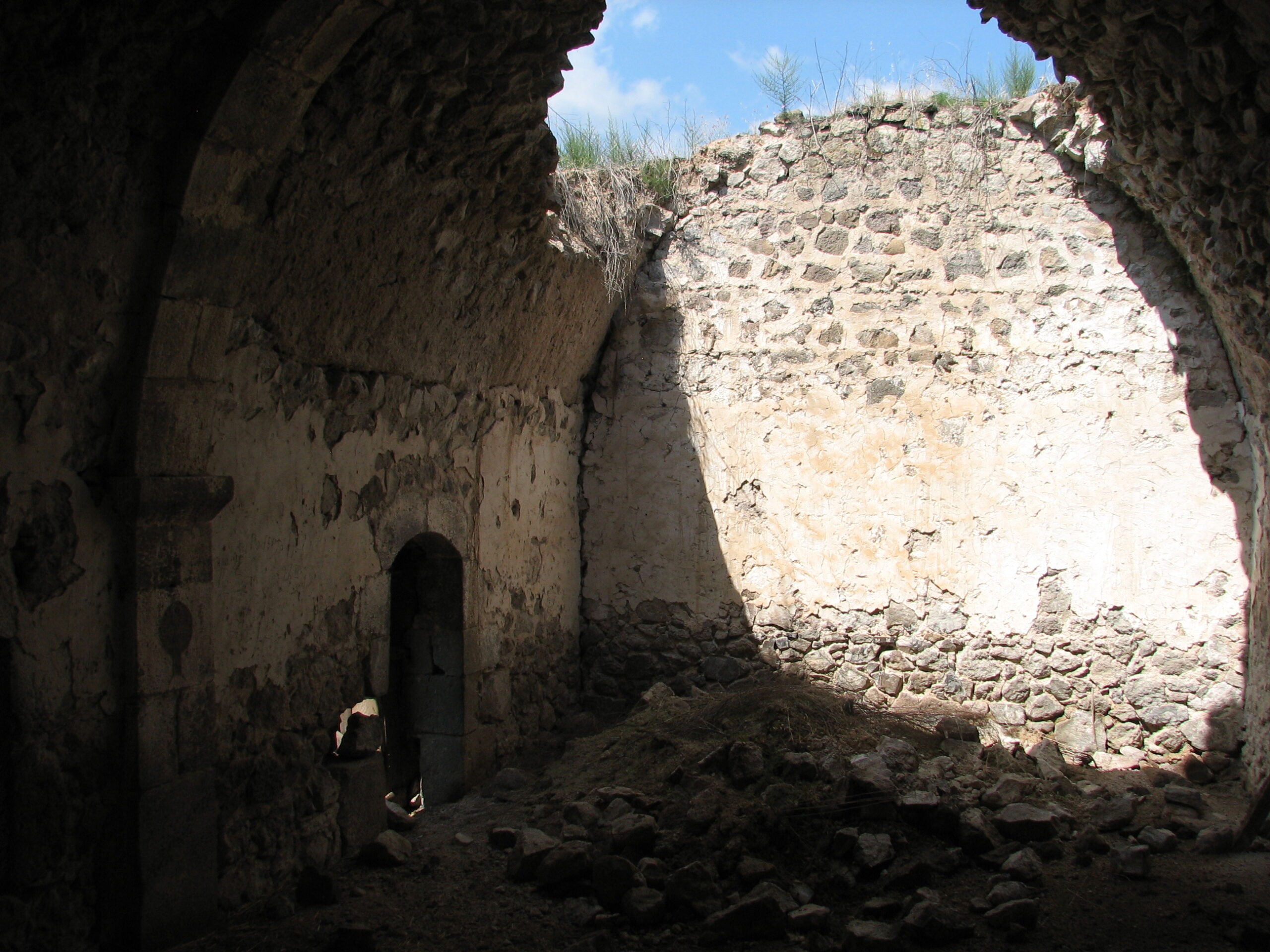
In its ground-plan and volumetric-spatial composition, the church belongs to the basilica type: it is a single-nave hall ending in a semicircular apse. In the northern wall of the apse, there is a single niche-window, crowned with an equal-armed cross decoration (Fig. 2). The semi-cylindrical vaulted covering of the prayer hall was constructed with reinforcing arches, which rest on wall-piers attached to the longitudinal walls of the hall (Fig. 2). In the western part of the prayer hall, the vault is partially destroyed (Fig. 3). The church had a gable roof. The only entrance opens in the southern wall. It is recessed and crowned with an arch resting on the imposts of the entrance’s corner walls (Fig. 4). The entrance is decorated with a semicircular inscribed tympanum stone (Fig. 5).

Fig. 2. The apse of the church and a section of the semi-cylindrical vault of the prayer hall. Photo by G. Sargsyan.

Fig. 4. The entrance of the church. Photo by G. Sargsyan.

Fig. 3. The western section of the vault of the prayer hall. Photo by G. Sargsyan.

Fig. 5. The inscribed tympanum stone of the church entrance. Photo by G. Sargsyan.

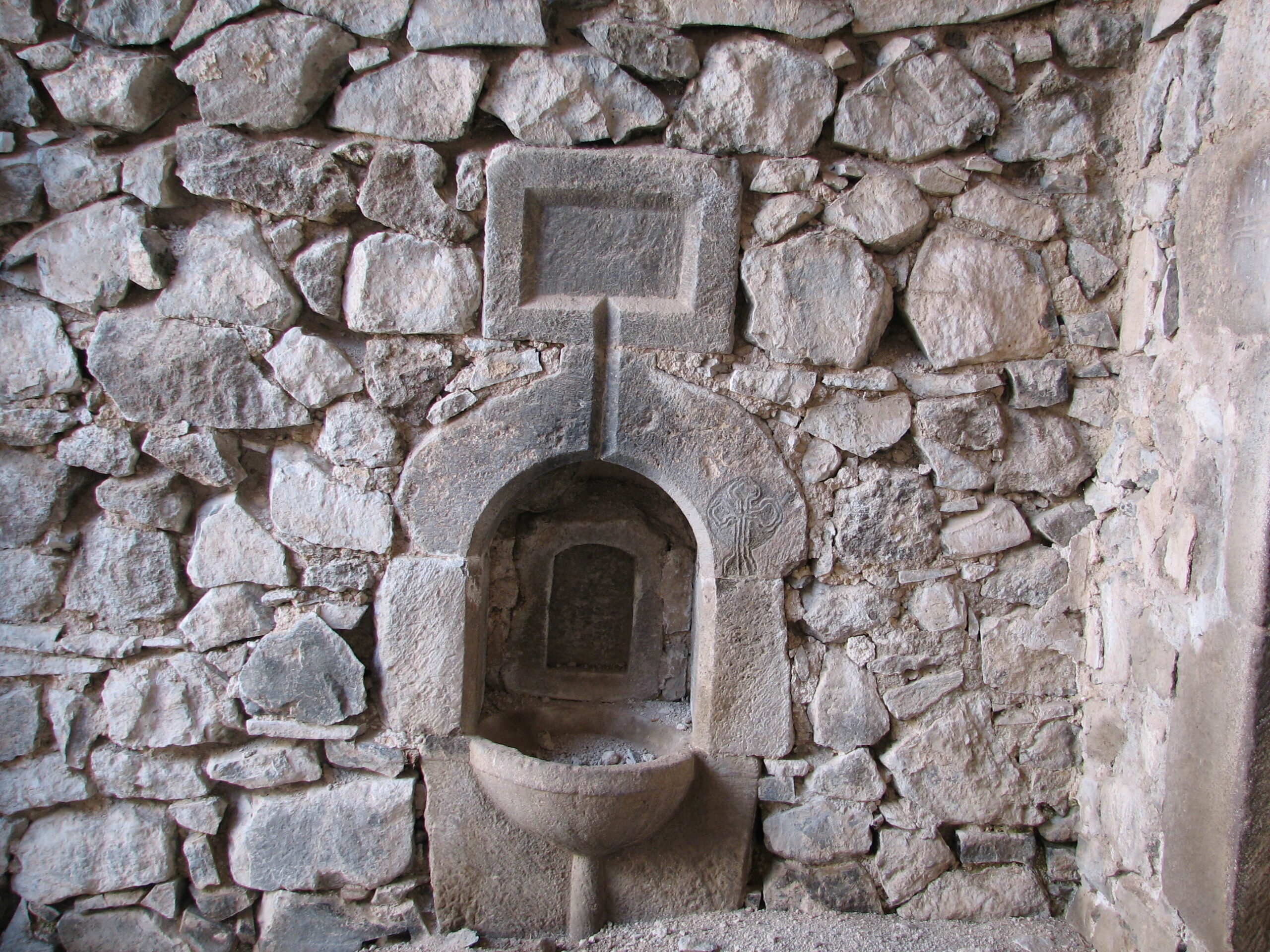
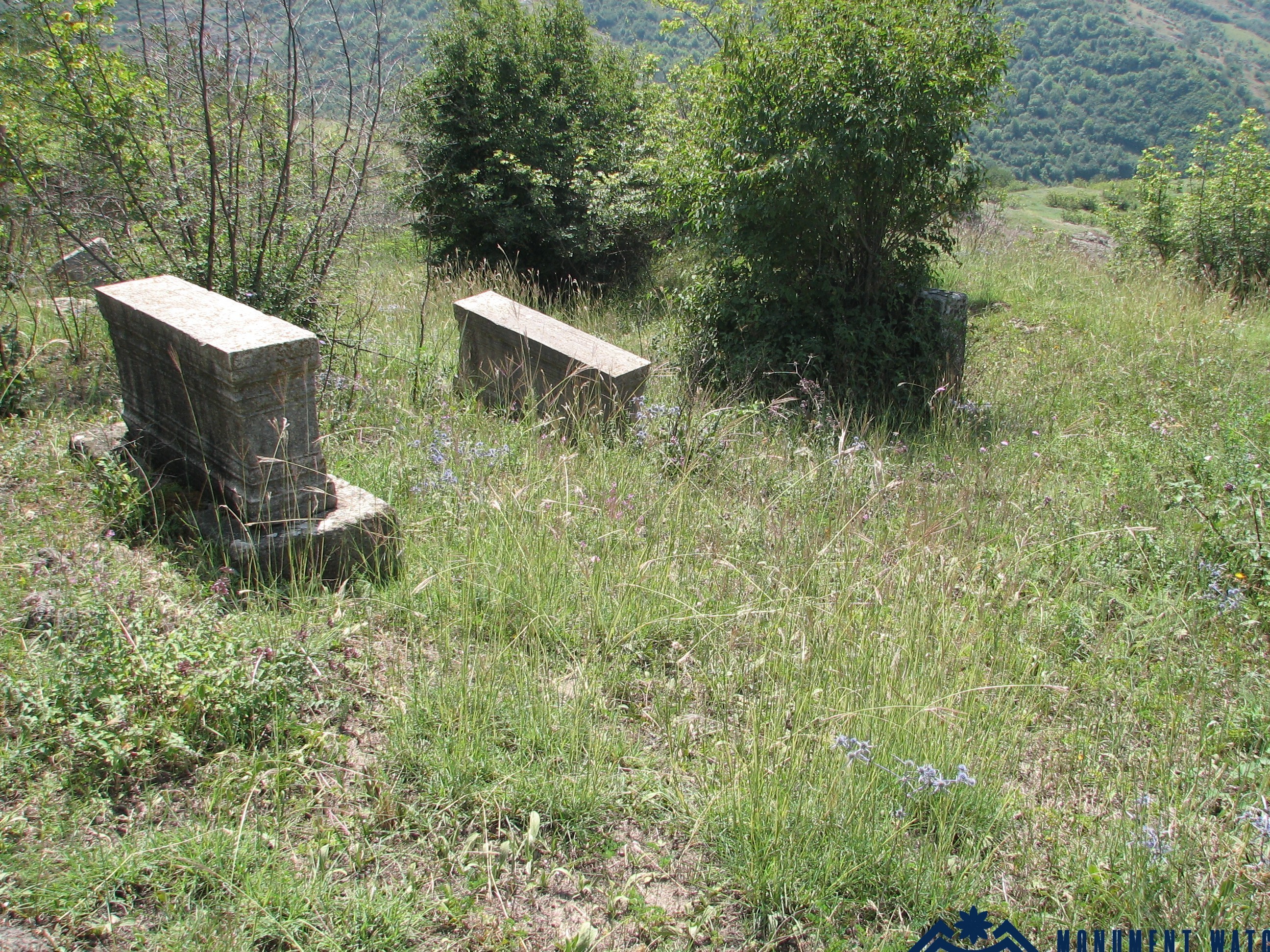
The baptismal font, made of finely dressed felsite stones, is placed in the northern inner wall of the prayer hall (Fig. 6). One window each opens in the eastern and southern walls of the church. The window of the southern façade is framed with finely dressed stones (Fig. 1). The walls of the structure are laid in undressed limestone bonded with lime mortar. Only the “responsible” structural elements of the church — the reinforcing arches, wall-piers, and cornerstones — are built of dressed stone. Around the church extends a cemetery with numerous tombstones and khachkars (Fig. 7).

Both the compositional type and the construction technique of the “Nngijan” Church are highly characteristic of late medieval ecclesiastical architecture (Kirakosyan 2023, 249–264). Such features are typical of a number of churches of the 17th–19th centuries in the Martuni District, for example Surb Hovhannes Church of Nor Shen and Surb Gevorg Church of Sosi, which are likewise single-nave vaulted structures (Mkrtchyan 1985, 150).

Fig. 6. The baptismal font of the church. Photo by G. Sargsyan.

Fig. 7. A view of the cemetery surrounding the church. Photo by G. Sargsyan.

The Condition before, during, and after the war

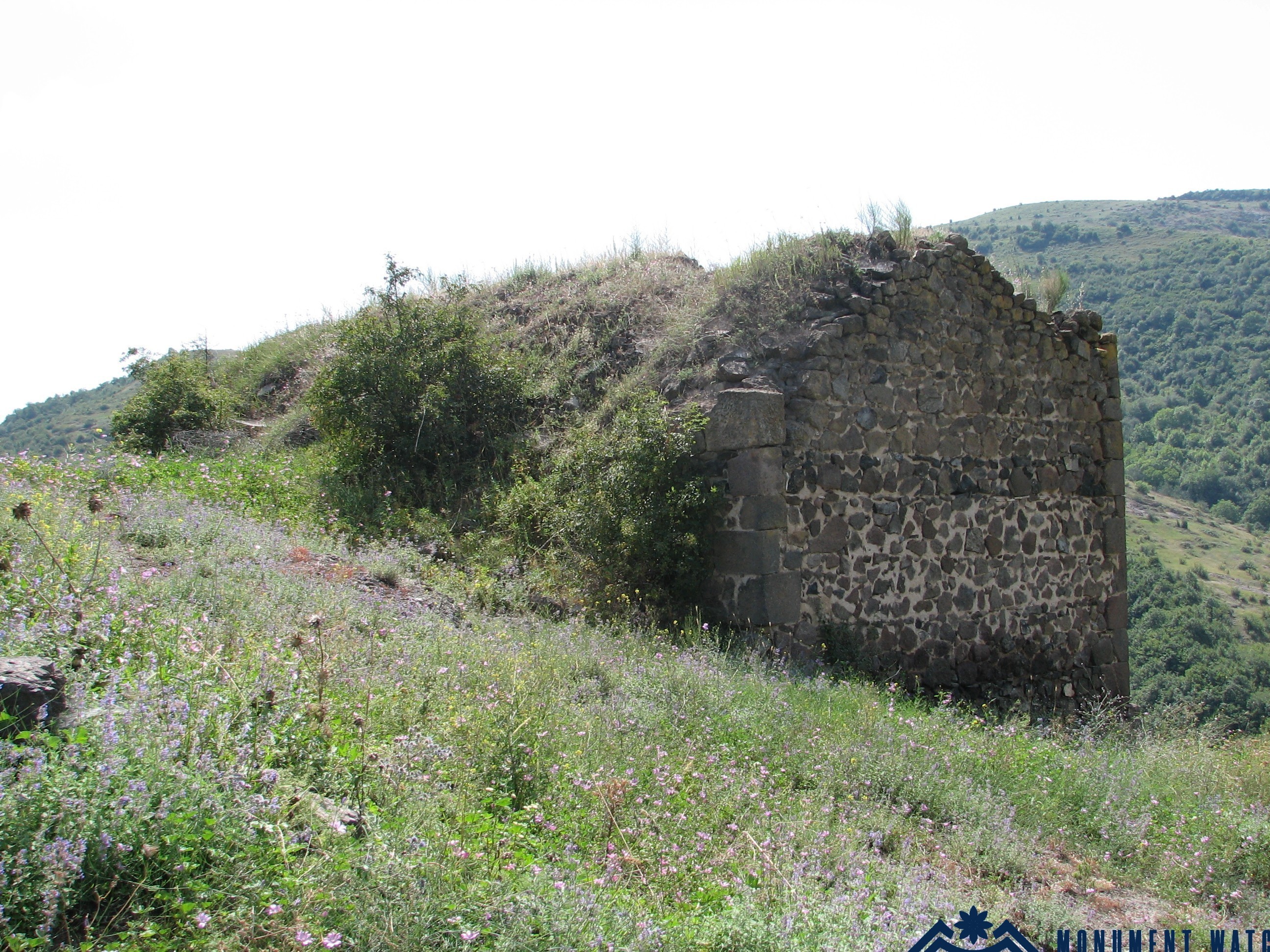
The church of the “Nngijan” rural settlement was generally standing, but in a very dilapidated condition. The interior of the church had once been plastered, but the plaster has now fallen off, surviving only in certain sections. The roof of the structure is destroyed, and abundant vegetation has grown in the lime mortar on the outer side of the vault, threatening the stability of the structure (Fig. 8). The floor covering is entirely absent. Both inside and outside the structure, excavation and cleaning works were needed. The situation has not changed after the war. Today, the church is occupied by Azerbaijan.

Fig. 8. View of the church looking north-west. Photo by G. Sargsyan.

Bibliography 

  1. Mkrtchyan 1985 - Mkrtchyan Sh., The Historical and Architectural Monuments of Nagorno-Karabakh, “Hayastan” Publishing House, Yerevan.
  2. Kirakosyan 2023 - Kirakosyan L., “The Composition of the Vaulted Hall in the Architecture of Artsakh,” Armenian Humanitarian Bulletin, 1(10), Artsakh, Yerevan, pp. 249–262.
  3. Mkrtchyan 1988 - Mkrtchyan Sh., Historical and Architectural Monuments of Nagorno-Karabakh, “Hayastan,” Yerevan.
The Church of the “Nngijan” Rural Settlement
Artsakh