The Hakrakahberd Fortress
Location
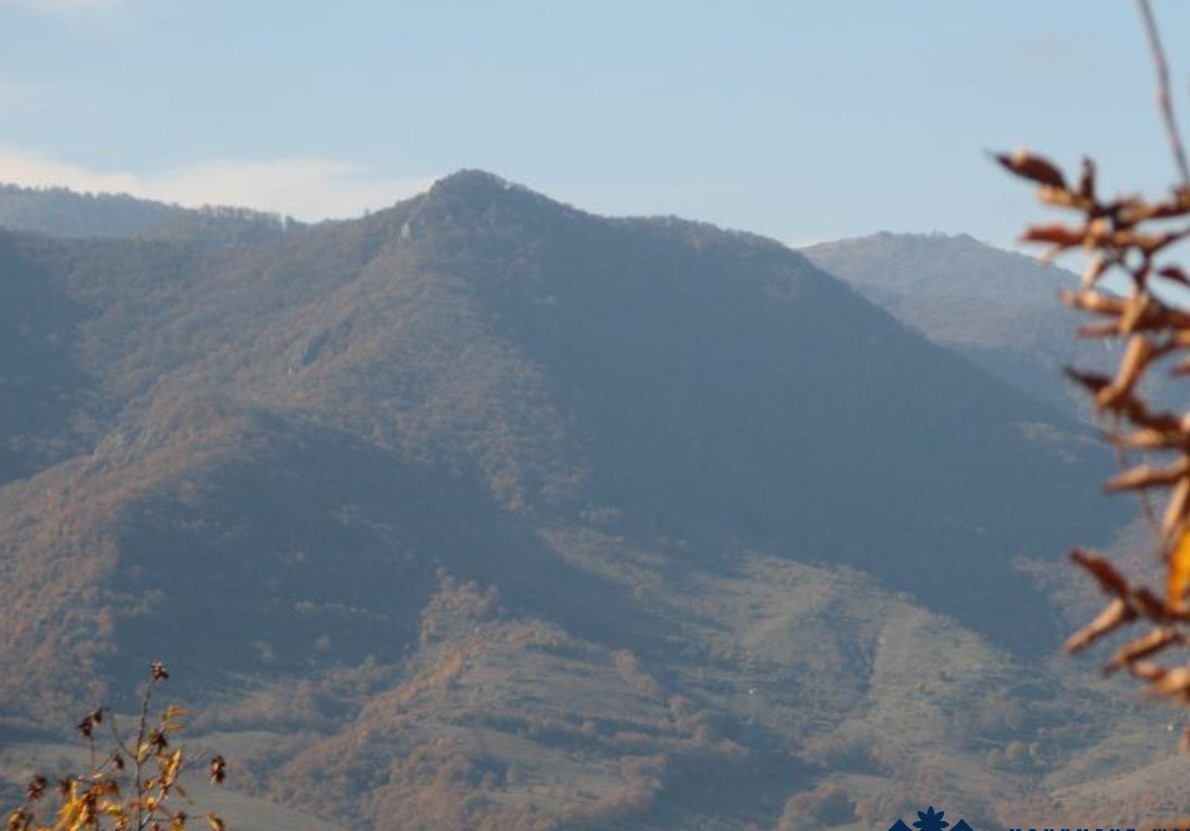
The monument is located on a high, forested mountain approximately 3 km south-west of Chapar village, in the Martakert region of the Republic of Artsakh. Since 2023, the site has been occupied by Azerbaijan.
Historical overview
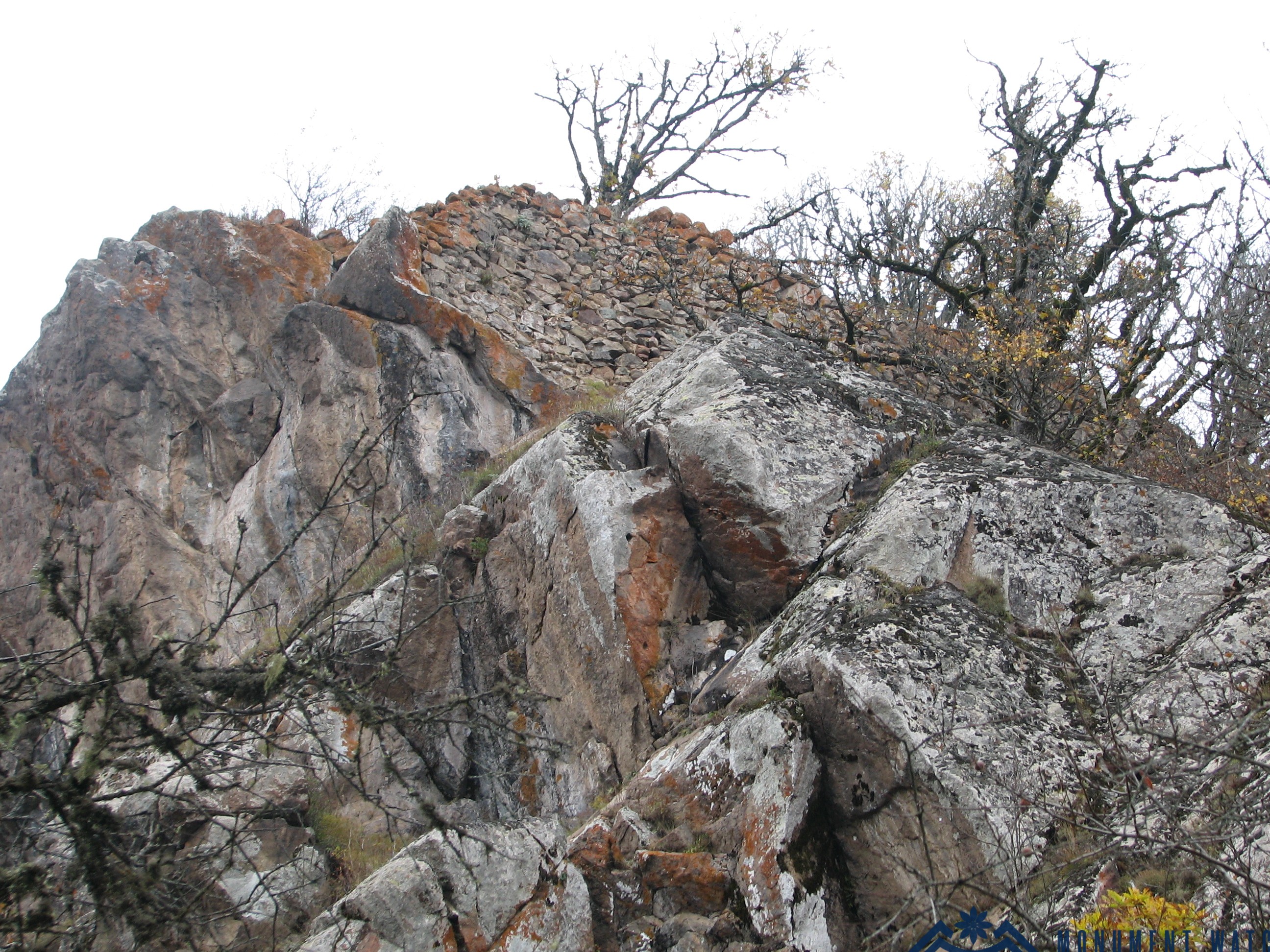
The official list of immovable monuments of history and culture of Chapar village and its surroundings includes 65 monuments, one of which is the 11th–13th-century fortress of “Hakrakahberd” (Fig. 1).
Information about Hakrakahberd is limited. According to Makar Barkhudaryants, “Hakrakahberd lies above Dadi Monastery on a sword-shaped and forested mountain. The fortress has a strong position, an excellent view, and remarkable water. There is a large stone-built reservoir filled with living water, which neither increases nor decreases, neither receives water nor releases it. The fortress-mountain is entirely isolated on all four sides by deep chasms and broad ravines; it has only one narrow path, which ascends to the fortress along a ridge. Within the fortress, traces of old constructions can be seen here and there” (Barkhutareants 1895, 212).
Sh. Mkrtchyan notes that the fortress is situated 3 km from Chapar village: “The high and inaccessible cliffs on which the fortress was built were additionally reinforced by double walls. A spacious reservoir has been preserved in the fortress, the water level of which remains unchanged throughout the year” (Mkrtchyan 1989, 46). V. Balayan also mentions Hakrakahberd among the monuments of Chapar village, dating it to the 12th–13th centuries (Balayan 2020, 362).
A more detailed discussion of Hakrakahberd is provided by S. Minasyan (Minasyan 2010, 5–13). In his article, he examines the name of Hakrakahberd and lists its variants, including “Hkrapert,” “Berd,” “Chapar Fortress,” “Haykaberd,” “Ghala,” and “Sharmagh yghchka j’yur” (Minasyan 2010, 11).
Architectural-Compositional Examination
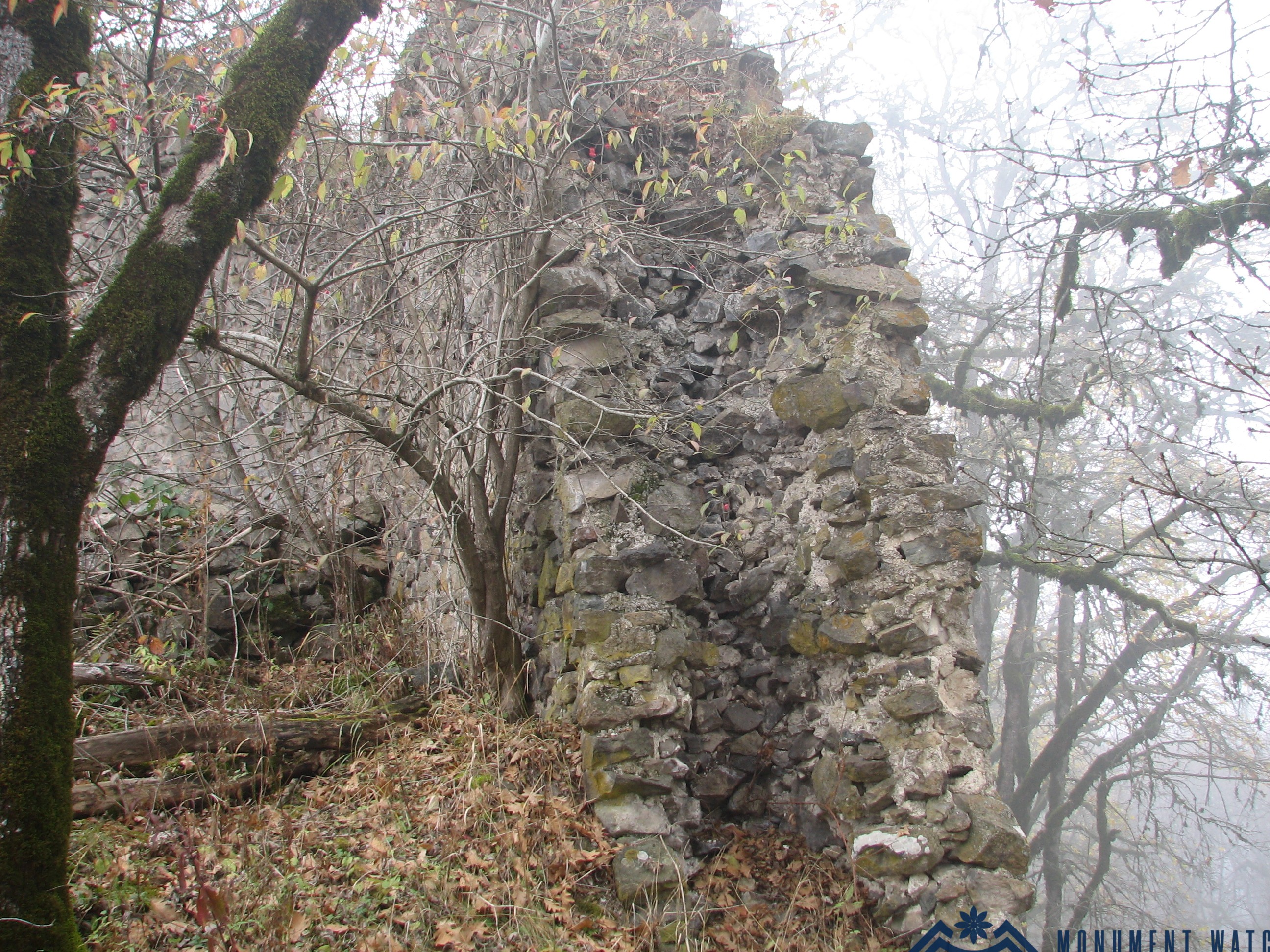
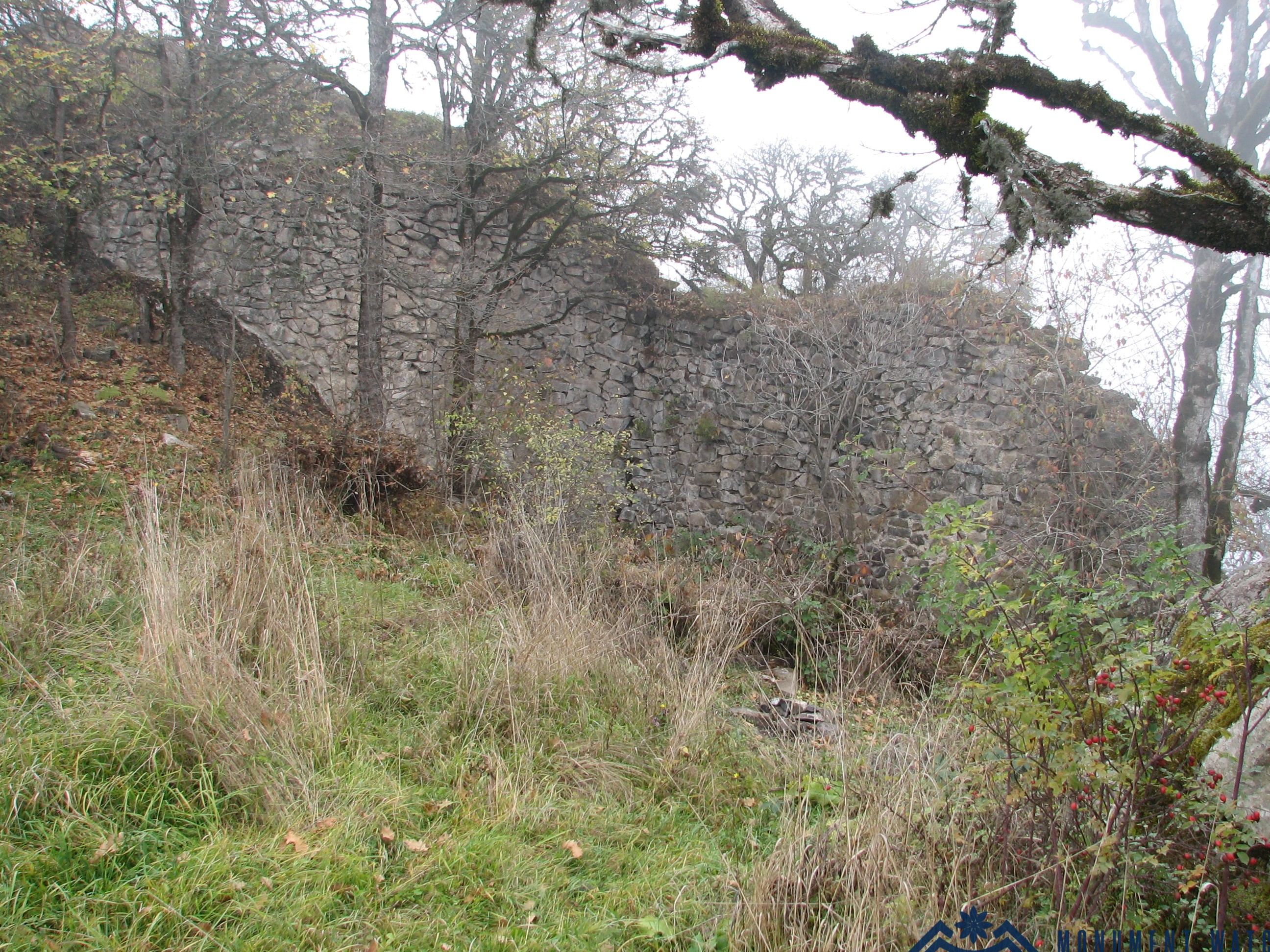
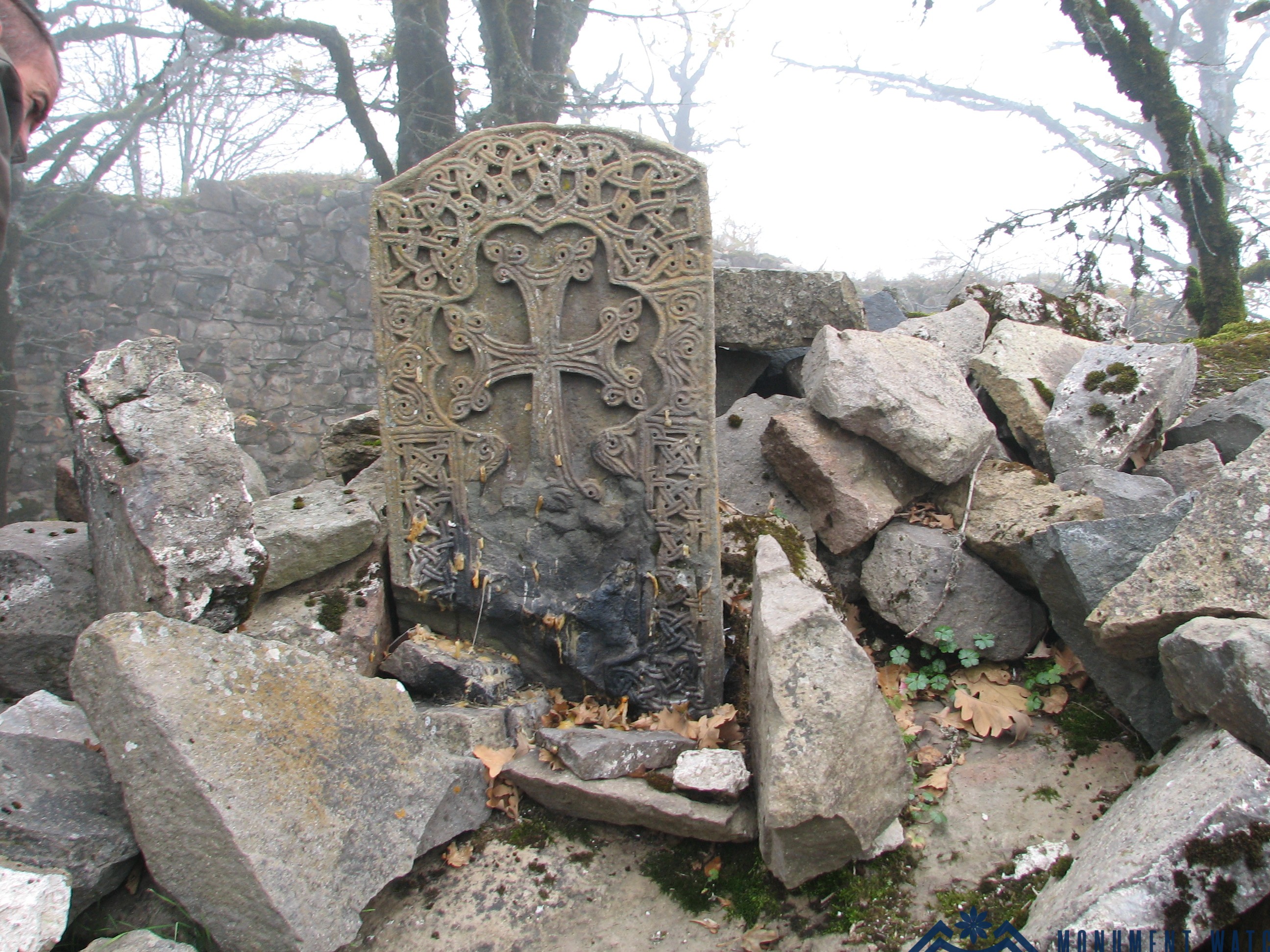
The role and significance of this ancient fortress were considerable in the densely populated valley of the Tartar River, where it functioned as one of the principal defensive nodes of Upper Khachen. The summit area consists of a large rocky outcrop (approximately 25–30 m × 16 m), along the inaccessible edges of which the fortification walls were laid out in a balanced line with rounded contours. The enclosing walls range from 1 m to 8–9 m in height. They are built of roughly hewn, undressed stone bonded with lime mortar (Figs. 2–4). In certain sections of the fortress, round towers were constructed; these are now ruined. Among the notable features preserved at the site today are a sacred spot marked by a khachkar and a reservoir.
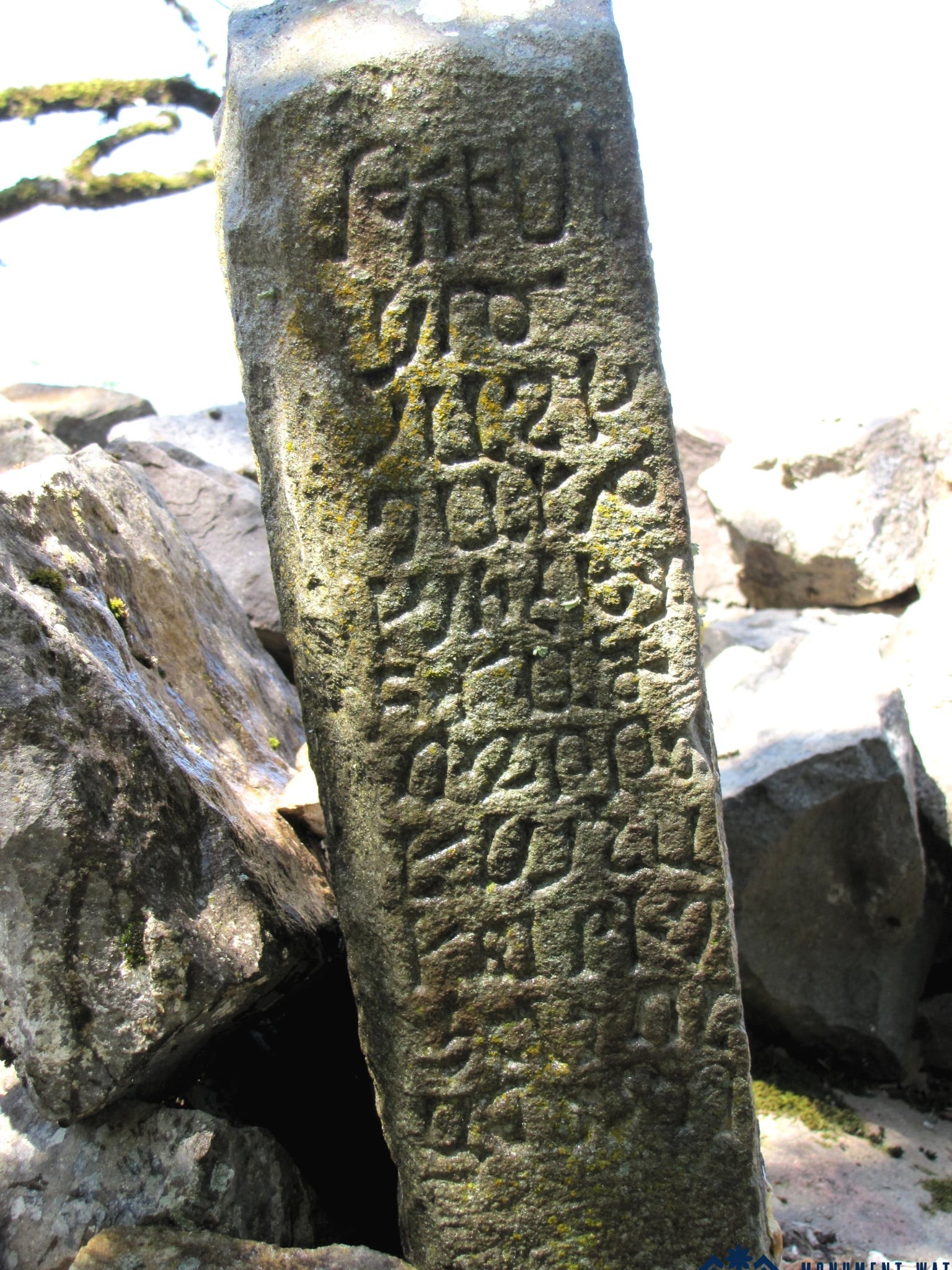
The khachkar (Fig. 5) is set on a semi-level rock slab, beneath which an underground passage–chamber opens. A large inscription is preserved on the right side of the khachkar (Fig. 6). According to S. Minasyan, the khachkar was placed here during the Artsakh liberation struggle (Minasyan 2010, 9).
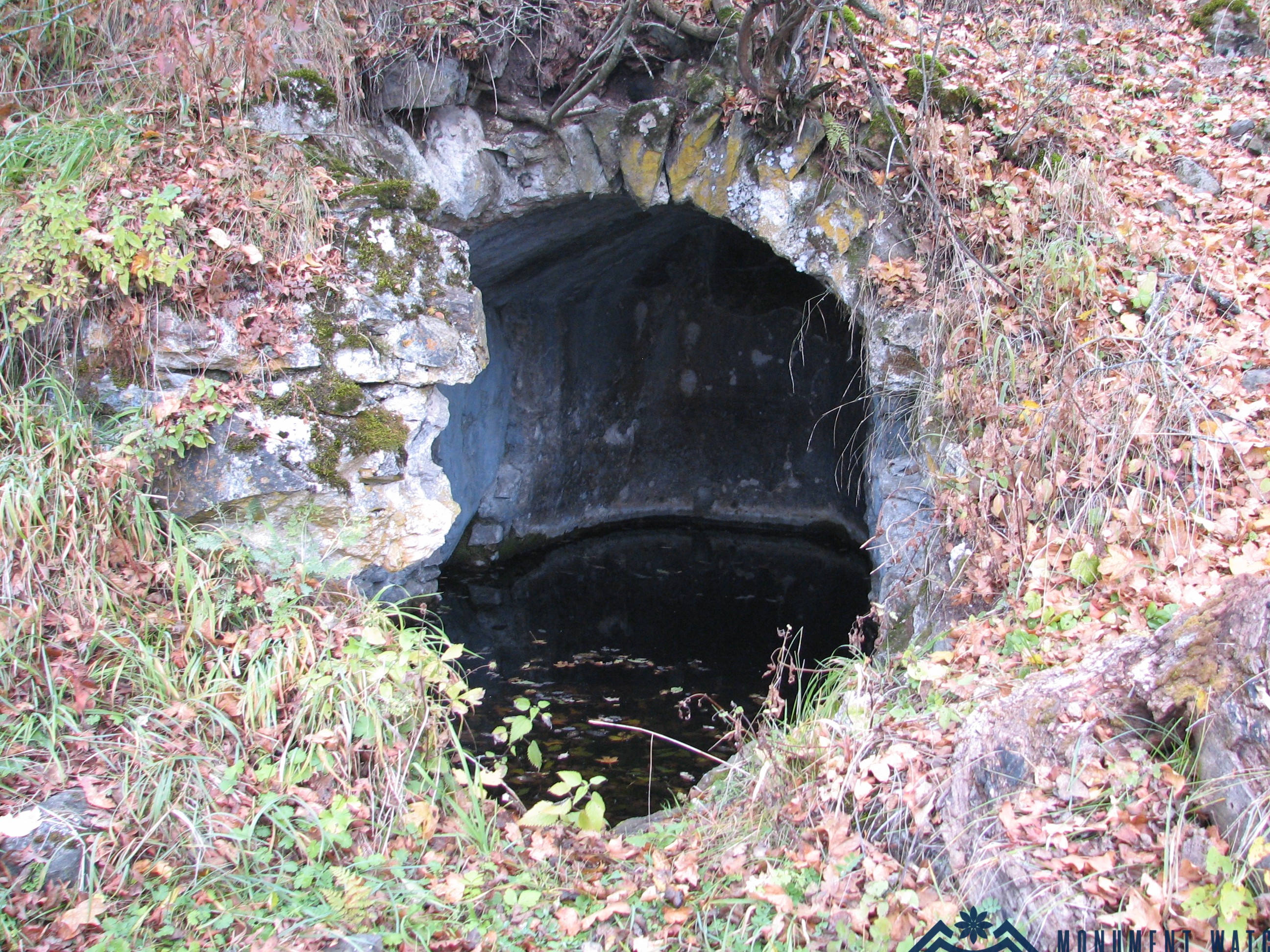
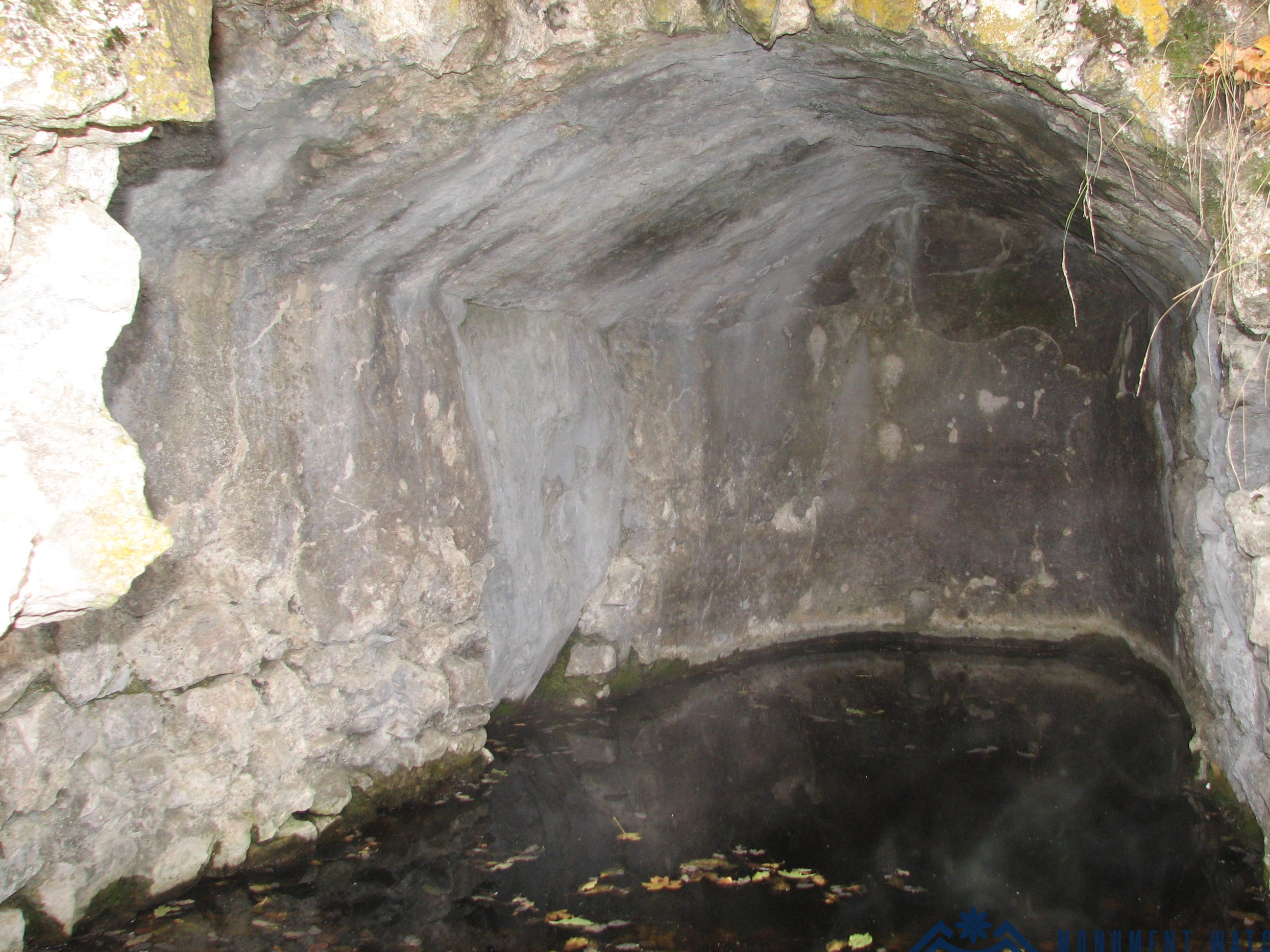
The reservoir (Figs. 7, 8) was constructed in the 12th–13th centuries. Even today, water is preserved in it at a depth of 0.5–1.0 m. Even after the water is removed, the level reportedly restores itself after some time; however, the source of this replenishment remains unknown. The reservoir is vaulted and comparatively well preserved; the interior is plastered with a water-resistant lime mortar. The eastern side has collapsed. Either an entrance once existed here (now lost), or the structure was originally entirely closed. The water stored in the reservoir was likely accessed through an opening from above, which is no longer preserved.
The Condition before and after the war
No information is currently available regarding the monument’s present condition.
Bibliography
- Barkhudaryants 1895 - Barkhudaryants M., Artsakh, Baku.
- Mkrtchyan 1989 - Mkrtchyan Sh., Historical and Architectural Monuments of Nagorno-Karabakh, Yerevan.
- Minasyan 2010 - Minasyan S., Artsakh’s Hakrakahberd: The Site, Name Variants, and Etymology, Journal of Armenian Studies, 1, Artsakh State University, Stepanakert.
- Balayan 2020 - Balayan V., Outlines of the History of Artsakh’s Settlements, Yerevan.
- Certificate of the Ministry of Education, Science, Culture and Sports of Artsakh Certificate of the Ministry of Education, Science, Culture and Sports of Artsakh.
The Hakrakahberd Fortress
Artsakh