The House of Culture of Khndzristan Village

Location

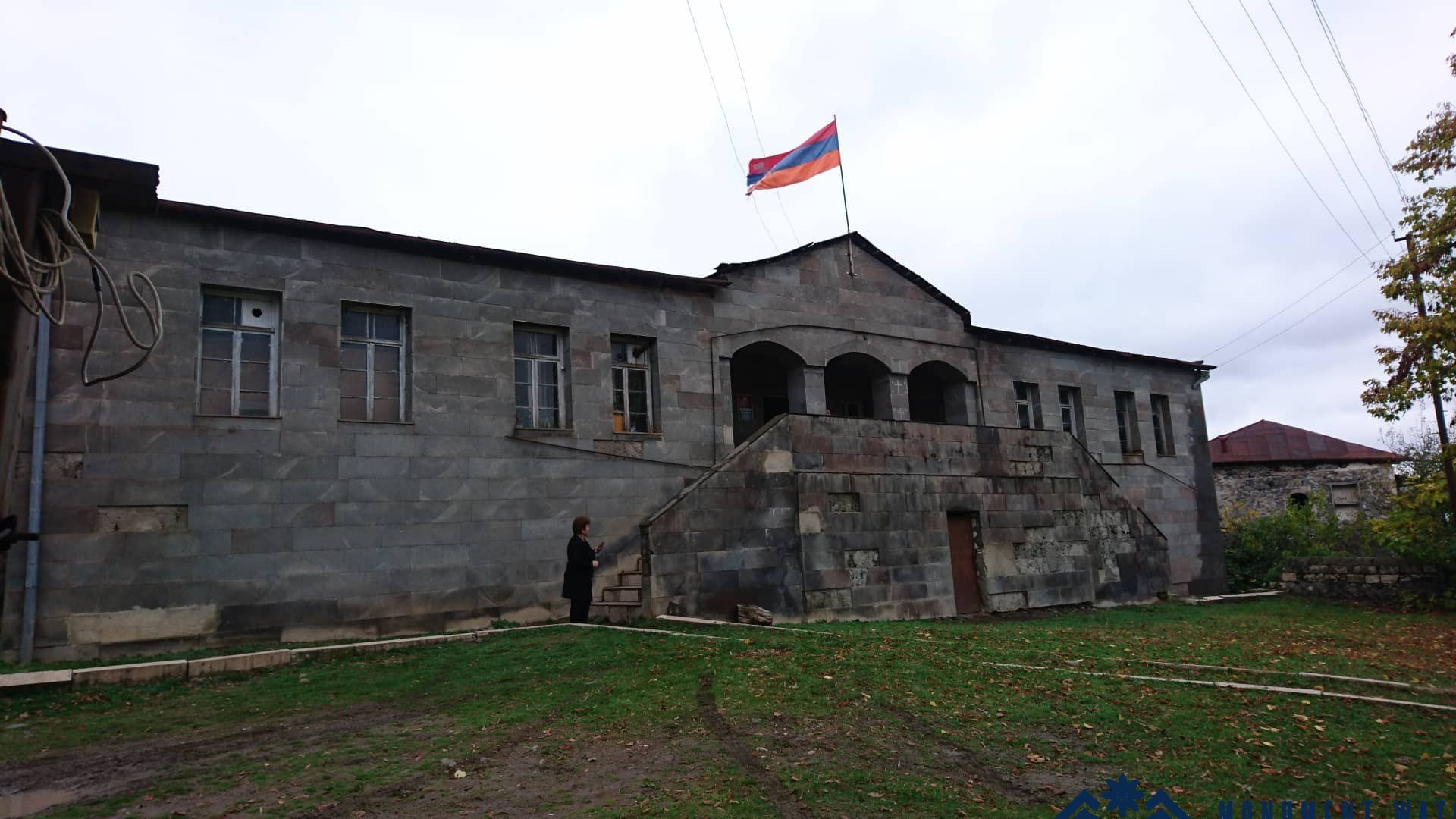
The House of Culture is located in the village of Khndzristan, in the Askeran Region of the Republic of Artsakh. The building, which initially served as a House of Culture and later as an administrative building, is situated in an elevated part of the village (Fig. 1). Since 2023, it has been occupied by Azerbaijan.

Fig. 1. The House of Culture of Khndzristan. Photo by H. Muradyan.

Historical overview

The building of the Khndzristan House of Culture was originally the village’s 19th-century church, which was converted into a village club in 1922. Under the influence of Soviet atheist policies and Azerbaijani nationalist pressure, the church’s inscriptions were destroyed and its original roof was replaced.

The history of the House of Culture directly reflects Soviet policy toward religious buildings. Within the framework of Soviet atheist ideology, the functioning of churches was prohibited. In rural settlements, churches were often the only substantial buildings situated on small public squares and, by state decision, began to be used for public and economic purposes. Churches were frequently converted into houses of culture or warehouses, and in some cases into barns. Particularly in Azerbaijani-populated villages, churches were demolished, while individual dressed and decorative masonry elements were reused in the construction of schools, houses, and other buildings. Examples include Surb Sargis Church in Tsar village, Charektar Monastery, and others (for details, see Petrosyan 2023).

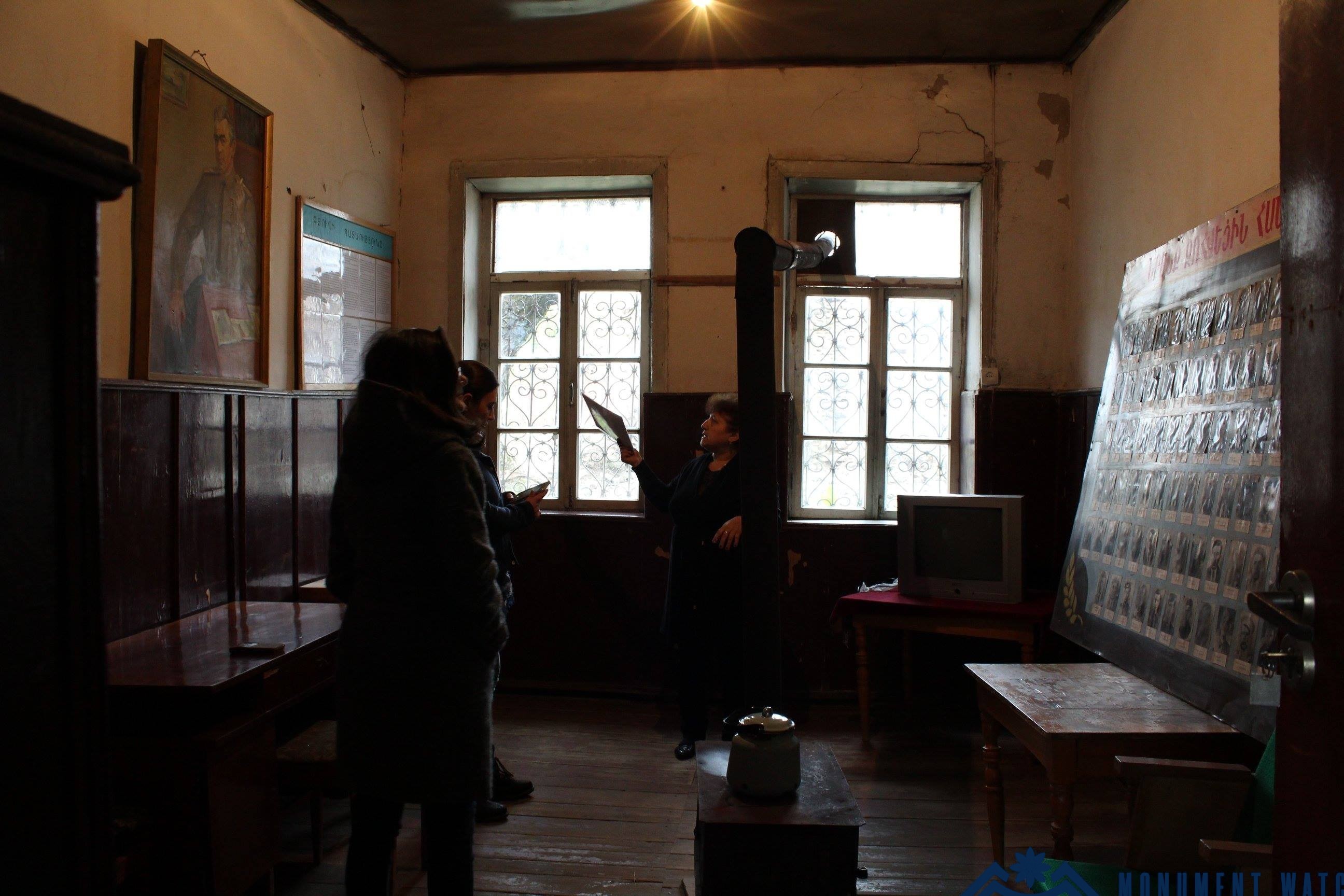
In 1955, the building was completely adapted to the needs of the village council, and its interior was renovated as a secular administrative space (Fig. 2).

Fig. 2. One of the rooms of the House of Culture. Photo by H. Muradyan.

Architectural and compositional description

Unlike many other rural houses of culture in Artsakh, the Khndzristan building was not a standard Soviet-era structure, but a 19th-century Armenian church. It has a clear west–east orientation.

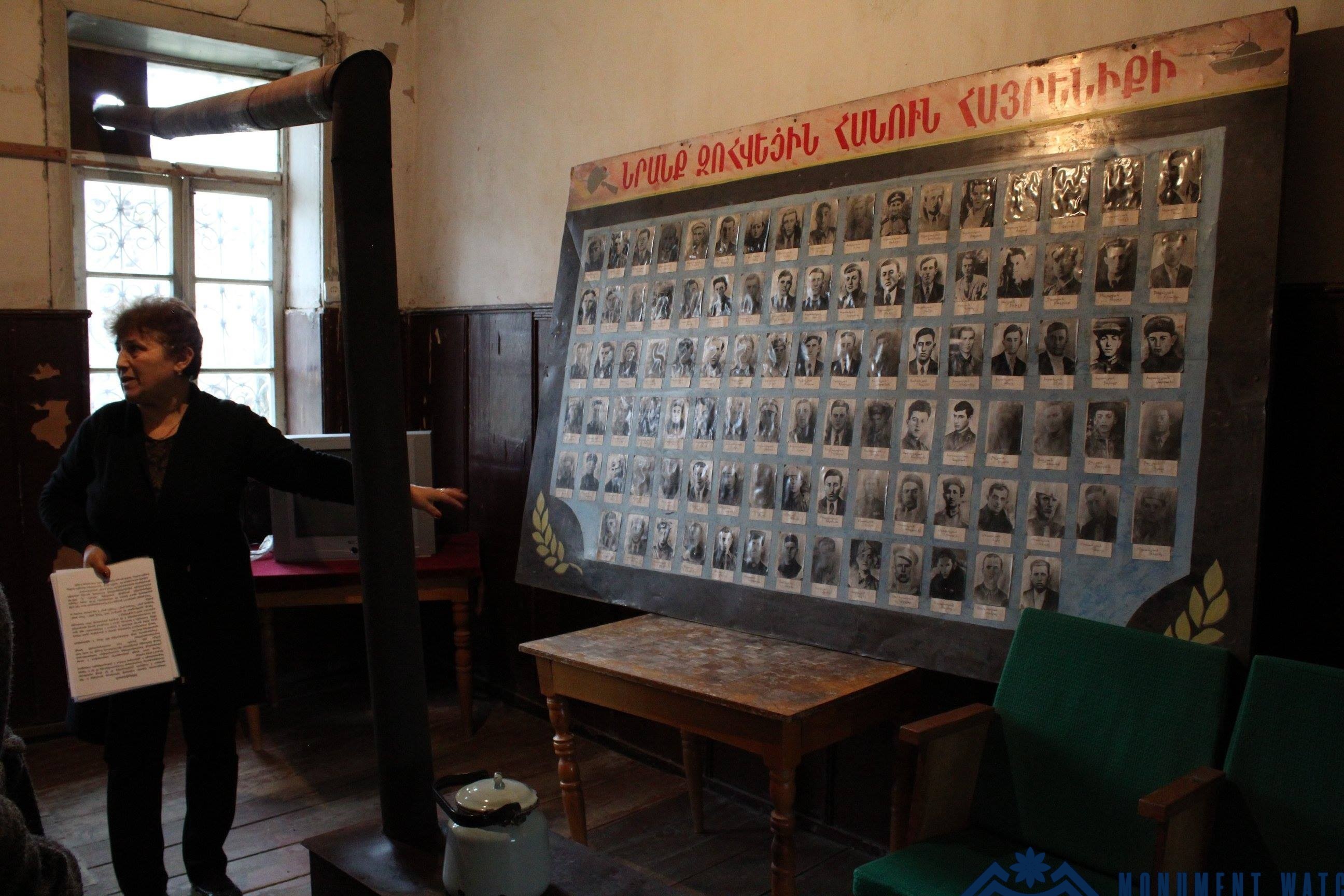
The church building has been completely altered. Externally, it was faced with finely dressed basalt, characteristic of Soviet-era houses of culture. The building measures 13 m in width and 25 m in length. On the southern side, in the central section, a three-arched vestibule and a staircase were added. The interior was also completely reorganized, with an auditorium and separate offices created within the former church space (Fig. 3).

Fig. 3. One of the rooms of the House of Culture. Photo by H. Muradyan.

The Condition before, during, and after the war

During the First Artsakh War, the village was subjected to shelling, which also damaged the northern section of the building.

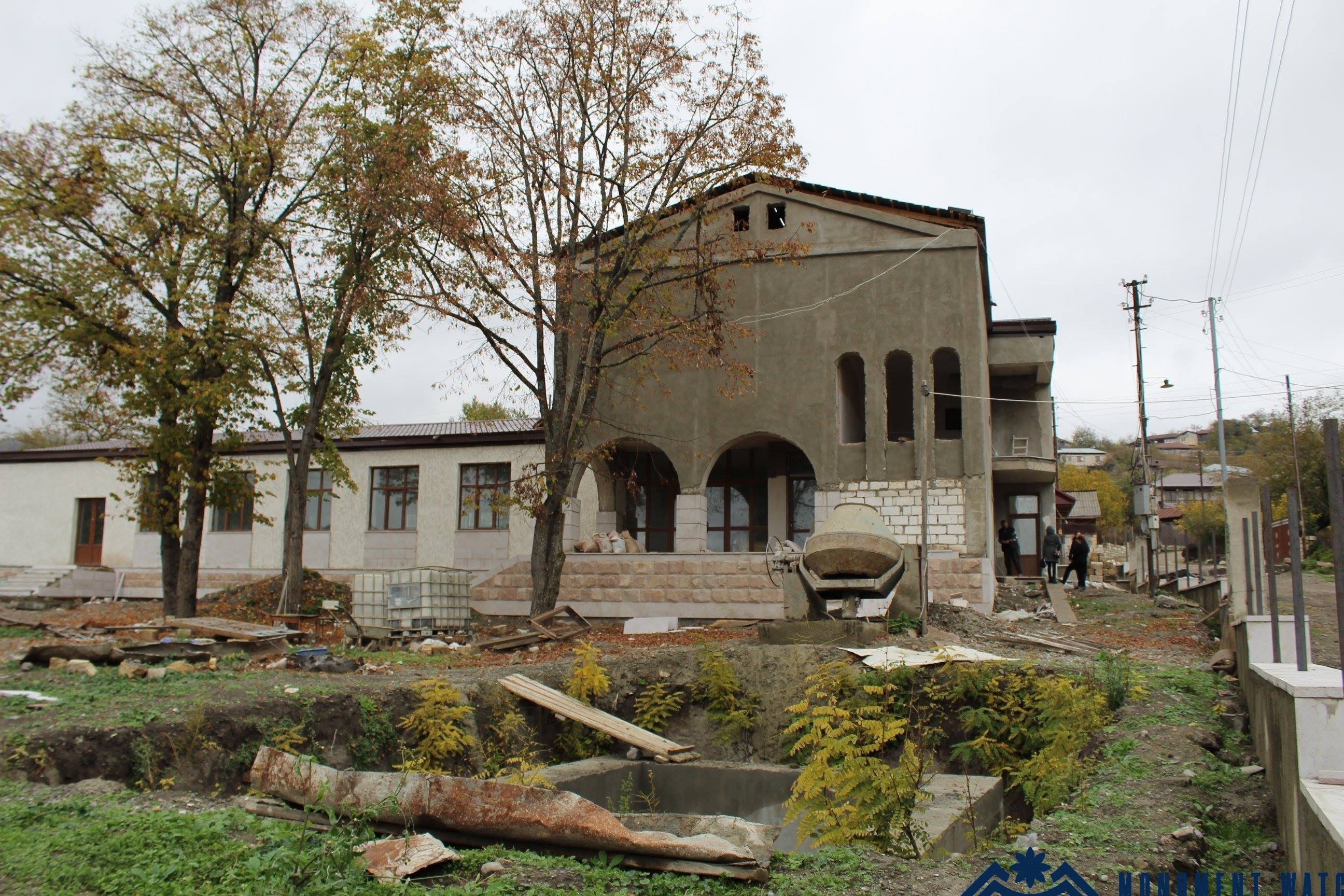
In 2019–2020, immediately before the 44-day war, construction of a new multifunctional community center began in the central part of the village. The design of the new building had already been approved, and construction was underway (Fig. 4). The two-story community center included an auditorium and office spaces intended both for various cultural groups and activities and for administrative functions. Construction of the building was completed after the 44-day war.

Fig. 4. The newly constructed community center. Photo by H. Muradyan.

The House of Culture of Khndzristan Village
Artsakh