The Mosque of Kovsakan (Malatkeshin Village)
Location
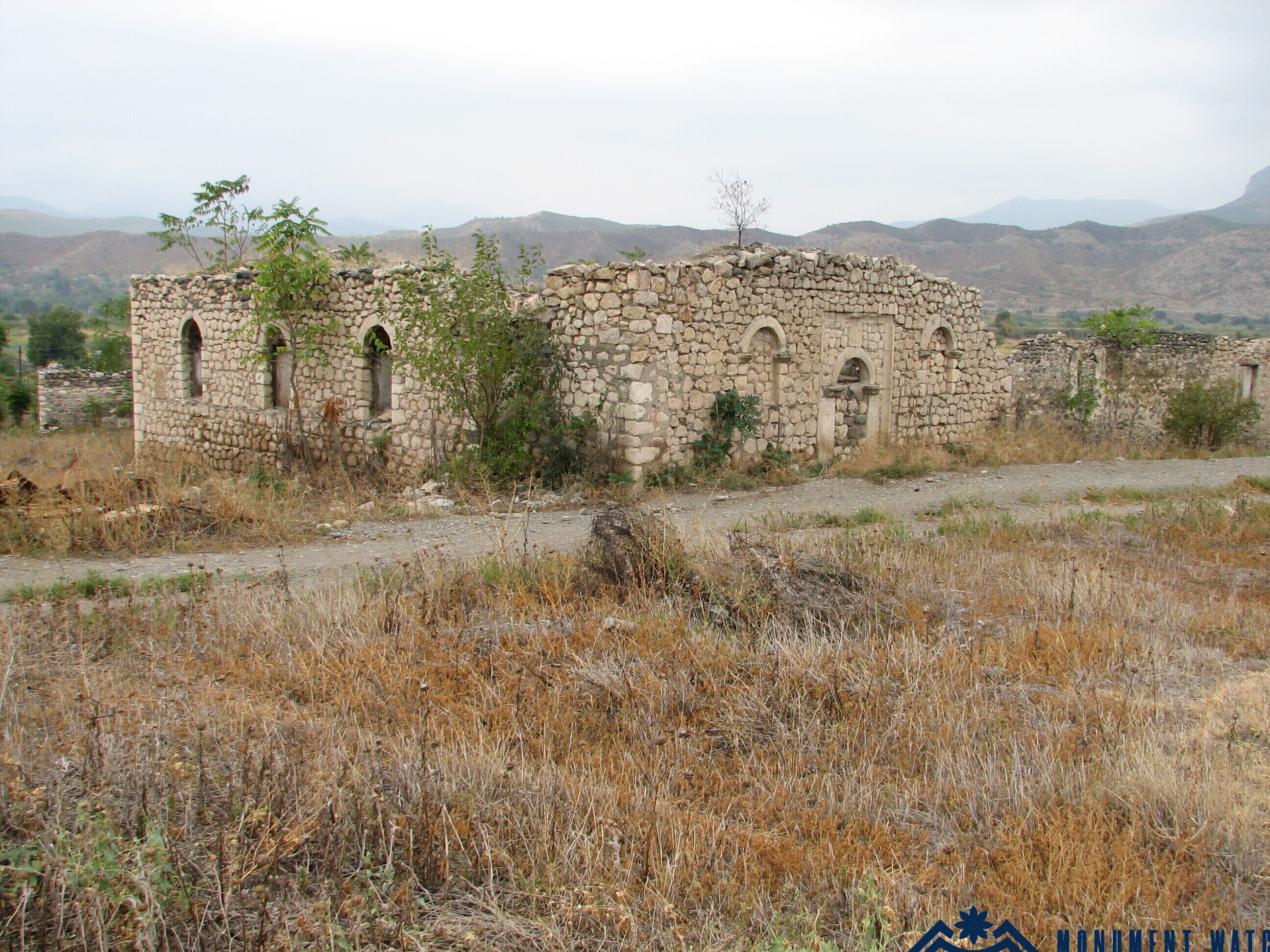
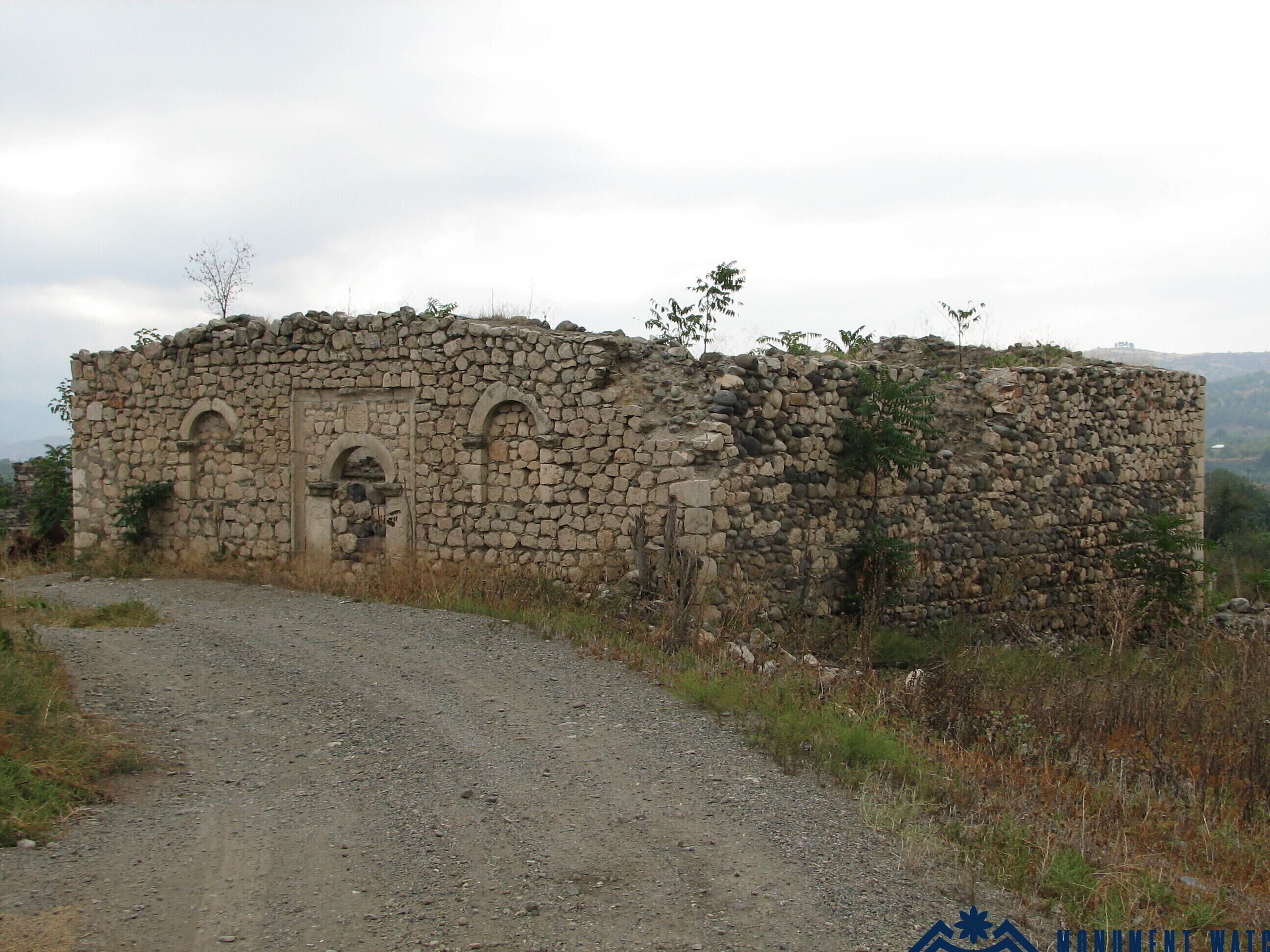
The mosque is located in the center of the former village of Malatkeshin, near the sites of former residential buildings (Figs. 1, 2).
Historical overview
Malatkeshin village is located on the left bank of the Voghji River, along its lower course. The indigenous Armenian villages of this area were depopulated of their Armenian inhabitants toward the end of the 18th century. New sedentary Muslim populations, Tatars and Kurds, settled in the area during the 19th century, particularly in the second half. Malatkeshin's inhabitants were Shi’a Tatars.
The ruins of Armenian churches and cemeteries remained visible in many villages throughout the area. Historically, these territories formed part of Kovsakan District in the province of Syunik of Greater Armenia (Karapetyan 1999, 203–207).
The mosque was constructed in the second half of the 19th century.
Architectural and compositional description
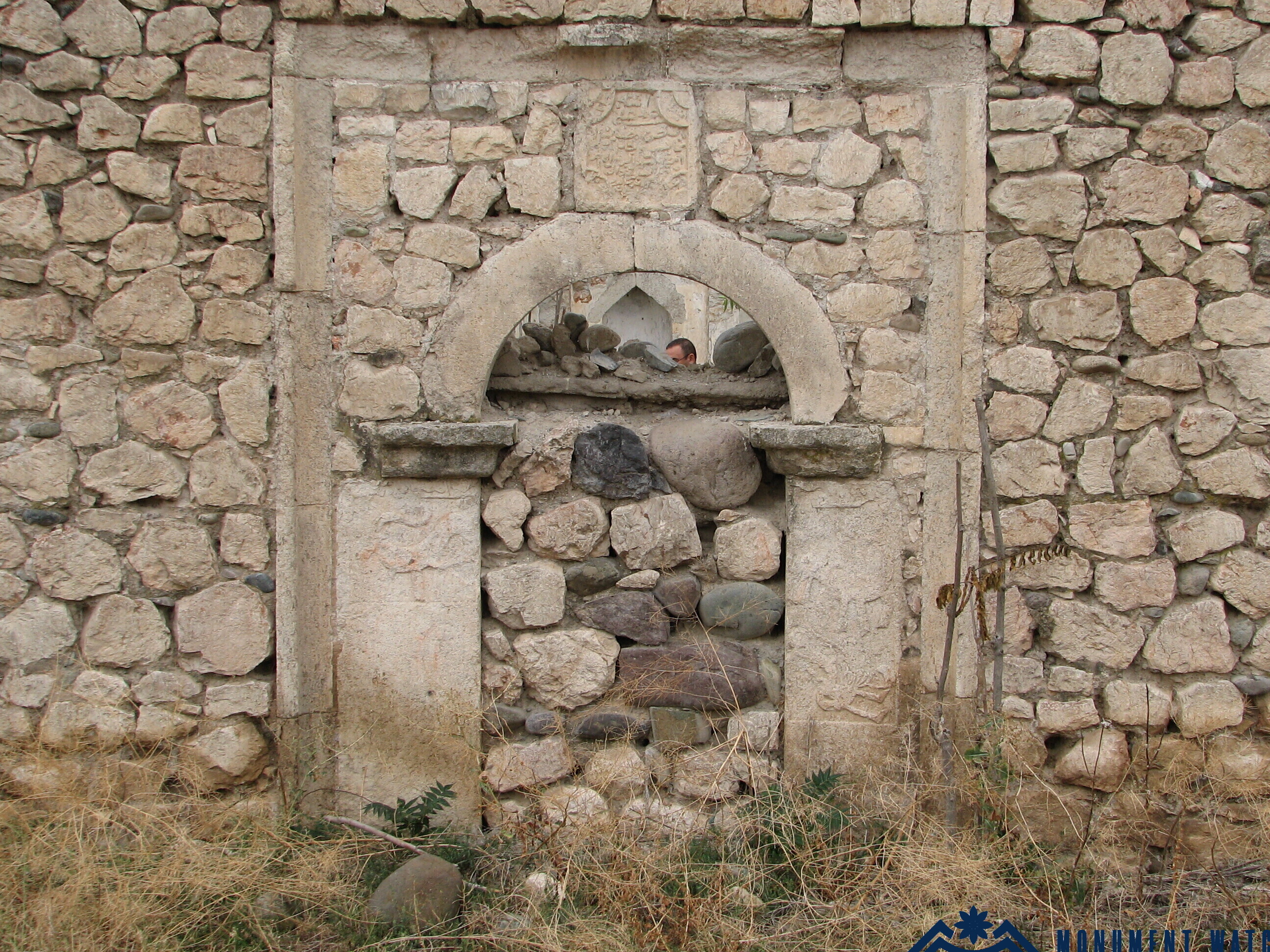
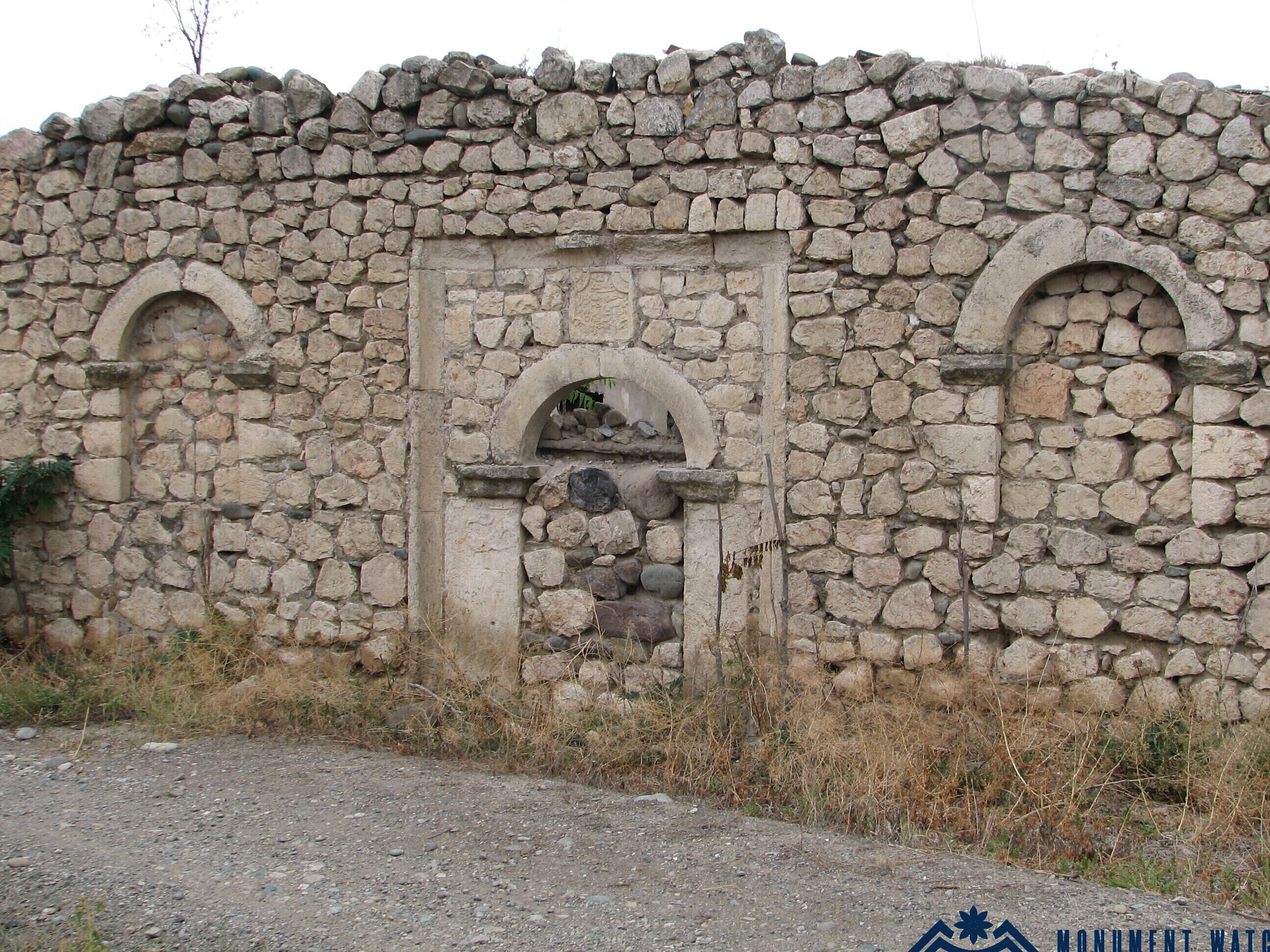
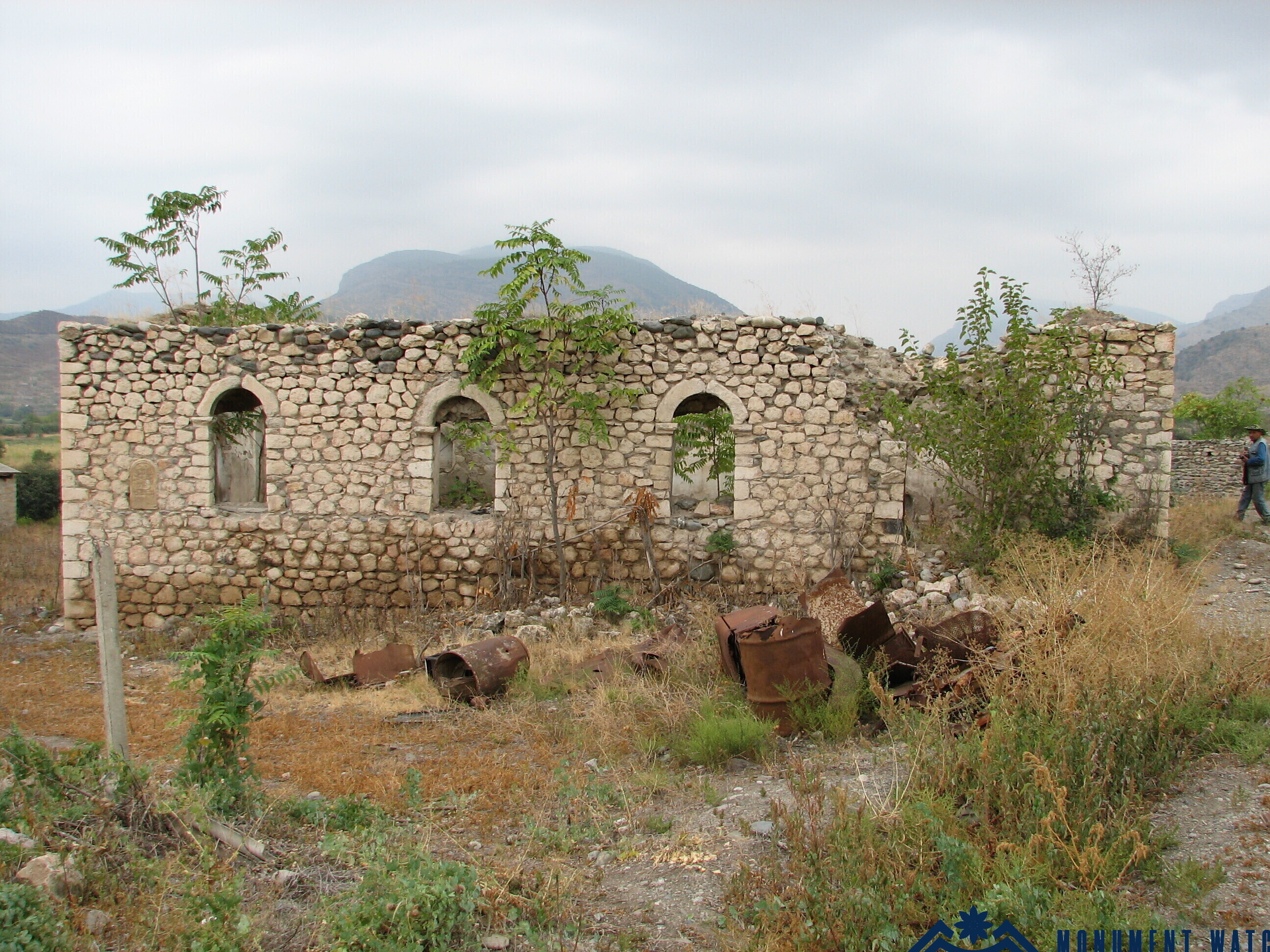
The mosque of Malatkeshin village is a relatively simple structure, consisting of a single-nave rectangular prayer hall constructed of small and medium-sized roughly hewn stones and river cobbles bonded with lime mortar. Finely dressed stone forms the quoins, the arched entrance (Fig. 3), and the window surrounds (Fig. 4).
The windows are large and wide. Two are on the northern façade, and three on the western façade (Fig. 5). The northern windows flank the entrance and were later blocked up.
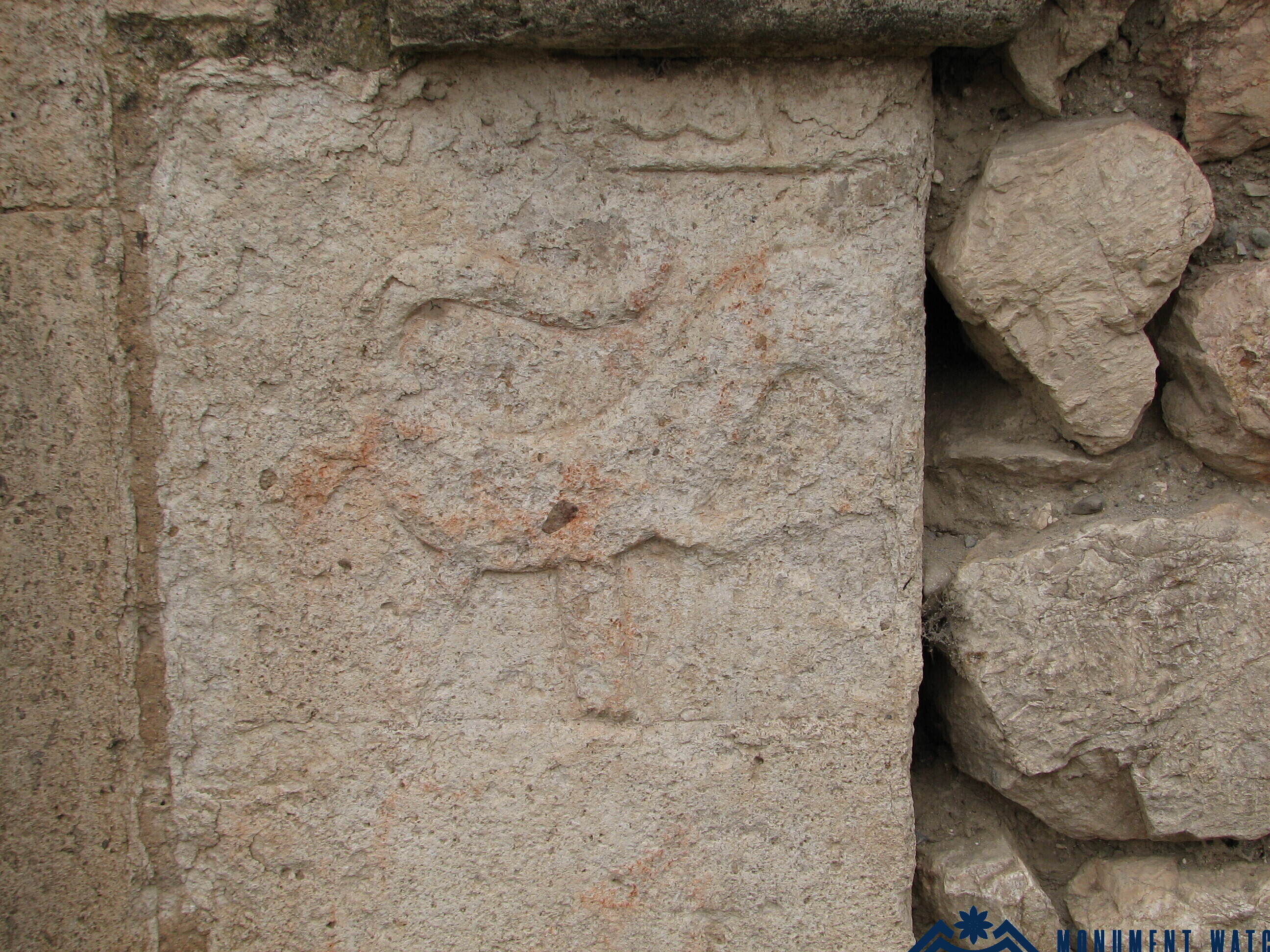
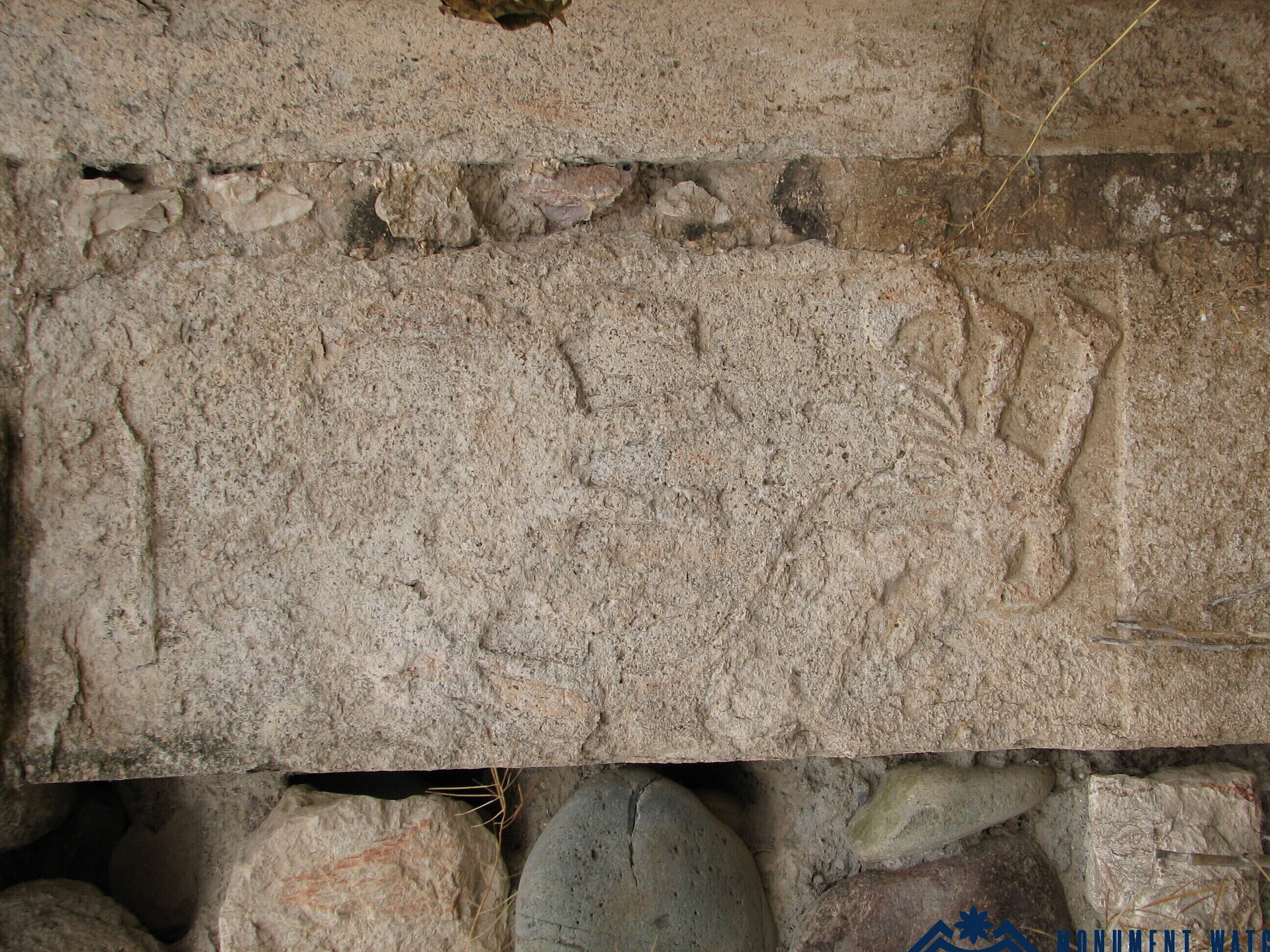
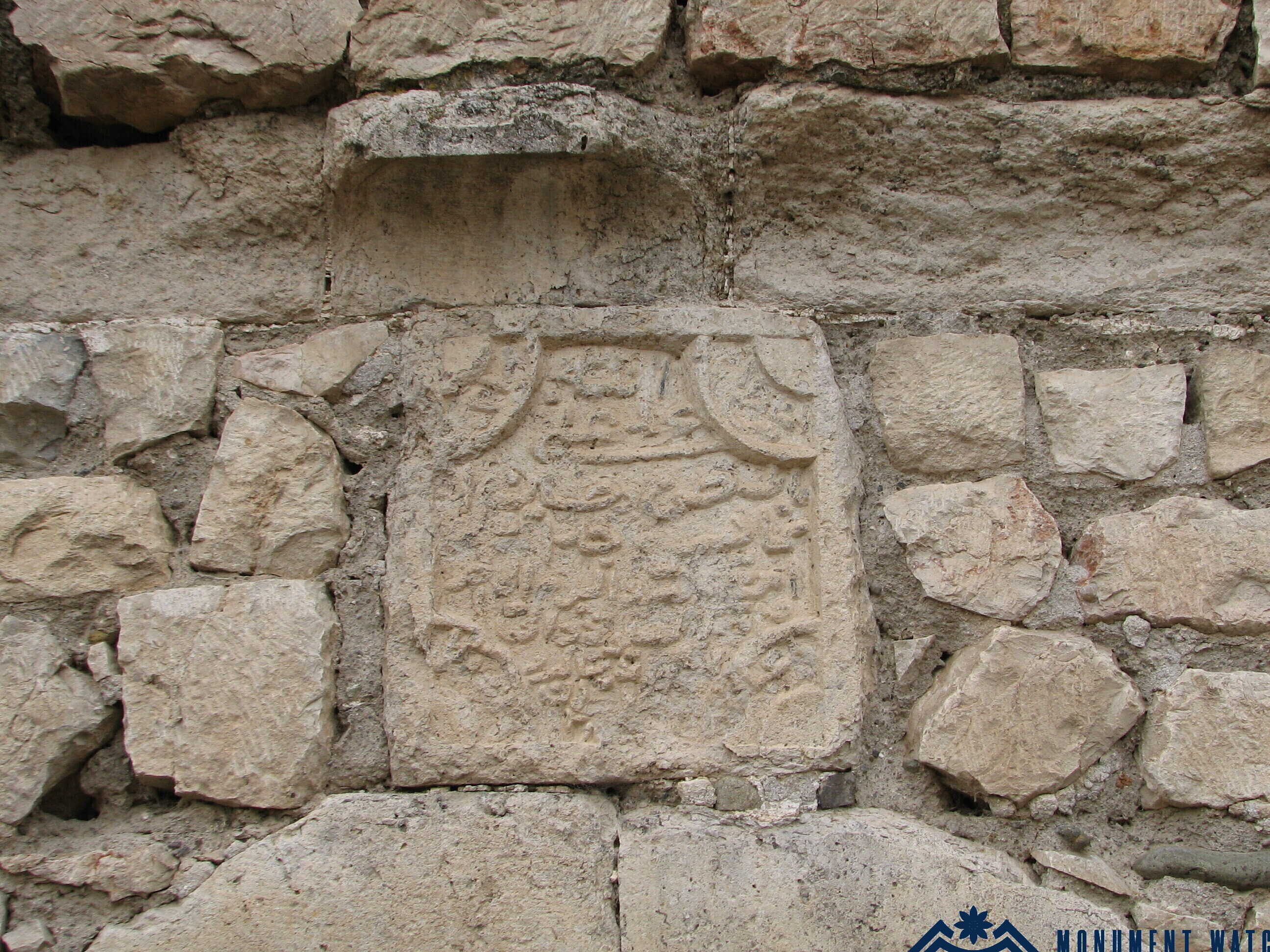
The entrance is particularly noteworthy for the lion-like figures carved on its jamb stones (Figs. 6, 7). The carvings are relatively simple, and the figure on the right has also suffered from weathering. The masonry above the entrance incorporates an inscribed stone bearing a well-preserved inscription in Arabic script (Fig. 8). Another inscription in Arabic script is located on the western façade, near the windows.
The mosque’s roof has not survived. It was originally constructed of timber. The interior is architecturally simple and unornamented, while the walls were originally plastered. The mihrab has survived intact and features a pointed-arch termination.
Overall, the mosque of Malatkeshin is characterized by its modest architectural appearance and straightforward construction, which scarcely distinguishes it from the surrounding residential buildings. This characteristic is typical of rural places of worship and has also been noted by scholars studying mosque architecture in various rural regions of Azerbaijan (Gadzhieva 2012, 5–18; Alosmanova 2018, 114–117).
The mosque in the center of Malatkeshin closely resembles the rural churches built in Artsakh during the 19th century, suggesting its design was directly influenced by local church architecture. Armenian master artisans may also have built the building, whose expertise remained in demand for various construction projects even during the Soviet period (Hovsepyan 2024, 102–103).
Condition Before and After the War
Apart from its wooden roof, which was damaged during the First Artsakh War, the mosque's main structure remains intact. The mihrab and Arabic-script inscriptions have also been preserved in their original condition. No evidence of deliberate damage is visible on the walls.
Unfortunately, no information is available concerning the mosque’s condition during the Soviet period. However, its utilitarian use during that time may be inferred from the fact that the windows and entrance on the main façade were blocked up.
Bibliography
- Karapetyan 1999 - Karapetyan S., Monuments of Armenian Culture in the Territories Annexed to Soviet Azerbaijan, Yerevan.
- Hovsepyan 2024 - Hovsepyan R., “Issues in the Research and Preservation of the Islamic Monuments of Artsakh,” in Armenia as a Crossroads of Civilizations: Historical and Cultural Interconnections, Proceedings of the International Conference, Yerevan, pp. 99–107.
- Alosmanova 2018 - Alosmanova M., “Mosques Constructed in the Lankaran–Astara Region of the Republic of Azerbaijan in the 19th Century,” AMIT, no. 3 (44), Moscow, pp. 110–120.
- Gadzhieva 2012 - Gadzhieva S., “Monuments of Religious Architecture in the North-Western Region of Azerbaijan and Issues Concerning Their Preservation,” AMIT, no. 2 (19), Moscow, pp. 2–20.
- Neymat 2011 - Neymat M., Corpus of Epigraphic Monuments of Azerbaijan, Baku.
The Mosque of Kovsakan (Malatkeshin Village)
Artsakh