Եղիշա կույսի անապատը

Location

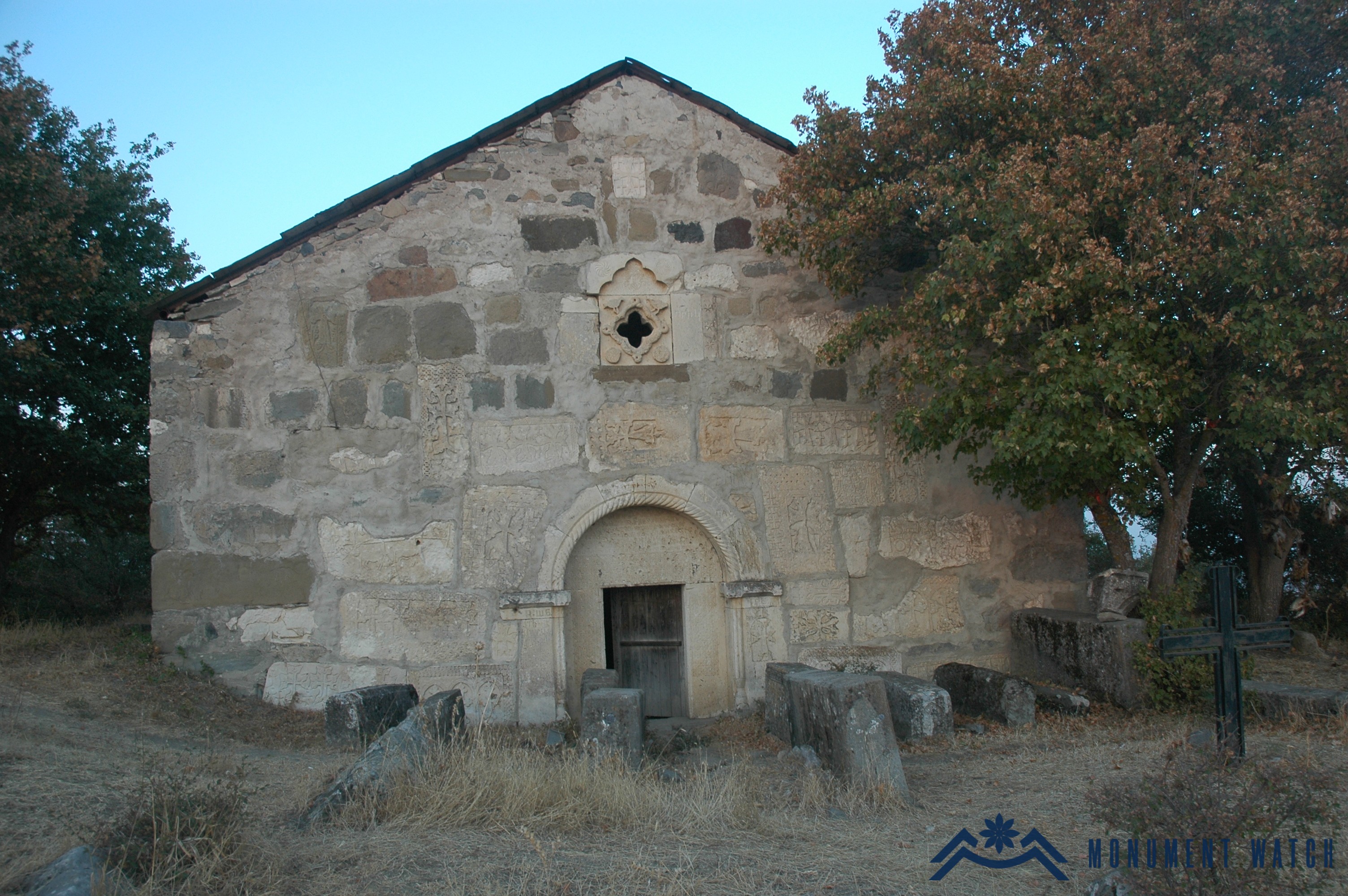
The Anapat of Yeghisha Kuys stands on the summit of a mountain rising to the south of the village of Chartar in the Martuni region of Artsakh. This mountain "stands" between the villages of Gyune and Guze Chartar (CAE 5, 161). A medieval cemetery is spread around the sole surviving structure of the monastery—the church. The monastic precinct was once enclosed by a wall, of which only building debris survives in places (Fig. 1). At present, the village—and accordingly all monuments within its territory—are under the control of the Armed Forces of Azerbaijan.

Fig. 1. A general view of the Anapat of Yeghisha Kuys from the east. Photo by N. Yeranyan.

Historical Overview

Written sources concerning the monastery are limited; however, the extant building remains on site and specific architectural details (foundations of a basilican structure, capitals characteristic of the 4th–5th centuries, pier bases, and carved decorative fragments) attest to the existence here of a cultural and cultic center as early as the early medieval period. From the 12th century onward, the monastery became a notable pilgrimage site. It later fell into ruin and was rebuilt in the 17th century (Barkhudaryants 1895, 116–117).

Architectural-compositional examination

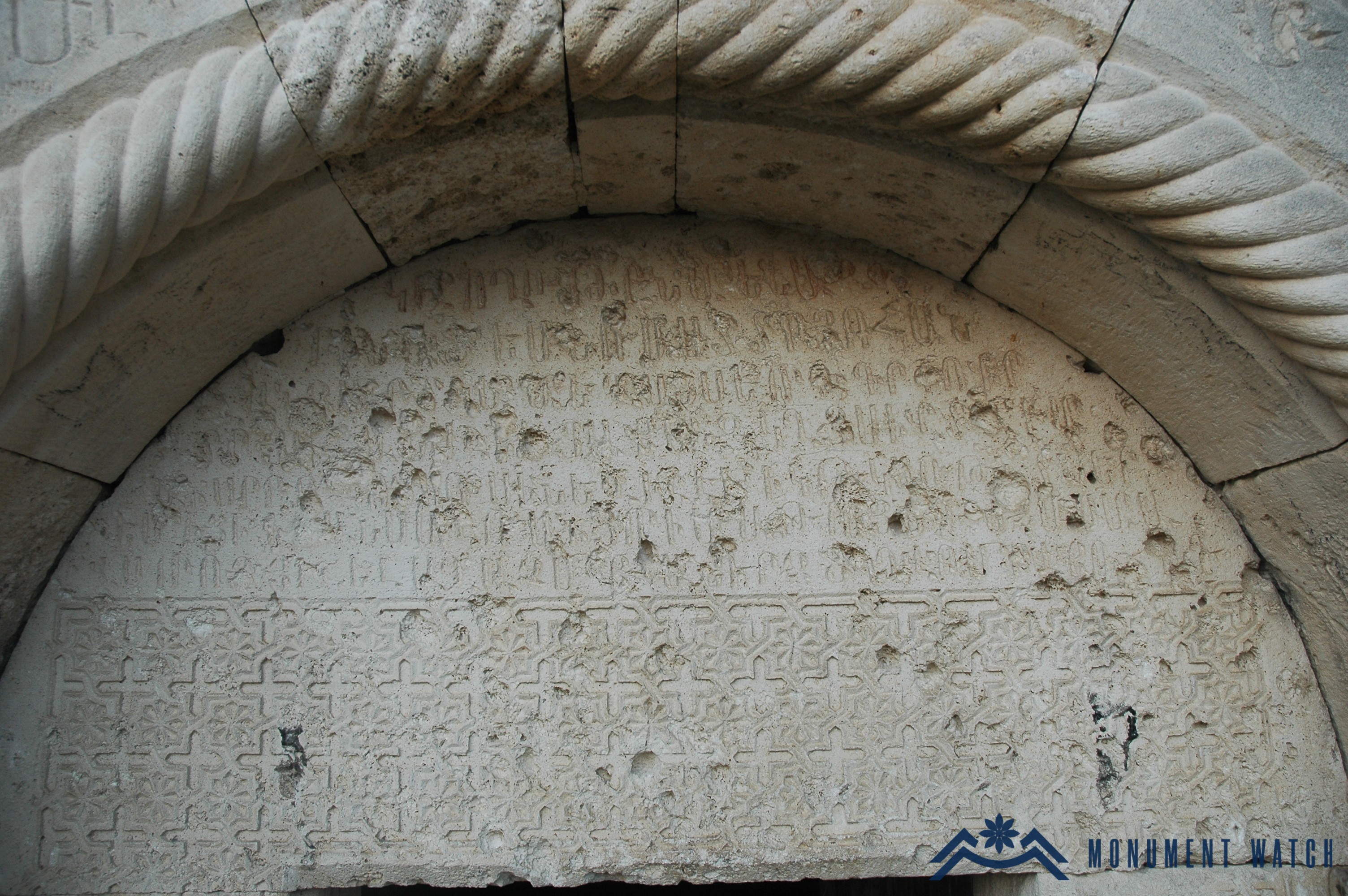
The only surviving structure of the monastery is the church, referred to in the inscriptions as the Anapat of Yeghisha Kuys. A reconstruction inscription carved on the lintel of the west entrance records works carried out in 1675: "By the power of Almighty God, I, the humble Ter Hovhannes, a weak priest, together with my spiritual son, the little Ter Hovhannes, built this holy church in the name of Yeghisha Kuys, during the catholicosate of Lord Yeremia and in the house of Ałuankʿ, whose mother see is Gandzasar. We beseech that whoever reads [this] remember [us] together with our parents in prayer. Year 1124 (= 1675)." (CAE 5, 162; Fig. 2). A second inscription above the window on the same façade states:

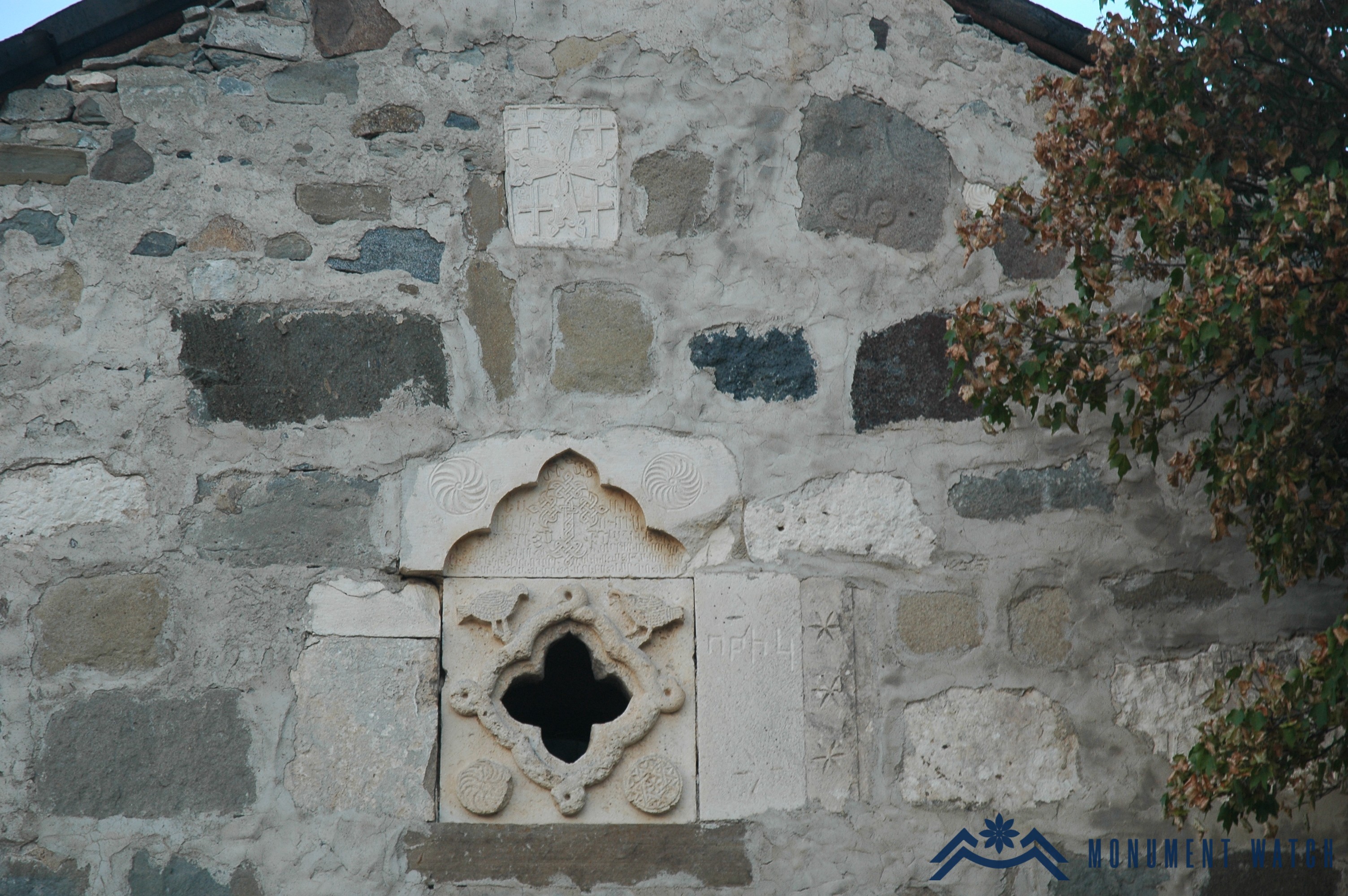
"Lord God Jesus Christ, I, the unworthy master Gabriel, built this church by my own hand. Whoever reads, let him say with one voice: 'Lord, have mercy.' This cross is in memory of Gabriel, of my parents, and of my daughters and sons." (Barkhutareants 1895, 116–117; Fig. 3).

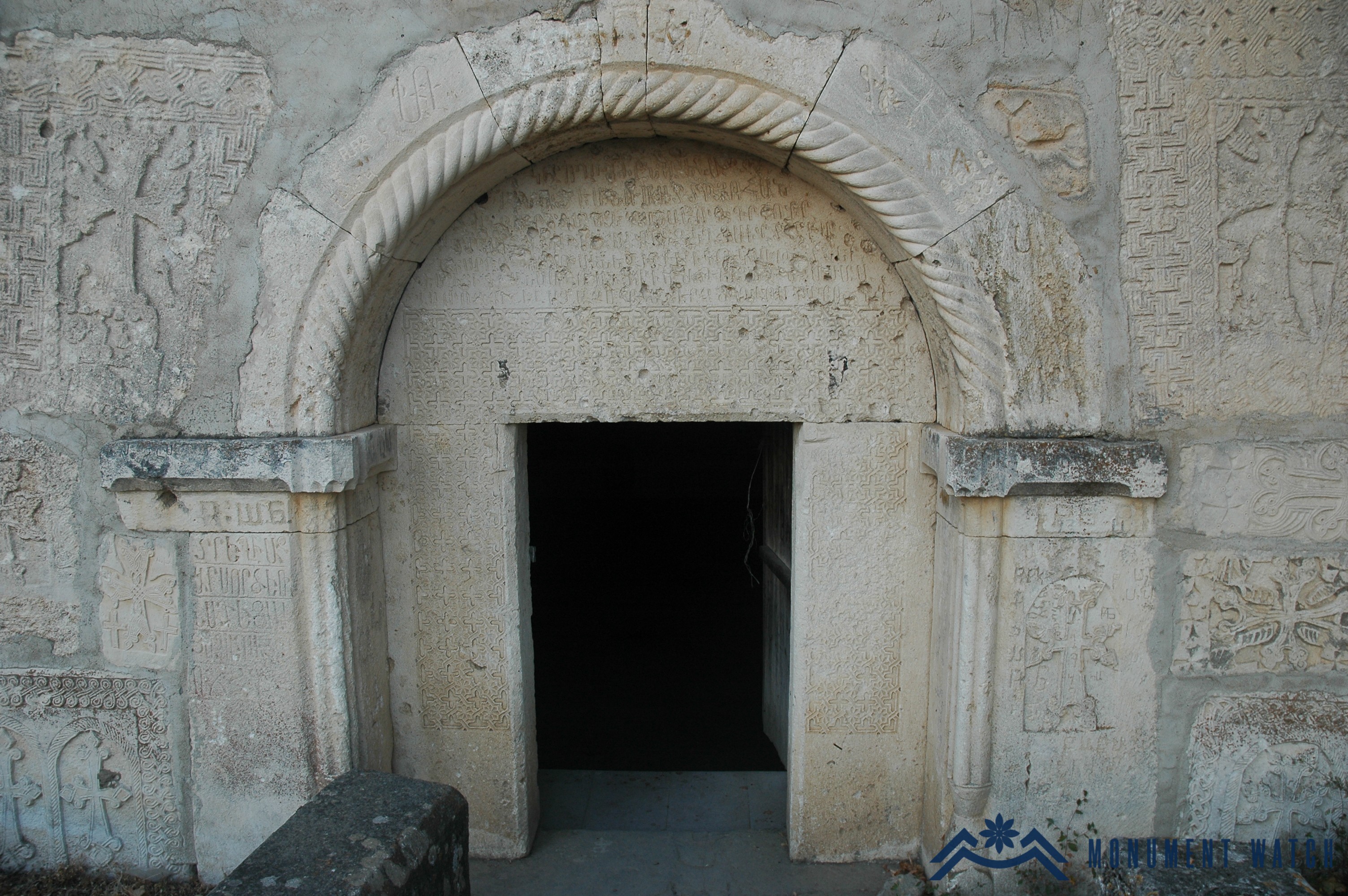
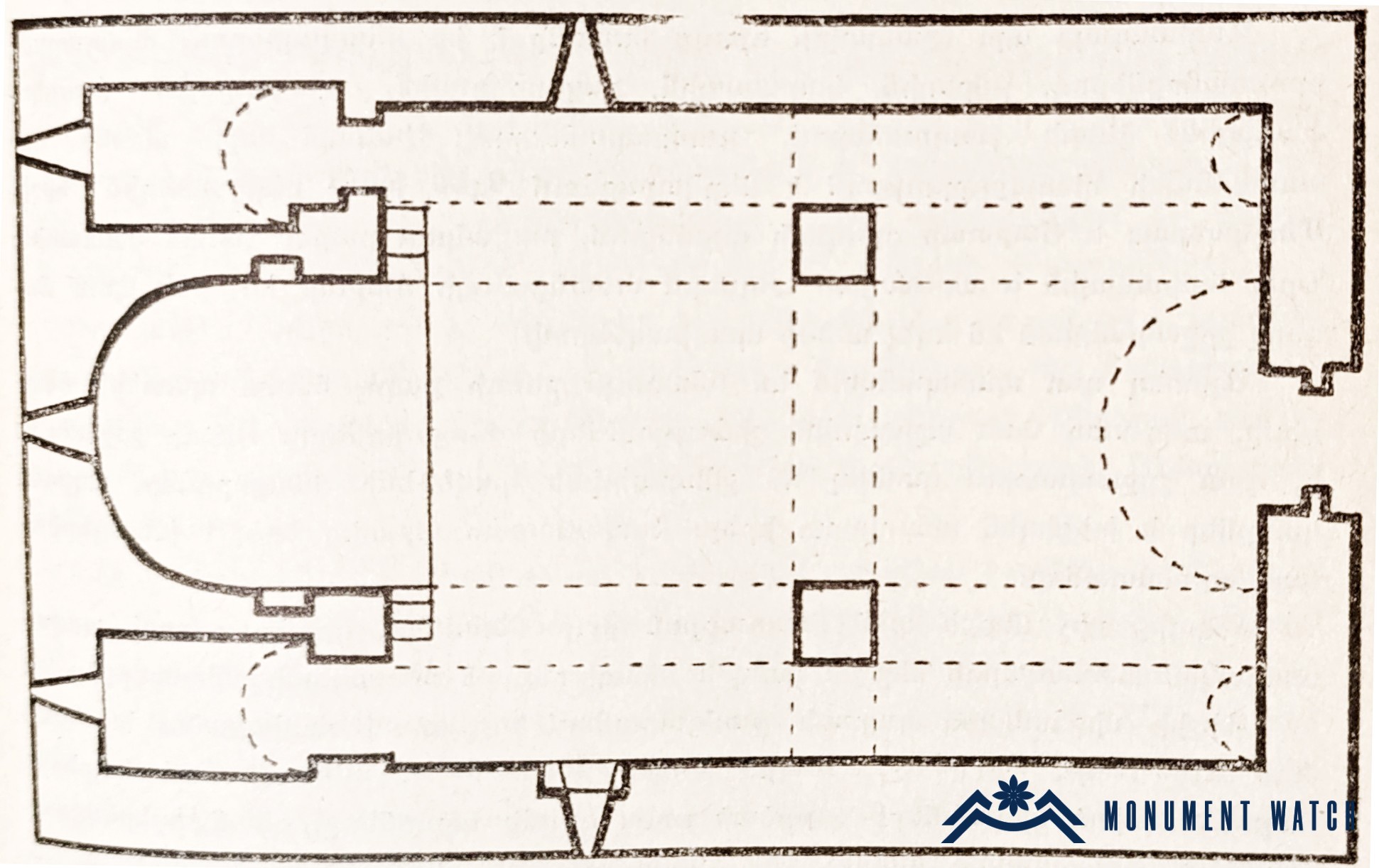
The church is a three-nave basilica: the side aisles are relatively narrow, while the central nave—terminating in the sanctuary (apse)—is markedly wider. Single openings are set in the eastern and western walls of the apse. The side aisles end in rectangular sacristies. The plan measures 15.95 × 9.70 m. The sole entrance is in the west wall and is articulated by an arch resting on columns (Fig. 4). The sanctuary is lit by a window in the east façade; each sacristy likewise has a single, symmetrically placed window on this side. The nave is illuminated by two longitudinal windows pierced in the south and north walls (Fig. 5).

Fig. 2. The reconstruction inscription on the west lintel. Photo by N. Yeranyan.

Fig. 4. The ceremonial west entrance. Photo by N. Yeranyan.

Fig. 3. The inscription above the west window. Photo by N. Yeranyan.

Fig. 5. The church plan; survey by S. Karapetyan.

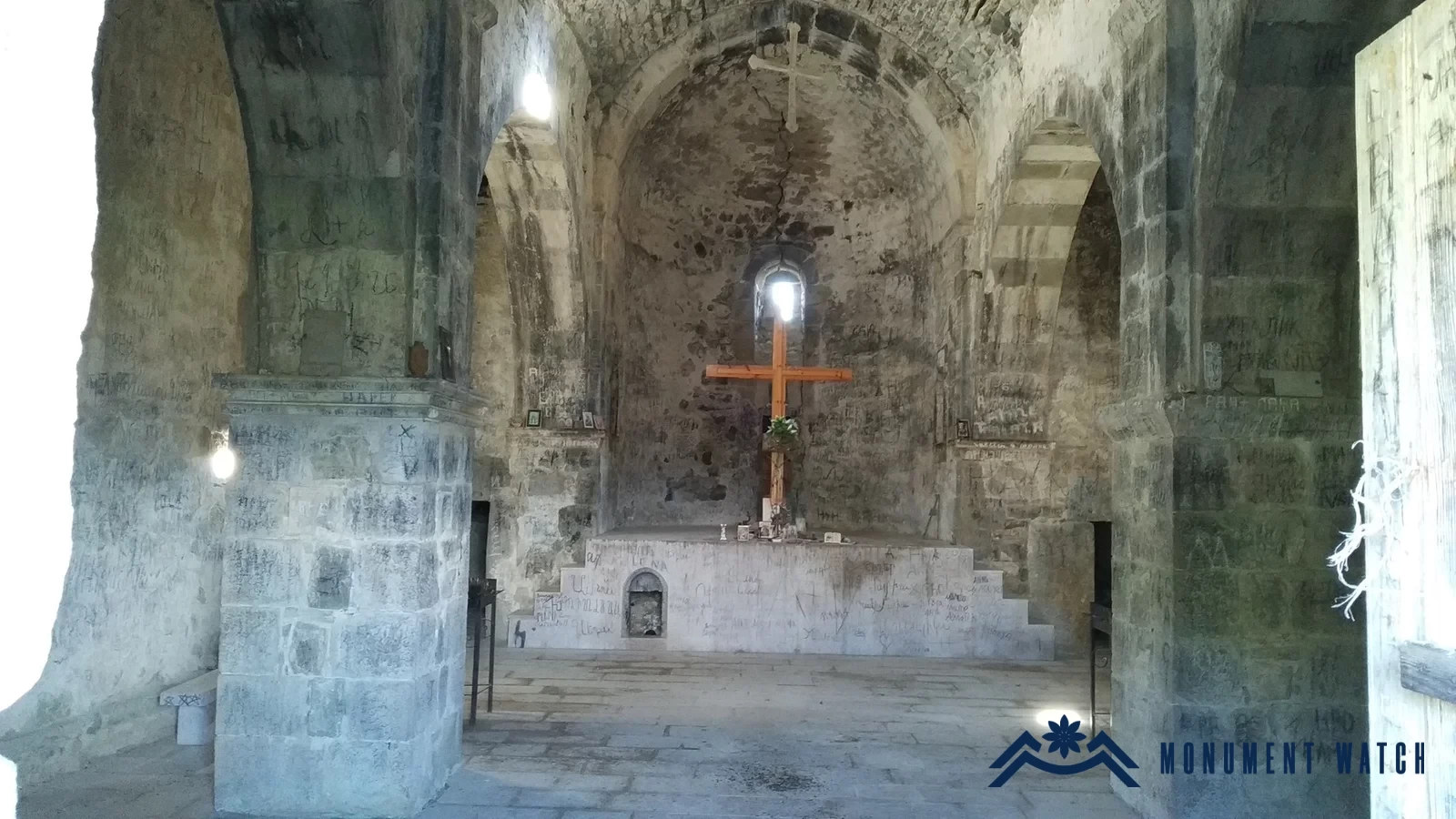
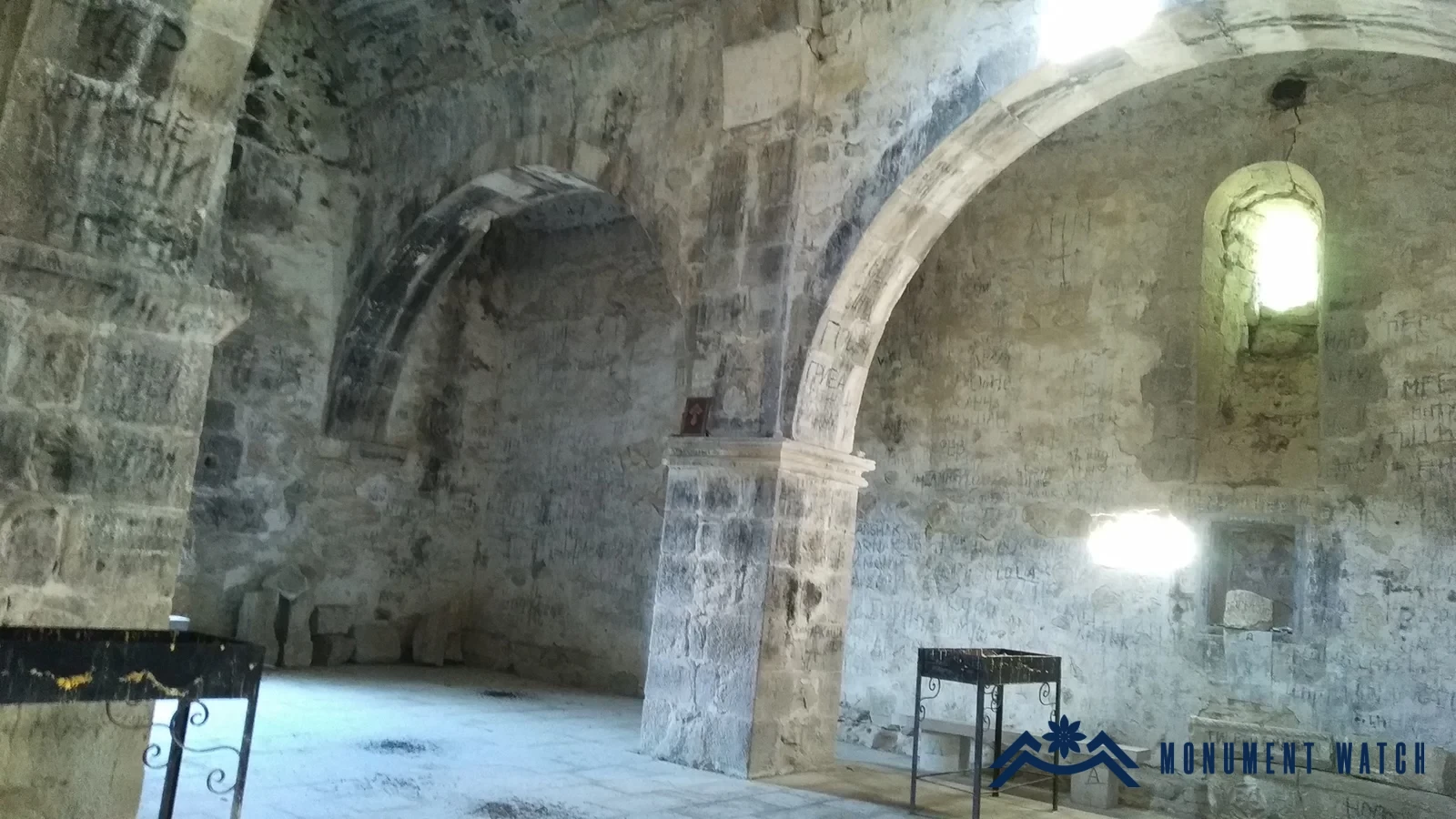
The interior is spacious, with a relatively high bema raised four steps above the nave floor (Fig. 6); beneath it lies the tomb of Yeghisha Kuys. The nave is barrel-vaulted; the vaulting arches are carried, on the one hand, by a pair of free-standing columns within the prayer hall and, on the other, by simple, chamfered imposts let into the east and west walls (Fig. 7). Traces of the original interior plaster survive in the apse and on the walls of the sacristy. The roof formerly supported a small bellcote (katoghike) which has since collapsed.

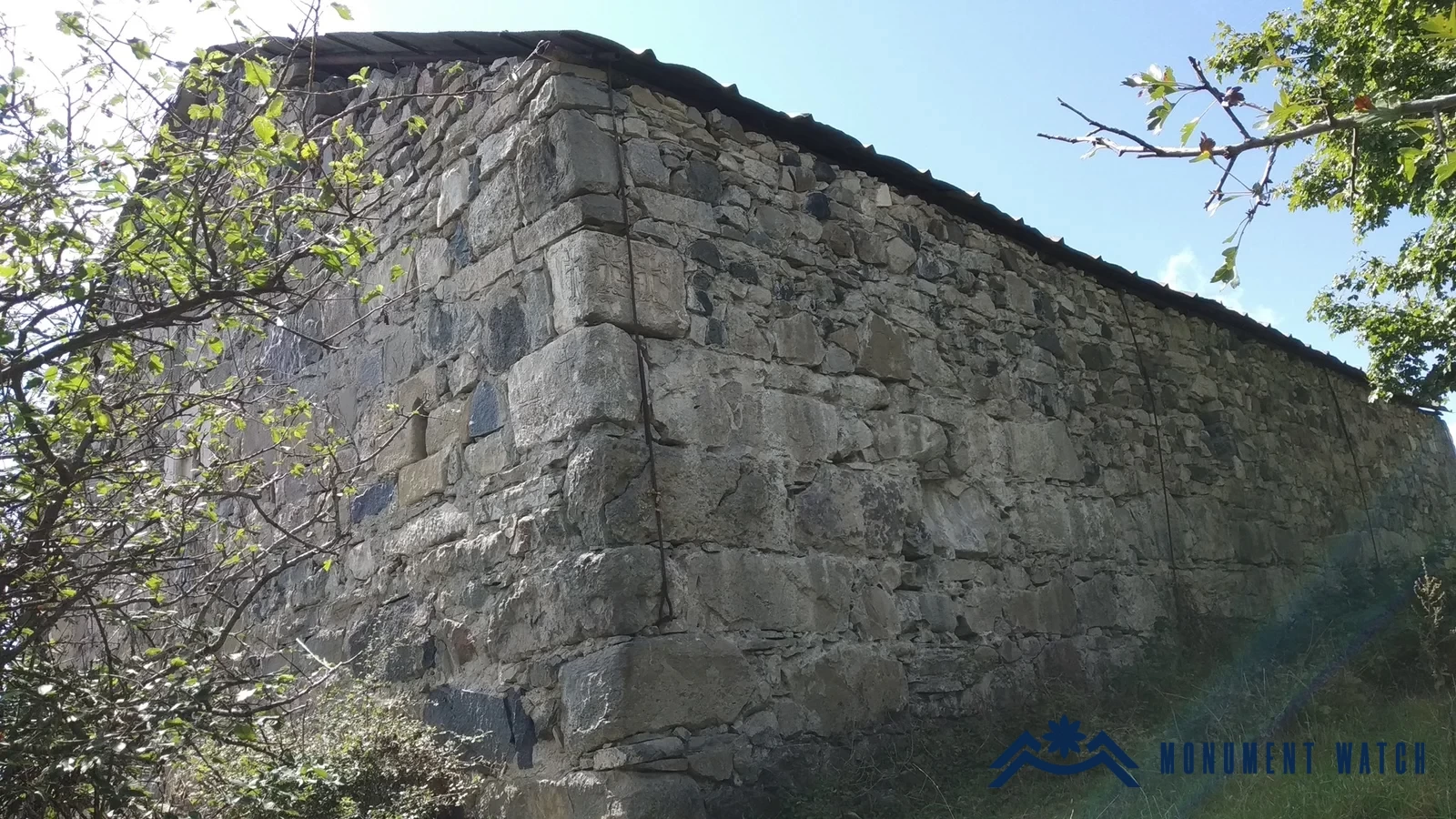
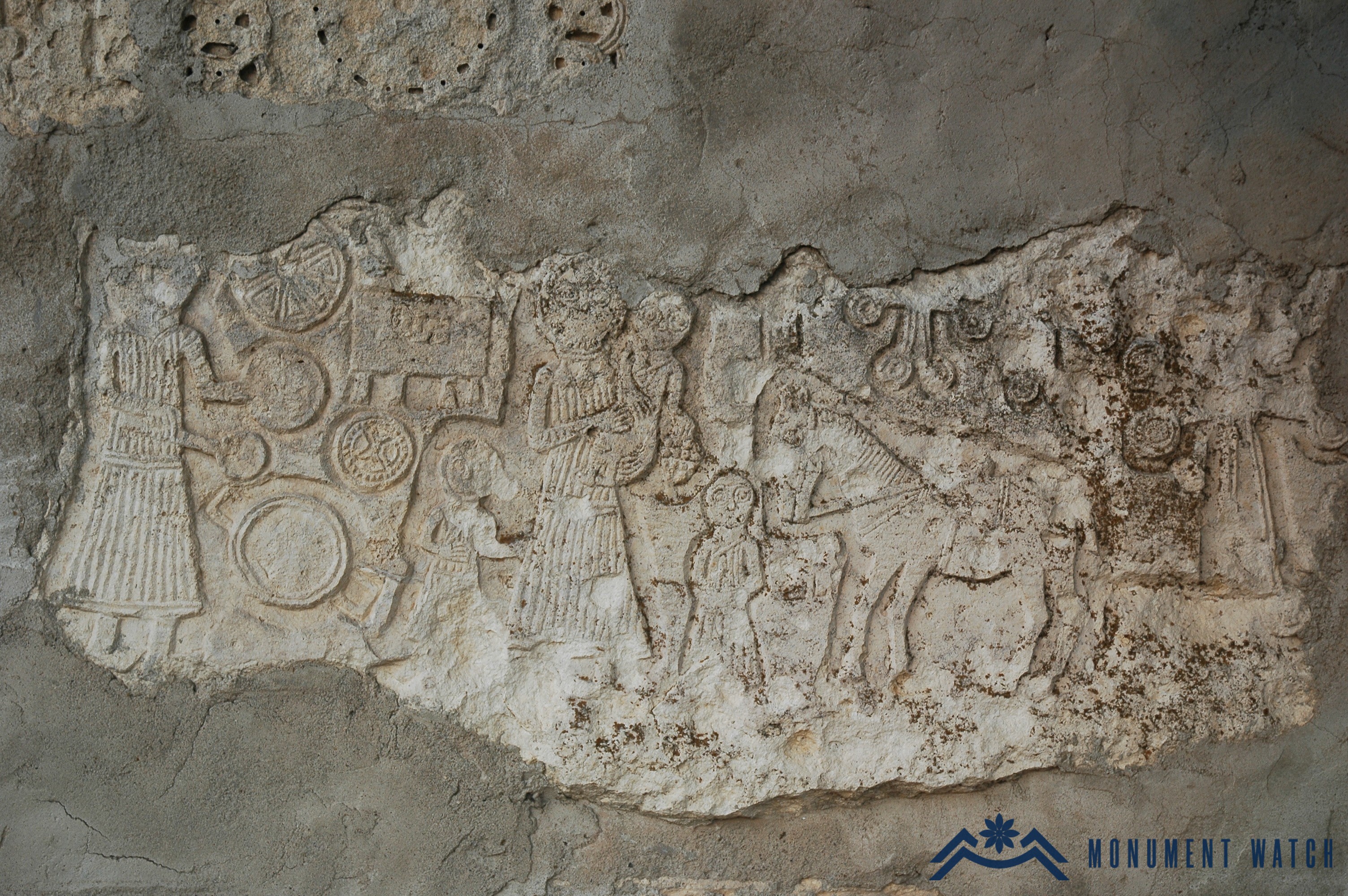
The church is built mainly of roughly dressed fieldstone set in lime mortar; only the arches, piers, and the door and window surrounds are of finely dressed ashlar (Fig. 8). The walls incorporate numerous reused elements from earlier buildings-khachkars, carved fragments, inscription pieces, and tombstones (Fig. 9)-some of which bear notable iconographic scenes from economic and everyday life (Mkrtchyan 1985, 154).


Fig. 6. The sanctuary platform (bema). Photo by N. Yeranyan.

Fig. 8. View of the church looking toward the north-east. Photo by N. Yeranyan.

Fig. 7. The nave roofing system. Photo by N. Yeranyan.

Fig. 9. A tombstone set into the church wall. Photo by N. Yeranyan.

The Condition Before, During, and After the War

During the Soviet period, the Anapat of Yeghisha Kuys was abandoned and left untended; the church interior was used for storage and other utilitarian purposes. After the First Artsakh War, the roof was repaired, the interior was cleaned, and the surroundings were improved. Following the Azerbaijani occupation, no reliable information has been available about the current state of the monument.

Bibliography

  1. Barkhutareants 1895 - Barkhutareants M., Artsakh, "Aror," Baku.
  2. CAE 5 - Corpus of Armenian Lithography, Issue 5, Artsakh, compiled by S. Barkhudaryan, Publishing House of the Academy of Sciences of the Armenian Soviet Socialist Republic, Yerevan, 1982.
  3. Mkrtchyan 1985 - Mkrtchyan Sh., Historical-Architectural Monuments of Nagorno-Karabakh. Yerevan: "Hayastan" Publishing house.
Եղիշա կույսի անապատը
Artsakh