The Village Church of Mets Shen, Shushi District

Location

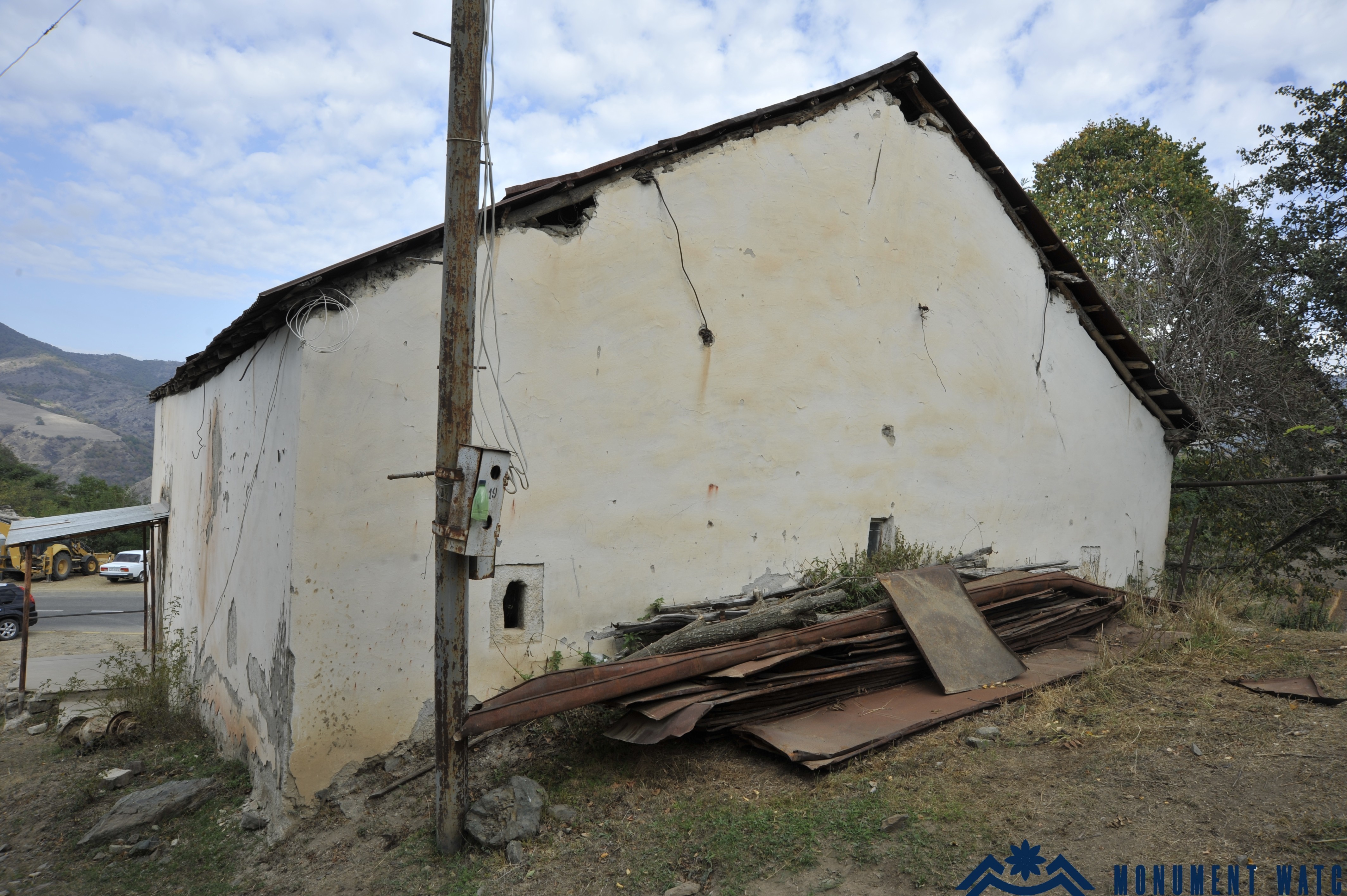
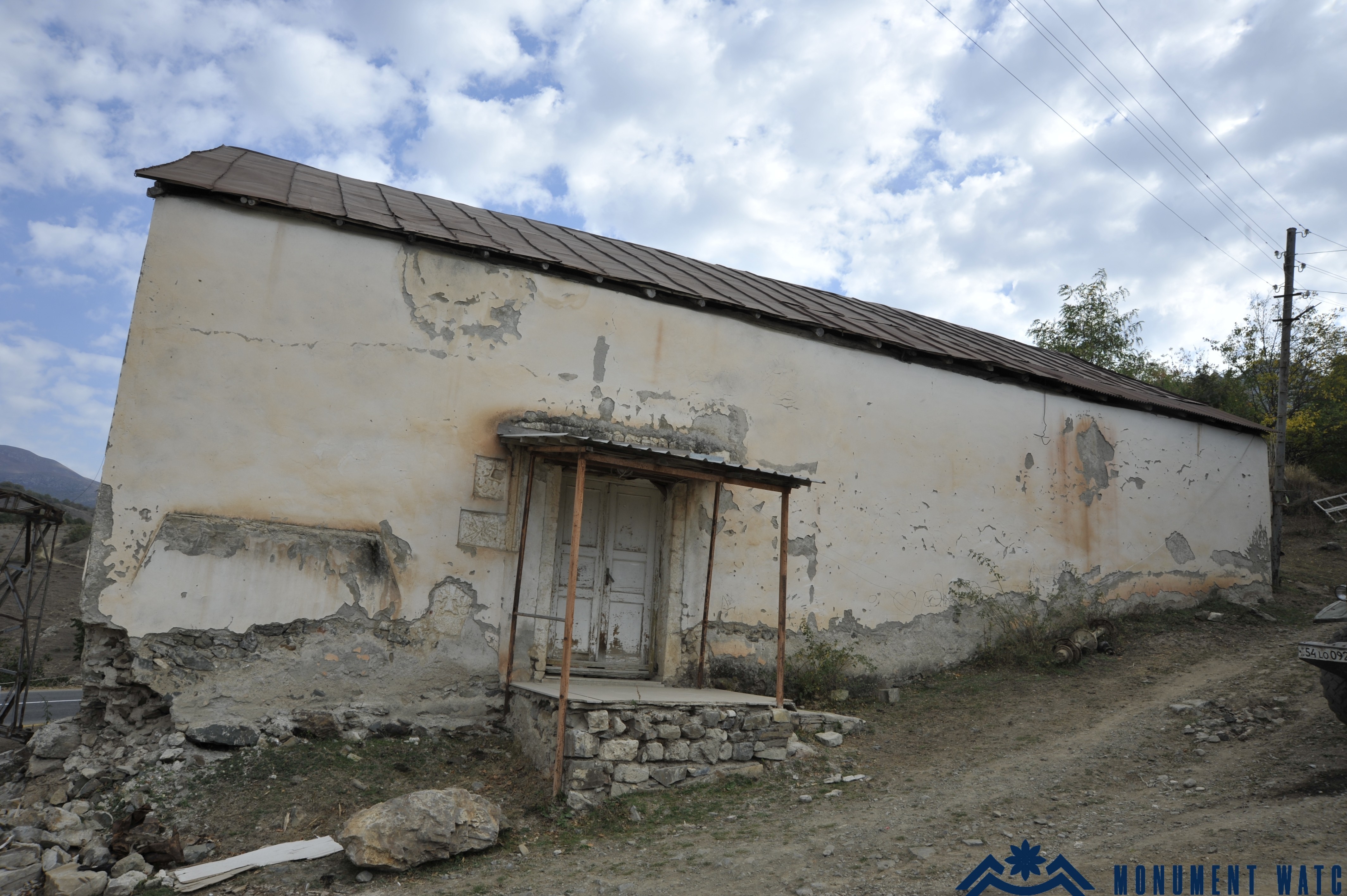
 The village of Mets Shen is located in the occupied Shushi District of Artsakh. Surb Astvatsatsin Church stands in the center of the village (Figs. 1, 2).

Fig. 1. General view of the church from the south. Photo: Monumentwatch group.

Fig. 2. General view of the church from the east. Photo: Monumentwatch group.

Historical overview

No historical information has survived about the village itself or the church. Among researchers, Sh. Mkrtchyan mentions the church, suggesting that it was built on the foundations of an older basilica (Mkrtchyan 1985, 238), although no such traces are visible on site. It should also be noted that Surb Panteleon Monastery, which for centuries was a well-known pilgrimage site, is located near the village. For details, see: https://monumentwatch.org/hy/monument/%d5%bd%d5%a2%e2%80%a4-%d5%ba%d5%a1%d5%b6%d5%a4%d5%a1%d5%ac%d5%a5%d5%b8%d5%b6%d5%ab-%d5%be%d5%a1%d5%b6%d6%84%d5%a8-%d5%ba%d5%a1%d6%80%d5%ab%d5%b6-%d5%ba%d5%ab%d5%aa/։

Architectural and compositional description

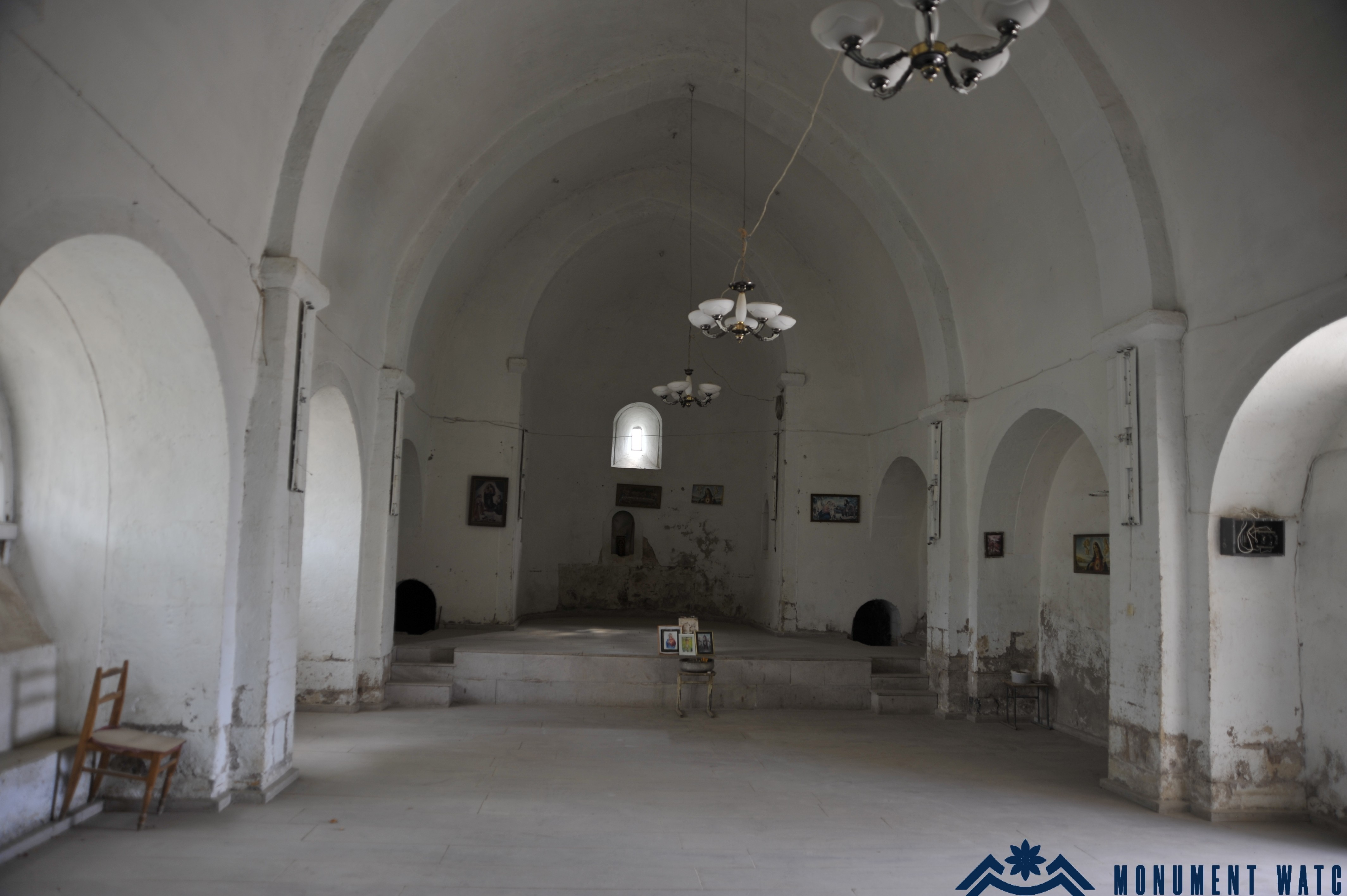
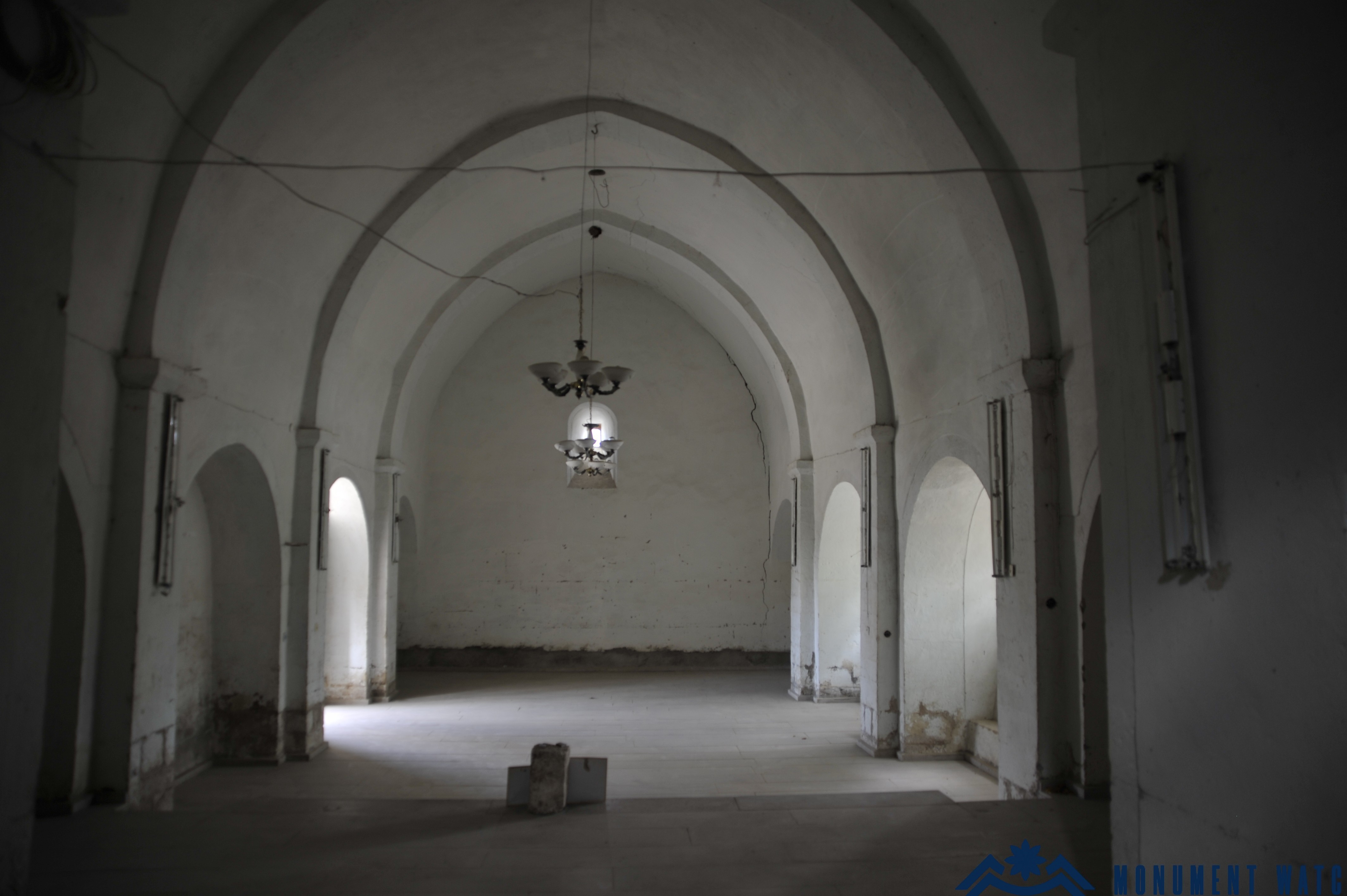
The church is a single-nave hall with an eastern main apse and adjoining semi-subterranean sacristies (Fig. 3). On the basis of its volumetric-spatial composition—particularly the pronounced plastic articulation of the wall-piers supporting the vault, the arches resting on them, and the pointed arches—the church may be dated to the 17th century (Figs. 3, 4).


Fig. 3. General view of the prayer hall looking east. Photo: Monumentwatch group.

Fig. 4. General view of the prayer hall looking east. Photo: Monumentwatch group.

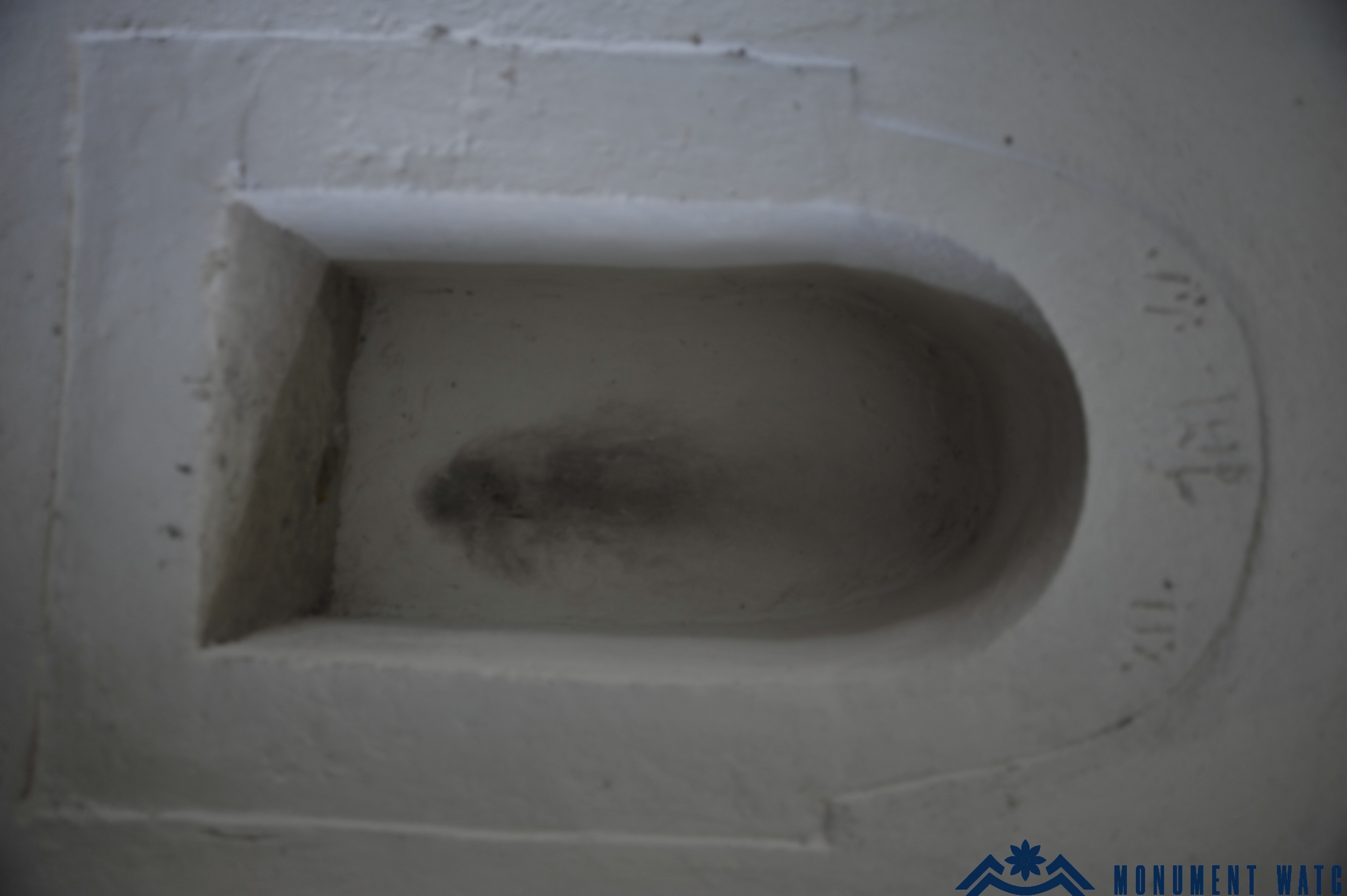
The baptismal font is built into the northern wall of the apse. The apse also has two deeply recessed niche-windows. On the arch of one of them, fragments of an inscription have survived, from which the words “Ter … Sahak” can be read (Fig. 5). This may refer either to the original name of the church or to the name of its builder.

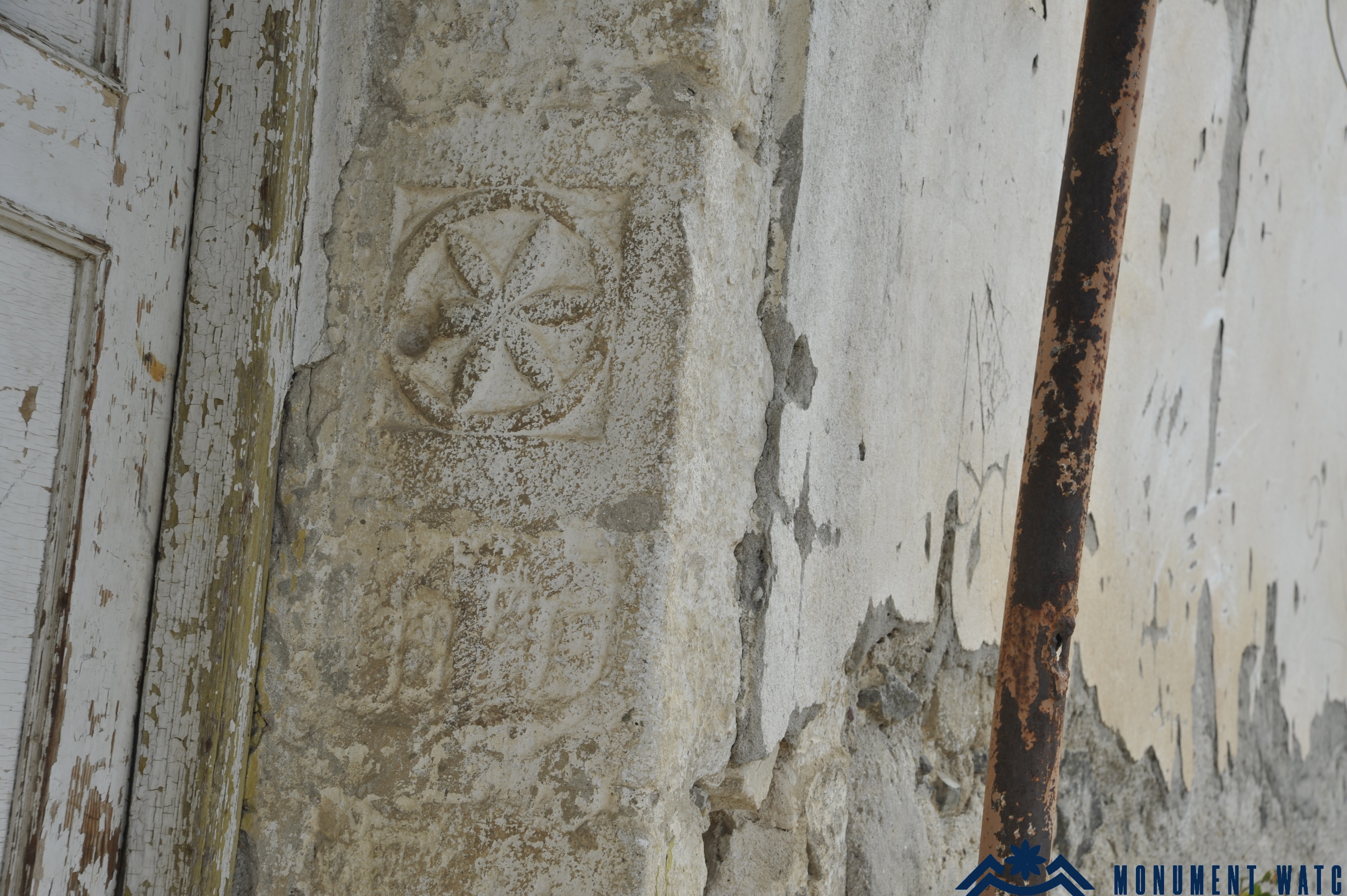
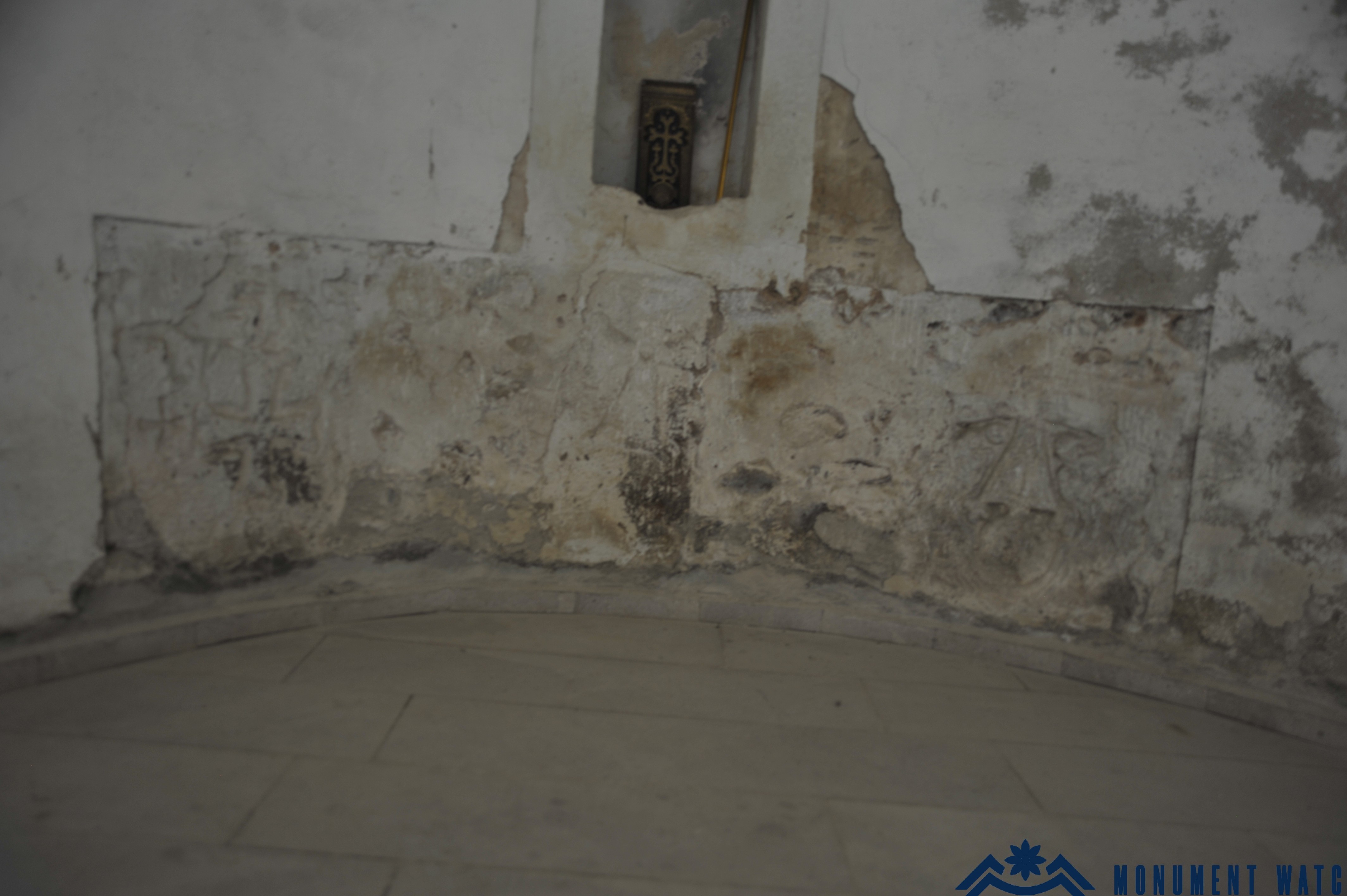
The only entrance opens from the south and is adapted to the sloping terrain. The right-hand jamb stone of the entrance was most likely originally the lintel of an older church (Fig. 6). It may also have preserved the construction date, which, unfortunately, has been scraped off and is now illegible. To the left of the entrance, three fragments of 12th–13th-century khachkars are embedded in the wall (Fig. 7). Fragments of khachkars and a tombstone are also incorporated into the wall near the bema of the main apse (Fig. 8).

Fig. 5. The inscribed niche-window of the apse. Photo: Monumentwatch group.

Fig. 6. The eastern jamb stone of the entrance. Photo: Monumentwatch group.

Fig. 7. The western section of the entrance. Photo: Monumentwatch group.

Fig. 8. The wall of the main apse with embedded fragments of khachkars and a tombstone. Photo: Monumentwatch group.

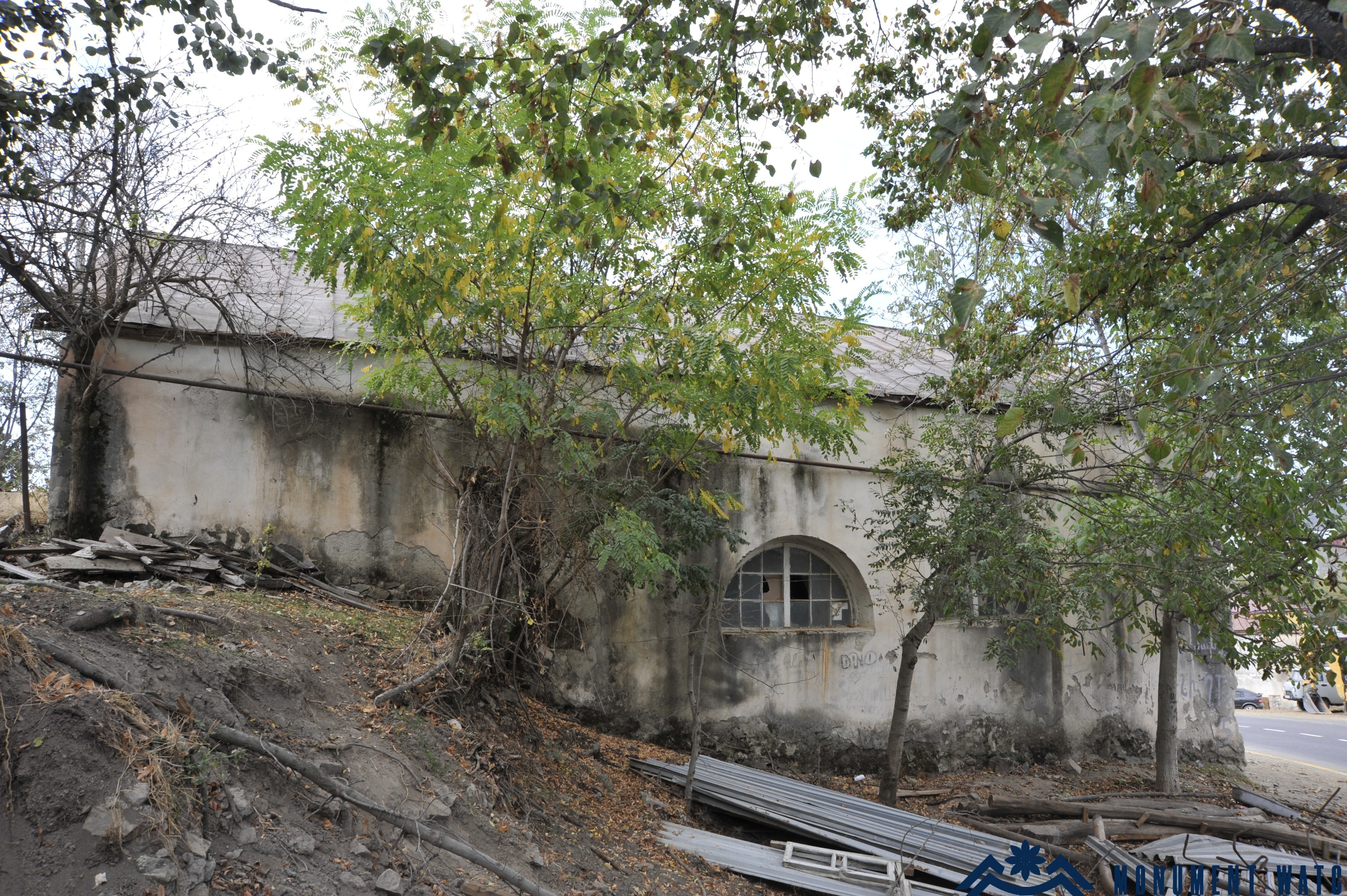
The church is plastered and whitewashed both inside and outside. During the Soviet period, large windows were opened in its northern wall (Fig. 9), the structure was covered with a sheet-metal roof, and it was used as a club. During the years of independence, the church was additionally plastered and renovated; at that time, the embedded khachkars and tombstones were cleaned from beneath the plaster. Before the 2023 forced displacement, there were plans to replace the roof covering.

Fig. 9. The northern wall of the church with Soviet-period windows. Photo: Monumentwatch group.

The Condition before and after the war

During the First Artsakh War, the church suffered external damage: the south-western corner cracked, and the plaster fell off. After the village was liberated, the church was repaired and brought into proper condition. No information is available about the church following the 2023 forced displacement.

Bibliography

  1. Mkrtchyan 1985 - Mkrtchyan Sh., The Historical and Architectural Monuments of Nagorno-Karabakh, Yerevan, Hayastan Publishing House.
The Village Church of Mets Shen, Shushi District
Artsakh