Inscription:
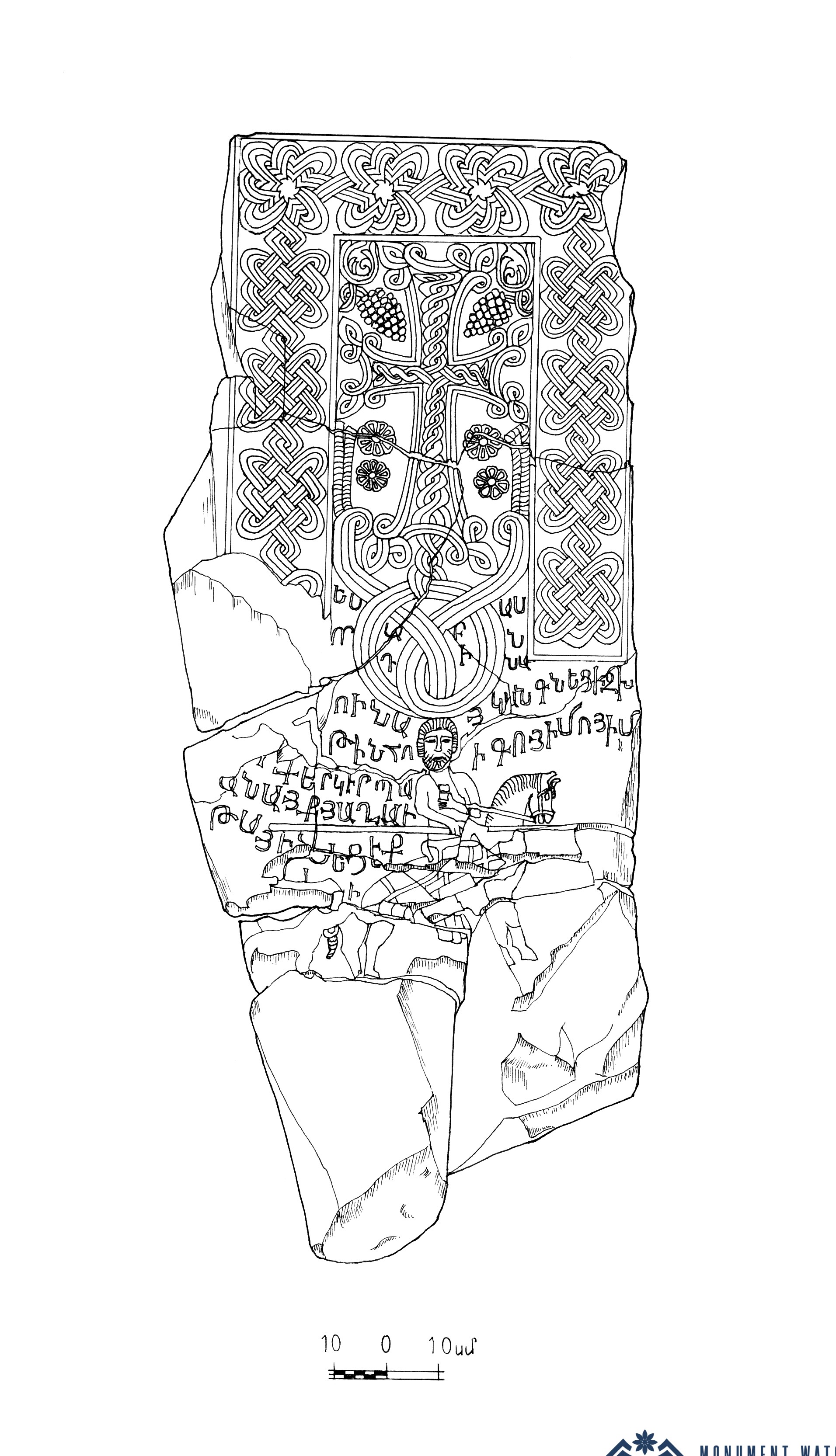
“I, Abas, son of N…, erected this cross for the salvation of my soul in the Lord. You who worship [here], remember [me] in your prayers …”
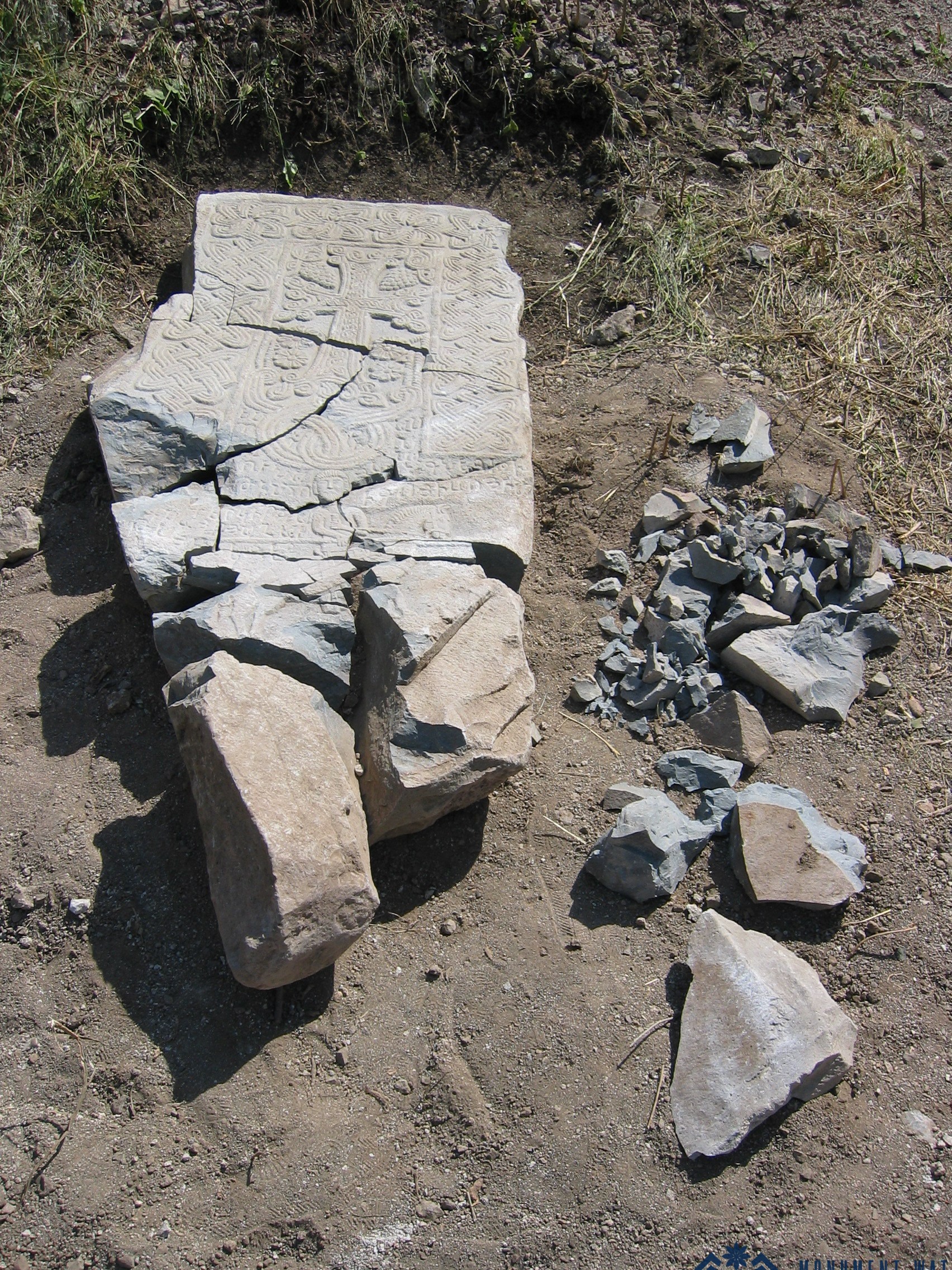
It was smashed to pieces in the 1980s by Azerbaijanis.
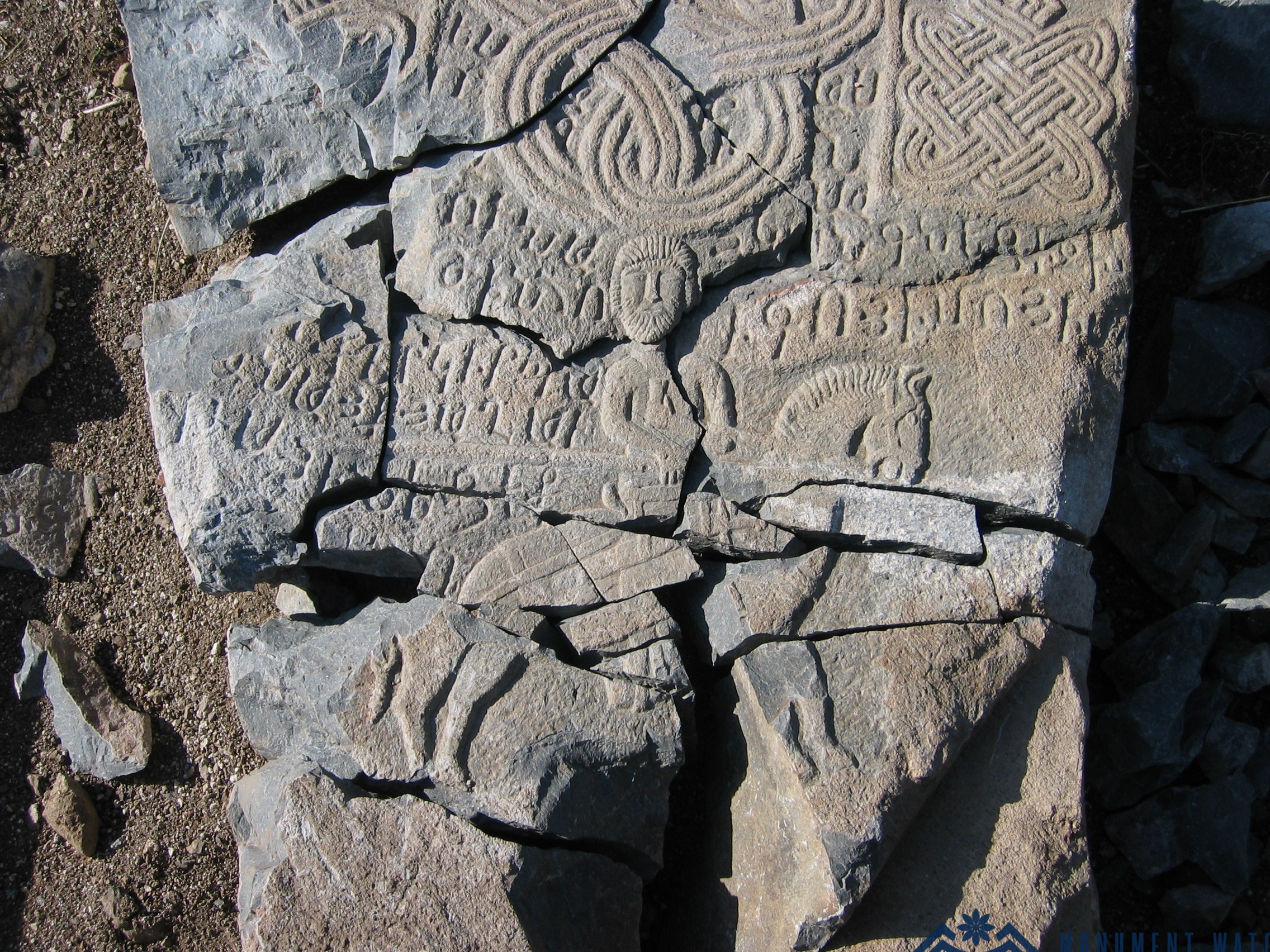
The mounted warrior is depicted in profile below the waist and frontally above the waist, with his gaze fixed directly on the viewer. On his head, he wears what was probably a papakha made of sheepskin, beneath which his thick yet carefully arranged hair is visible. His full beard is rendered in the same well-groomed manner. He appears to be wearing a chukha, of which only the deep, heart-shaped neckline is clearly visible. At the waist, the garment is tightened by a broad belt, from which a broad-bladed sword with a curved hilt is suspended by two vertical straps. With his right hand the warrior holds a long spear, and with his left, a cup. The stemmed form of the cup and the lobed, semi-spherical element encircling its middle suggest that the sculptor intended to represent a metal prototype.
In several figural reliefs on Artsakh khachkars, warriors are shown holding cups in their hands. In some cases, servant-cupbearers are also depicted, carrying a jug in one hand and offering a cup to the warrior with the other. A close examination of such compositions suggests that the ritual drinking of wine formed one component of the theme of the so-called “eternal feast.” This, in turn, drew on the popular belief that death could be overcome through the act of feasting.
For more detail, see:
Petrosyan H., Kirakosyan L., Safaryan V., Handaberd Monastery and Its Excavations, Yerevan, Printinfo, 2009.