The Surb Hripsime Church of Khnatsakh
Location
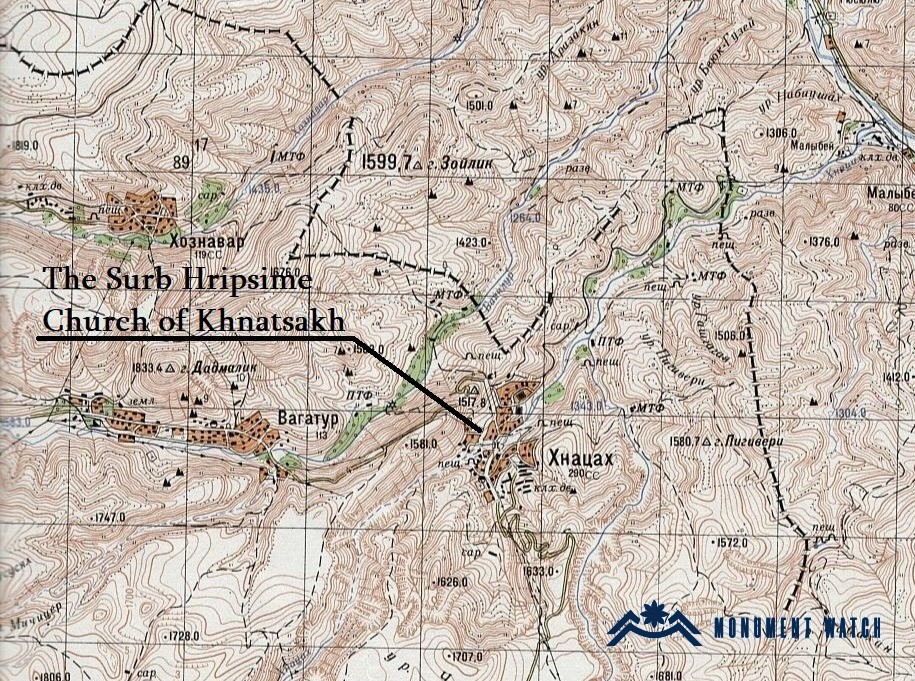
Khnatsakh is located in the Syunik Region of the Republic of Armenia, 109 km from the provincial center Kapan, 17 km from Tegh, the administrative center of the enlarged community, and 28 km from the city of Goris. The village lies at an elevation of 1,380 m above sea level. Among the many monuments located in the village is Surb Hripsime Church (Fig. 1).
Historical overview
Stepanos Orbelian mentions the village as part of the district of Haband and records it in the tax register with 20 units of tax (Orbelian 1910, 399).
In the 15th–18th centuries, the Kashatagh melikdom was a flourishing, exclusively Armenian-populated, semi-independent polity, whose seat centers were the settlements of Kashatagh and Khnatsakh, ruled by the Melik-Haykazyan family. The founder of this house, known from historical sources of the 15th–17th centuries, was the lord or prince Haykaz, who descended from the Khaghbakyan–Proshyan princely line (Hovsepyan 1928, 232).
Khnatsakh’s role in Syunik grew especially in the 16th century, when Melik Hakhnazar, son of Melik Haykaz, transferred the center of the melikdom from the settlement of Kashatagh to Khnatsakh and built a new palace (Hasratyan 1985, 158).
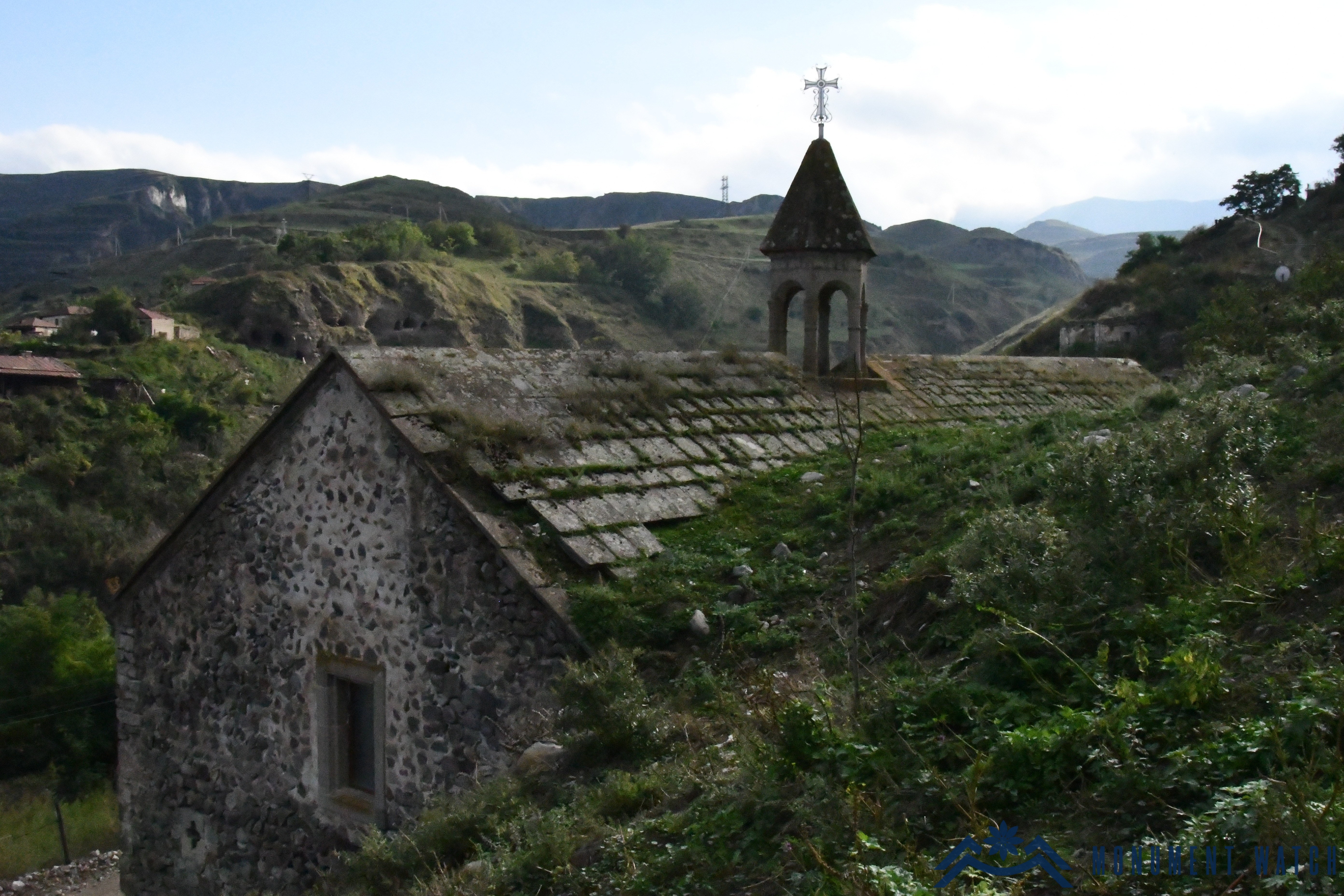
One of the important monuments of this melik seat village is the 17th-century Surb Hripsime Church, located 100 m north-west of the Melik-Haykazyan palace (Fig. 2).

Architectural-Compositional Examination
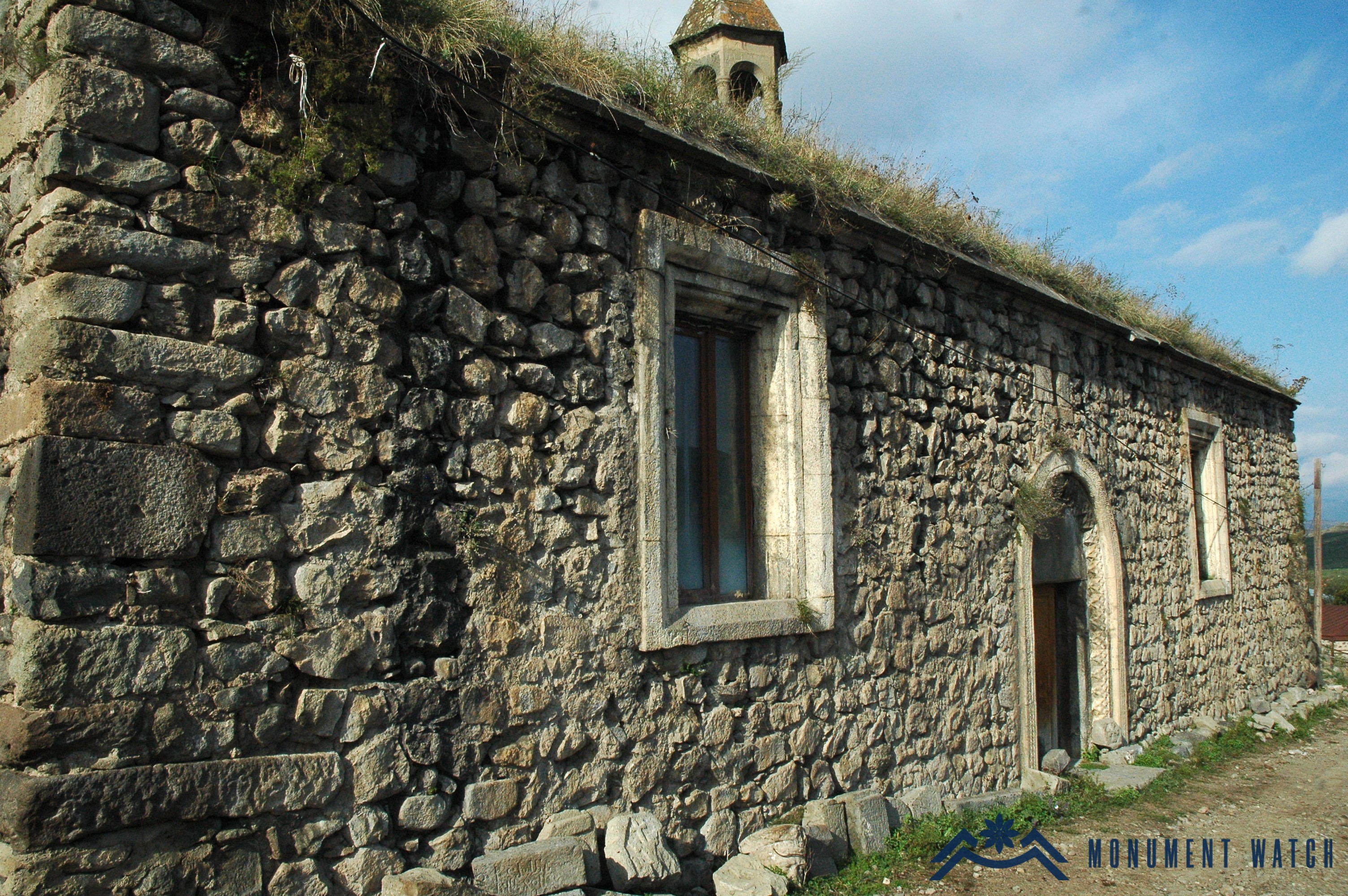
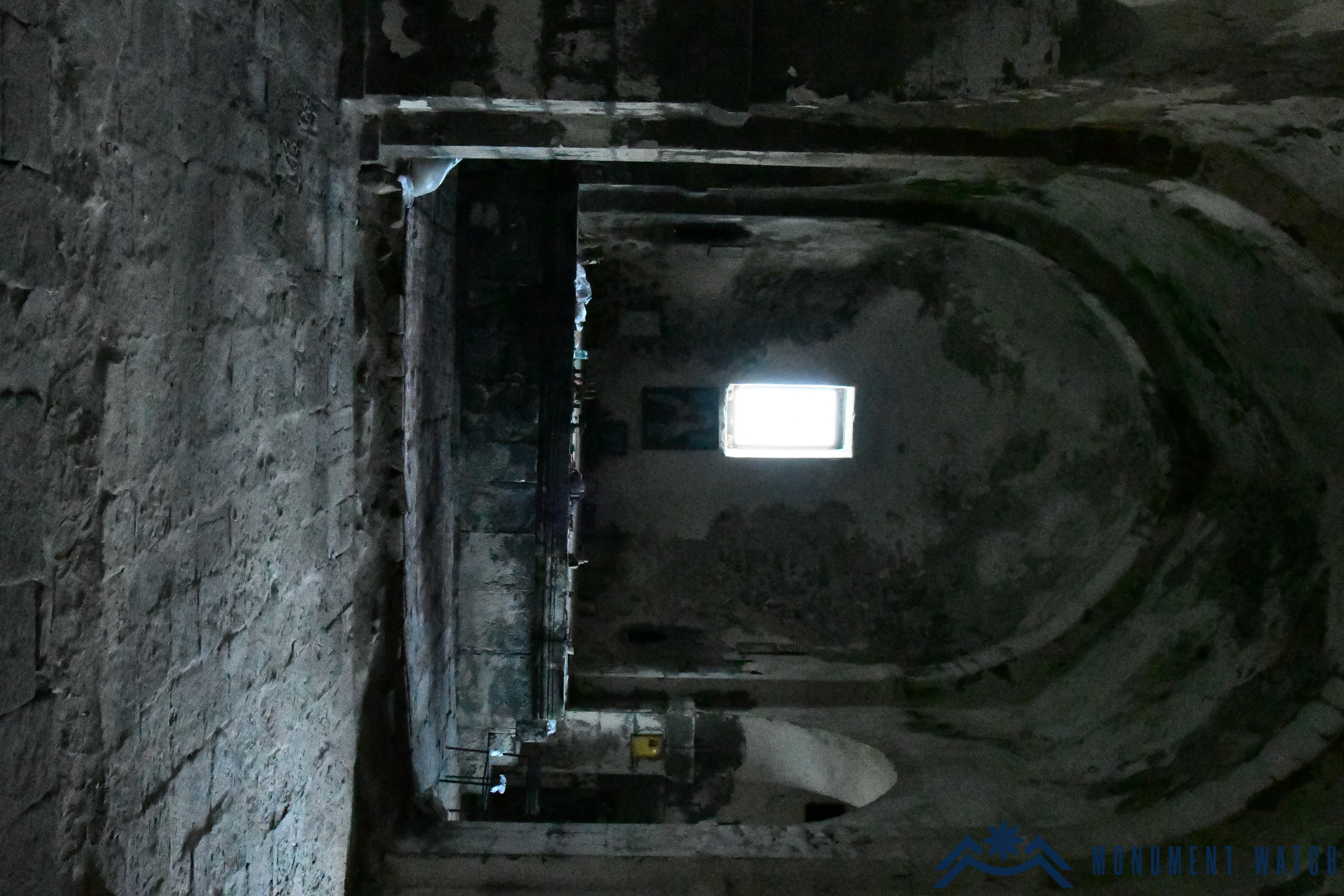
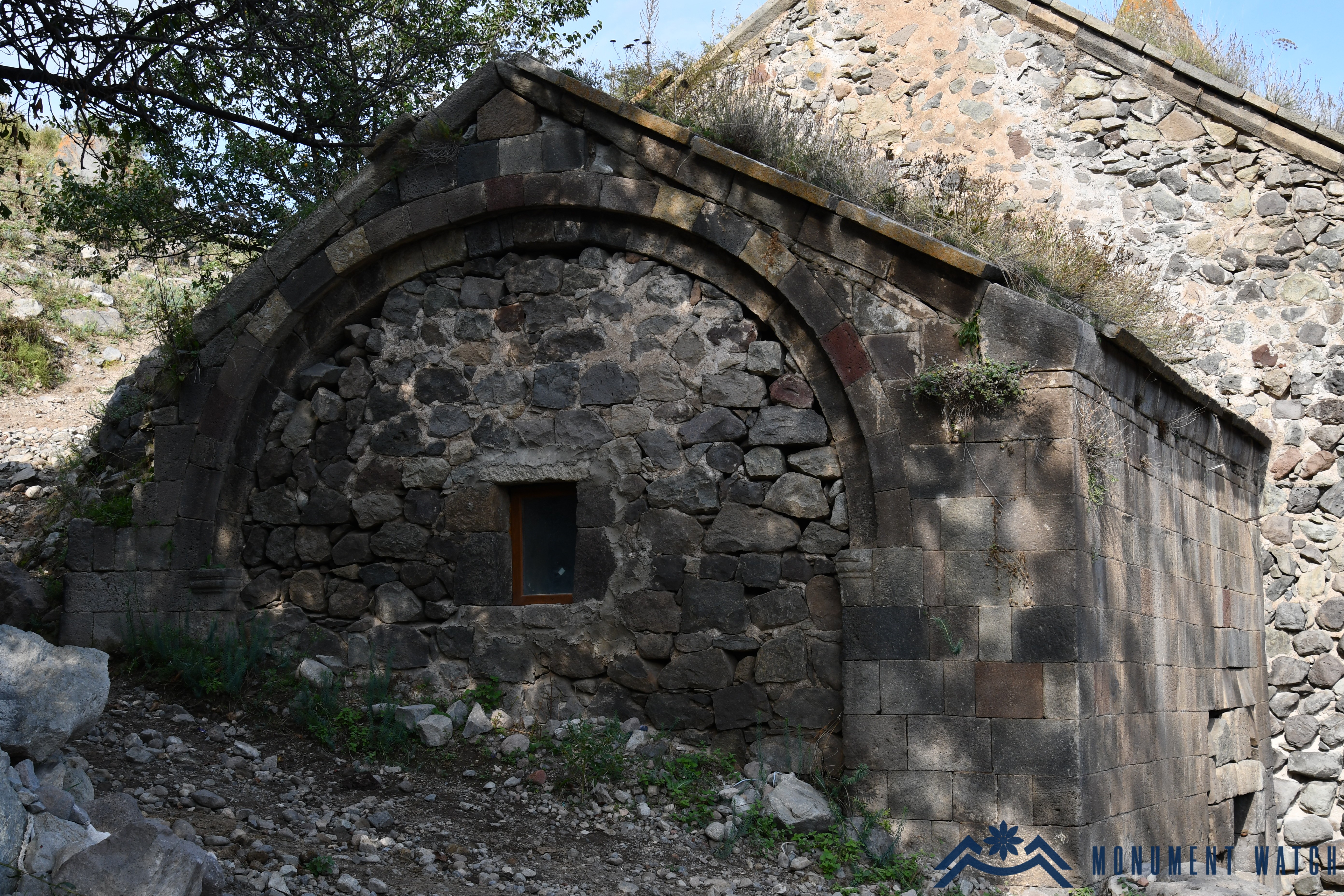
The Surb Hripsime Church is a vaulted three-aisled basilica. On either side of the apse, it has sacristies (Fig. 3). The structure has two entrances, from the south and the west. The church is built of locally quarried split stone and lime mortar, while the piers and the frames of the windows and entrances are made of finely dressed basalt. It was built by Melik Haykaz II in 1610–1615.
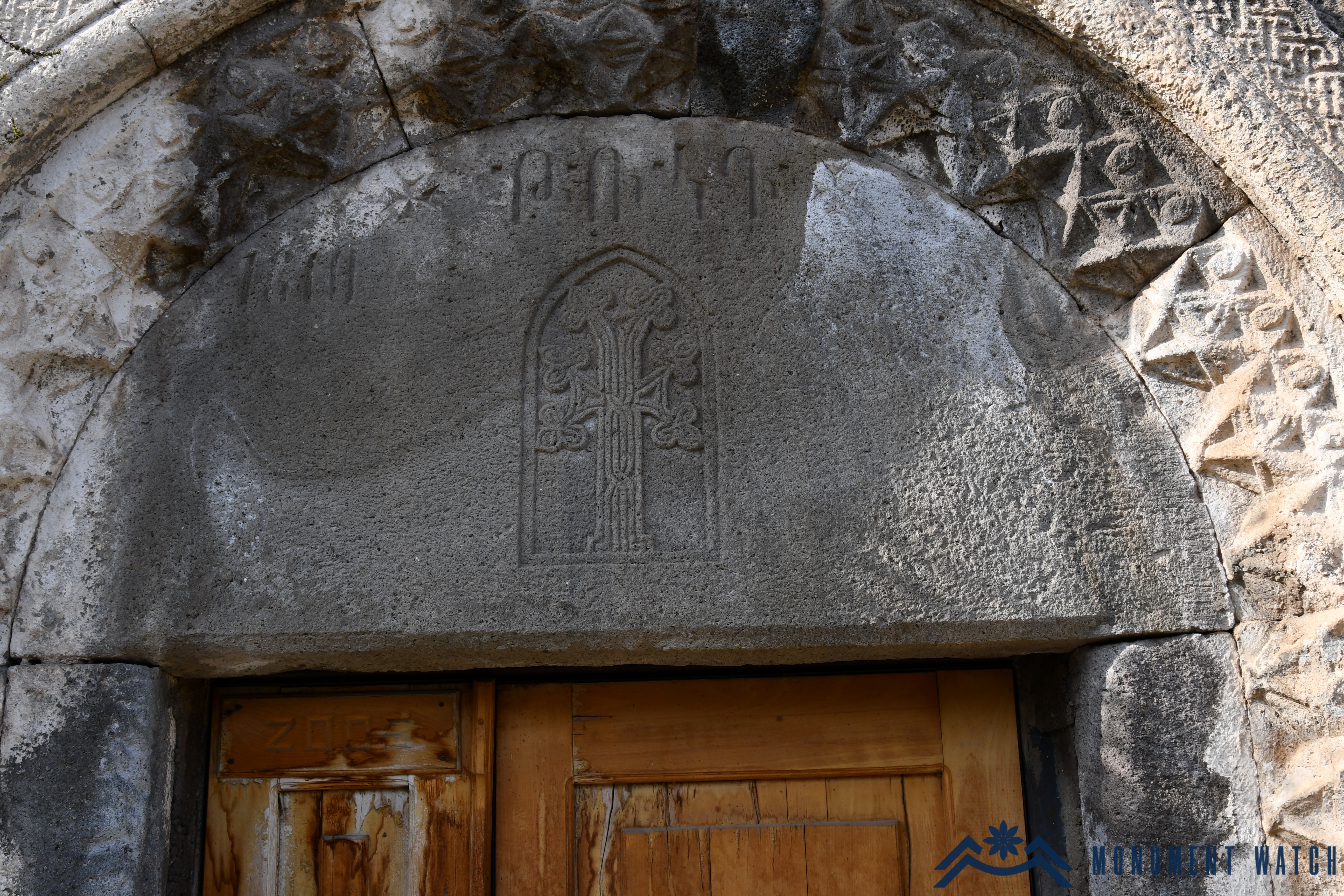
On the lintel of the southern entrance, the date of construction is preserved as “In the year 1615” (Khurshudyan 2023, 216). Later, below the inscription, the date “1610” was added on the left side (Fig. 4). Owing to the steep slope of the terrain and the movement of the soil layer, the northern side of the structure has become covered with earth.
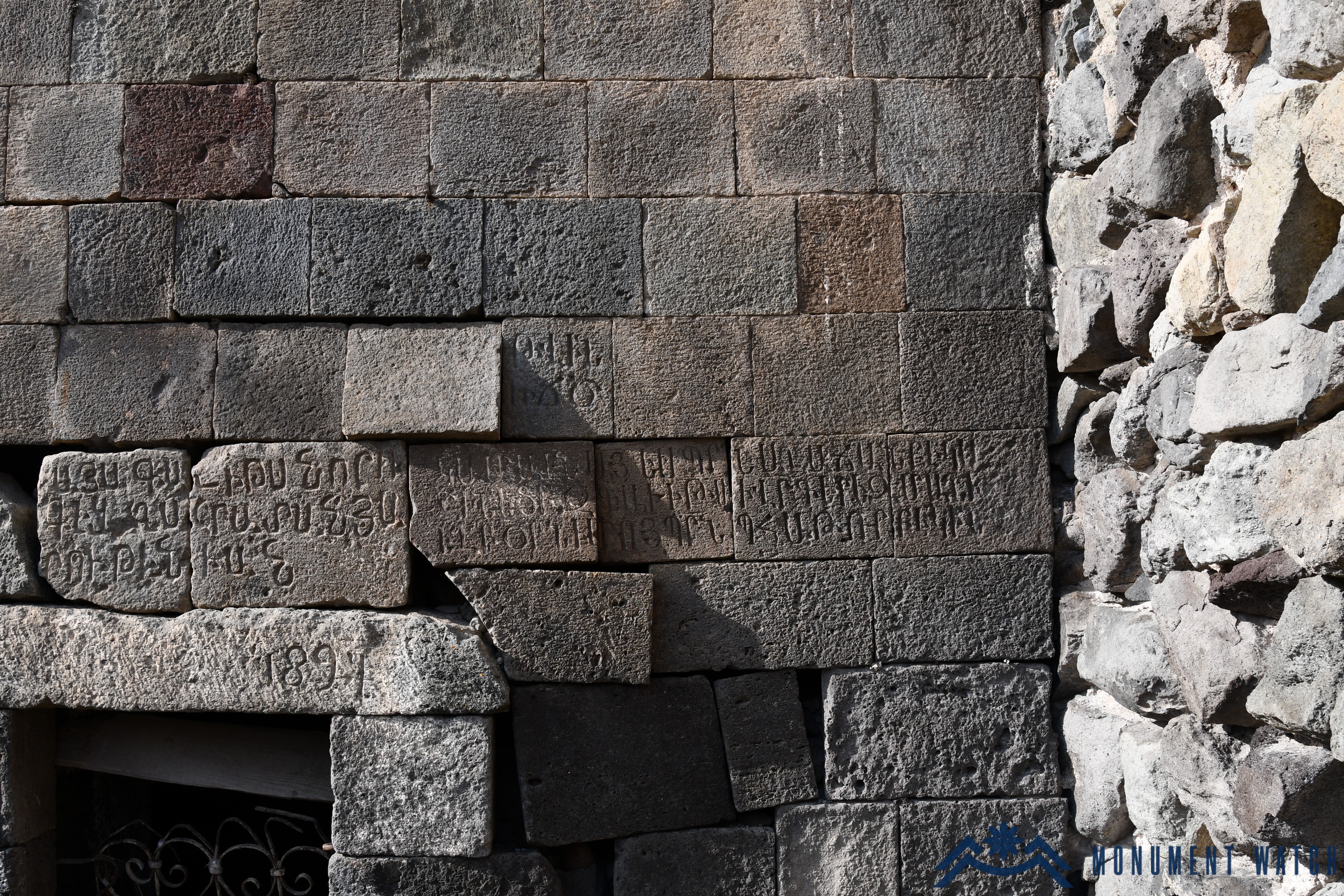
In 1701, a vaulted gavit, open on the western side and built of finely dressed basalt, was added to the church from the west (Fig. 5). The arched opening on the west was later blocked with roughly hewn stone. On the southern wall of the gavit, a building inscription has been preserved, which reads in translation: “In the year 1701, by the will of God, I, Baron Aghajan Bek, built this gavit over the grave of my brother, Baron P‘ahtor Bek.” (Khurshudyan 2023, 216). According to another construction inscription, the gavit was renovated in 1897 by Ghahraman Harutyunyan: “This gavit was renovated by Ghahraman Harutyunyan, 1897.” (Khurshudyan 2023, 217; Fig. 6).
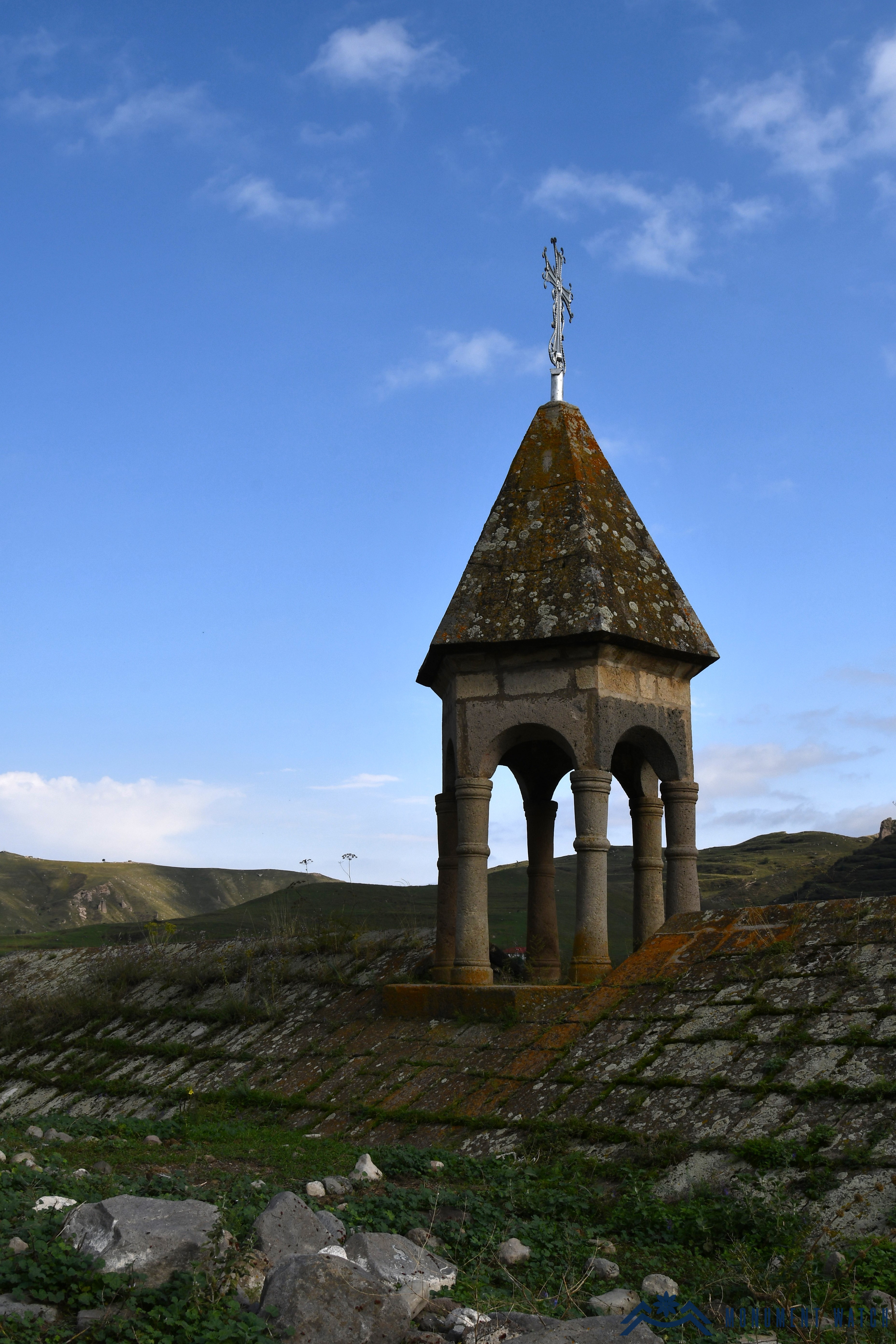
The roofs of the church and gavit are covered with basalt slabs. In 1905, a belfry consisting of six columns of finely dressed stone was added to the church roof (Fig. 7).
A large number of tombstones, khachkars, and fragments are embedded in the walls of the structure and scattered around it; some of them have been gathered beneath the church’s southern wall (Fig. 2).
Bibliographic examination
The inscriptions on Surb Hripsime Church in Khnatsakh, as well as those on the khachkars and fragments of tombstones found in the area, were published by the epigraphist S. Khurshudyan in his article “The Historical and Cultural Heritage of Khnatsakh” (Khurshudyan 2023).
The Condition after the 2020–2022 Azerbaijani aggression
Following the 44-day Artsakh war and the subsequent border changes, the cemetery of Khnatsakh came to lie 690 m from the border.
Bibliography
- Khurshudyan 2023 - Khurshudyan S., The Historical and Cultural Heritage of Khnatsakh, Sion, nos. 4–7, Jerusalem.
- Hasratyan 1985 - Hasratyan M., Historical-Archaeological Studies, Yerevan.
- Hovsepyan 1924 - Garegin Archbishop Hovsepyan, The Khaghbakyans or the Proshyans in Armenian History: A Historical-Archaeological Study, Vagharshapat.
- Orbelian 1910 - Stepanos Orbelian, History of the Province of Sisakan, Tiflis.