Surb Astvatsatsin Church of the Yeghaker Rural Settlement in Tonashen

Location

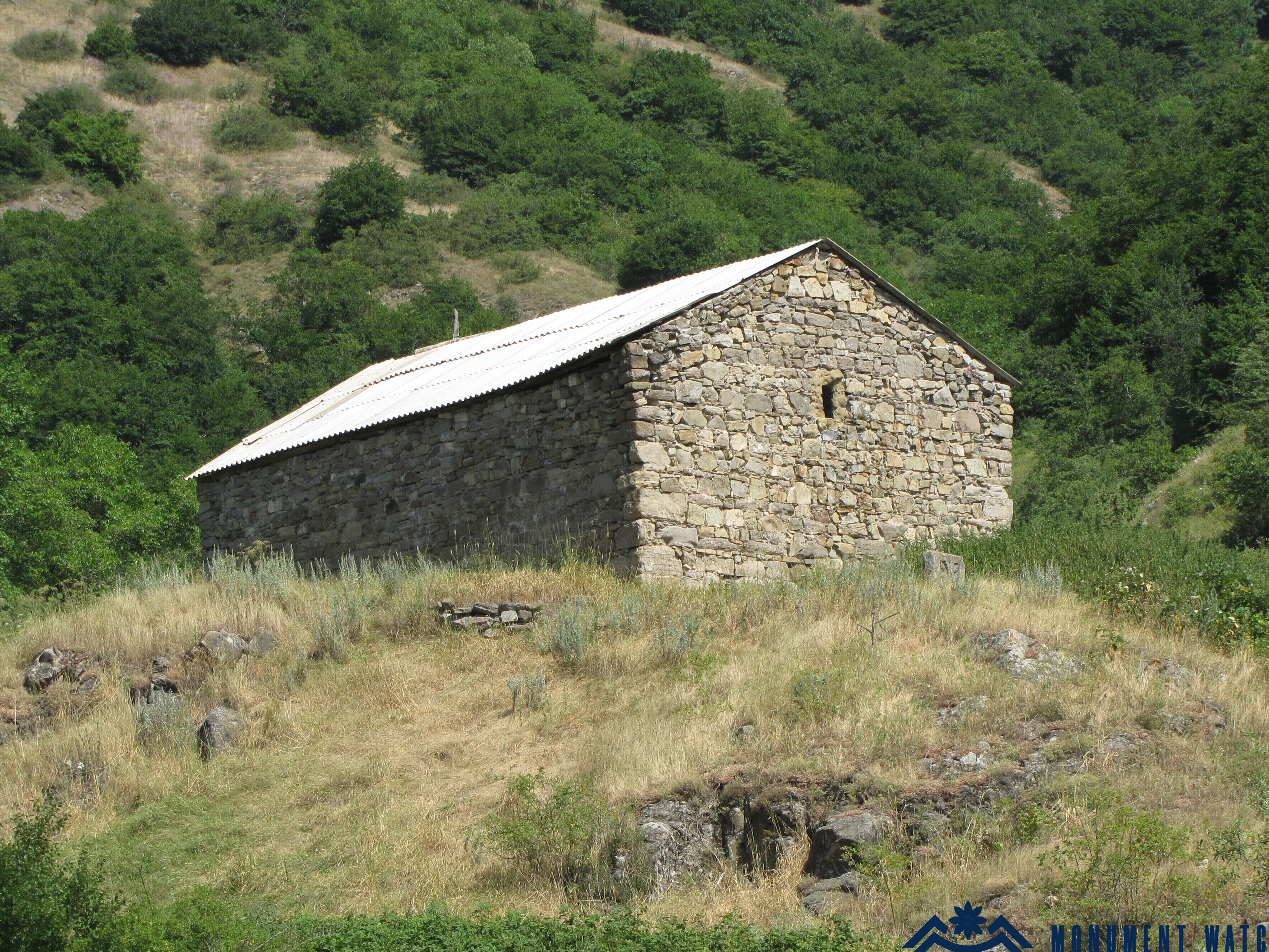
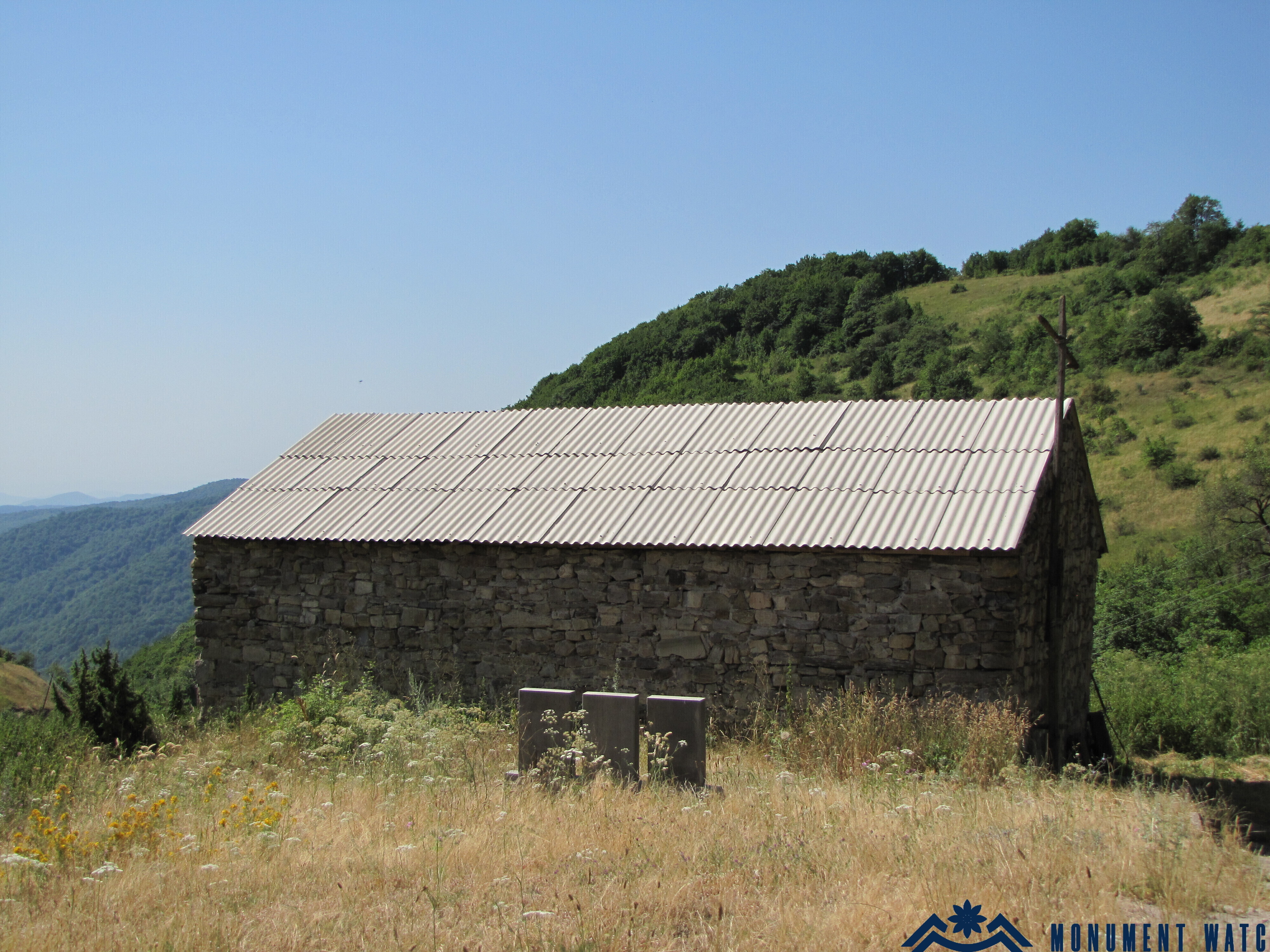
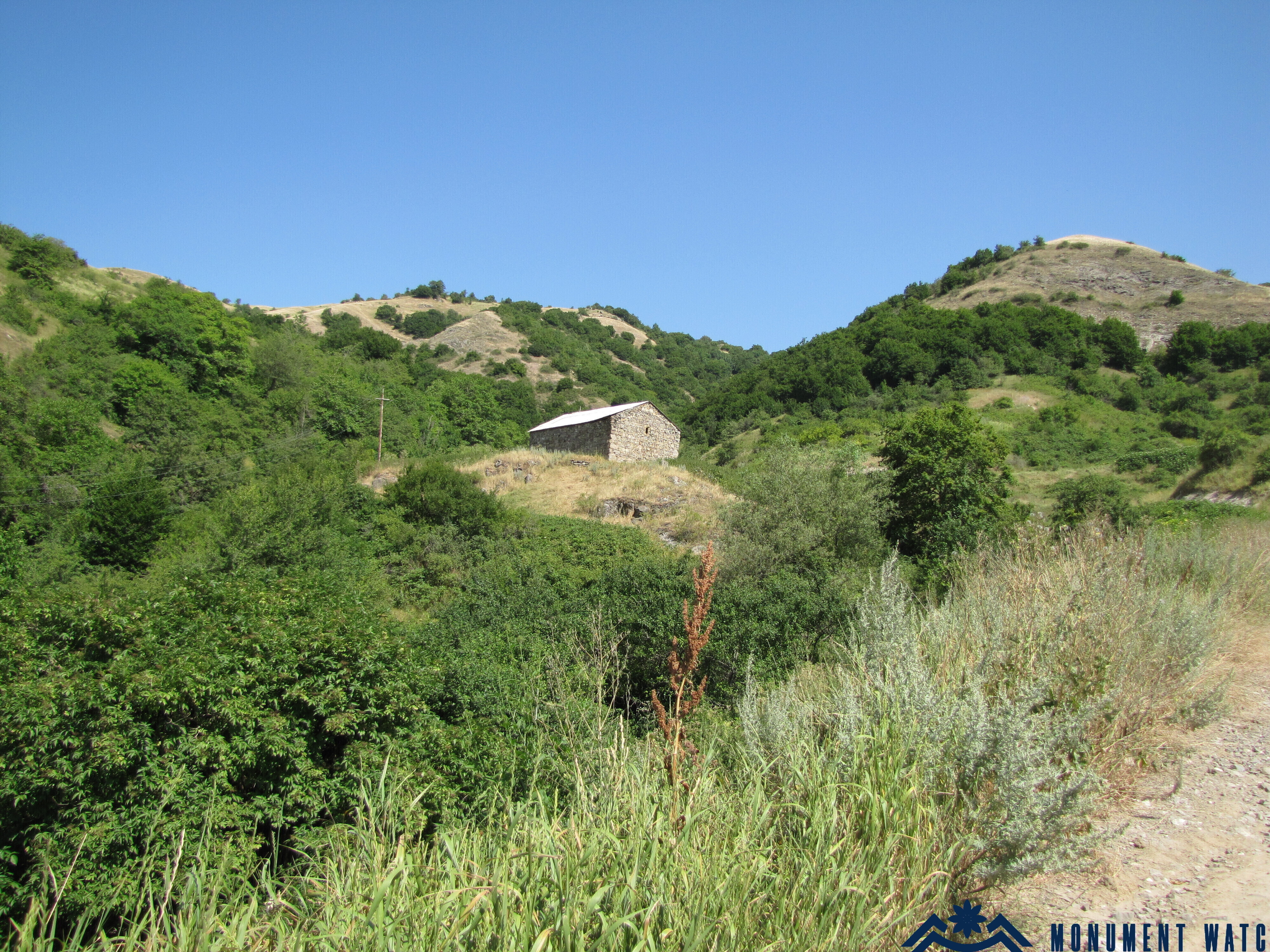
The Surb Astvatsatsin Church is located in the area known as Yeghaker Shen, not far from the village of Tonashen (Figs. 1, 2). Several old rural settlements are situated in the vicinity of Tonashen, including Yeghaker, Pokr Ttut, Kotrats Yeghtsi, and others (Balayan 2020, 396).

Fig. 1. The general view of the church. Photo by G. Sargsyan.

Fig. 2. The general view of the church. Photo by G. Sargsyan.

Historical overview

Historical information about the church is almost absent. The only known reference is found in the work of Makar Barkhudaryants:

“…the church of Surb Astvatsatsin is stone-built, constructed on a single arch, and ancient; its length is 12 m 5 cm and its width 7 m 50 cm. Near this church there is a large old cemetery, in which we found only one inscribed tombstone: ‘This is the tomb of Mejlum, son of Mkhitar, the village headman, year ՌՃՂԹ [1750]’” (Barkhudaryants 1895, 237–238).

Architectural and compositional description

In its ground-plan and volumetric-spatial composition, the church is a single-nave vaulted hall with an eastern apse. The interior is covered by a vault, with the apse situated at the eastern end. The vault rests on an arch supported by a pair of engaged wall-piers.

Judging from its external appearance and ground plan, the church must have been constructed — or substantially rebuilt — in the 19th century. It is built of small and medium-sized roughly hewn stones. Comparatively large roughly hewn stones were used for the corner masonry, but only in the lower course; in the upper sections, the corners are constructed of medium-sized roughly hewn stones (Fig. 3).

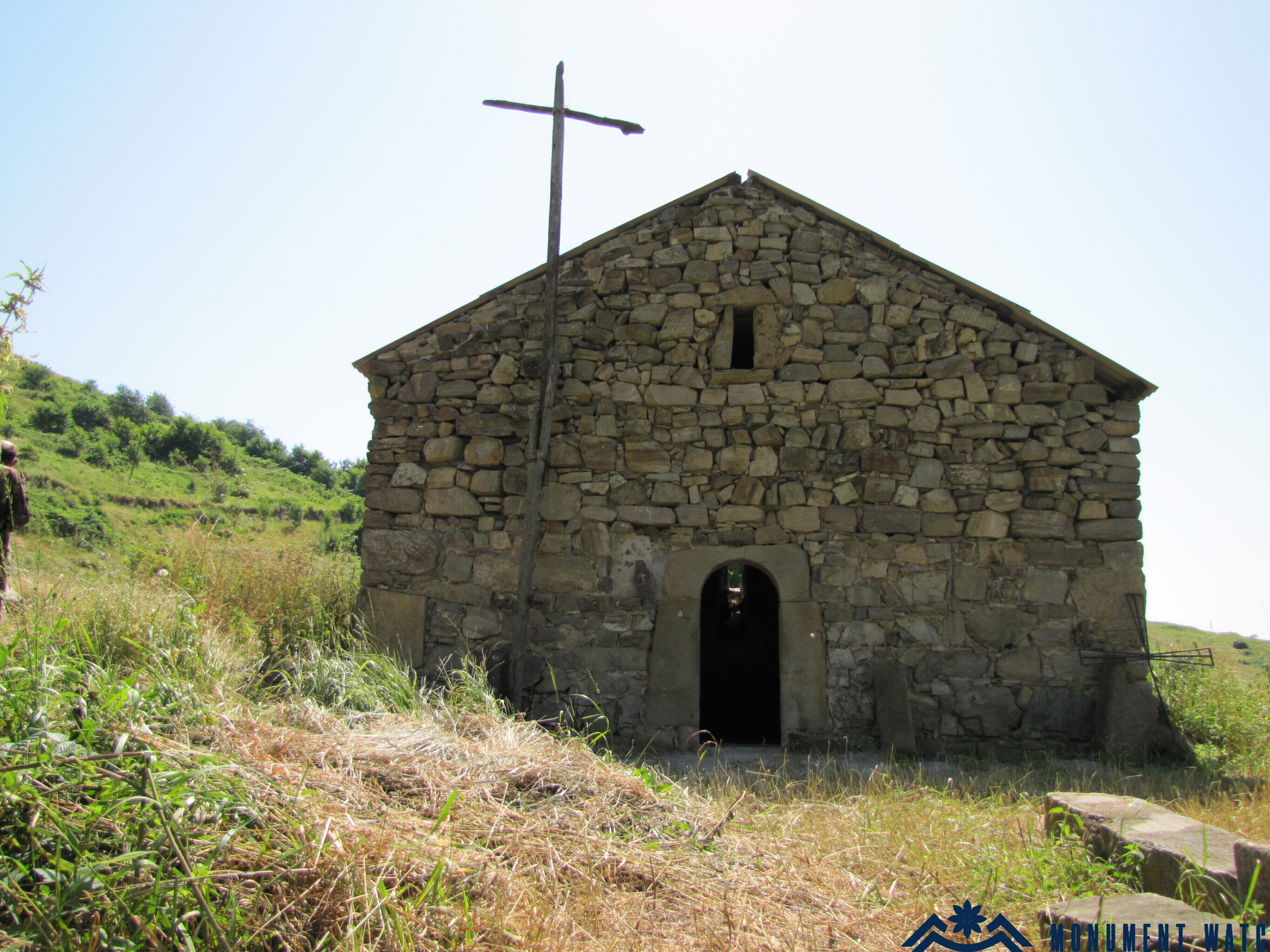
The church has a single entrance, located on the western side and constructed of comparatively large, finely dressed stones (Fig. 4). The windows are small and are located in the western and eastern façades. Overall, the exterior architectural treatment of the church is highly restrained.

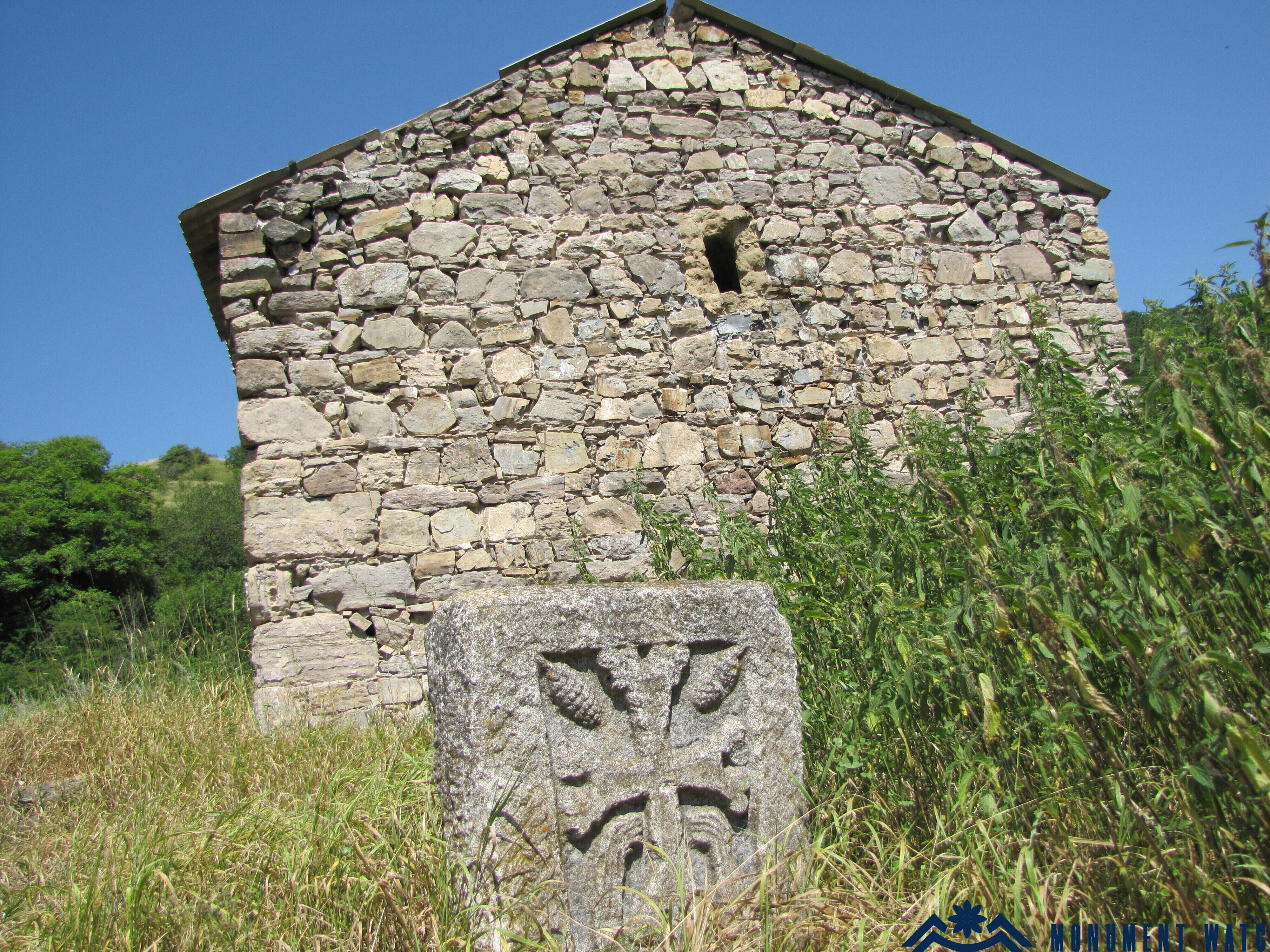
To the east of the church stands a 12th–13th-century khachkar characteristic of the Artsakh school of khachkar carving. Bunches of grapes are particularly prominent among its decorative motifs (Fig. 5).

Fig. 3. The northern façade of the church. Photo by G. Sargsyan.

Fig. 4. The western façade of the church. Photo by G. Sargsyan.

Fig. 5. The eastern façade of the church and the khachkar. Photo by G. Sargsyan.

The Condition before and after the war

The church was not damaged during the Artsakh wars. Following the complete occupation of Artsakh in 2023, no information has been available regarding the fate or current condition of the church.

Bibliography

  1. Balayan 2020 - Balayan V., Historical Outlines of the Settlements of the Republic of Artsakh, Yerevan, 2020.
  2. Barkhudaryants 1895 - Barkhudaryants M., Artsakh, Baku, “Aror,” 1895.


Surb Astvatsatsin Church of the Yeghaker Rural Settlement in Tonashen
Artsakh