The Cathedral of the Protection of the Holy Mother of God (Surb Astvatsatsin) in Stepanakert

Location

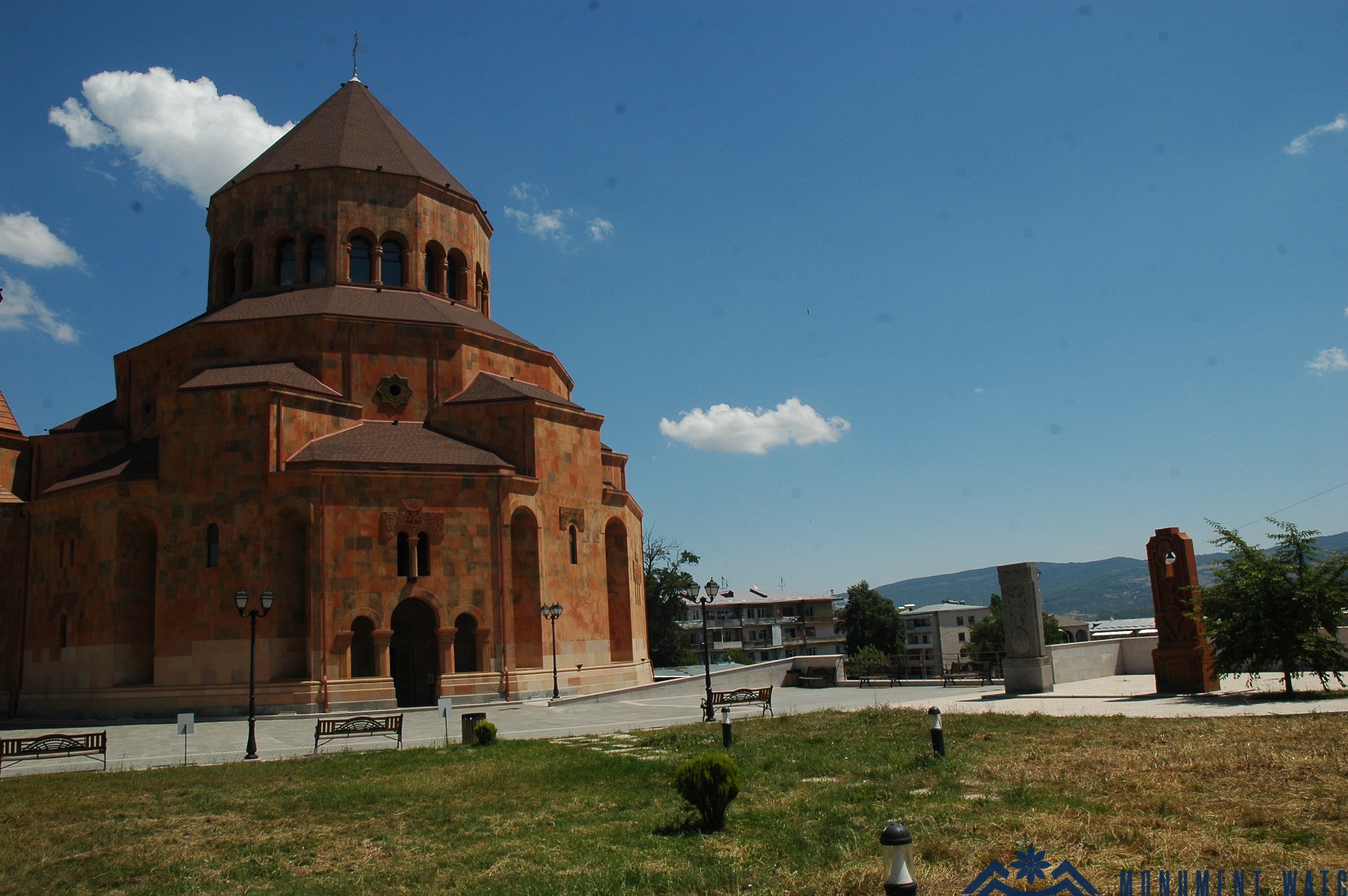
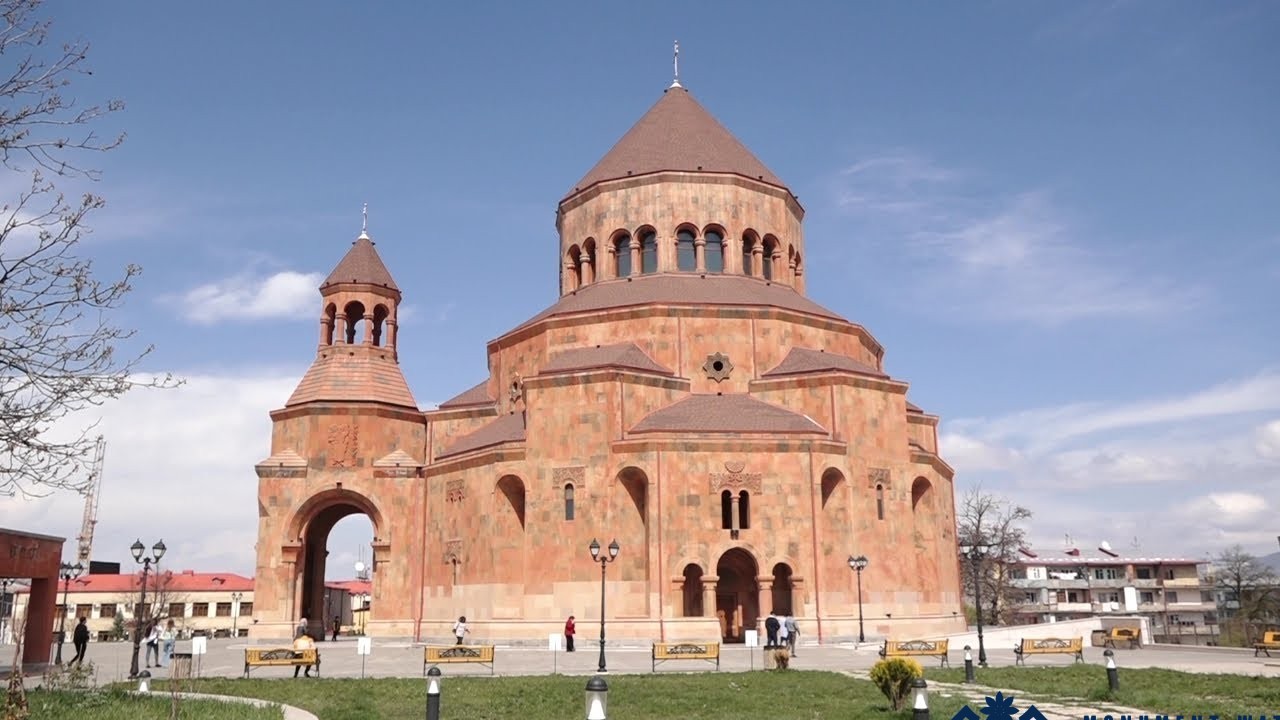
The Cathedral of the Protection of the Holy Mother of God in Stepanakert was one of the most important spiritual and architectural symbols of Artsakh. It was located in the central, elevated part of Stepanakert, the capital of the occupied Republic of Artsakh, in the upper section of Nelson Stepanyan Street (Fig. 1).

Fig. 1. The general view of the church. Photo: https://monumentwatch.

Historical overview

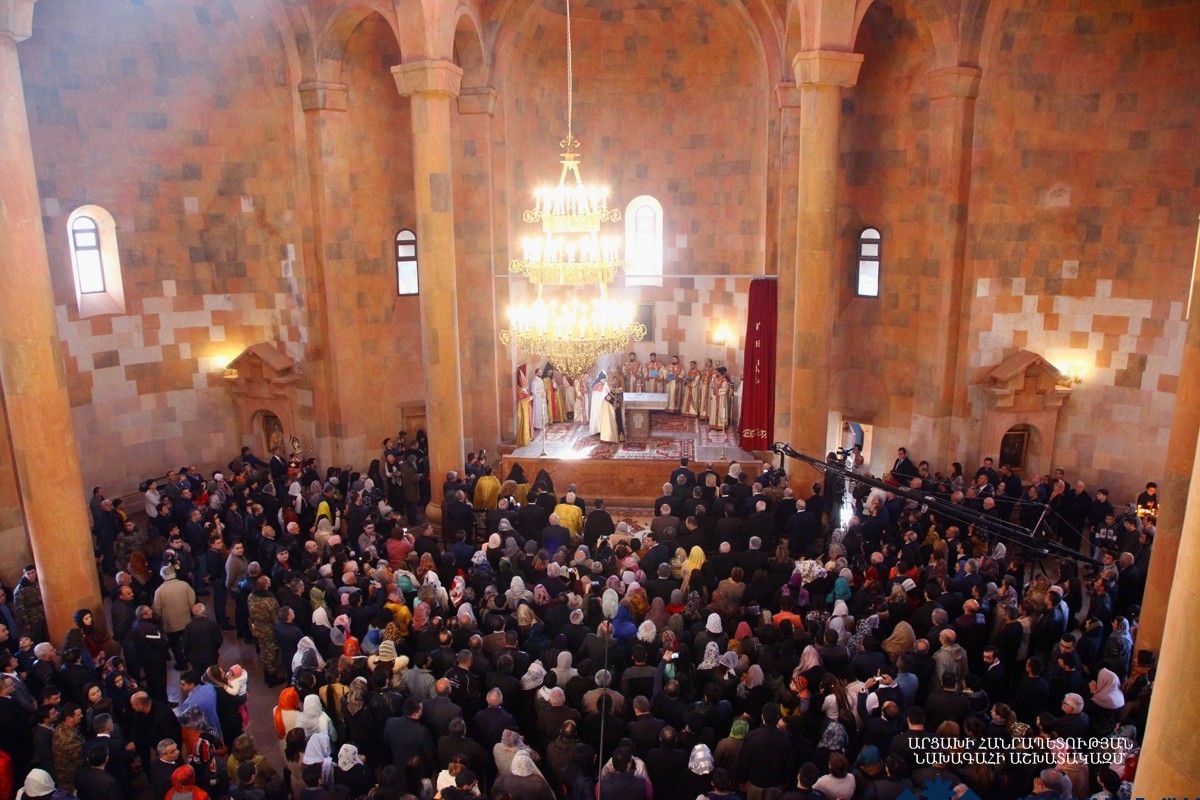
The foundation-laying ceremony of Stepanakert’s main cathedral took place in 2006, performed by Catholicos of All Armenians Garegin II. The idea of constructing the cathedral belonged to Archbishop Pargev Martirosyan, Primate of the Diocese of Artsakh, and arose from the need to have a large ecclesiastical structure capable of meeting the spiritual needs of the population of Stepanakert. According to this vision, the church was also to become the largest ecclesiastical structure in Artsakh and the episcopal seat of the diocese.

The church was built through the patronage of benefactors. The principal patrons were businessman Hrant Vardanyan and his sons, Mikayel and Karen Vardanyan, who, on the day of the church’s consecration, were awarded the Order of Saint Gregory the Illuminator, the highest honor of the Armenian Apostolic Holy Church. The architect of the church was Gagik Yeranosyan. The cathedral was officially consecrated on 7 April 2019 (https://www.youtube.com/watch?v=_AK9_2NVbmM).

The history of the church’s name is connected with Archbishop Pargev. During the construction process in 2015, he shared his reflections on the matter. Although the name “Protection of the Holy Mother of God” was unusual for the Armenian Church and was more closely associated with the Russian tradition, the Archbishop proposed this name to the Catholicos, who approved it. The name was symbolic: both Archbishop Pargev and the people believed in the protection of the Holy Mother of God.

The name of the church expressed the belief that the Holy Mother of God grants spiritual protection to the people and that the church stands under her patronage. It should also be noted that the cathedral was a real shelter during the two Artsakh wars, when its spacious basement became a refuge for hundreds of people from Artsakh.

The church was an important center for the faithful of Artsakh and could accommodate around 1,500 people. It symbolized the revival of Artsakh’s spiritual life and the preservation of Armenian identity.

Architectural and compositional analysis

The exterior appearance and plan of the church combined elements of the Zvartnots and Hripsime cathedrals, as the architect of the church himself stated at the time (https://www.youtube.com/watch?v=7m3PWGO5m4Y).

In its plan and volumetric-spatial composition, the cathedral represented a reinterpretation of the classical Armenian architectural tradition, combining traditional building art with modern construction technologies.

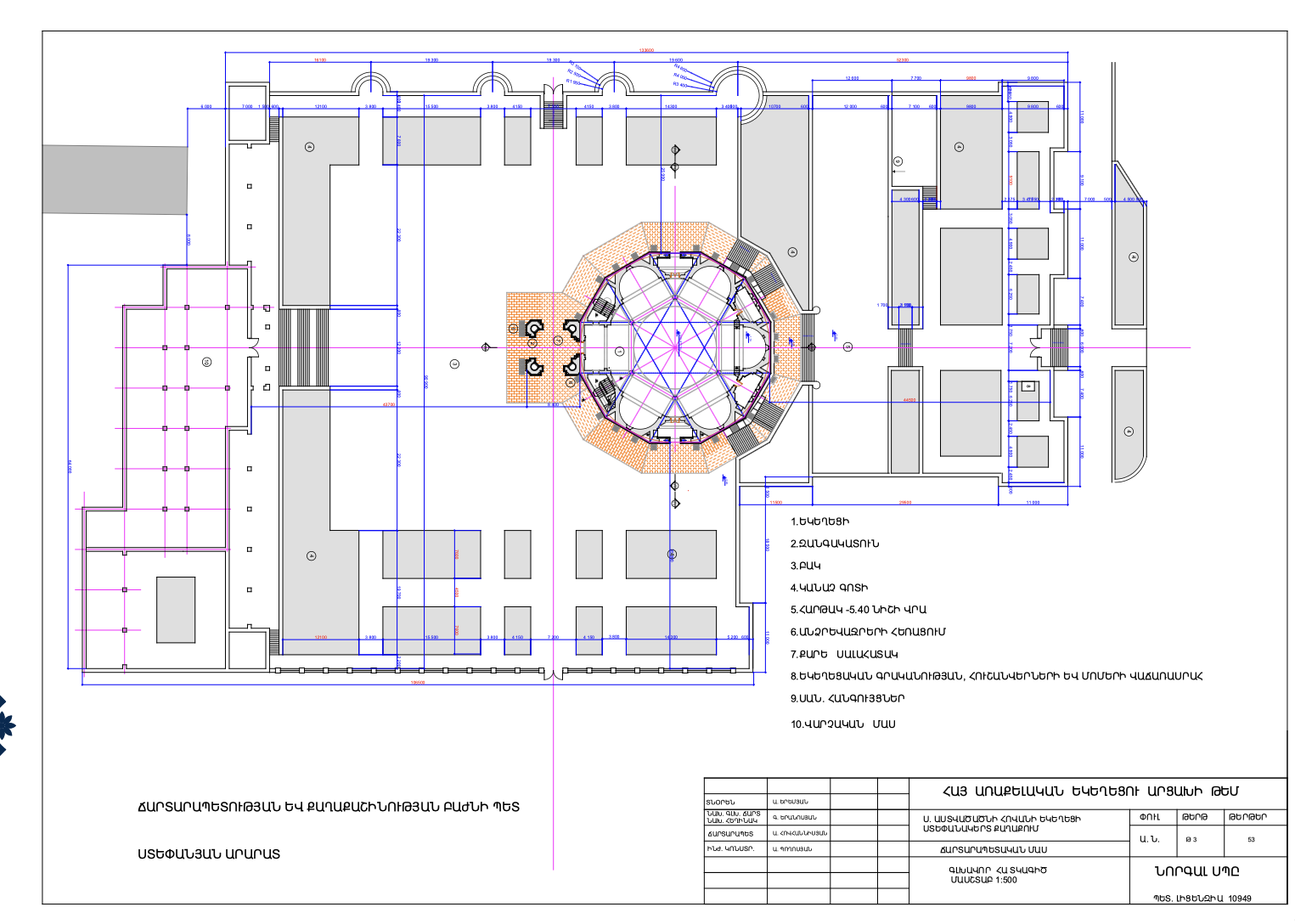
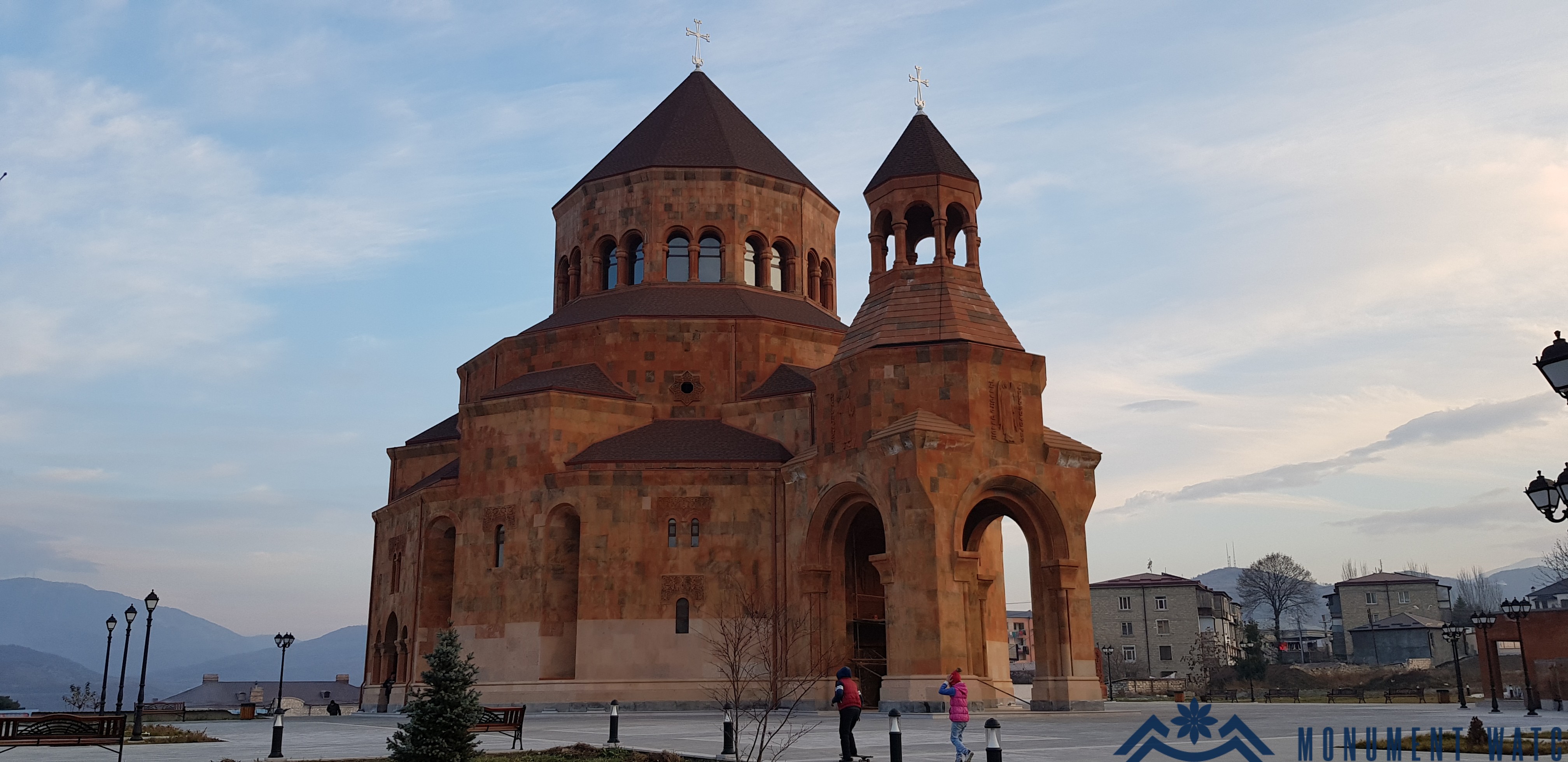
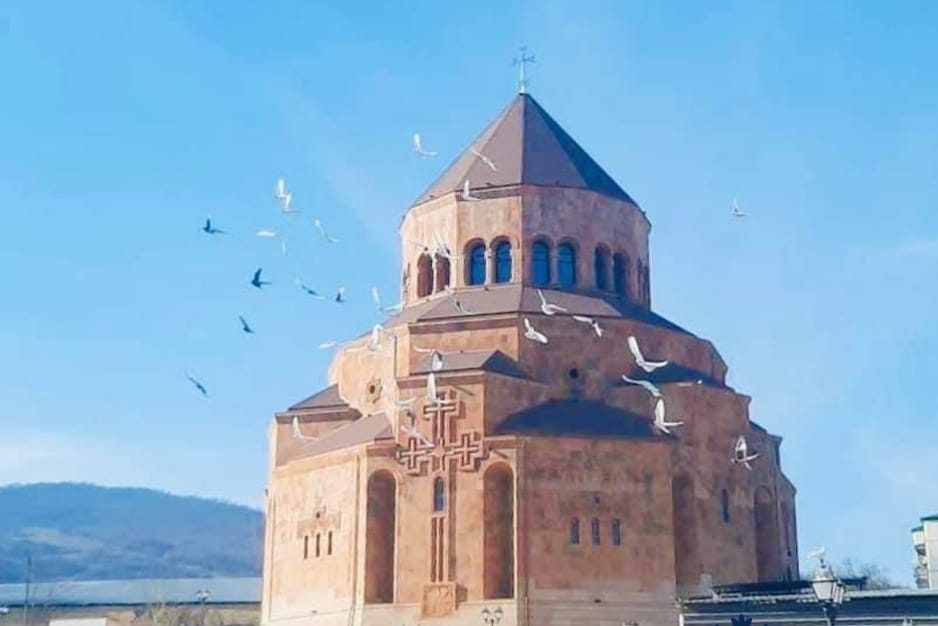
In the plan, the main axis was emphasized in the east–west direction. The main altar was located on the eastern side. Five additional apses were placed along intermediate axes, giving the church a six-apsed composition. The church measured approximately 35 m in length and 30 m in width. Its composition was symmetrical, with only the western section, containing the main entrance, slightly elongated. The cathedral had three entrances (Fig. 2). On the western side, attached to the church, stood a three-storey bell tower, 24 m high (Fig. 3).

Fig. 2. The general plan of the church. Photo: Diocese of Artsakh.

Fig. 3. The general view of the church, looking west. Photo: https://www.aravot.am/2023/10/16/1376834/.

The Stepanakert Cathedral was a central-domed structure, in which the dome served as the dominant volumetric and spatial element. The three-tier composition of early medieval Zvartnots-type cathedrals received a new interpretation here. The entire structure rose upward, creating a sense of spiritual elevation. The dome was also the visual center of the building and the axis of its interior space.

The cathedral’s three-tier structure was set on a stepped stylobate. The first level, approximately 6 m high, formed the entrance zone, followed by the main volume, rising to about 15 m. Above this was the dome, where an octagonal drum was crowned with a pyramidal conical roof bearing a simply designed metal cross; the total height of the cathedral was 35 m. Windows were opened in the exterior walls of the apses. Each face of the octagonal drum also had a pair of wide arched windows. The exterior walls of the cathedral also contained windows in the form of octagonal rosettes (Fig. 4). The semi-circular windows were crowned with elegant hood-mouldings.

The exterior walls of Stepanakert Cathedral were decorated with deeply recessed niches of the Hripsime type. A sundial was carved on the southern wall (Fig. 4).

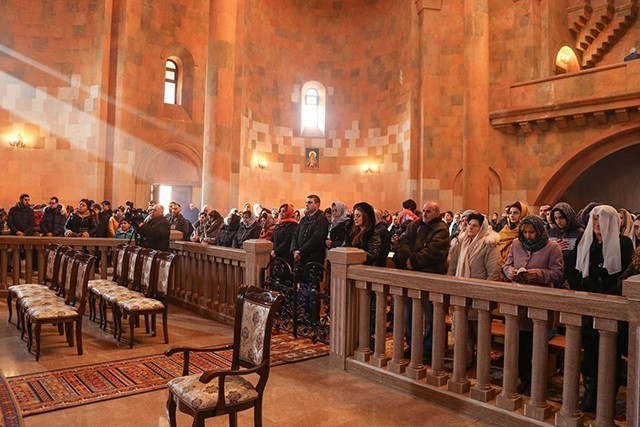
The cathedral had a very spacious interior. In the eastern main apse, a high bema was built, reached by four steps. The front of the bema was decorated with reliefs (Fig. 5). In front of the bema, the choir area was separated by railings (Fig. 6). On the full height of the exterior wall of the eastern apse, a cross was carved with clear geometric precision, incorporating the window opening toward the sanctuary (Fig. 7).

Fig. 4. The southern façade of the church. Photo: https://mamul.am/am/news/286784.

Fig. 5. The interior of Stepanakert Cathedral, looking toward the main altar. Photo: https://www.aravot.am/2023/04/09/1333870/.

Fig. 6. The choir area of the church. Photo: https://www.aravot.am/wp-content/uploads/2021/01/.

Fig. 7. The eastern façade of the church. Photo: https://araratnews.am/show/72513.

On the western side, above the entrance, a gallery was built for the choir. The prayer hall was filled with light, provided by numerous windows. Natural light entered through the windows and the dome, symbolizing the divine presence. Inside, there were images of Jesus Christ and the Holy Mother of God. The purpose of the interior design was not to impress through luxury, but to focus the worshipper on prayer, silence, and spiritual connection. It combined the simplicity of the traditional Armenian church with the spatial sensibility of a modern structure.

The Cathedral of the Protection of the Holy Mother of God in Stepanakert was built of yellowish-red Ani tuff (Fig. 2). In the masonry, the facing stones included both yellowish and reddish blocks arranged in a checkerboard pattern. This polychrome approach to wall decoration is also characteristic of traditional Armenian church architecture, especially the Ani-Shirak architectural school. The church stood at the center of an open paved square.

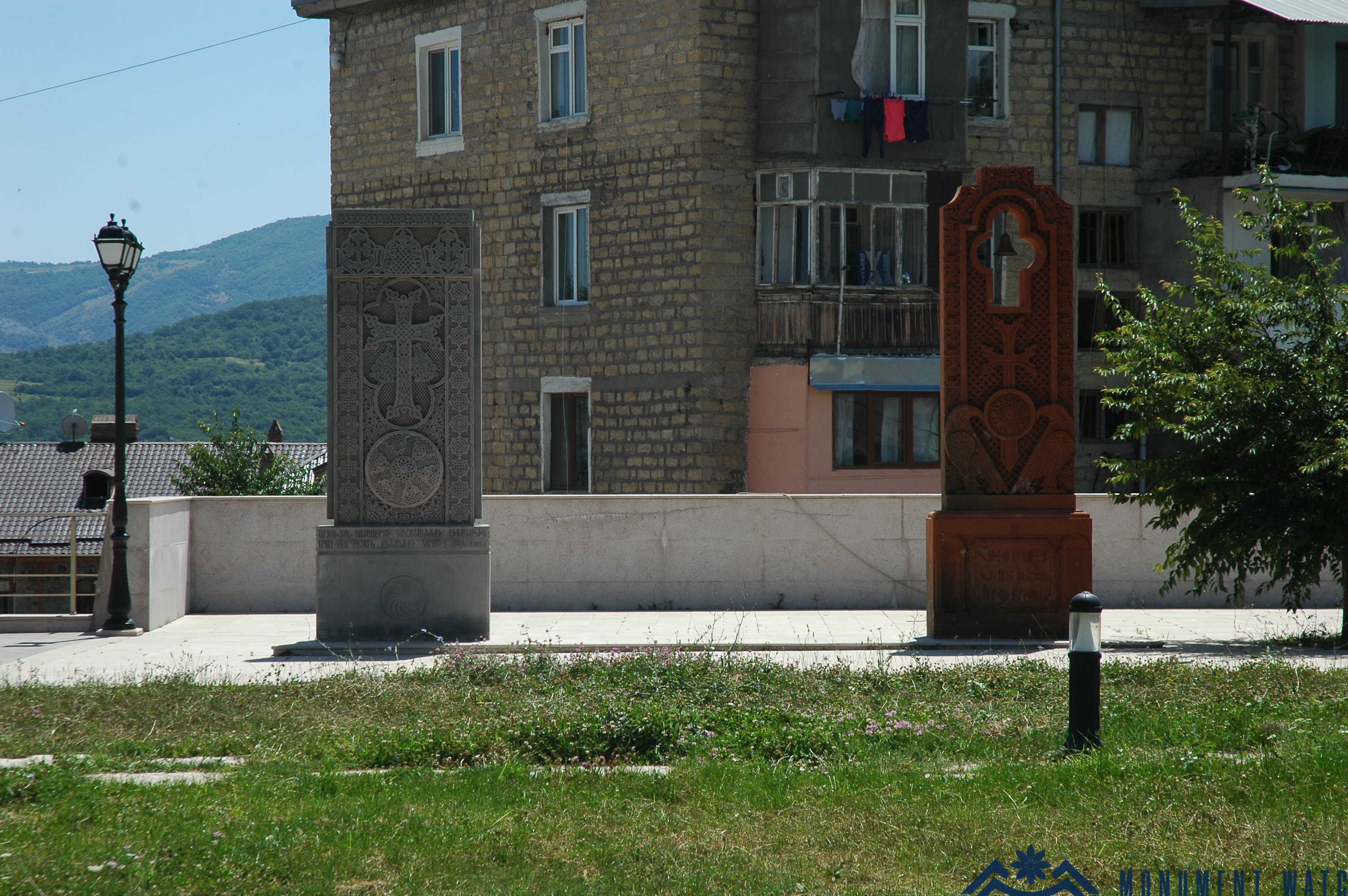
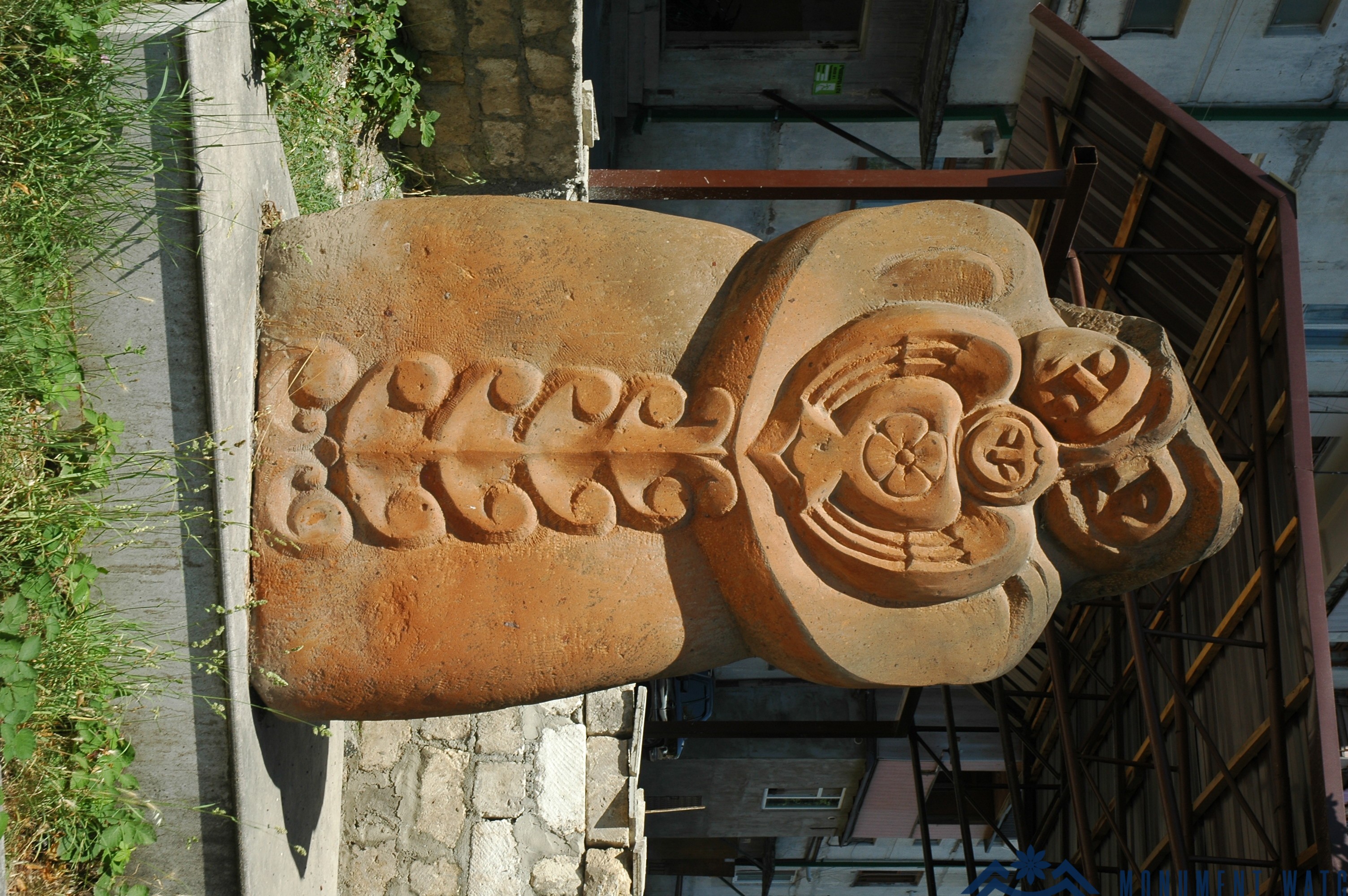
In front of the church stood two khachkars (Fig. 8) and a monument symbolizing motherhood (Fig. 9).

Fig. 8. The khachkars in the surroundings of the church. Photo: https://monumentwatch.

The Condition before and after the war

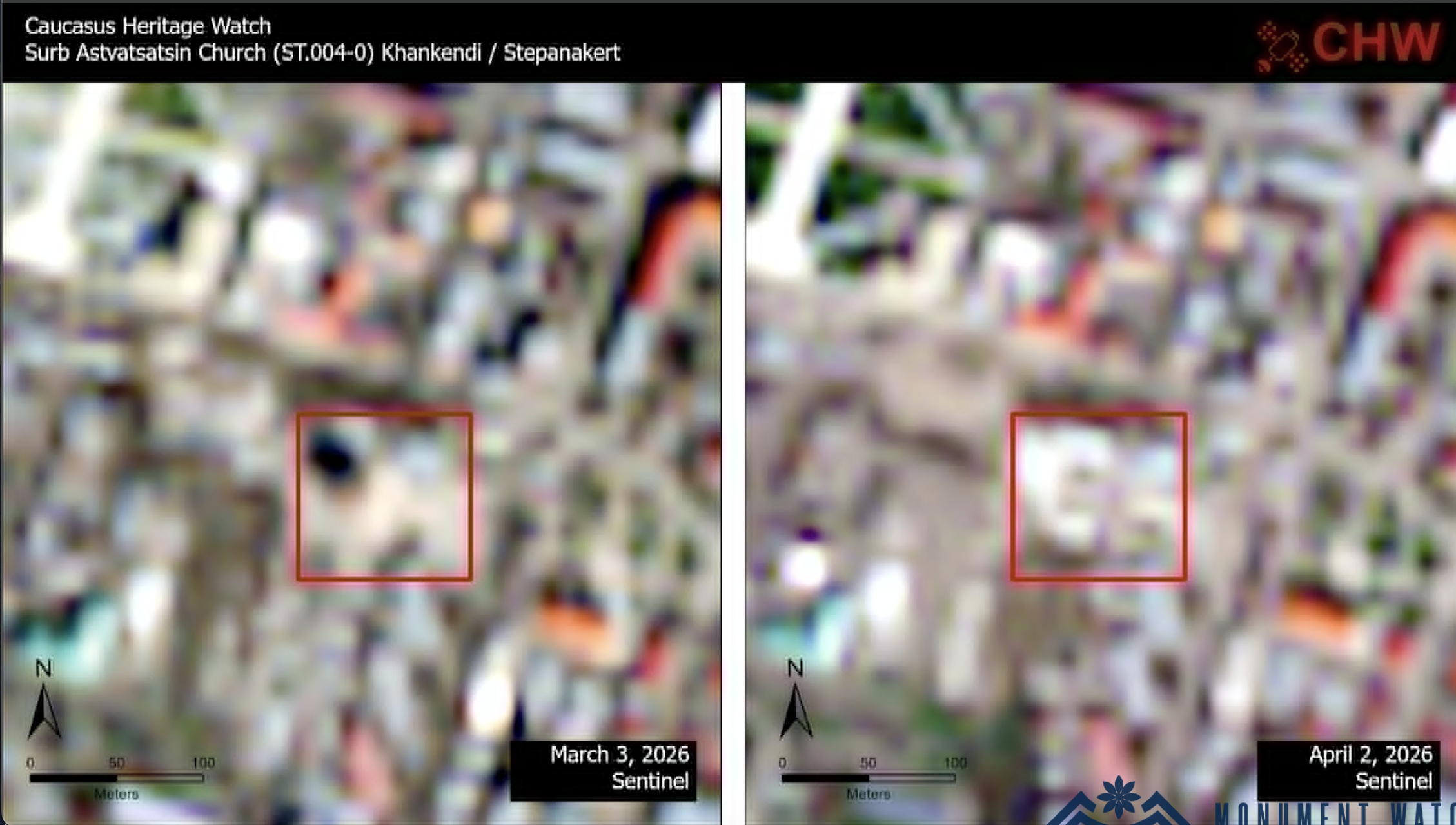
According to videos uploaded in the Azerbaijani online sphere, as of 21 April 2026, Azerbaijan had completely destroyed the Cathedral of the Protection of the Holy Mother of God (https://www.aravot.am/2026/04/21/1551378/), a fact confirmed by satellite images (Fig. 10).

The destruction of the Cathedral of the Protection of the Holy Mother of God in Stepanakert is yet another manifestation of the consistent Anti-Armenian sentiment and vandalistic policy pursued by Azerbaijan toward the eradication of Armenian cultural heritage and the Armenian presence in the region more broadly.

Fig. 9. The monument symbolizing motherhood. Photo: https://monumentwatch.

Fig. 10. Satellite documentation of the dismantling of the Cathedral of the Protection of the Holy Mother of God. Photo: Caucasus Heritage Watch.

Bibliography

  1. The Consecration of Stepanakert Cathedral, https://www.youtube.com/watch?v=_AK9_2NVbmM.
  2. The Ceremony of Installing the Crosses and Bells of Stepanakert Cathedral, https://www.youtube.com/watch?v=7m3PWGO5m4Y.
  3. “The destruction of the Church of the Protection of the Holy Mother of God is another episode in the same tragic chain that began a century ago with genocide,” aravot.am, 21 April 2026. Accessed 24 April 2026.
The Cathedral of the Protection of the Holy Mother of God (Surb Astvatsatsin) in Stepanakert
Artsakh