The Iron Age Burials of the Khachenaget Valley

Location

The burials were located near the village of Arajadzor, on the left bank of the Khachen River, in the Martakert region of the Republic of Artsakh. Since 2023, the area has been occupied by Azerbaijan.

Historical overview

The Khachenaget Valley is rich in diverse antiquities, among which the Bronze Age and Iron Age burial mounds are especially notable. The Bronze Age burial mounds on the left bank of the Khachenaget were first excavated by E. Rösler in 1893–1894 at Arajadzor, and in 1894 and 1897 at Balukaya and Srkhavend. See: https: //monumentwatch.org/hy/monument/խաչենագետիբրոնզեդարյանդամբարաններ/.

In 1896, A. Ivanovsky, a member of the Imperial Moscow Archaeological Society, excavated five burial mounds dated to the Late Bronze Age in the area between the villages of Vank, Kolatak, and Tbghlu (Ivanovsky 1911; for details see: https:// monumentwatch.org /hy/monument /%d5%ad%d5%a1%d5%b9%d5%a5%d5%b6%d5% a1%d5%a3% d5%a5% d5%bf%d5%ab%d5%b0%d5%b8%d5%be%d5%bf% d5%ab%d5%b8% d6%82% d5%b7%d5%a2%d6%80%d5%b8%d5%b6%d5%a6%d5%a5-%d5%a4%d5%a1% d6% 80%d5% ab-%d5%a4%d5% a1% d5%b4%d5%a2/).

In 1887, Archimandrite Khachik Dadyan excavated five burial mounds in the villages of Tbghlu, Arajadzor, Kolatak, and Seysulan (Topchyan 1900, 63–74).

In 1897, on the left bank of the Khachen River, in the area of the settlement of Akhmakh, E. Rösler excavated Iron Age burial mounds, about which detailed information is preserved in his reports (IAK 1897). During the Soviet period, these monuments were discussed and analyzed in detail by K. Kushnaryova (Kushnaryova 1957, 135–177).

Archaeological investigation

In 1897, on the left bank of the Khachen River, in the area of the settlement of Akhmakh situated between the villages of Arajadzor and Srkhavend, E. Rösler recorded eight small, weakly expressed burial mounds, which differed markedly in appearance from the large burial mounds in the same area. Rösler excavated five of them.

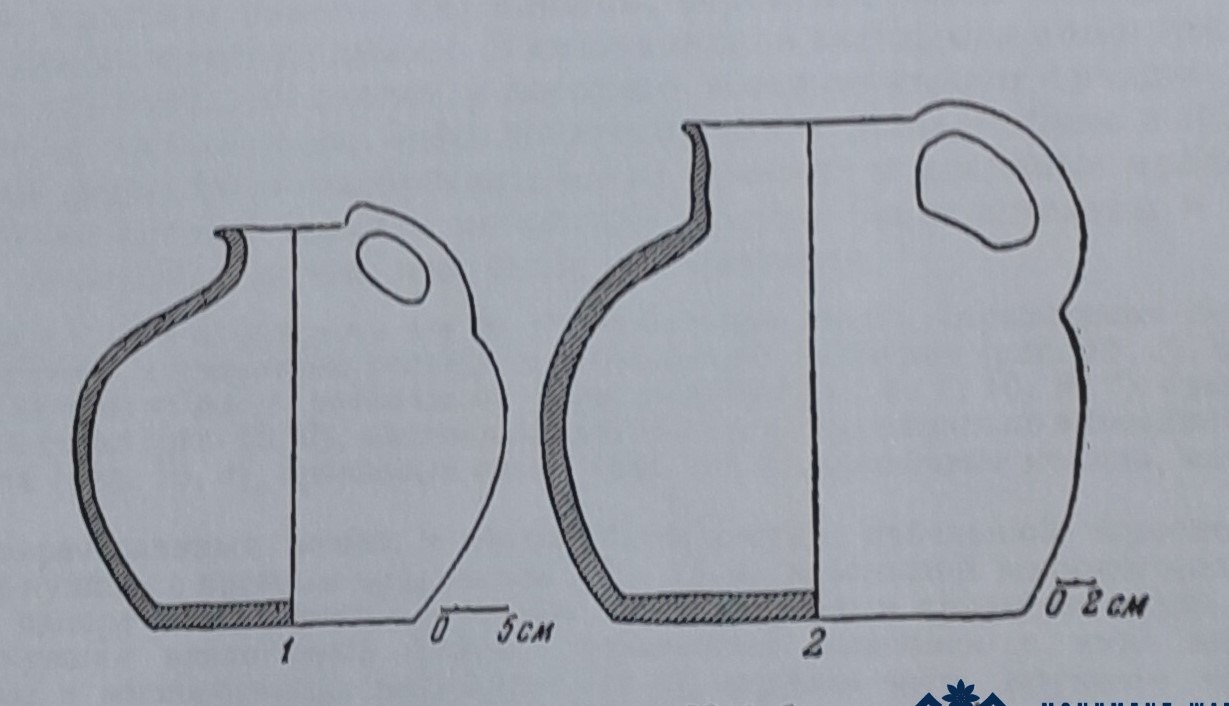
In burial mound no. 1 — 1 m high, with a base diameter of 16.25 m — a stone cist grave was discovered. In its eastern part lay the skeleton of a man placed on his left side, with his arms bent over the abdomen. Also found here were four coarse handmade clay vessels (Fig. 1), a bronze dagger and knife of the Transcaucasian type, and flint arrowheads.

Fig. 1. The clay vessels from burial mound no. 1, after Rösler, in Kushnaryova 1957, fig. 13.

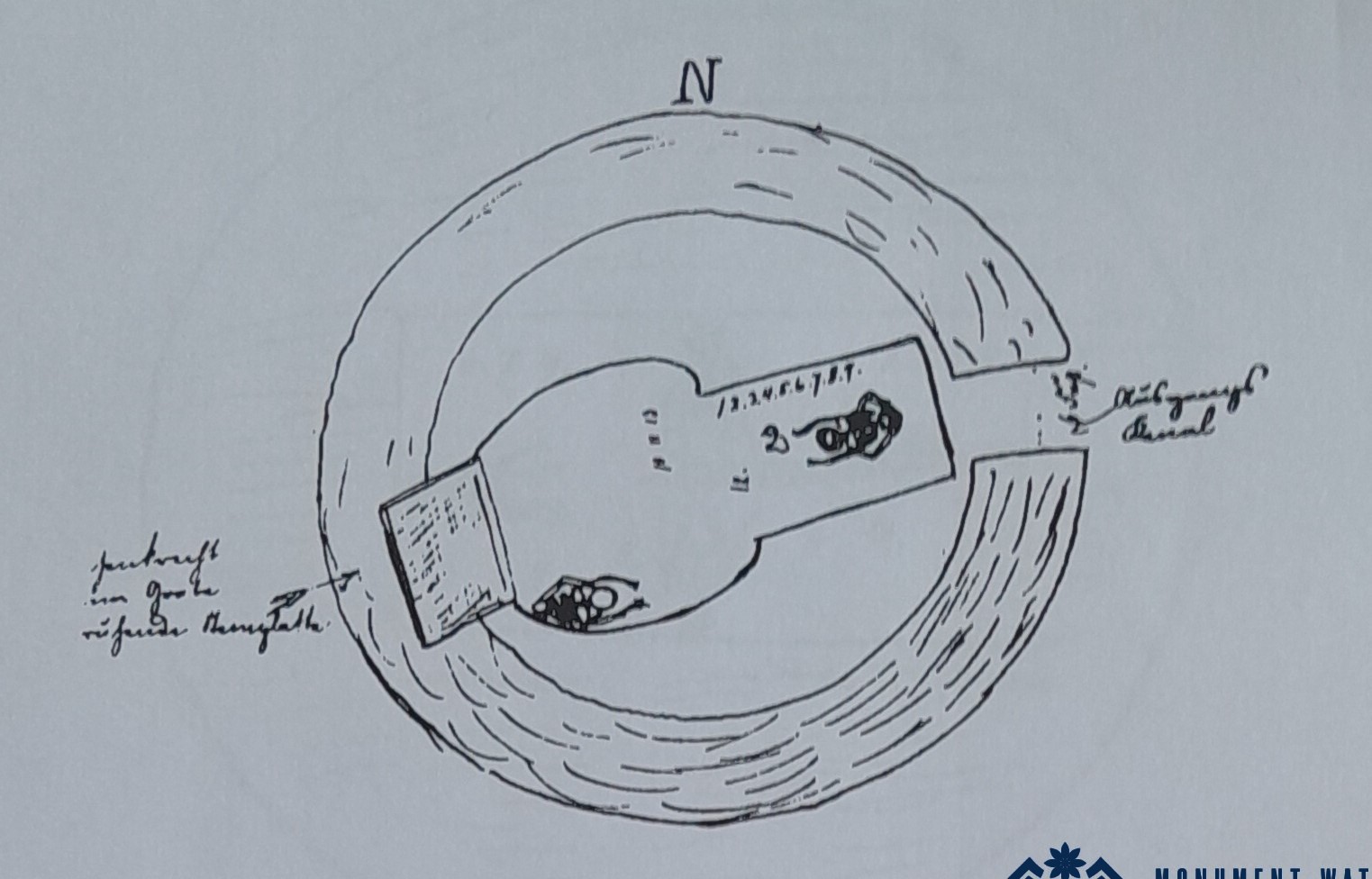
Near the western, northern, and southern walls, three additional skeletons were found in a seated position (Fig. 2). Small finds were discovered near them, including rings, beads, an awl or borer, and other objects.


Fig. 2. The plan of the grave of burial mound no. 1, after Rösler, in Kushnaryova 1957, fig. 12.

In burial mound no. 2 — 2.5 m high and 16 m in diameter — an irregularly shaped stone cist grave covered with four slabs was discovered beneath the mound fill. The grave contained two skeletons in a seated position, with their heads bent forward: one in the eastern part and the other in the western part (Fig. 3).

Almost all of the objects found in the grave were concentrated near the skeleton in the western part. These included two bronze daggers with openwork pommels, a bronze awl or borer and an arrowhead, a bone perforator, obsidian and flint arrowheads, as well as carnelian beads. Five different vessels were placed near the other skeleton (Fig. 4).

Fig. 3. The plan of the grave of burial mound no. 2, after Rösler, in Kushnaryova 1957, fig. 14.

Fig. 4. The clay vessels from burial mound no. 2, after Rösler, in Kushnaryova 1957, fig. 15.

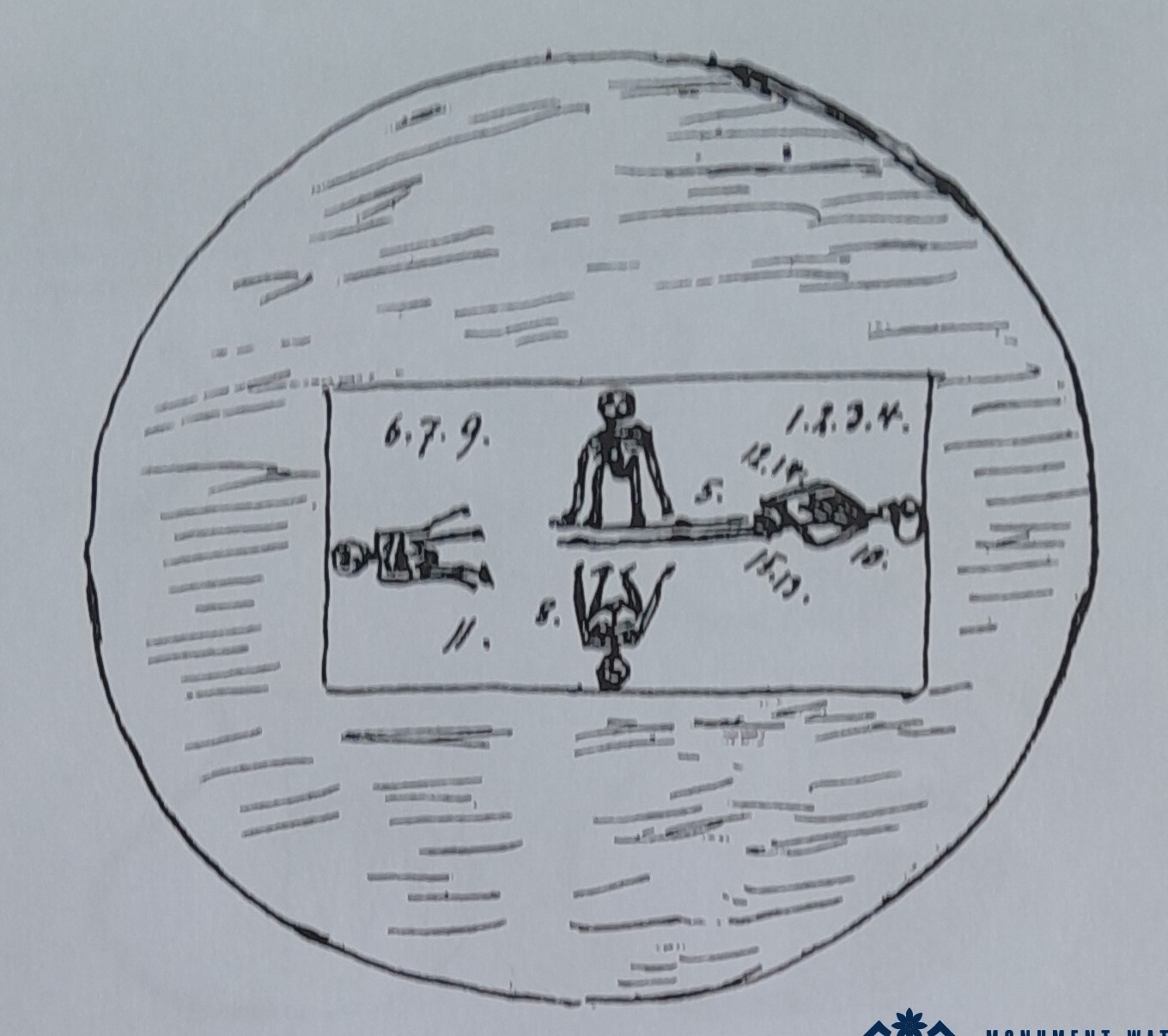
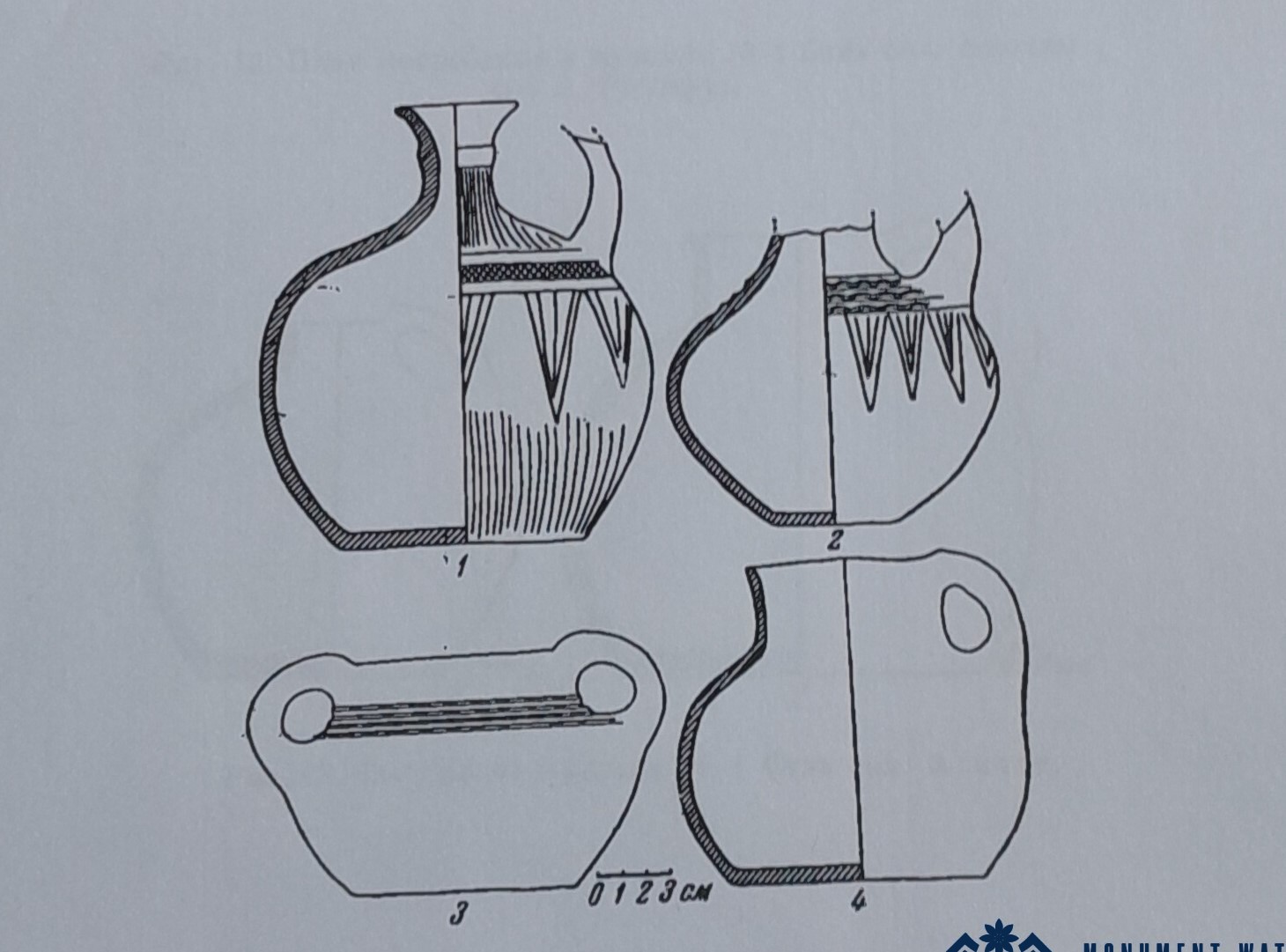
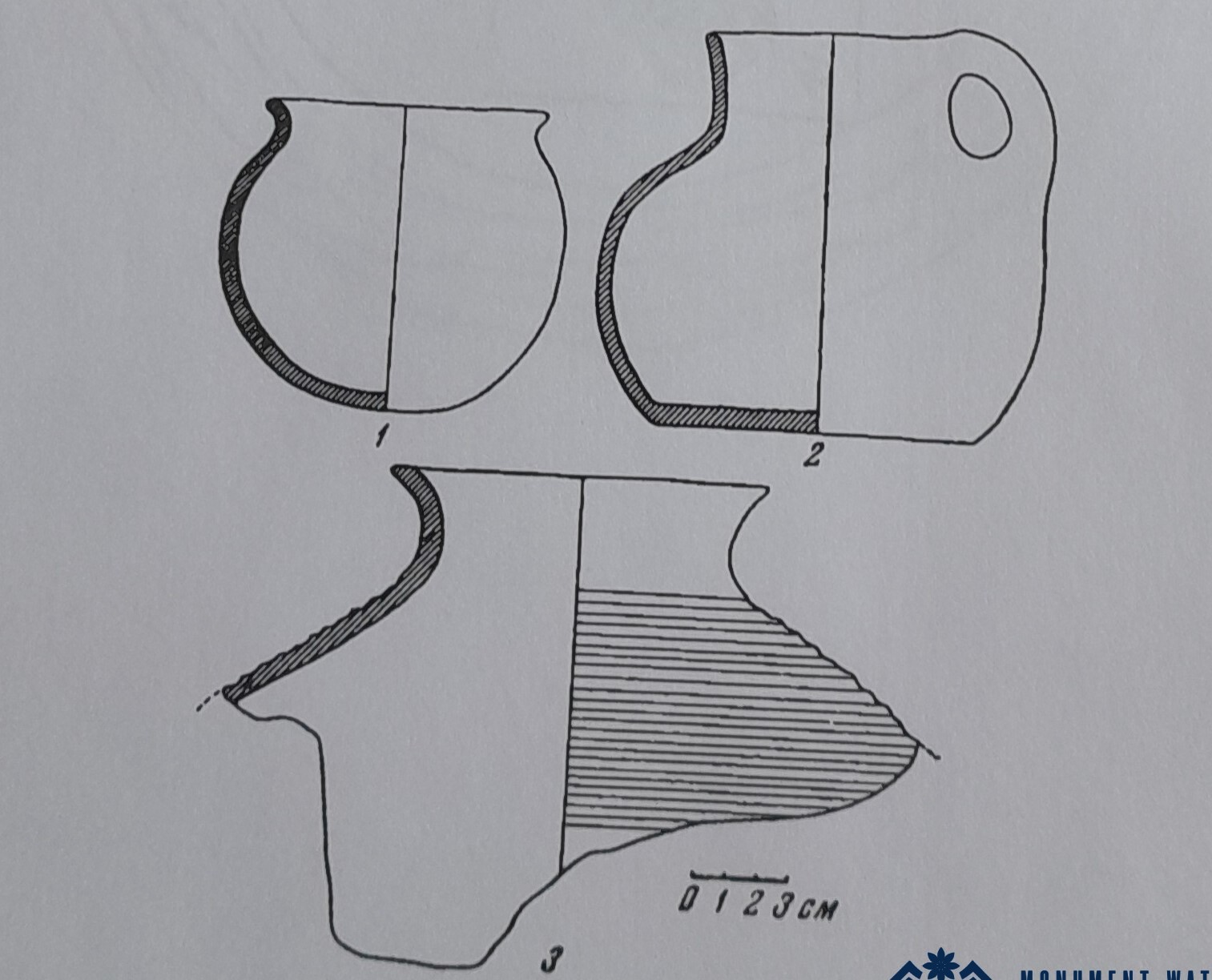
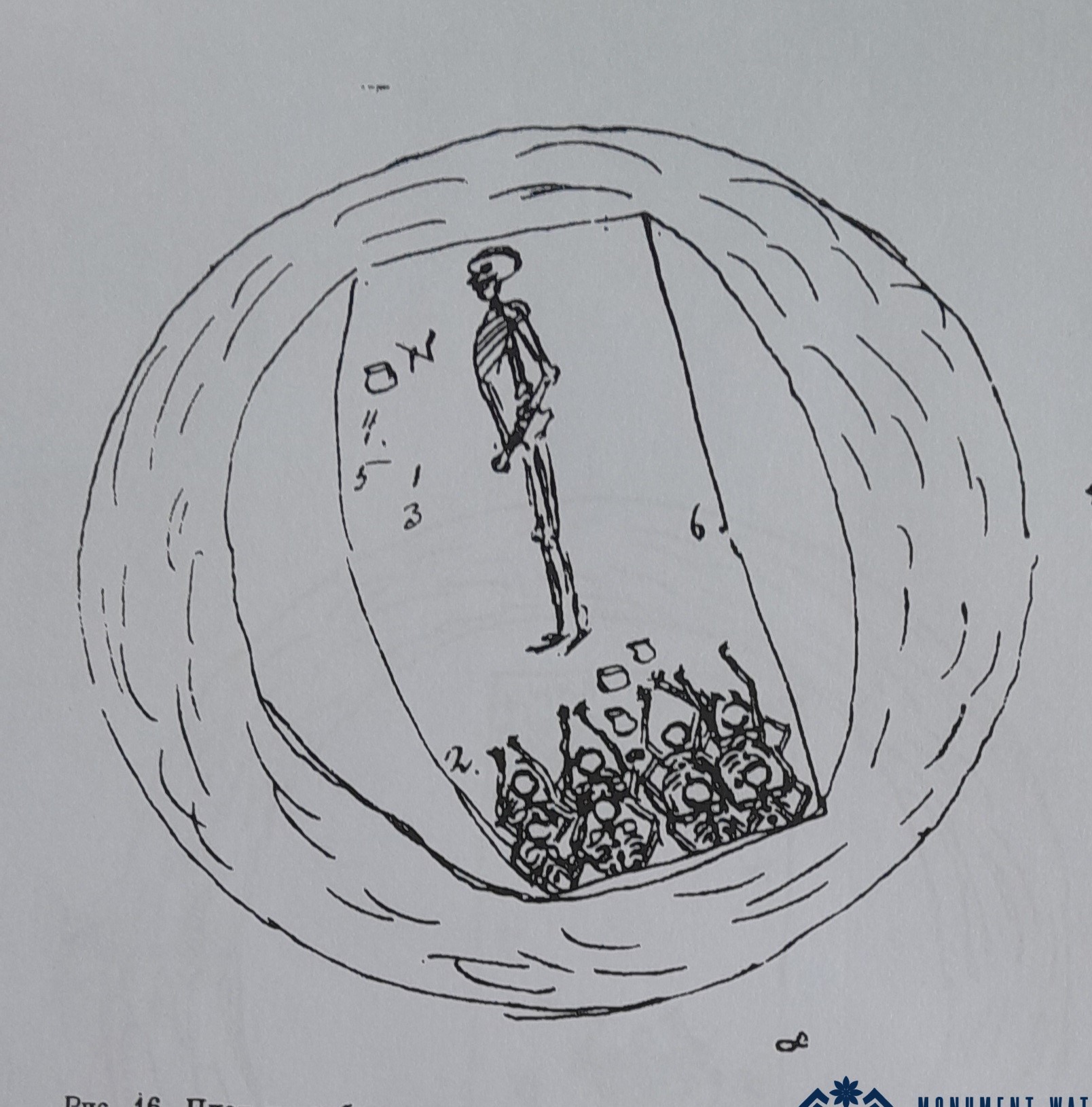
In burial mound no. 3 — 2.6 m high, with a base diameter of 9.2 m — a stone cist grave covered with two large slabs was discovered beneath the mound fill. Inside the grave, on the earthen floor, nine skeletons were found. One of them was located in the western part, in an extended position on the right side, with the hands placed on the abdomen. Near the head was a handmade clay vessel filled with ash (Fig. 5); beside it were bronze daggers of the Transcaucasian type, a bone spearhead, rings, and beads. Along the eastern wall, eight skeletons — apparently attendants of the principal deceased — were arranged in two rows, tightly pressed against one another (Fig. 6). Traces of trauma on their skulls indicate violent death.

Fig. 5. The clay vessels from burial mounds nos. 3 (2, 3) and 5 (1), after Rösler, in Kushnaryova 1957, fig. 17.

Fig. 6. The plan of the grave of burial mound no. 3, after Rösler, in Kushnaryova 1957, fig. 16.

In burial mound no. 4 — 1.8 m high, with a base diameter of 9.5 m — a stone cist grave was discovered beneath the mound fill. It contained broken fragments of human bones, as well as several bronze bracelets and rings.

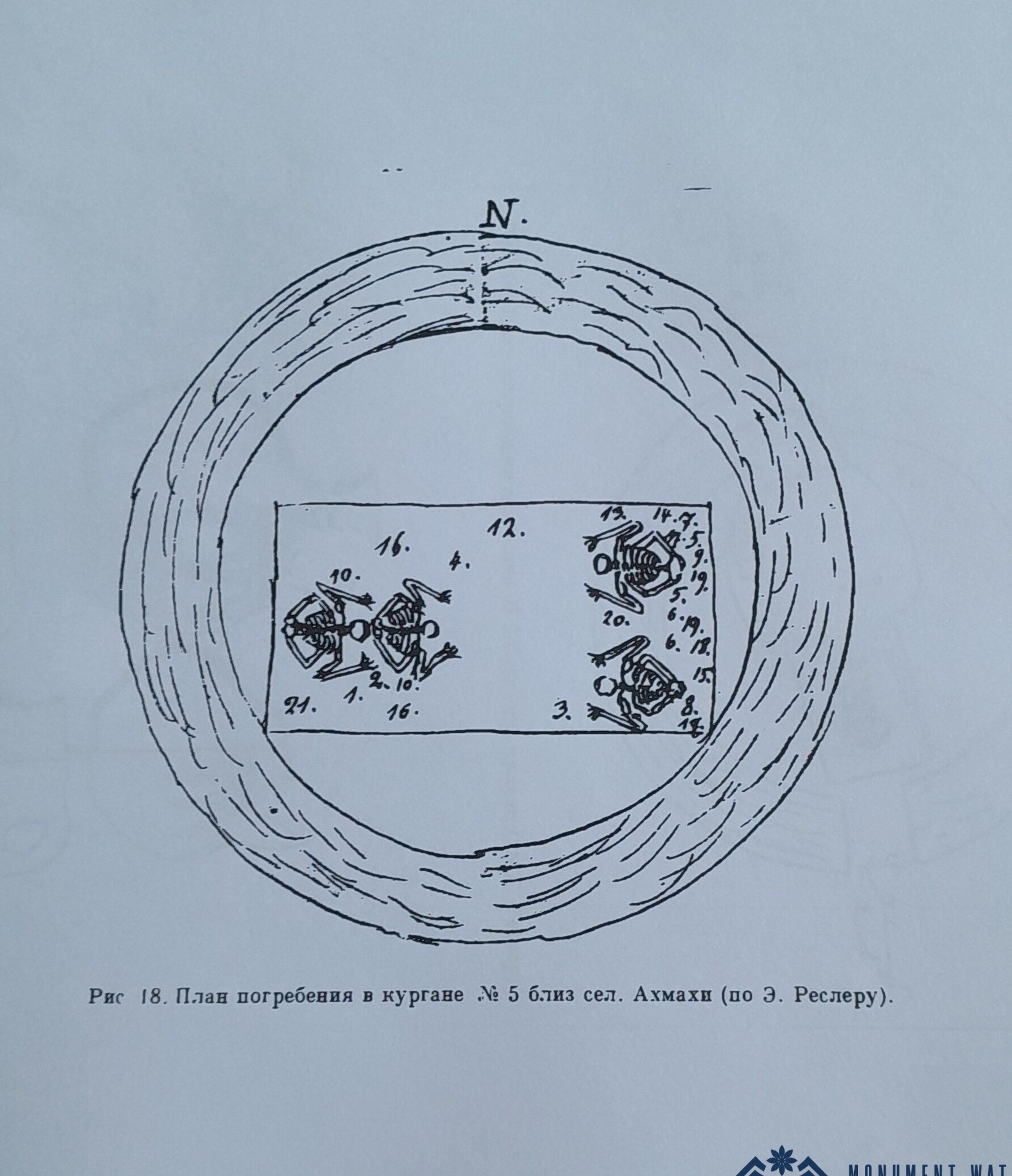
In burial mound no. 5 — 2 m high, with a base diameter of 9 m — an irregularly shaped stone cist grave covered with two large slabs was found beneath the mound fill. Four skeletons were discovered in the grave: two near the eastern wall in a seated position, and two others in the same position in the central part of the grave, near the western wall (Fig. 7).

Most of the objects were found in the center of the grave. They included up to 20 clay vessels, a large bronze socketed spearhead, bronze rings, bracelets, small ornaments, a deer figurine, obsidian arrowheads, bone perforators, beads, and other items (Kushnaryova 1957, 148–153).

Different forms of burial structures were recorded in this area: stone cist graves, earth-pit burials, and burials carried out on log platforms. K. Kushnaryova explained this diversity either by the different tribal affiliations of the deceased or by differences in their social status. For a detailed analysis of the diversity of burial rites and grave goods, see Kushnaryova 1957, 156–177.

Kushnaryova dated the burial mounds on the left bank of the Khachenaget to the 9th–8th centuries BCE. The results of these excavations are highly important for reconstructing the cultural landscape of Artsakh at the beginning of the 1st millennium BCE, an effort to which our team is also contributing.

Fig. 7. The plan of the grave of burial mound no. 5, after Rösler, in Kushnaryova 1957, fig. 18.

Bibliography

  1. IAK 1897 - The Imperial Archaeological Commission and the Study of Monuments of the Caucasus and Ciscaucasia, in The Imperial Archaeological Commission (1859–1917): The History of the First State Institution of Russian Archaeology from Its Foundation to Reform, collective monograph, vol. 2, chapter IX, St. Petersburg, 2019, pp. 968–977.
  2. Ivanovsky 1911 - Ivanovsky A., Across Transcaucasia: Archaeological Observations and Research of 1893, 1894, and 1896, in Materials on the Archaeology of the Caucasus Collected by the Expeditions of the Moscow Archaeological Society, Moscow, issue VI, pp. 85–185.
  3. Kushnaryova 1957 - Kushnaryova K., “Some Bronze Age Monuments in Nagorno-Karabakh,” Soviet Archaeology, issue 27, pp. 148–153, 156–177.
  4. Topchyan 1900 - Topchyan Y., Catalogue of the Manuscripts of Archimandrite Khachik Dadyan, Collected in 1878–1898, Part II, Vagharshapat.
The Iron Age Burials of the Khachenaget Valley
Artsakh