The Islamic Mausoleum of Nerkin Tumas Village
Location
The mausoleum sits on the southern outskirts of Nerkin Tumas village, in Artsakh's occupied Kashatagh Region.
Historical overview
No historical information about the mausoleum has been preserved. The village name Tumas is a dialectal form of the Armenian personal name Tovmas. Nerkin Tumas was formerly an Armenian-populated village. By the late 19th century, the church ruins still stood. During the Soviet period, however, the remains were dismantled, and the stones were reused in the construction of an Azerbaijani school. The church’s finely dressed and ornamented stones were particularly visible in the walls of the school’s second floor (Karapetyan 1999, 241).
Like many Islamic mausoleums in historical Artsakh, the Islamic Mausoleum of Nerkin Tumas was constructed in the steppe zone, a significant presence of Islamic cultural heritage in Artsakh's steppe areas becomes evident from the late 13th century onward, particularly during the reign of Ghazan Khan (1295–1304), when the Mongol ruling elite converted to Islam. During this period, the Mongol elite placed particular importance on the lowland and foothill areas of Artsakh and the surrounding territories, as attested by 14th-century Persian sources (Hovsepyan 2025, 24–30).
Many Islamic mausoleums lack inscriptions, leaving considerable gaps in our knowledge of their precise construction dates, architects, and patrons. Based on its architectural characteristics and construction techniques, the mausoleum of Nerkin Tumas likely dates to the 14th–15th centuries.
Architectural and compositional description
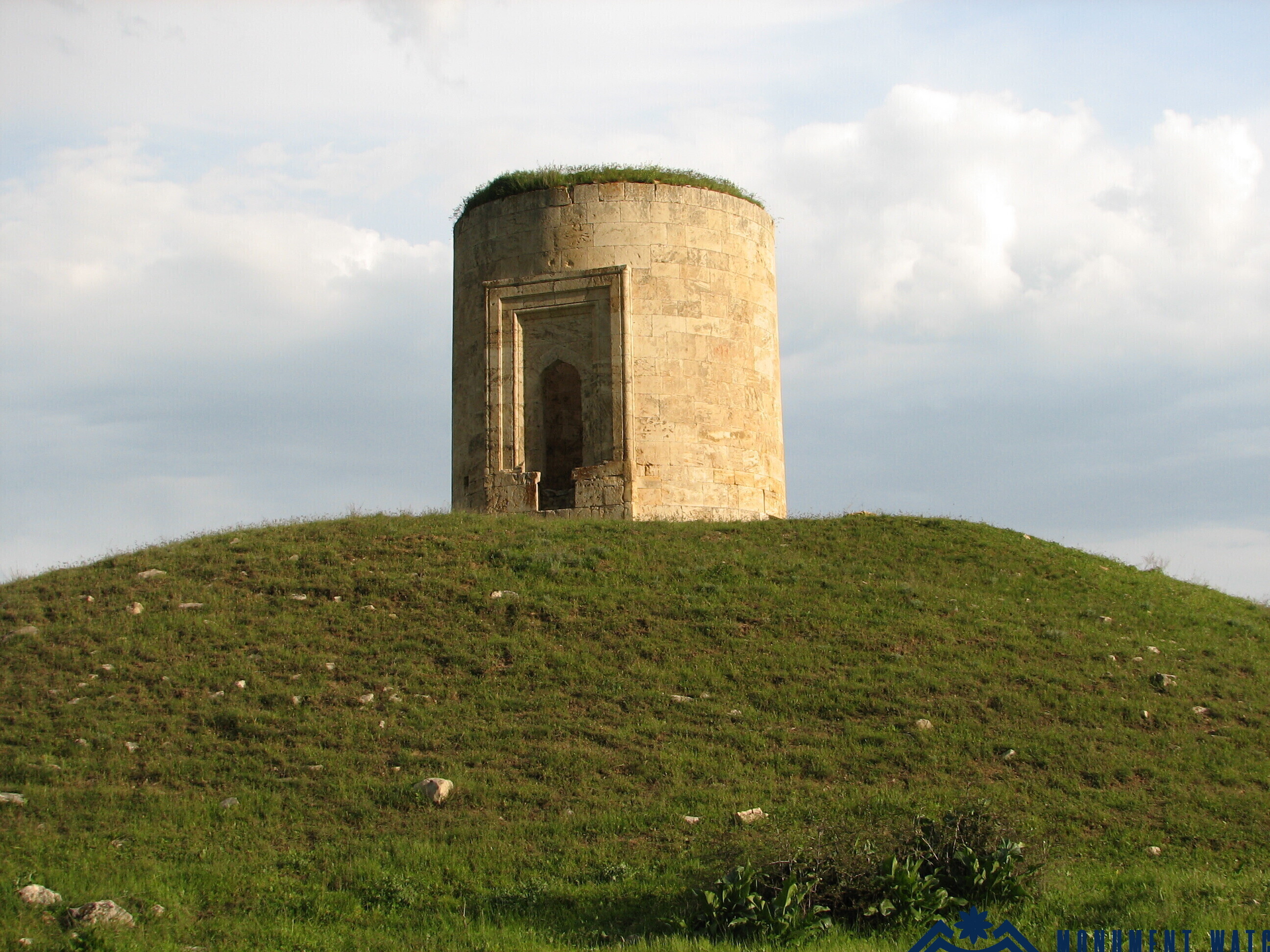
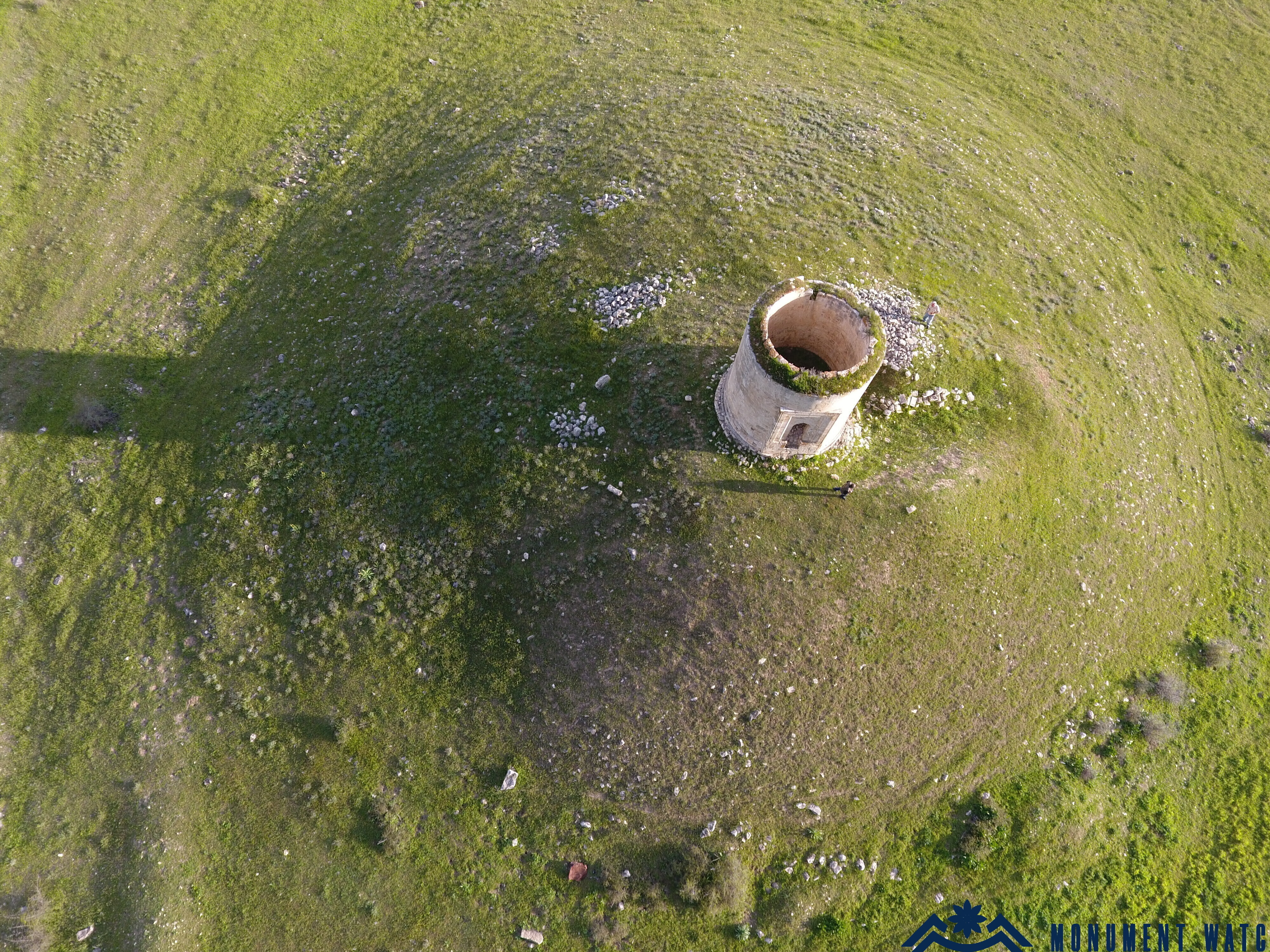
The mausoleum stands on an artificial mound, which may itself be a burial mound dating to the Bronze or Iron Age (Figs. 1, 2).
Many Islamic mausoleums in steppe and foothill regions, including those in Iran and Central Asia, were built on small hills, elevated sites, or artificial mounds. Such locations gave these monuments symbolic significance, expressing Islamic cultural presence and the authority of the individuals interred within them (Garustovich 2014, 96–106).
In the steppe zone of Artsakh, the mausoleums of Veysalli, Mir-Ali, Gyurjulu, Vardanants, Ivanyan, and others were likewise constructed on artificial mounds or elevated ground.

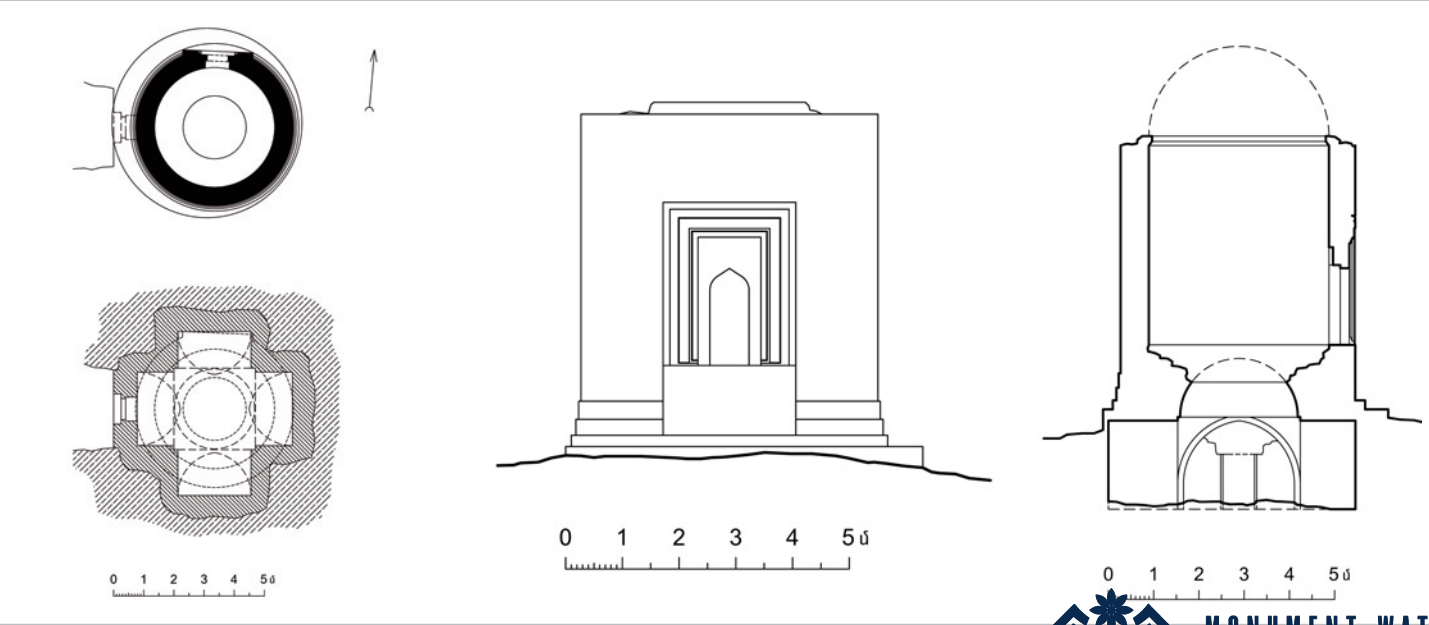
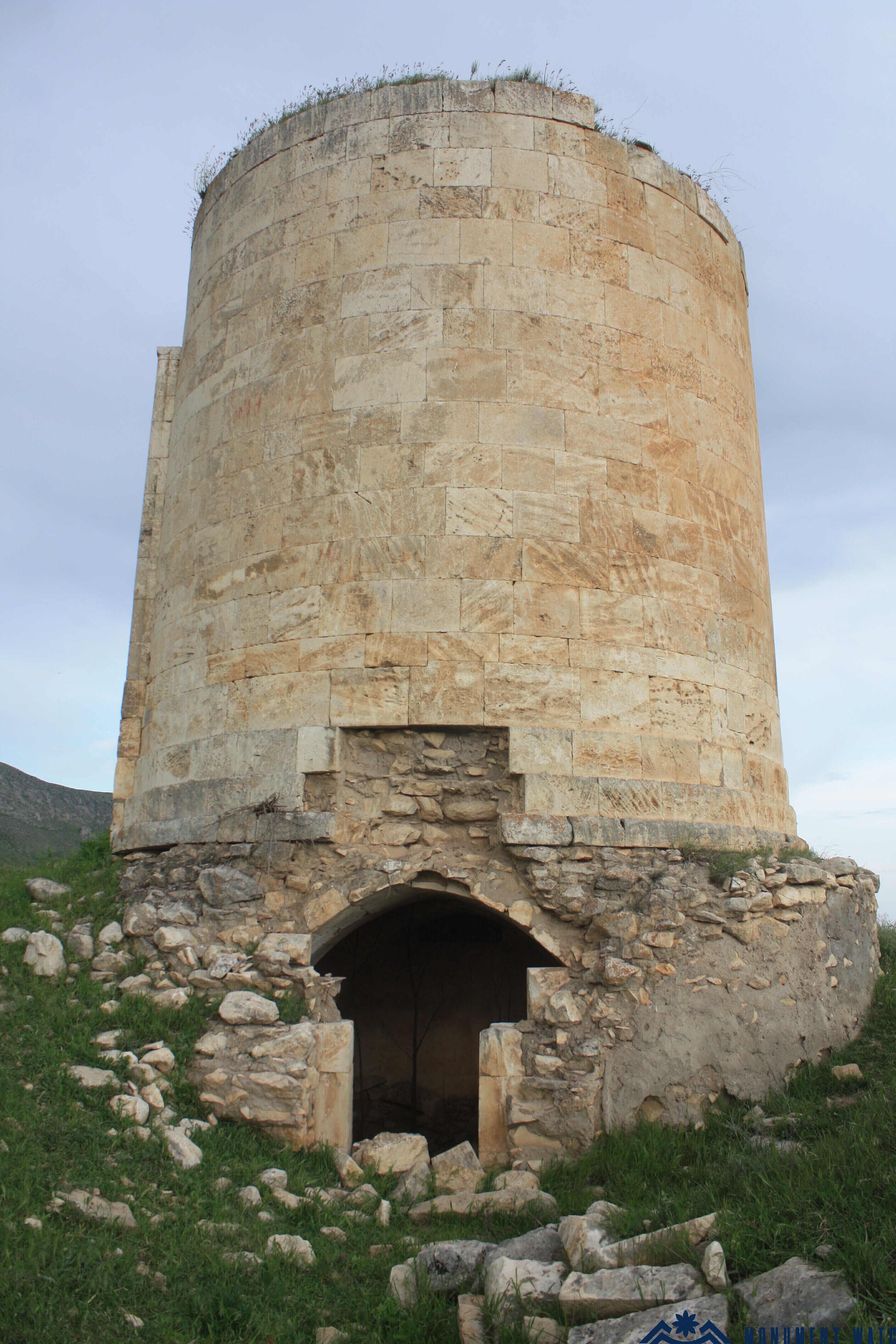
The mausoleum of Nerkin Tumas is constructed of finely dressed limestone bonded with lime mortar. Externally, it is a cylindrical structure measuring 12 m high and 5.0 m in diameter (Fig. 3).
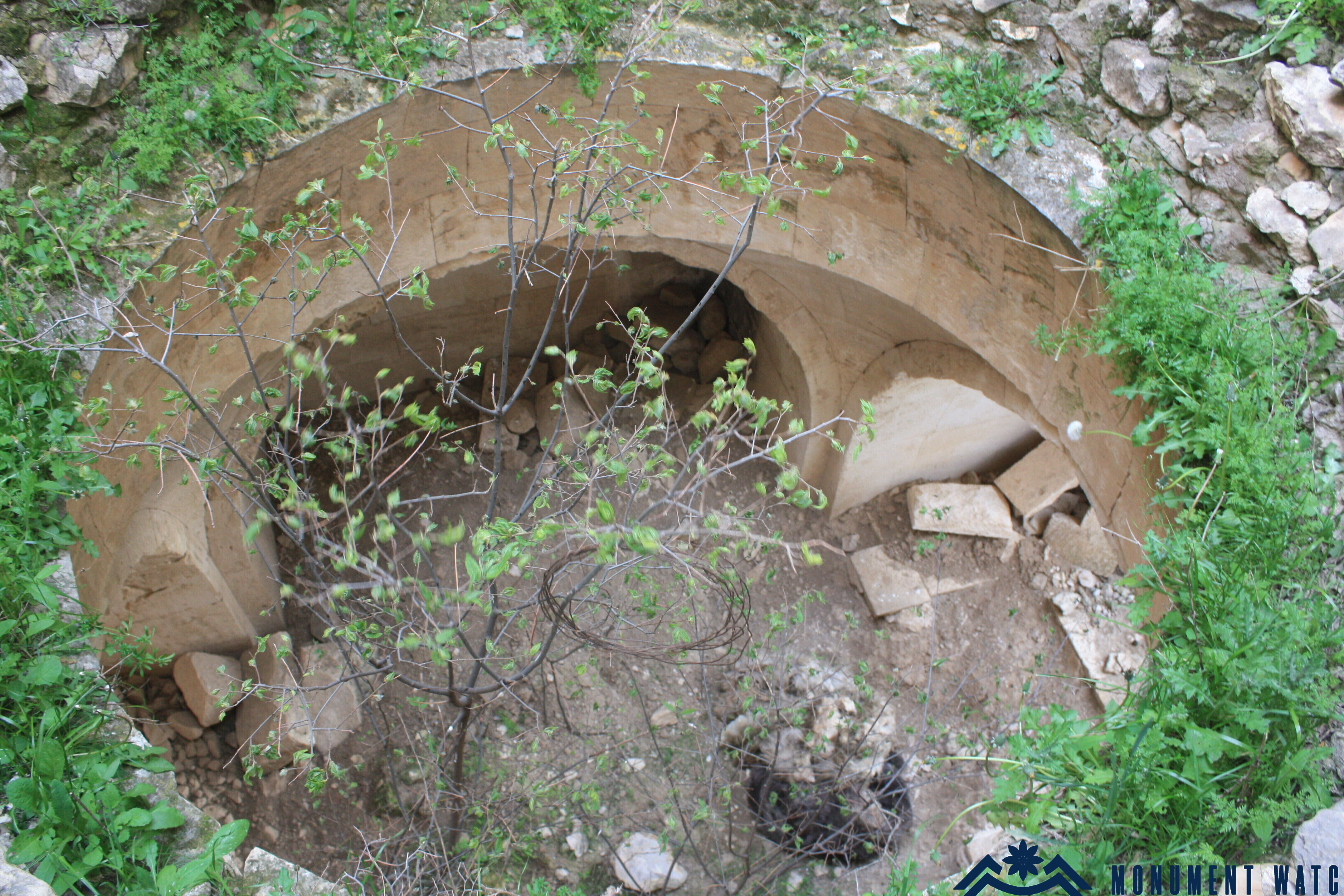
The building consists of two levels: an underground burial chamber and an above-ground prayer hall.
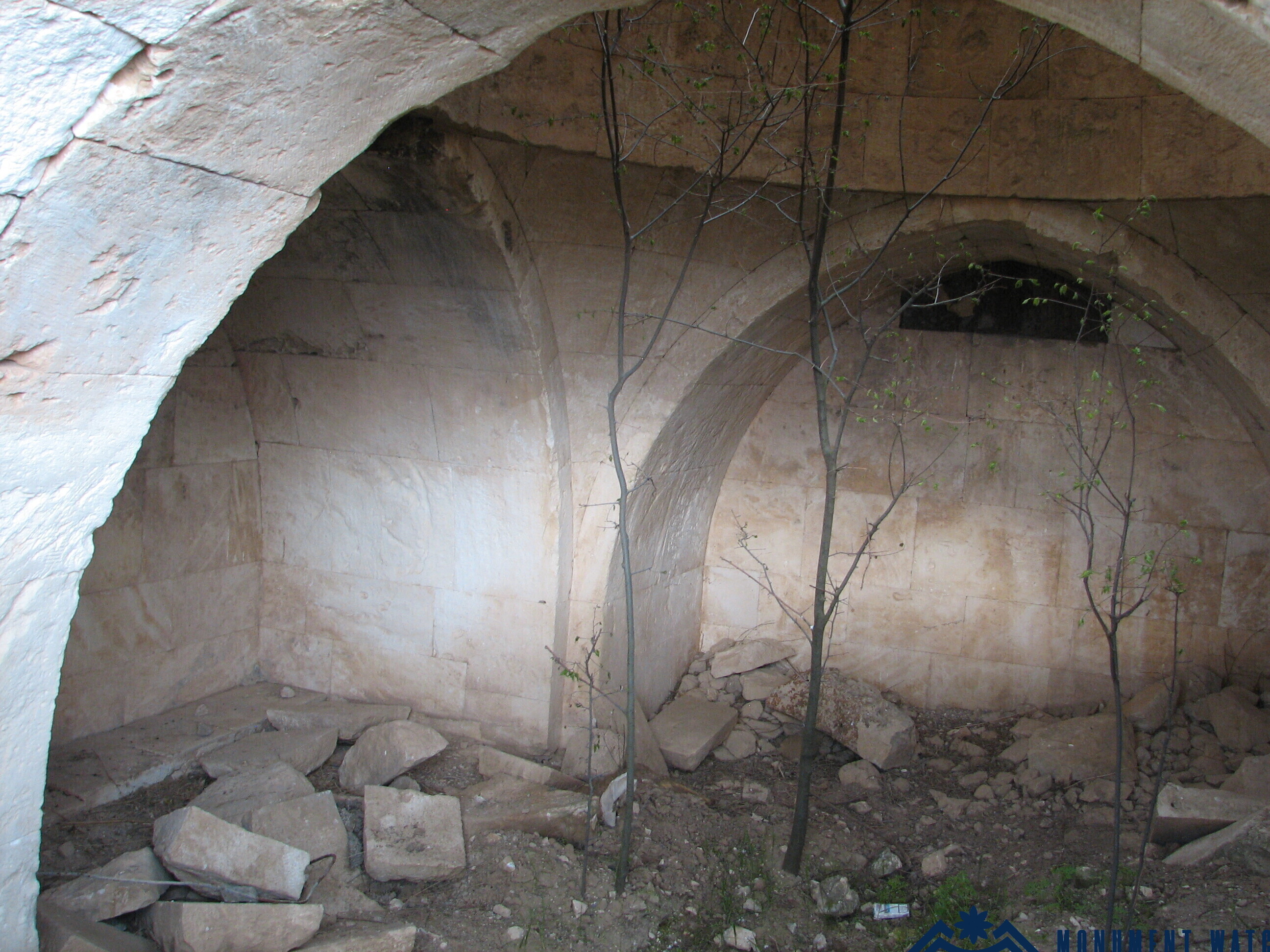
The burial chamber has a cruciform plan and is articulated by arched wall niches (Fig. 4). These originally supported a domical vault, which in turn carried the floor of the prayer hall above. The vault has since collapsed.
A separate entrance is located in the western arm of the cruciform chamber, although it is now ruined (Fig. 5).
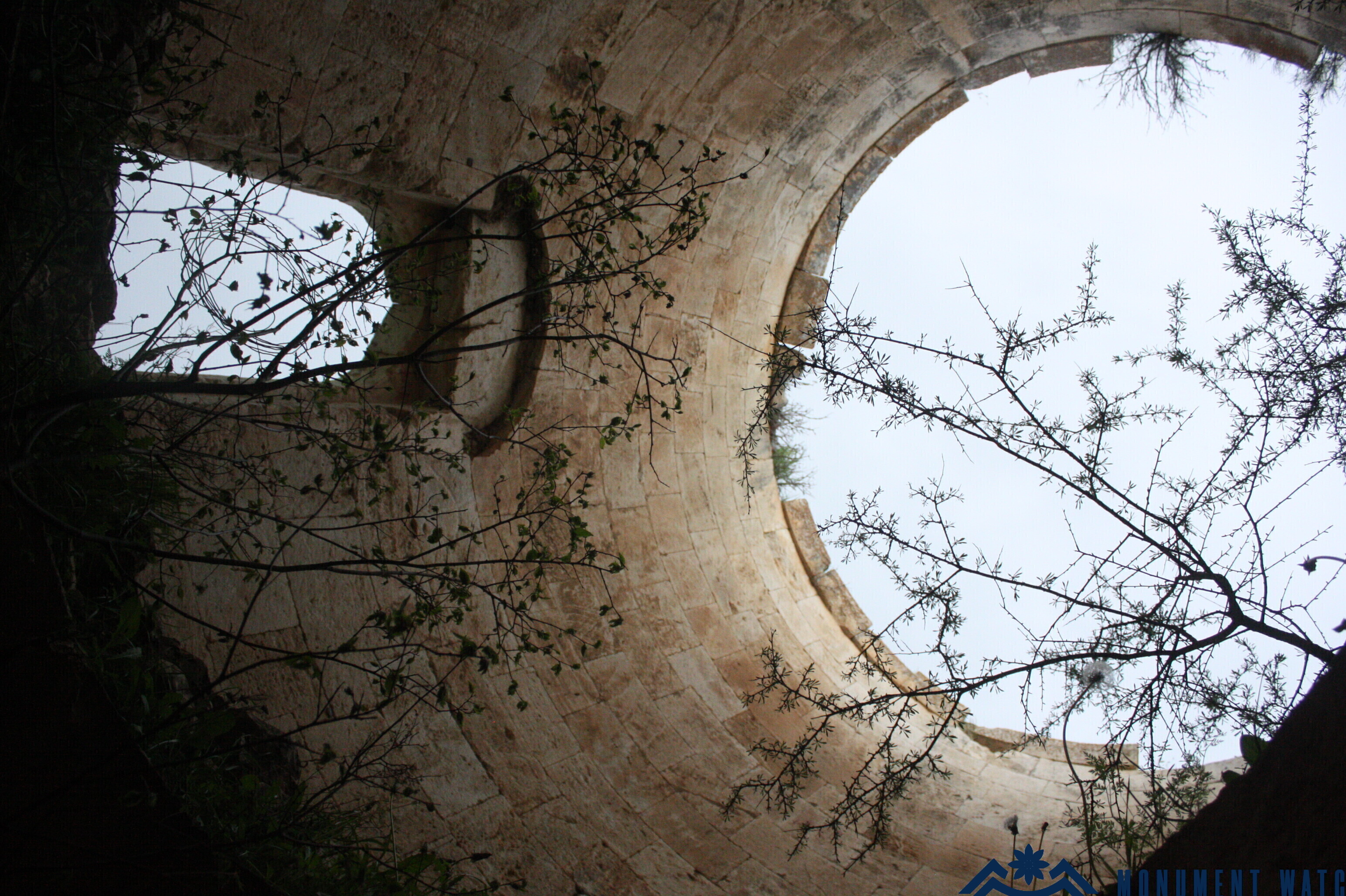
The upper level is an above-ground cylindrical structure, accessed through a pointed-arch entrance on its northern side (Figs. 6, 7).
Of particular interest are the masons’ marks, stylized crosses.
In terms of its ground plan and internal and external spatial configuration, the mausoleum of Nerkin Tumas closely resembles the Veysalli Mausoleum. The principal difference lies in their state of preservation: whereas the roof of the Nerkin Tumas Mausoleum has been lost, the Veysalli Mausoleum has survived almost intact.
The Veysalli Mausoleum is crowned by a roof terminating in a pointed apex. It is therefore reasonable to suggest that the mausoleum of Nerkin Tumas may originally have had a similar roof. However, a cylindrical roof form cannot be ruled out.
Cruciform burial chambers also appear in the Khachen, Nor Maragha, Mir-Ali, Veysalli, and other mausoleums in the steppe zone of Artsakh.
Mausoleums with cruciform interiors are more common in Asia Minor and Transcaucasia, while comparatively fewer examples appear in Iran and Central Asia (Hovsepyan 2025, 31–33; Voronina 1969, 160–161; Muradov 2018, 305–306).
Condition Before and After the War
The mausoleum sustained no damage during the Artsakh wars.
However, the monument requires clearance and archaeological investigation, which would also help establish whether any burial remains are preserved within the structure.
Bibliography
- Karapetyan 1999 - Karapetyan S., Monuments of Armenian Culture in the Territories Annexed to Soviet Azerbaijan, Yerevan.
- Hovsepyan 2025 - Hovsepyan R., “The Islamic Monuments of Artsakh in Their Historical and Chronological Context,” Hushardzan, no. 2, Yerevan, pp. 22–39.
- Voronina 1969 - Voronina V., “The Architecture of Medieval Iran,” VIA, vol. 8, pp. 144–166.
- Garustovich 2014 - Garustovich G., “‘The Theory of Mausoleums’ or Regional Characteristics of Religious and Memorial Architecture in the Ural–Volga Region during the Golden Horde Period: Historical and Ethnographic Aspects,” Golden Horde Review, no. 2, Kazan, pp. 95–119.
- Muradov 2018 — Muradov R., “Ribbed Tent Roofs and Domes of Islamic Mausoleums,” in Traces of Empires: Culture of Central Asia from Alexander the Great to the Timurids, Kabul–Bishkek, 2018, pp. 305–324.
The Islamic Mausoleum of Nerkin Tumas Village
Artsakh