On the Policy of Settling Azerbaijanis in Artsakh
Since 2022, the Government of Azerbaijan has been implementing in the occupied territories of Artsakh the policy of the “Great Return to the territories liberated from occupation,” which envisages the “resettlement” of the Azerbaijani population in these allegedly “liberated historical” lands (https://azertag.az/ru/xeber/rasporyazhenie_prezidenta_azerbaidzhanskoi_respubliki__ob_utverzhdenii_i_gosudarstvennoi_programmy_po_velikomu_vozvrashcheniyu_na_osvobozhdennye_ot_okkupacii_territorii_azerbaidzhanskoi_respubliki-3622211). In practice, this means the settlement of Artsakh by Ադրբեջանցիներով Azerbaijanis. This settlement policy intensified especially after 2023, when the whole of Artsakh was occupied, and the Armenian population was subjected to forced displacement. It is evident that the Azerbaijani side is actively settling Azerbaijanis first and foremost in formerly exclusively Armenian-populated localities where no Azerbaijani population had ever existed, above all in the territories of the former Nagorno-Karabakh Autonomous Oblast.
During 2024–2025, Azerbaijanis were settled in the villages of Vank, Horatagh, Nerkin Horatagh, Kolatak, Haterk, Chapar, and Drmbon in the Martakert District; in the town of Martuni, as well as Karmir Shuka and Sos in the Martuni District; in the town of Hadrut in the Hadrut District; and in the villages of Aygestan, Patara, Astghashen, Khachen, Noragyugh, Khnapat, Khnatsakh, and Shosh in the Askeran District. A policy of settling Azerbaijanis has also begun in the city of Stepanakert and in its suburb Karkijahan (https://t.me/maidentower/60709).
It is clear that the Azerbaijani side is primarily pursuing a policy of the “Azerbaijanization” of historically Armenian, exclusively Armenian-populated settlements and districts, assigning these settlements and territories new toponyms and a new history from which the Armenian historical and cultural presence is excluded. It is not accidental that from 2024 onward, the historical and spiritual heart of Artsakh—historic Khachen, with its village of Vank—also began to be subjected to this process of “Azerbaijanization.” Judging from published photographs, Azerbaijanis are simply being settled in Armenian homes, which have been renovated and refurbished by the Azerbaijani government and then presented by Azerbaijani media as “newly built.” In the same manner, the Azerbaijani side presents schools and kindergartens built during the Soviet period and during the years of the Republic of Artsakh, and in urban areas, residential buildings, many of which had been constructed by the Artsakh government. These “resettled” Azerbaijanis are presented by the Azerbaijani government as “displaced indigenous inhabitants.” Here, however, there is an obvious contradiction and a blatant falsehood, since Soviet-era documents recording the ethnic composition and population figures of the villages now being resettled clearly demonstrate the complete absence of any Azerbaijani population there. It is evident that, by filming the oral narratives of these so-called resettlers, the Azerbaijani side is simply creating a new and politically acceptable past for these villages.
In the formerly Armenian-populated, historically Armenian settlements now being settled by Azerbaijanis, the historical and cultural monuments located within the settlements and in their administrative boundaries and surroundings—together with the monuments erected within these communities, their cemeteries, and related heritage sites—are placed under direct threat of destruction. As a consequence of this Azerbaijani “return,” the memorial erected in Vank village in memory of those killed in the Great Patriotic War and the Artsakh war has been demolished (https://monumentwatch.org/hy/alerts/%d5%b4%d5%a1%d5%b5%d5%ab%d5%bd%d5%ab-9-%d5%ab%d5%b6-%d5%a8%d5%b6%d5%a4%d5%a1%d5%bc%d5%a1%d5%bb-%d5%be%d5%a1%d5%b6%d6%84-%d5%a3%d5%b5%d5%b8%d6%82%d5%b2%d5%ab-%d5%b0%d5%a1%d5%b5%d6%80%d5%a5%d5%b6%d5%a1/).
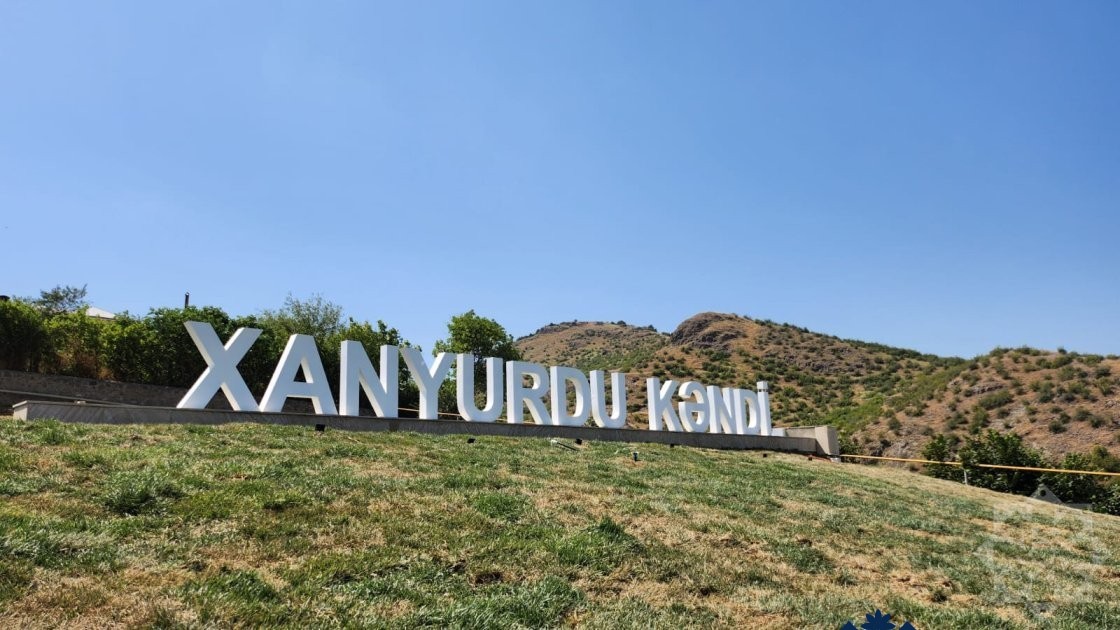
The attached images illustrate the process of settlement in Khnatsakh village. The memorials dedicated to the Great Patriotic War and the Artsakh Liberation Struggle in the village have been removed, and in their place a sign bearing the village’s fabricated Azerbaijani name—Xanyurdu kəndi—has been erected.

Fig. 1
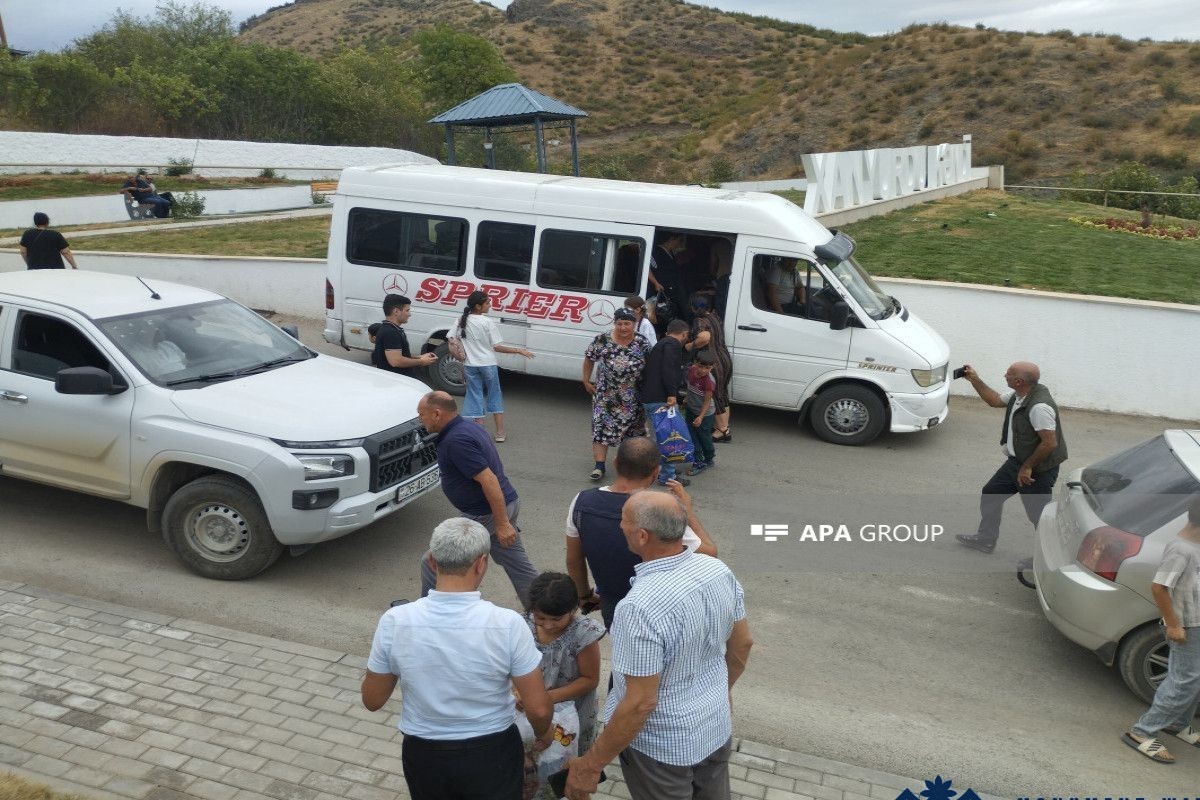
Fig. 2

Fig. 3