The “Gharadam” Chapel-Oratory of Aravadzor
Location
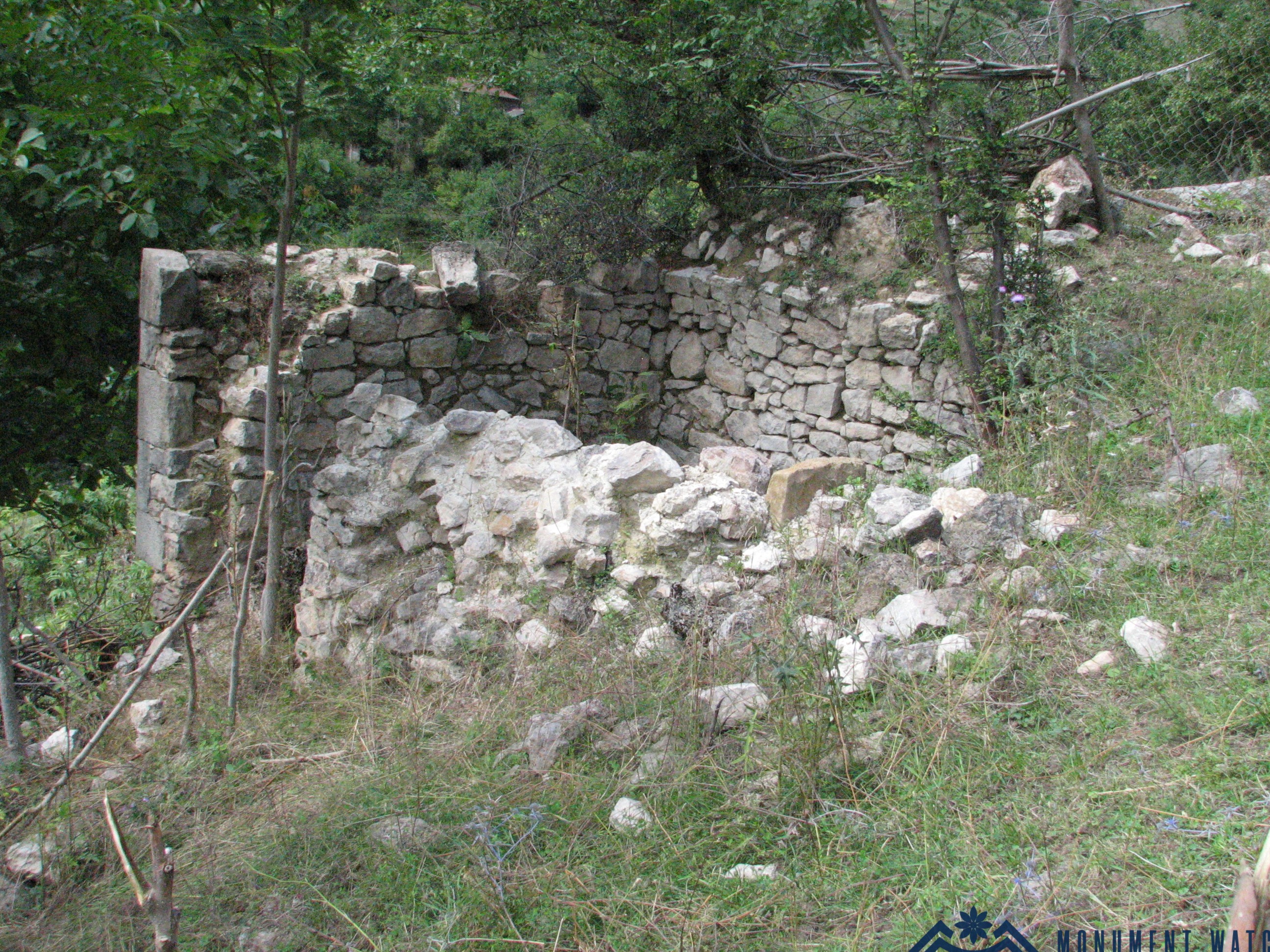
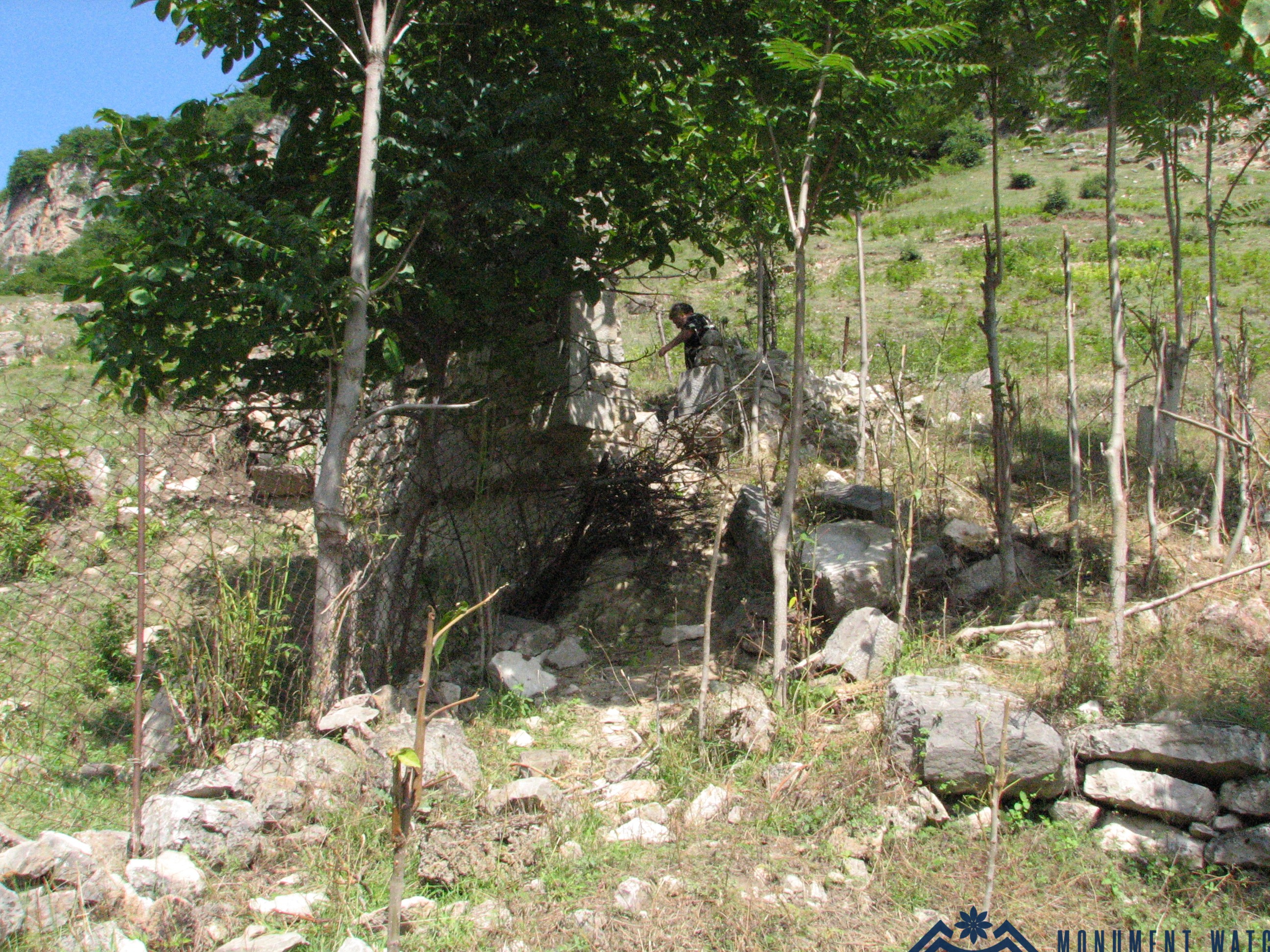
The “Gharadam” chapel-oratory is located not far from the village of Aravadzor, in the occupied Martakert region of Artsakh (Figs. 1, 2).
Historical overview
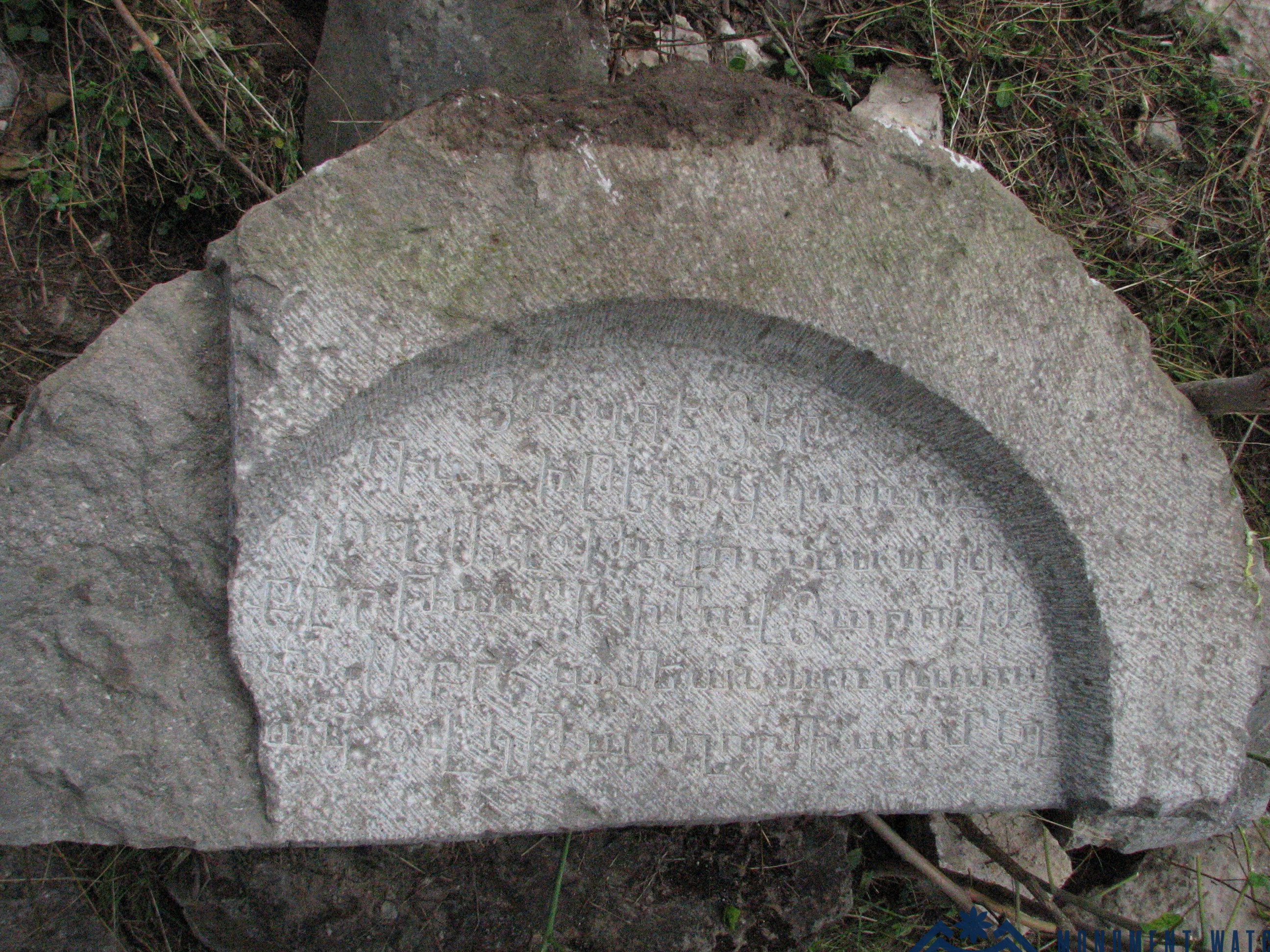
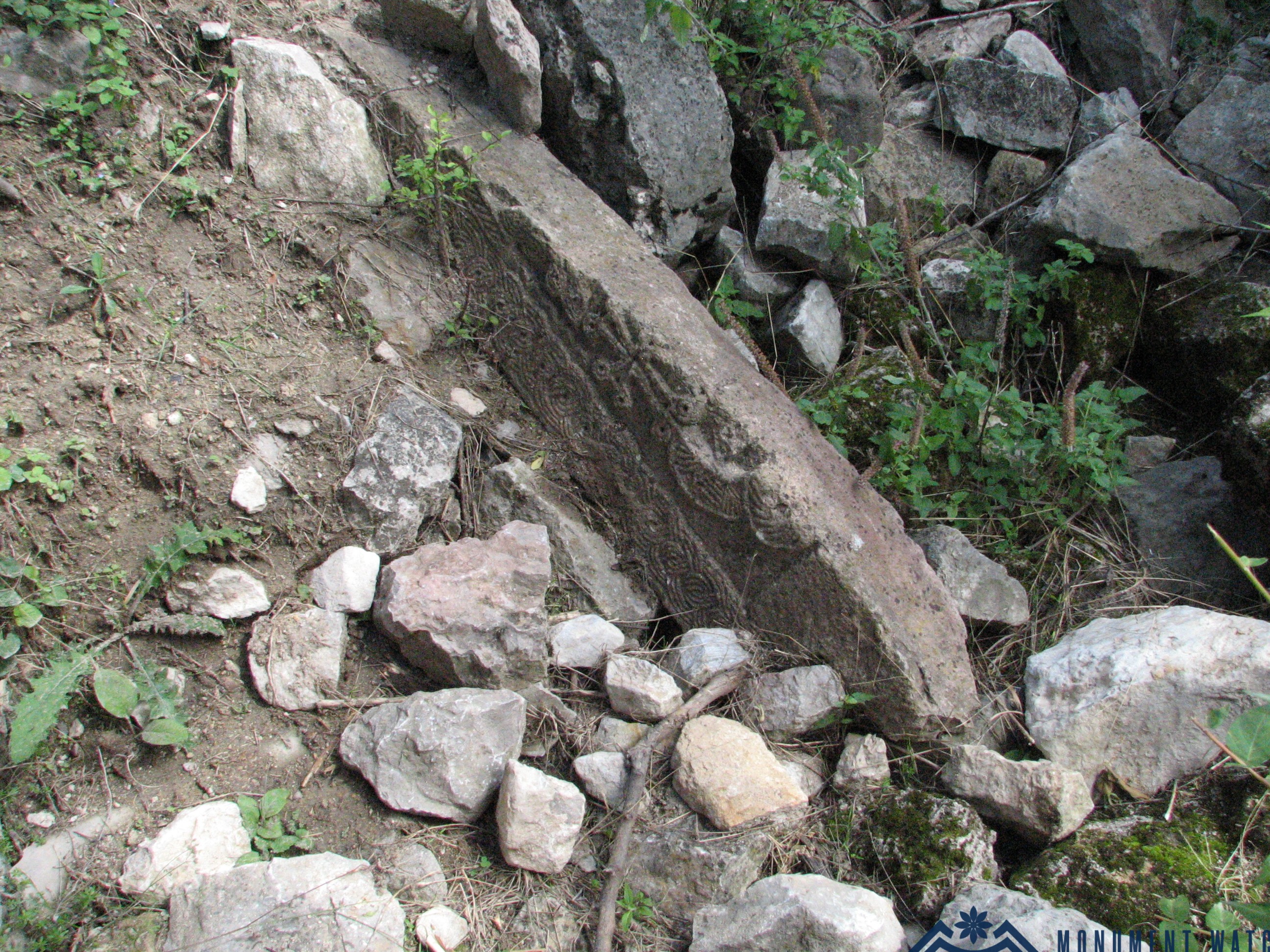
No historical information has come down to us about this semi-ruined structure. According to the monument protection certificate of the Republic of Artsakh, the chapel-oratory dates to the 19th century. The stone lintel of the entrance lies nearby. The inscription on it says the chapel was built by Harutyun Abrahamyan, of the Ter-Davtyants lineage (Fig. 3).
The original name of the chapel-oratory is unknown; in the monument protection certificate, it is referred to as “Gharadam.” In connection with the name of this chapel-sanctuary, the testimony of the ethnographer Yervand Lalayan concerning folk sanctuaries widely venerated among the rural population of Artsakh is of particular importance. These sanctuaries were known as “holy hearths” (surb ojakh) (Lalayan 1988, 98–99). Such sanctuaries usually did not resemble classical chapels: they lacked the rectangular longitudinal plan and west–east orientation characteristic of chapels (Petrosyan 2001, 353–354). Rather, they resembled a traditional dwelling, in which the formal presence of the hearth was central. It is therefore no coincidence that Lalayan compared such sanctuaries—where the presence of the hearth was essential—with the traditional dwelling known as the gharadam (glkhatun, or main house) and its hearth.
Such sanctuaries usually had a generic name that included the word ojakh (“hearth”). They also had a specific name, often connected with a particular lineage (Petrosyan 2001, 348–349). Sacralizing the hearth meant expanding its function. It became a communal ritual and cultic center. Thus, we see a mix of folk and Christian beliefs (Petrosyan 2001, 350–352). In this monument’s case, the sanctuary-chapel was built by the Ter-Davtyants lineage. In addition to the indirect designation ojakh, replaced here by gharadam, it also had a lineage-based association.
It should be noted that a sacralized dwelling could be functioning, abandoned, or ruinous. Old, semi-ruined chapels and sanctuaries often became such folk sanctuaries (Petrosyan 2001, 352–354). In Artsakh, such sanctuaries also had an important function as places where matagh offerings were made and ritual feasts were organized in honor of the saint.
Architectural and compositional description
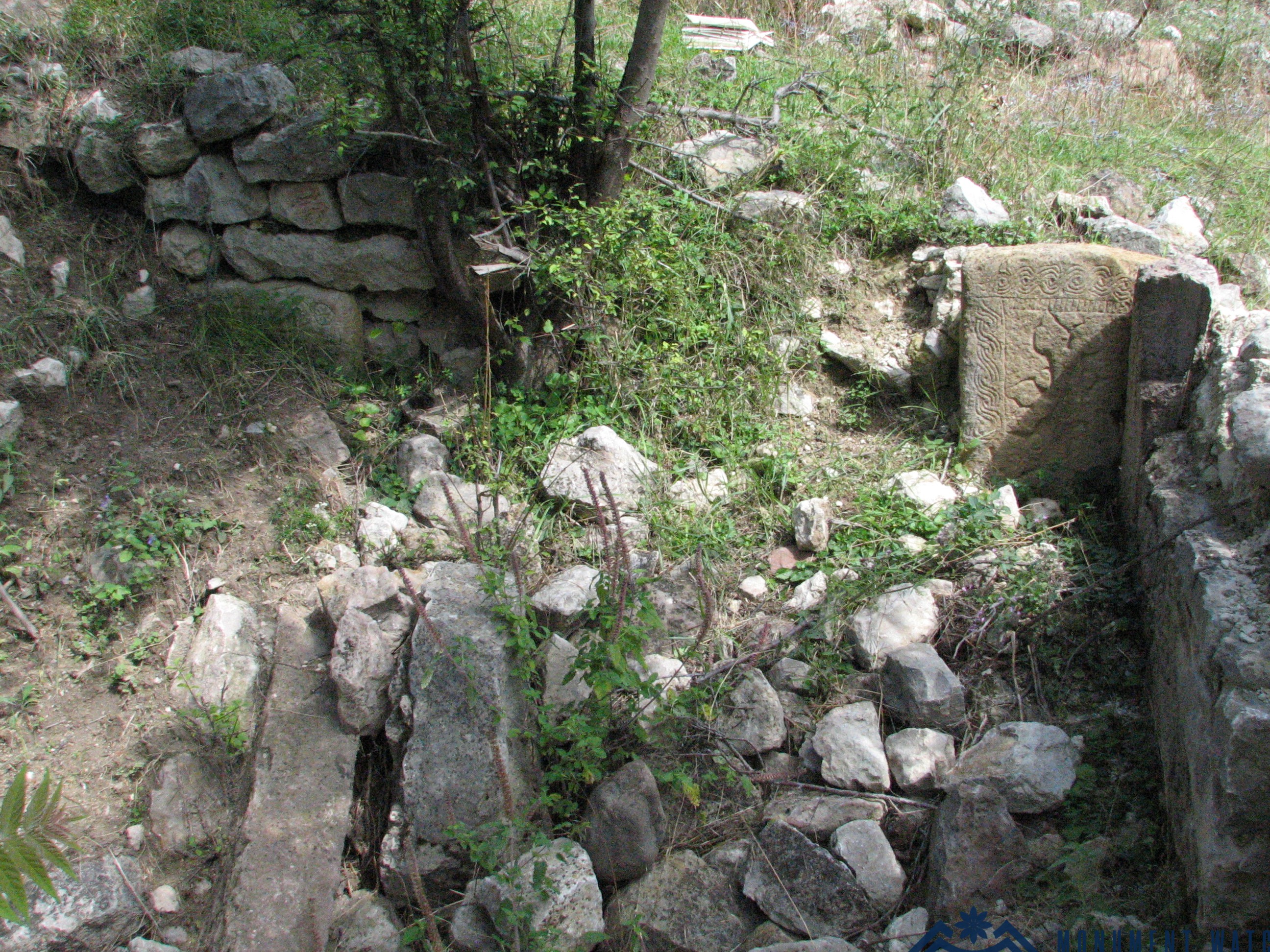
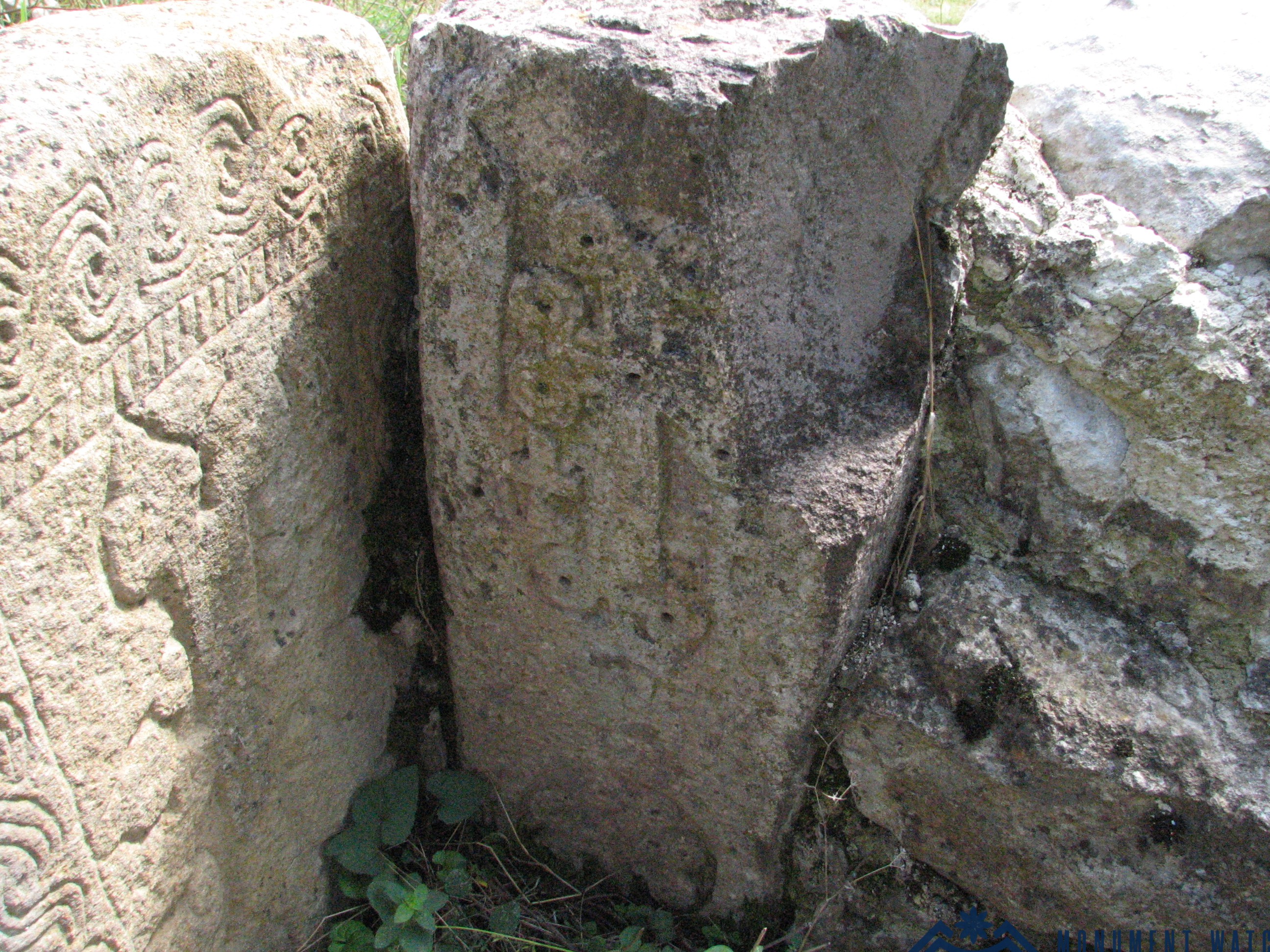
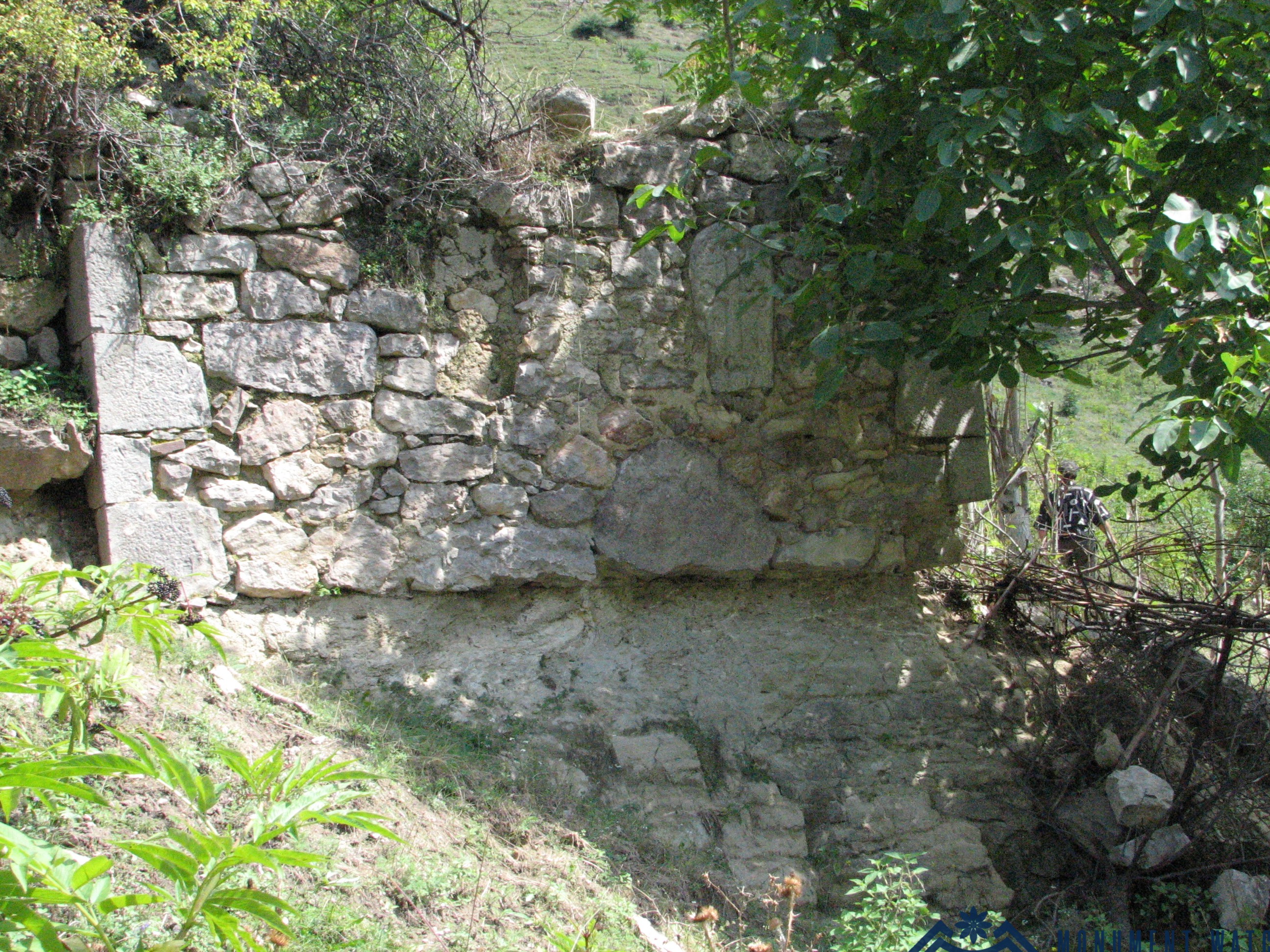
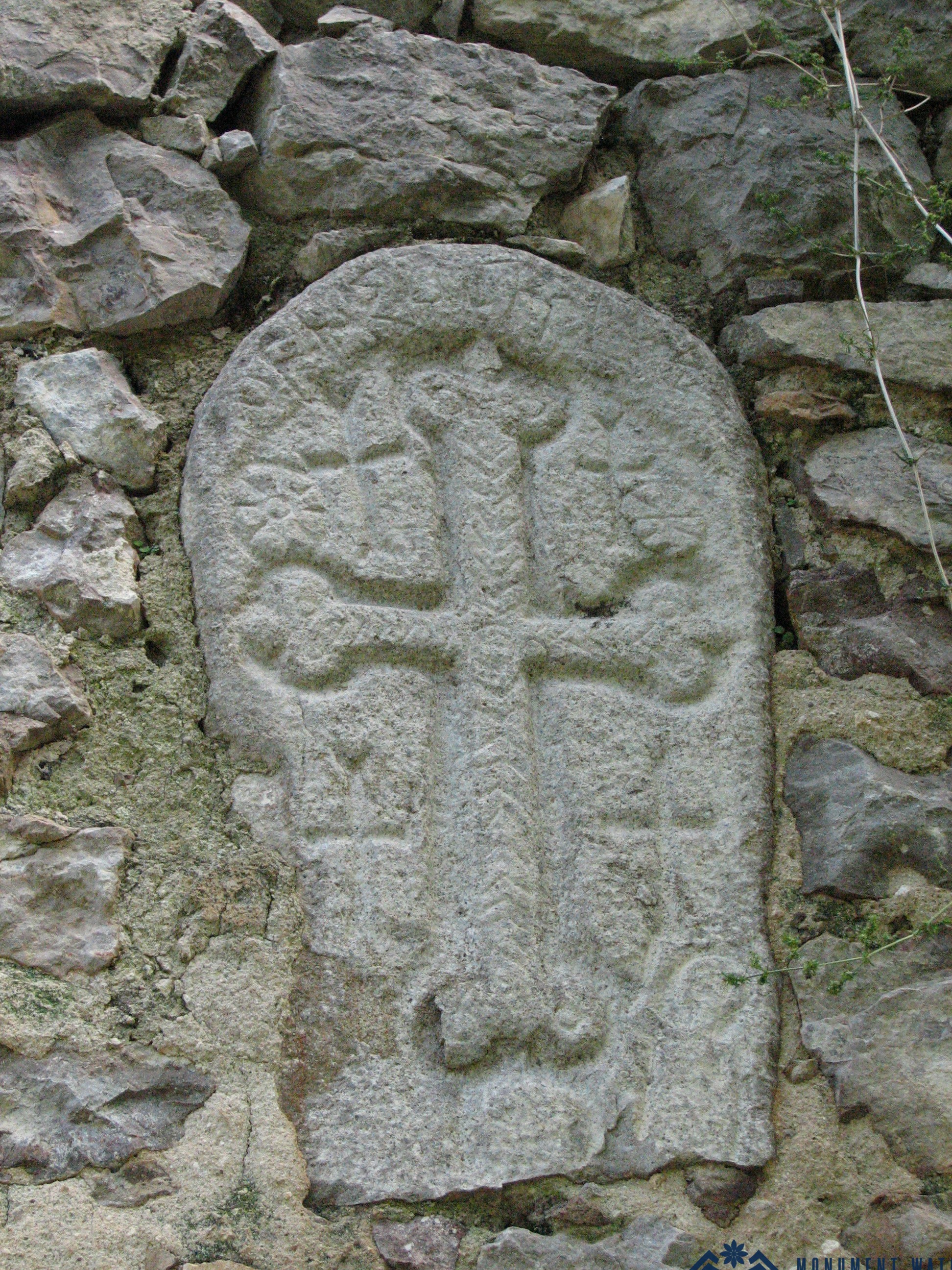
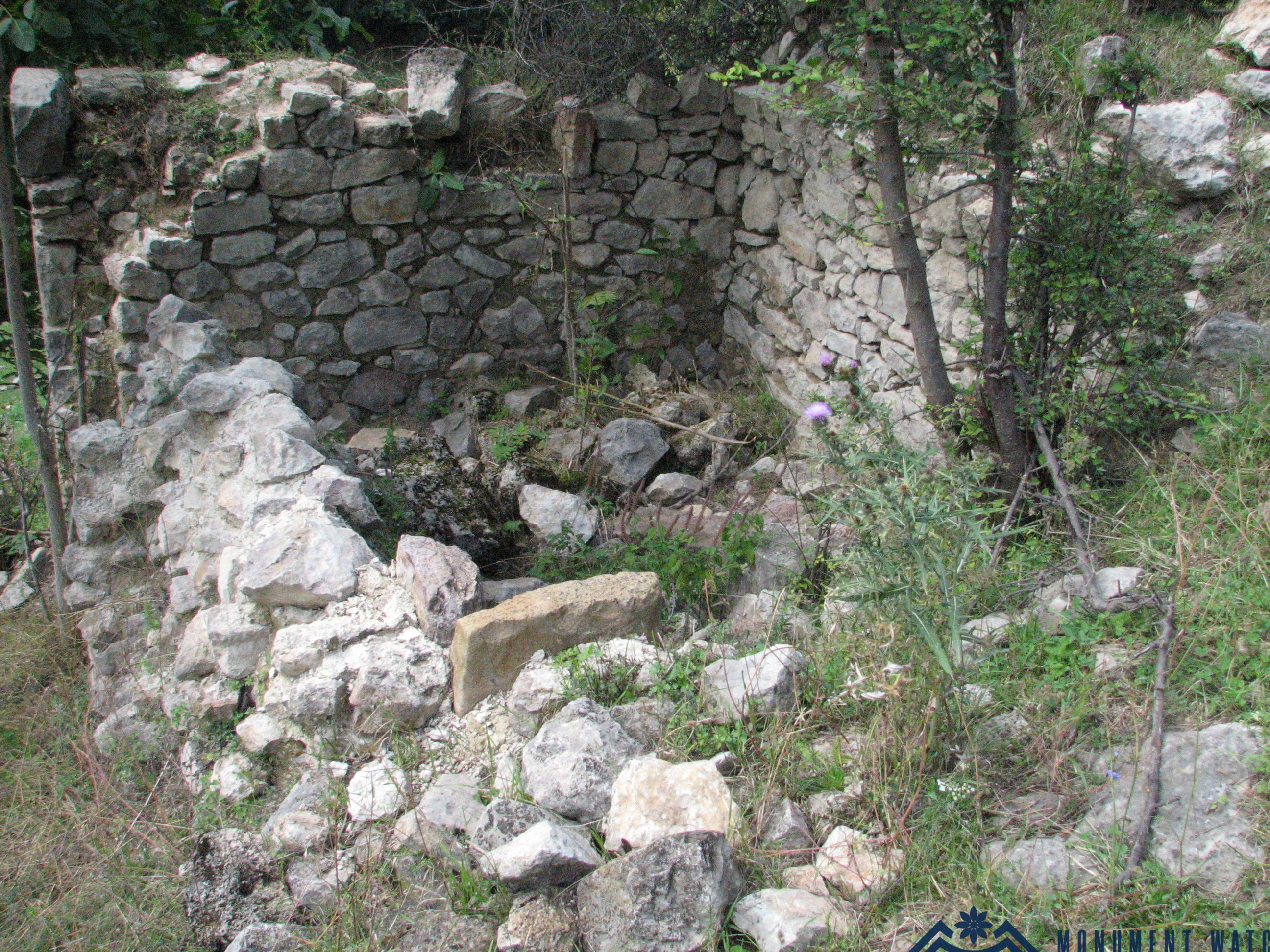
The chapel-oratory is a small rectangular structure set on sloping terrain. It is built of roughly hewn stones of various sizes bonded with lime mortar. The corners of the structure are laid with relatively large, better-dressed stones. Embedded in the walls are khachkars dating to the 12th–13th and 16th–17th centuries; some of them were set into the walls horizontally, that is, adapted to the irregular masonry courses (Figs. 4–8).
The Condition before and after the war
The chapel-oratory is semi-ruined and requires clearing of rubble and vegetation, as well as archaeological excavation. In its present condition, its ground plan and internal structure are not clearly identifiable (Fig. 9).
Bibliography
- Lalayan 1988 - Lalayan Y., Varanda: Materials for Future Study, Works, vol. 2, Yerevan.
- Petrosyan 2001 - Petrosyan H., “The Newly Discovered Sanctuary of Karablur and the Cult of ‘Holy Hearths’ in Artsakh,” in Armenian Saints and Sanctuaries: Origins, Types, Cult, Yerevan, pp. 347-356.
The “Gharadam” Chapel-Oratory of Aravadzor
Artsakh