The “Mayrakaghak” or “Surb Tiramayr” Monastery of Vaghuhas
Location
The monument is located in the central part of Vaghuhas village, in the Martakert region of the Republic of Artsakh. Since 2023, it has been occupied by Azerbaijan.
Historical overview
Vaghuhas is one of the villages of Artsakh, the richest in historical monuments. The list of immovable monuments of history and culture of the village and its surroundings includes 125 monuments, one of which is the “Mayrakaghak” or “Surb Tiramayr” Monastery. According to Sh. Mkrtchyan, the complex was called “Tiramayr Monastery” because of the large mural image of the Mother of God preserved in the church (Mkrtchyan 1985, 57).
In earlier times, the monastery was very well known. According to S. Jalaleants, it served as the episcopal seat of Mets Kuen (Jalaleants 1858, 231). M. Barkhudaryants likewise notes that “from the size of the church and the extent of the cemetery, it is evident that Mayrakaghak was once a renowned monastery and a populous village, although it is now small” (Barkhutareants 1895, 191). According to historical sources, in the 19th century, the villagers called the complex “Mayrakaghak” or “Mayravank.” It is known that in the Middle Ages, prominent monasteries and episcopal centers were also called “mayrakaghak” (Aleksanyan 2016, 107–111; Harutyunyan, Aleksanyan 2017, 400).
In 2014–2015, the Department of Tourism and Historical Environment Protection of Artsakh carried out partial excavation and cleaning works in the area of the monastery’s gavit and adjacent structures, under the direction of T. Aleksanyan.
The inscriptions of the Vaghuhas monastery were published in the 19th century: S. Jalaleants published four inscriptions (Jalaleants 1858, 231–233), while M. Barkhudaryants published six (Barkhudaryants 1895, 192). S. Barkhudaryan, bringing together the local epigraphic material, presented seven inscriptions in the Artsakh volume of the Corpus of Armenian Inscriptions (CAI 1982, 113–114).
Architectural and compositional description
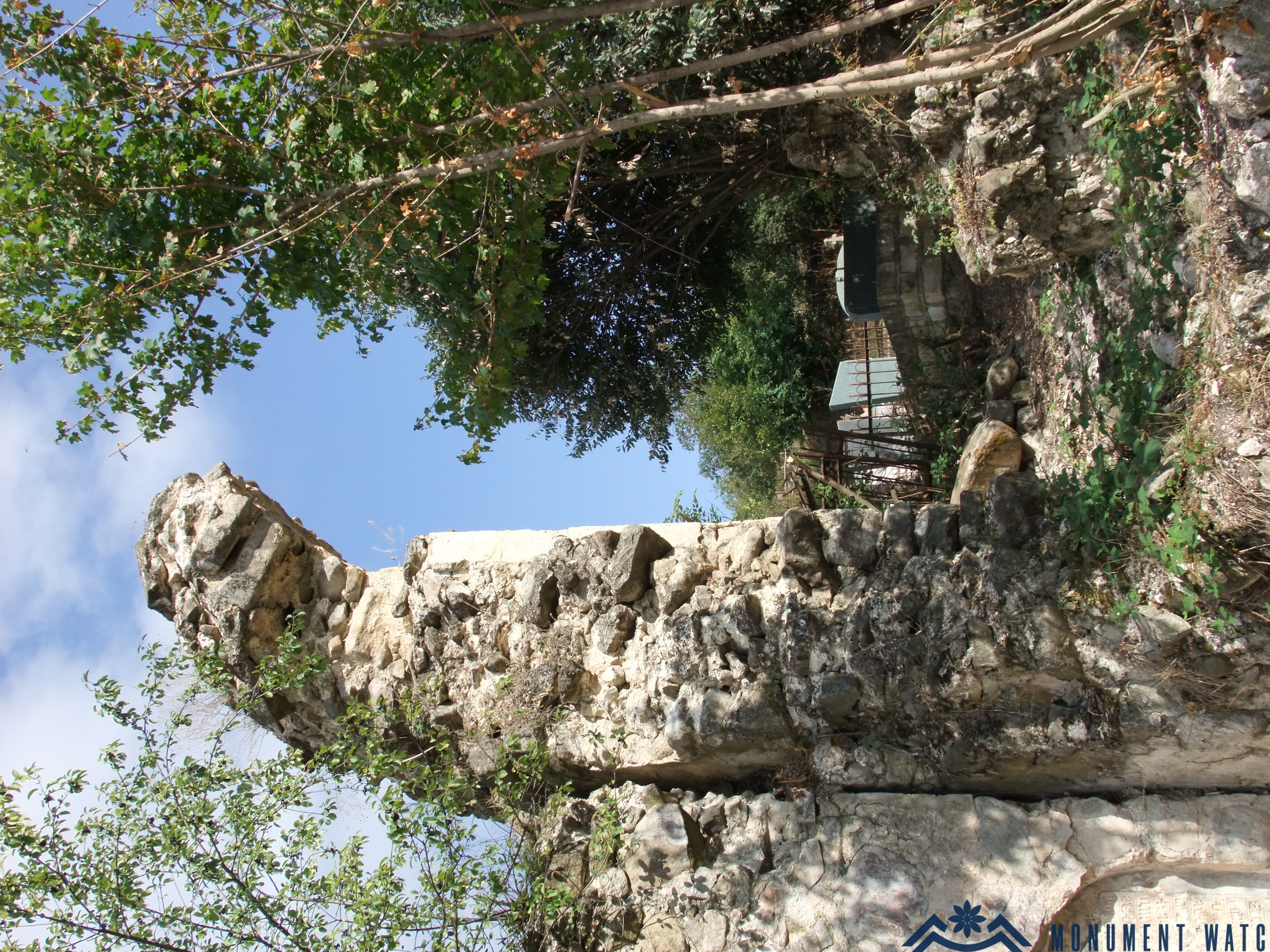
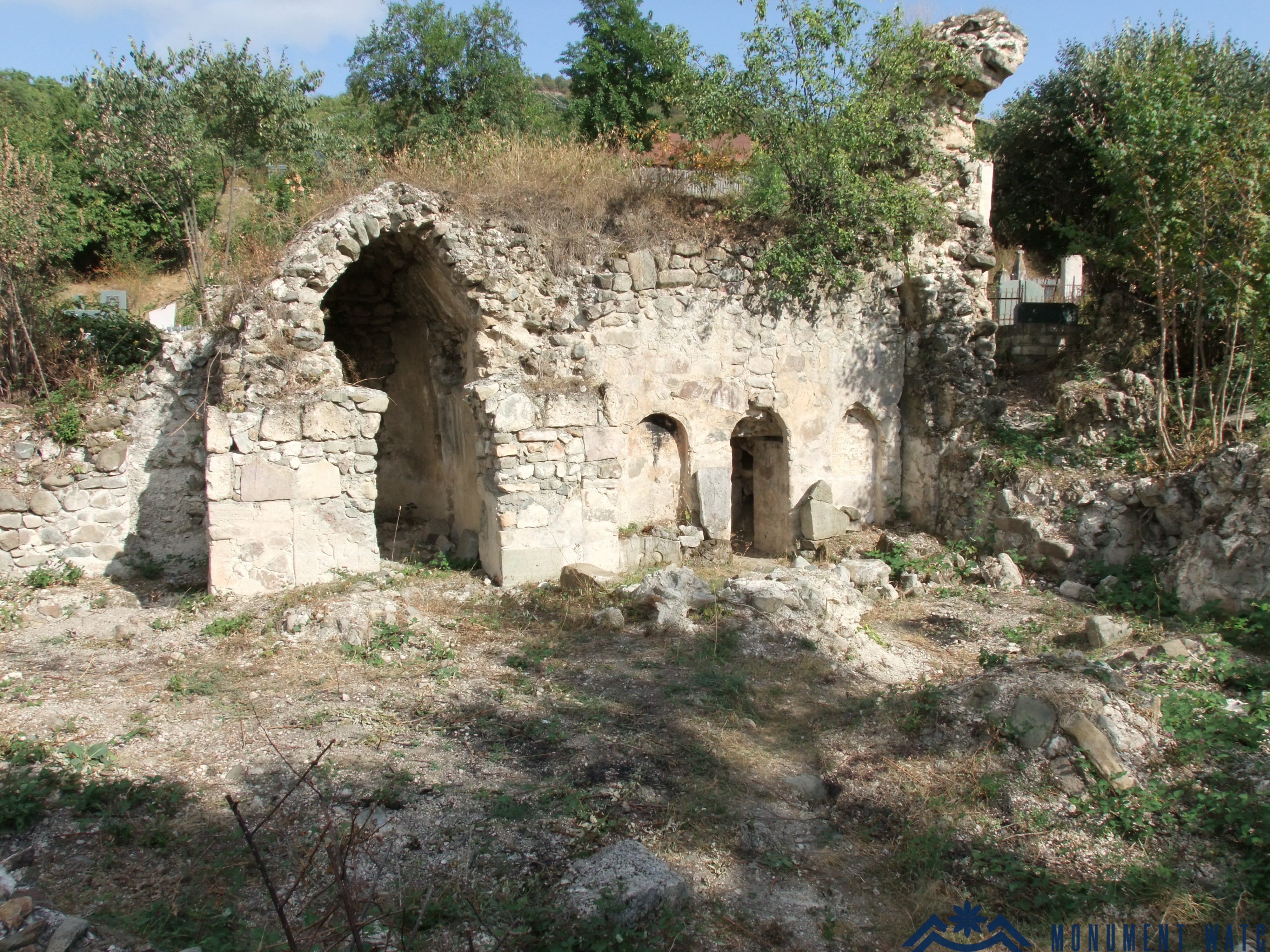
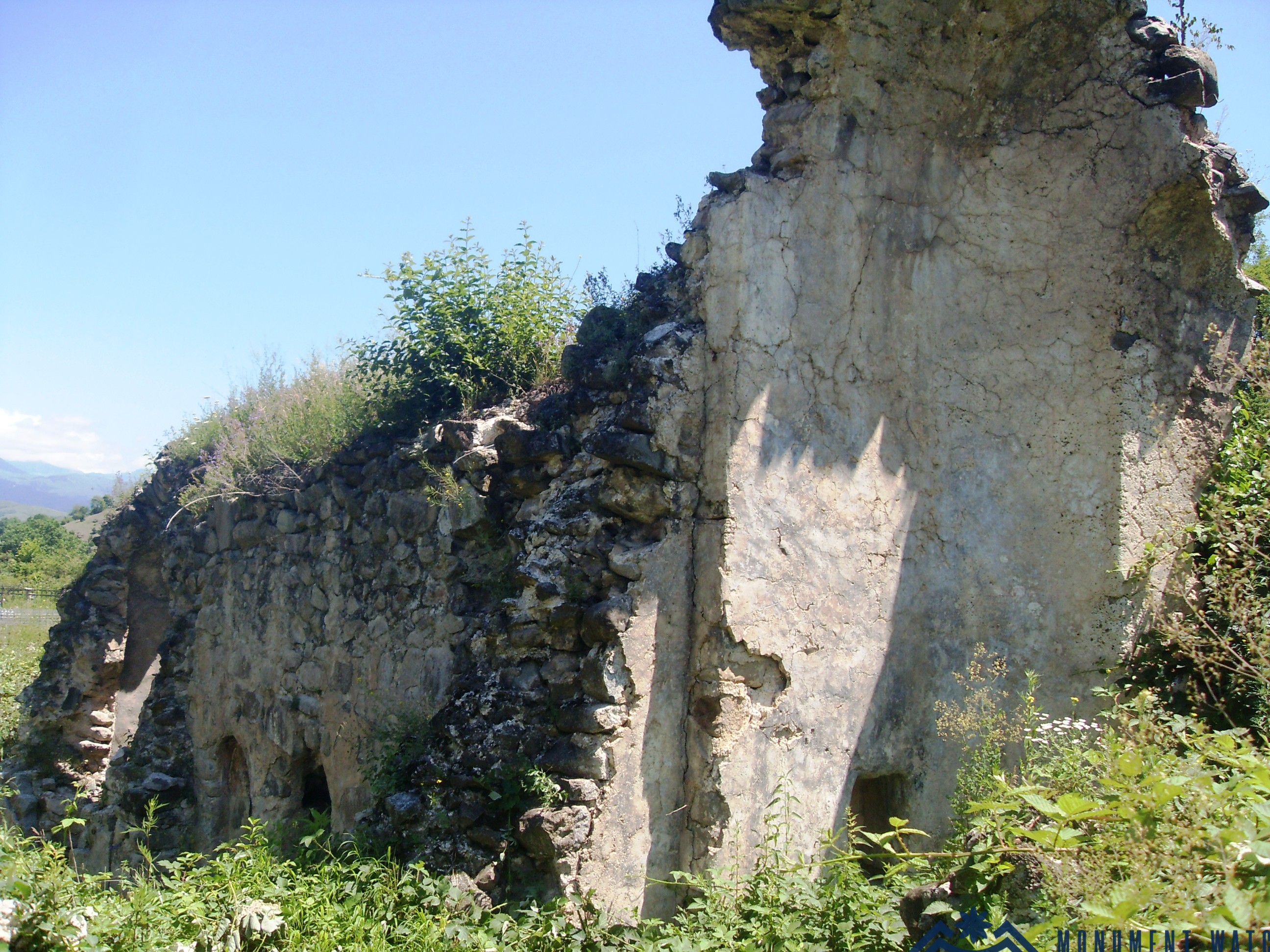
The monastic complex consists of a main church, of which only a section of the northern wall has survived (Figs. 1, 2), a large gavit now in ruins, and, in the eastern part of the gavit, two chapels—one with a common entrance in the south-eastern part—and a scriptorium/library in the north-eastern part (Fig. 3).
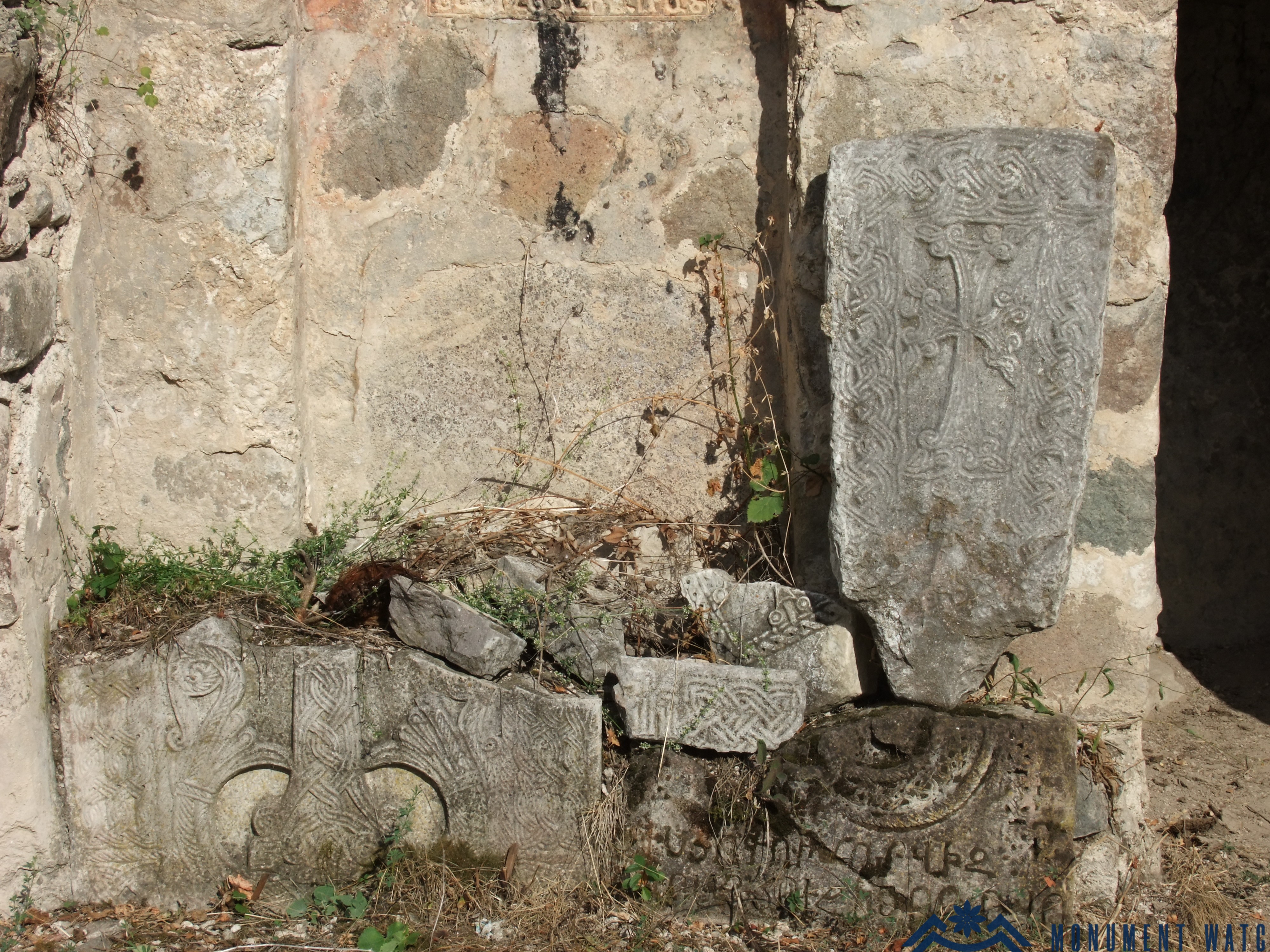
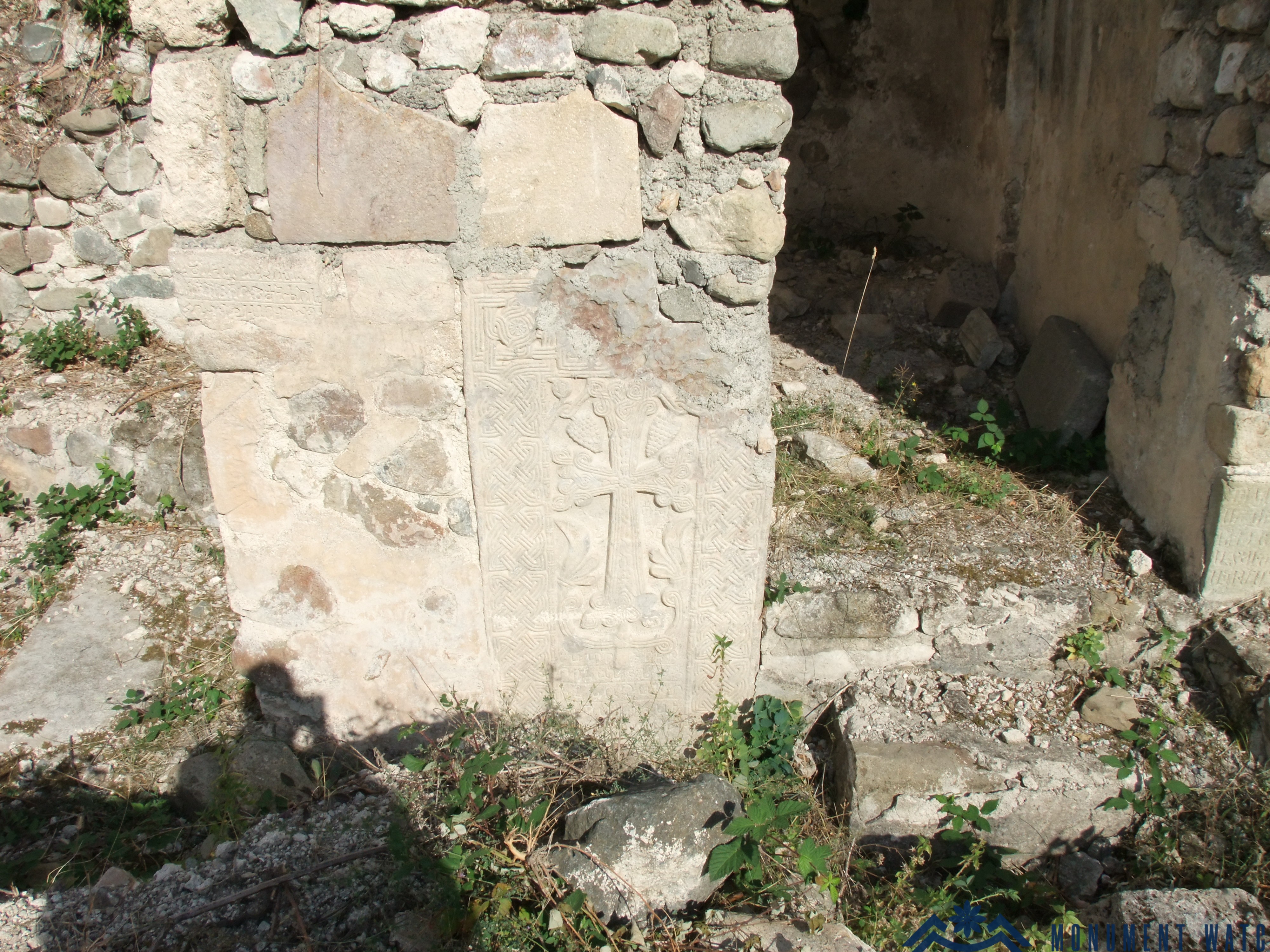
The structure is built of brownish, finely dressed, and roughly hewn stones bonded with lime mortar. During later repairs, khachkars, inscribed stones, and fragments of these were also reused as building material in the masonry of the walls (Figs. 4, 5). The monument measures 14.45 m in length and 12.97 m in width.
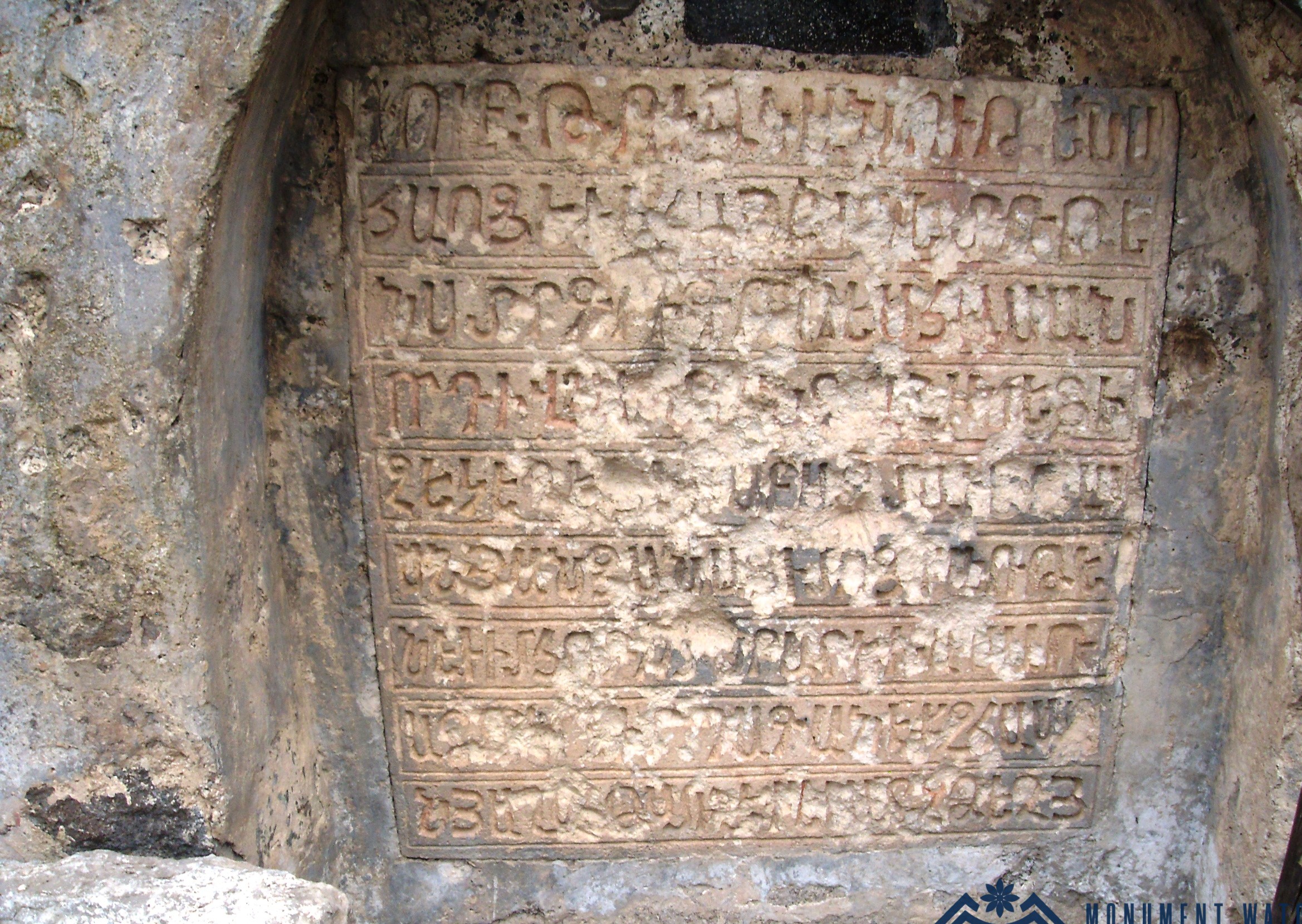
The exact date of the construction of the monument remains unclear. According to a nine-line inscription placed to the right of the entrance to the south-eastern chapel of the gavit (Fig. 6), the church was built in 1183 by Prince Hasan. The inscription may be translated as follows:
“In the year 1183 of the Armenian era, and during the catholicosate of Ter Grigor, I, Hasan, son of Vakhtang, built these many-ruined churches for the atonement of my sins and as an intercessor for my soul before God. You who worship, remember Hasan in your prayers, and may God remember you.” (Harutyunyan, Aleksanyan, 2017, 405)
The authors of the cited article argue that Hasan, son of Vakhtang, did not build the structures anew, but rather restored the ruined buildings (Harutyunyan, Aleksanyan 2017, 405).
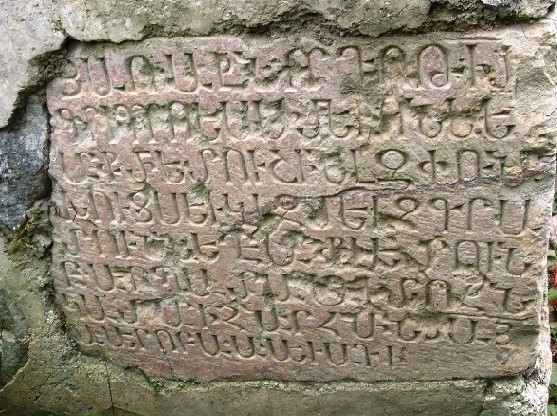
In the north-eastern part of the gavit, there was a library. The inscription preserved at the base of the southern wall of the library (Fig. 7) shows that this was not simply one of the monastery’s buildings later adapted as a library, but that it had been built as such from the outset. The inscription may be rendered as:
“Under the leadership of Ter Grigor, I, Simeon, and my brothers had this furnace-room built and the library arranged. My brothers gave two days of liturgy per year; may those who perform [it] be blessed by God: one for Serob and one for Sevadi.”(Harutyunyan, Aleksanyan, 2017, 410)
As M. Barkhudaryants reports, in the 19th century, an extensive cemetery surrounded the monastery. Around the gavit were the tombs of the Catholicoi of Aghvank and other vardapets (Barkhudaryants 1895, 192; CAI 1982, 114). The cemetery of Mayrakaghak was also regarded as the dynastic burial ground of the Dop‘ean princes of Upper Khachen or Tsar. From the 12th century onward, the Dopeans buried their princes in the monasteries of Mayrakaghak and Khada or Getamij in Vaghuhas (Ulubabyan 1975, 157).
By the 19th century, the inscribed monuments had already suffered damage. Later, the monastic complex fell victim to the pronounced atheist policies of the 1920s–1930s (Manukyan 1997, 188).
The condition before and after the war
Until 2023, separate sections of the ruined buildings’ walls, inscribed slabs, several khachkars, and other fragments were still preserved. No information is currently available regarding the monument’s present condition.
Bibliography
- Jalaleants 1858 - Jalaleants S., Journey to Greater Armenia, Part II, Tiflis.
- Barkhudaryants 1895 - Barkhudaryants M., Artsakh, Baku.
- Ulubabyan 1975 - Ulubabyan B., The Principality of Khachen in the 10th-16th Centuries, Yerevan.
- CAI 1982 - Corpus of Armenian Inscriptions, vol. 5, Artsakh, compiled by S. Barkhudaryan, Publishing House of the Academy of Sciences of the Armenian SSR, Yerevan.
- Mkrtchyan 1989 - Mkrtchyan Sh., Historical and Architectural Monuments of Nagorno-Karabakh, Yerevan.
- Manukyan 1997 - Manukyan A., The Church in Armenia in the 1930s, Yerevan.
- Aleksanyan 2016 - Aleksanyan T., “On the Question of Calling Medieval Monasteries ‘Mayrakaghak’,” Etchmiadzin, Yerevan.
- Harutyunyan, Aleksanyan 2017 - Harutyunyan A., Aleksanyan T., “The Inscriptions of Vaghuhas’s Surb Tiramayr Monastery,” Handes Amsorya, 1-12, Vienna-Yerevan.
The “Mayrakaghak” or “Surb Tiramayr” Monastery of Vaghuhas
Artsakh